Chinese Recipes for Diabetes That Taste Like Takeout
Chinese recipes for diabetes that recreate takeout favorites at home with low-sugar swaps, controlled portions, and stir-fries that keep blood sugar.
In this article(15)
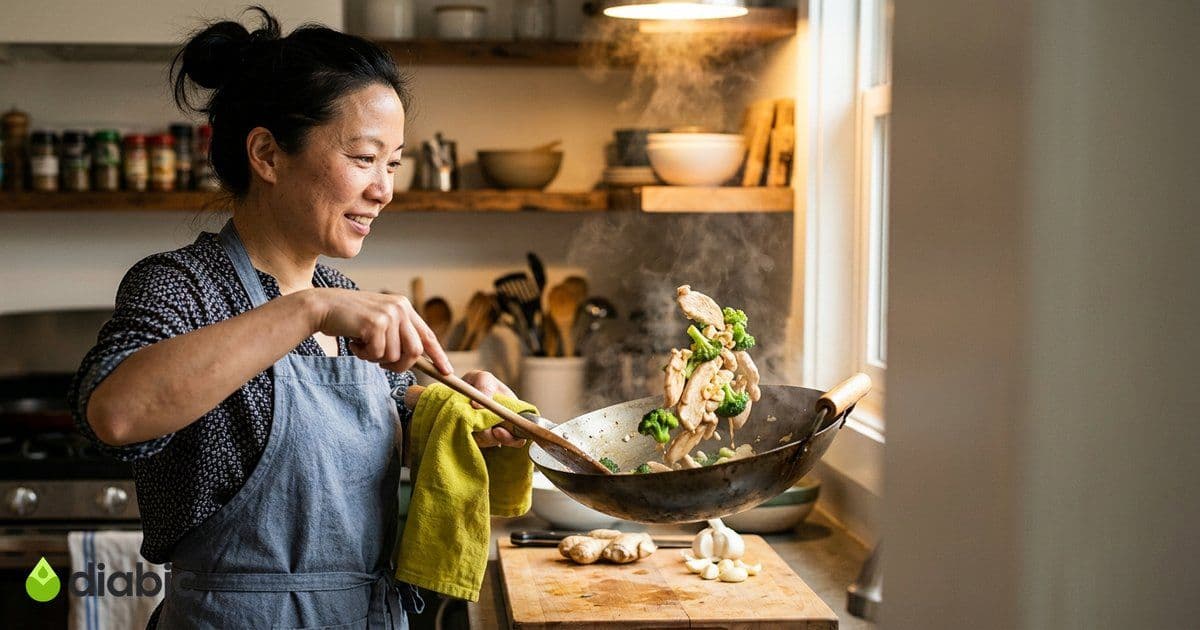
Chinese recipes for diabetes can taste like the takeout you grew up with, minus the sugar crash and the next-morning regret. The trick is not avoiding Chinese food. The trick is rebuilding a few core sauces, swapping the rice strategically, and letting the wok do what it does best, which is fast, vegetable-heavy cooking that fits a diabetes meal plan more easily than most cuisines.
The seven recipes below are the ones we cook on rotation. They use ingredients you can find in any grocery store, finish in under 30 minutes, and skip the cornstarch-heavy, sugar-loaded restaurant treatment without losing the flavor that makes Chinese food worth eating.
Why Homemade Chinese Food Is Better for Diabetes
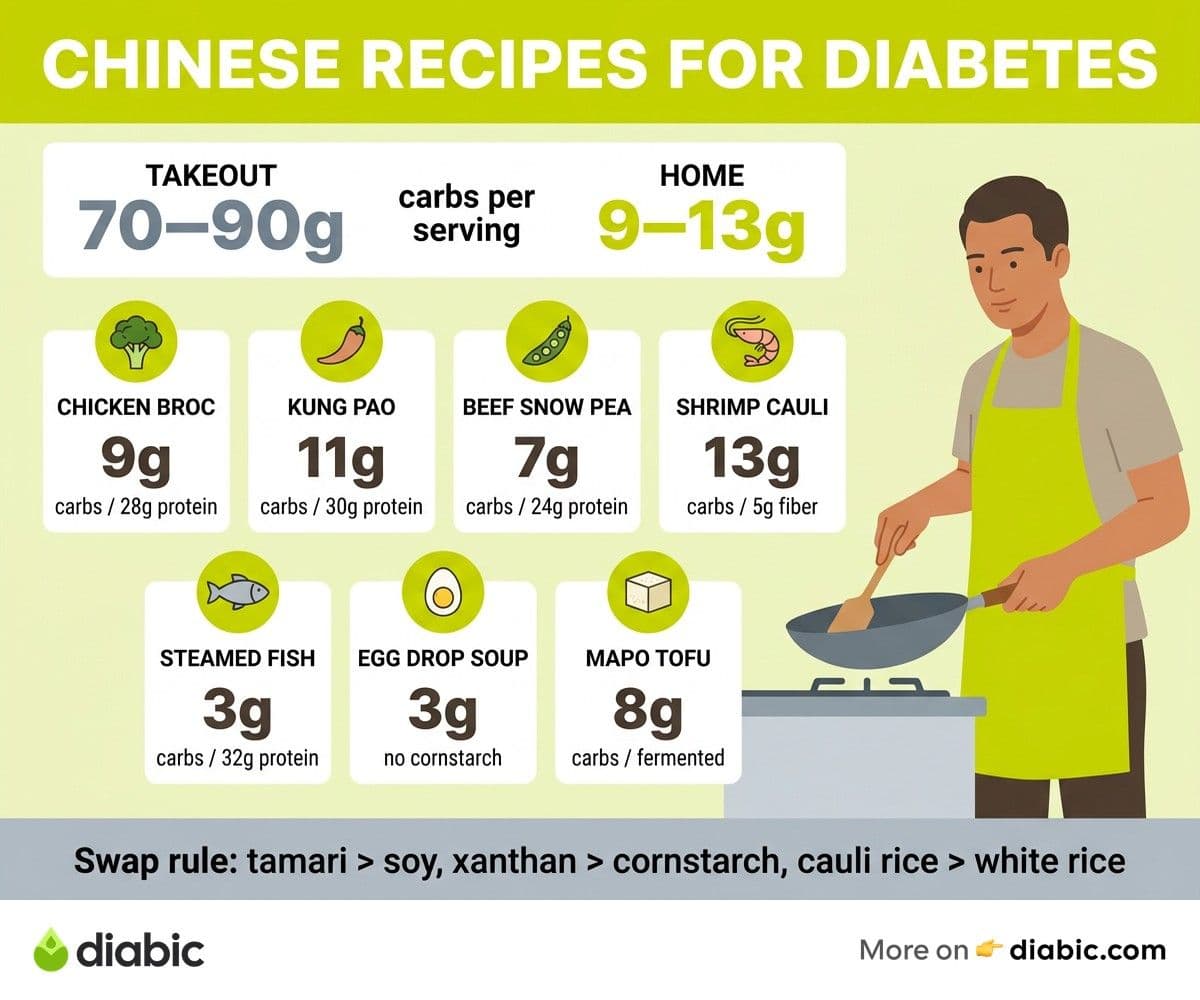
Restaurant Chinese food carries a hidden carb load that most people underestimate. A single serving of General Tso's chicken can deliver 70 to 90 grams of carbs from breading, sauce, and rice combined. Sweet and sour pork, orange chicken, and lo mein run similar numbers. The USDA's nutrition database shows added sugars stacked into nearly every signature sauce, often 8 to 12 grams per tablespoon. Pair that with two cups of white rice and you have a 100-gram carb meal before the spring roll.
Homemade gives you the dial. You decide how much oil, how much sauce, how much rice, and which sweetener (if any) goes in. You can keep the savory depth, the gloss, and the heat, while cutting the sugar by 80% or more. Most of the time, the homemade version tastes cleaner because the flavors are not buried under a thick sauce.
Stir-frying itself is one of the more diabetes-friendly cooking methods out there. High heat, small amounts of oil, fast cook times, and a default ratio that puts vegetables on equal footing with protein. If you have explored our broader Asian diabetes recipes guide, the same principles carry across Thai, Korean, Japanese, and Vietnamese cooking. Chinese cuisine just happens to be the one most Americans order from the most often.
From my experience: I grew up eating my grandmother's stir-fries, then spent a few years in college thinking the only "real" Chinese food was takeout. After my type 1 diagnosis, I went back to her style of cooking, less sauce, more vegetables, and a wok that does the talking. My post-meal numbers have never been steadier than when I cook this way at home.
Seven Chinese Recipes for Diabetes Worth Cooking
These seven recipes hit the most-ordered Chinese dishes and rework them for blood sugar. Each one tells you the why so you can adapt it to your own preferences and meal plan. They make solid diabetes-friendly dinner recipes any night of the week.
1. Chicken and Broccoli Stir-Fry
Slice 1 lb chicken breast or thigh into thin strips and toss with 1 tablespoon tamari and 1 teaspoon grated ginger. Heat 1 tablespoon avocado oil in a wok over high heat and sear the chicken in a single layer. Push to the side, add 4 cups broccoli florets and 2 minced garlic cloves, and stir-fry 3 minutes. Combine 2 tablespoons tamari, 1 tablespoon rice vinegar, 1 teaspoon sesame oil, 1 teaspoon monk fruit, and 1/4 teaspoon xanthan gum (instead of cornstarch). Pour over and toss for 30 seconds. Serves 4.
Per serving: roughly 9g carbs, 3g fiber, 28g protein. Why it works: classic chicken and broccoli is one of the better Chinese takeout choices to begin with, and the homemade version drops the sugar from the brown sauce while keeping the savory glaze.
2. Kung Pao Chicken (Low-Sugar Version)
Cube 1 lb chicken thigh and stir-fry in 1 tablespoon avocado oil with 4 minced garlic cloves, 1 tablespoon grated ginger, 4 dried red chiles, and 1 teaspoon Sichuan peppercorns. Add 1 diced bell pepper and 1 sliced zucchini. Combine 2 tablespoons tamari, 1 tablespoon black vinegar, 1 teaspoon sesame oil, and 1 teaspoon monk fruit. Pour over the pan, toss for 30 seconds, then top with 1/4 cup roasted unsalted peanuts. Serves 4.
Per serving: roughly 11g carbs, 3g fiber, 30g protein. Why it works: the takeout version builds heat on top of sugar. This one builds heat on top of vinegar and aromatics, which is closer to the original Sichuan dish anyway.
3. Beef with Snow Peas
Slice 12 oz flank steak thinly against the grain and marinate 15 minutes in 1 tablespoon tamari, 1 teaspoon rice vinegar, and 1 teaspoon ginger. Sear in 1 tablespoon avocado oil for 90 seconds, remove. Stir-fry 3 cups snow peas and 2 sliced scallions for 2 minutes. Return the beef with 2 tablespoons tamari, 1 teaspoon sesame oil, and 1/2 teaspoon monk fruit. Toss and serve. Serves 4.
Per serving: roughly 7g carbs, 3g fiber, 24g protein. Why it works: snow peas hold their crunch and add fiber, and the lean beef keeps protein high without the cornstarch coating that thickens (and sweetens) the takeout version.
4. Shrimp Fried Cauliflower Rice
Beat 3 eggs and scramble in 1 tablespoon sesame oil, set aside. Stir-fry 1 lb peeled shrimp in 1 tablespoon avocado oil for 2 minutes, set aside. Add 5 cups riced cauliflower, 1 cup frozen peas and carrots, 3 sliced scallions, and 2 minced garlic cloves to the pan. Cook 5 minutes, then return the eggs and shrimp with 2 tablespoons tamari and a few drops of toasted sesame oil. Serves 4. For more shellfish ideas, our shrimp recipes for diabetes roundup has six more.
Per serving: roughly 13g carbs, 5g fiber, 28g protein. Why it works: a cup of restaurant fried rice runs about 45g of carbs. Cauliflower rice cuts that to a third while keeping the texture, and shrimp cooks fast enough that the whole dish hits the table in 15 minutes.
5. Steamed Fish with Ginger and Scallions
Place a 1.5 lb whole white fish (or two 6-oz fillets) in a heatproof dish. Top with 2 tablespoons julienned ginger and 1/4 teaspoon salt. Steam over simmering water for 8 to 12 minutes, until the flesh flakes. Pour off any excess liquid. Top with 4 sliced scallions and 2 tablespoons cilantro. Heat 2 tablespoons avocado oil until shimmering and pour over the scallions (it will sizzle). Drizzle with 2 tablespoons tamari. Serves 2 to 3.
Per serving: roughly 3g carbs, 0g fiber, 32g protein. Why it works: this is the cleanest, most blood-sugar-friendly preparation in Cantonese cooking. Almost no carbs, high protein, and the kind of dish that feels celebratory without spiking glucose.
6. Egg Drop Soup
Bring 4 cups low-sodium chicken broth to a simmer with 1 teaspoon grated ginger and 2 sliced scallions. Whisk in 1/2 teaspoon white pepper, 1 tablespoon tamari, and 1/4 teaspoon xanthan gum (for body, instead of cornstarch). Slowly drizzle in 3 beaten eggs while stirring with a fork to make the classic ribbons. Add 1 cup baby spinach at the end. Serves 4.
Per serving: roughly 3g carbs, 1g fiber, 7g protein. Why it works: a comforting starter or light lunch with almost no carb impact. Most takeout versions thicken with a cornstarch slurry that adds 6 to 8 grams of carbs per cup.
7. Mapo Tofu (Mild)
Brown 8 oz ground turkey or pork in 1 tablespoon avocado oil with 4 minced garlic cloves, 1 tablespoon ginger, and 2 sliced scallions. Add 1 tablespoon doubanjiang (fermented broad bean paste, check the label for added sugar), 1/2 teaspoon Sichuan peppercorns, and 1 cup low-sodium chicken broth. Add 14 oz cubed silken tofu and simmer gently for 5 minutes. Finish with a teaspoon of sesame oil. Serves 4.
Per serving: roughly 8g carbs, 2g fiber, 18g protein. Why it works: tofu is naturally low-carb and high-protein, and the dish gets its complexity from fermented paste rather than sugar. Mapo tofu is one of the few Chinese recipes for diabetes that works equally well as a meatless main with extra tofu.
Chinese Cooking Tips for Blood Sugar
A few small habits make almost every Chinese recipe more diabetes-friendly. The ADA's eating out guide covers the restaurant side, but most of the same principles apply at home.
Use tamari or coconut aminos instead of regular soy sauce. Tamari is gluten-free and slightly less salty per teaspoon. Coconut aminos are sweeter and lower in sodium, which is helpful if blood pressure is also on your radar. Both give you the umami depth without the wheat.
Skip the cornstarch slurry, or use a small amount. Most home stir-fries do not need it. The vegetables release enough moisture, and a teaspoon of arrowroot or a pinch of xanthan gum gives you a glossy sauce without the carb hit. If you do use cornstarch, 1 teaspoon for a 4-serving dish is plenty.
Serve with cauliflower rice, shirataki noodles, or a small portion of brown or wild rice. Half a cup of brown rice runs about 22 grams of carbs, which fits most meal plans when paired with a vegetable-heavy stir-fry. The CDC's diabetes meal planning guide outlines how to balance grains, protein, and non-starchy vegetables on the plate to keep post-meal numbers in range. Cauliflower rice keeps carbs under 5 grams per cup. If you want to scout takeout-style options when cooking at home is not in the cards, our diabetic fast food options post covers the backup plan.
FAQ
What Chinese food can a person with diabetes eat?
Steamed or stir-fried dishes with lean protein and vegetables are the safest choices. Steamed fish, chicken and broccoli, beef with snow peas, egg drop soup, and stir-fried greens all work. Avoid breaded dishes (General Tso's, sweet and sour pork), heavy noodle dishes, and large portions of white rice. Order brown rice or skip rice entirely when possible.
Is Chinese takeout safe for people with diabetes?
It can be, with deliberate choices. Order steamed or stir-fried proteins with vegetables, ask for sauce on the side, and limit rice to half a cup or less. Skip the egg rolls, fried rice, and sweet glazed dishes. Making Chinese food at home gives you the most control over sugar, oil, and portion size, which is why we lean homemade most nights.
How do I make low-carb fried rice?
Replace white rice with riced cauliflower, riced broccoli, or shirataki rice. Use the same technique: scramble eggs first, set aside, stir-fry your vegetables and protein, then add the riced cauliflower last and finish with tamari and sesame oil. Cauliflower rice drops the carb count from about 45g per cup to under 5g.
Are Chinese sauces high in sugar?
Many bottled Chinese sauces are. Hoisin, sweet and sour, oyster sauce, plum sauce, and most stir-fry sauces carry 5 to 12 grams of added sugar per tablespoon. Tamari, rice vinegar, sesame oil, chili oil, fish sauce, and Chinese black vinegar are reliably low-carb staples. Read labels and look for under 2 grams of sugar per tablespoon, or build your own sauces from those base ingredients.
Chinese food at home, with a few sensible swaps, can be a regular part of a diabetes meal plan instead of a once-in-a-while indulgence. The Chinese recipes for diabetes in this guide are the ones we lean on when the takeout menu starts calling, and they hold up to repeat cooking. Pick one this week, see how your numbers respond, and let the rest follow.
Shahriar P. Shuvo is the founder of Diabic. He has lived with diabetes for over 14 years, and built Diabic to deliver the practical, evidence-based self-management tools he wished existed when he was first diagnosed. By trade, Shahriar is a senior design and frontend engineer with 6+ years shipping products at Agora, Timescale (now Tiger Data), and ShareTrip. He writes from the intersection of lived diabetes experience and product craft, focused on what works in daily management rather than what sounds good in a textbook.
Medically reviewed by
Dr. Rezwana Parvin Rumpa is an obstetrics and gynaecology specialist with clinical focus on gestational diabetes, PCOS, and fertility. She holds the MRCOG (Final Part) from the Royal College of Obstetricians and Gynaecologists in London, the MRCPI (Final Part) from the Royal College of Physicians of Ireland, and an MBBS from Shaheed Monsur Ali Medical College under Dhaka University. Dr. Rumpa serves as a Senior Medical Officer in the Obs and Gynae department at BRB Hospitals Ltd, where she has spent three years managing prenatal care, emergency obstetric cases, and women's-health surgery. On Diabic, she medically reviews content for women living with diabetes, with particular attention to pregnancy, PCOS, and reproductive-health intersections.
More from Diet & Fitness
View all
7 Sweet Potato Diabetes Recipes That Keep Blood Sugar Steady
Seven sweet potato diabetes recipes with balanced macros, plus the cooking methods and portion tips that keep this naturally sweet vegetable blood-sugar.

Diabetes Pasta Recipes That Won't Spike Blood Sugar
Five diabetes pasta recipes that keep blood sugar steady, plus the cooking trick and pasta swaps that lower glycemic impact for everyday meals.
8 Diabetes-Friendly Mexican Recipes With Bold Flavor
Eight Mexican diabetes recipes with full ingredient lists, nutrition context, and smart swaps for tortillas, rice, and cheese.
Clinician-reviewed habits, plain-language guides, and honest answers - the small shifts that make living with diabetes feel lighter, every day.