7 Sweet Potato Diabetes Recipes That Keep Blood Sugar Steady
Seven sweet potato diabetes recipes with balanced macros, plus the cooking methods and portion tips that keep this naturally sweet vegetable blood-sugar.

In this article(14)
Sweet potato diabetes recipes get a strange reputation. Some sources say to avoid sweet potatoes entirely because of their natural sugar, others put them on every meal-plan list. The honest answer is in the middle, where portion size, cooking method, and what you serve alongside matter more than the food itself.
A whole baked sweet potato with the skin on is a different food, glycemically, than mashed sweet potato with brown sugar and marshmallows. The seven recipes below make the most of what sweet potatoes do well, fiber, vitamin A, potassium, and a moderate glycemic load, while keeping the plate balanced for steady blood sugar.
Why Sweet Potatoes Work for Diabetes
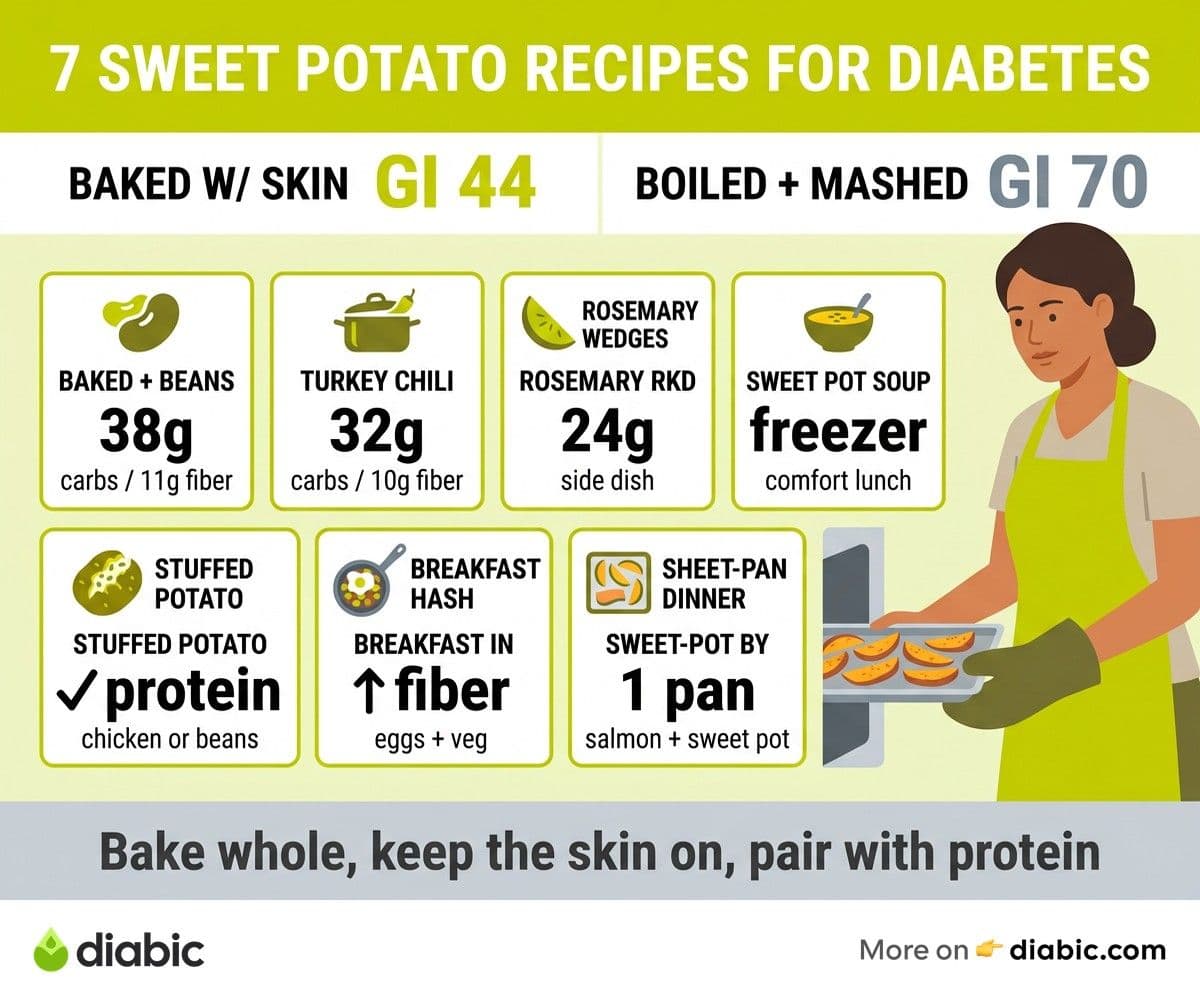
Sweet potatoes have a glycemic index in the moderate range, typically around 44 to 70 depending on how they are cooked. Boiled and mashed sweet potatoes sit at the higher end, while baked or roasted whole sweet potatoes with the skin tend to land lower. Fiber from the skin and flesh, around 4 grams per medium potato, slows digestion and softens the post-meal glucose curve.
The nutrition story goes beyond carbohydrate. According to the USDA nutrient database, a medium baked sweet potato delivers more than four times the daily value of vitamin A, plus potassium, vitamin C, and manganese. The CDC's diabetes meal planning page lists starchy vegetables like sweet potato among the foods to include in a diabetes meal plan when portioned thoughtfully and paired with protein and fat.
Three habits make sweet potatoes work for blood sugar. Bake them whole rather than peeling, dicing, and boiling. Keep the skin on for the fiber. Pair the portion with a real protein source and a generous serving of non-starchy vegetables. For more on framing meals this way, see our piece on a low glycemic diet for managing diabetes and our roundup of dinner recipes for diabetes where sweet potato shows up several times.
From my experience: After 14 years of living with diabetes and a lot of self-experimentation with my continuous glucose monitor, the difference between mashed sweet potato and a baked half-potato with the skin is striking. Mashed pushes my reading up about 40 mg/dL within an hour. The baked half, eaten with grilled chicken and a salad, barely moves the line. Same food, very different effect on the body.
7 Sweet Potato Diabetes Recipes That Work
These seven sweet potato diabetes recipes range from a 10-minute weeknight bowl to a hearty soup that feeds a crowd. Carb counts are approximate per serving and assume a measured sweet potato portion.
1. Baked Sweet Potato with Black Beans and Salsa
A 10-minute assembly meal once the potato is baked.
Ingredients (serves 2)
- 2 small sweet potatoes (about 6 oz each)
- 1 cup low-sodium black beans, warmed
- 1/2 cup fresh salsa
- 1/4 cup plain Greek yogurt
- 1/4 cup chopped cilantro
- 1 avocado, sliced
Instructions
- Bake potatoes at 400°F for 45 minutes until tender. Split open.
- Top with beans, salsa, yogurt, avocado, cilantro.
Why it works: Around 38 g carbs, 11 g fiber, 14 g protein. Beans add fiber and plant protein, yogurt swaps in for sour cream and adds another protein boost.
2. Sweet Potato and Turkey Chili
Freezer-friendly, family-friendly, and high in slow-release fiber.
Ingredients (serves 6)
- 1 lb 93% lean ground turkey
- 1 medium sweet potato, peeled and diced
- 1 onion, diced
- 1 bell pepper, diced
- 1 can (15 oz) low-sodium black beans
- 1 can (15 oz) low-sodium kidney beans
- 1 can (28 oz) crushed tomatoes
- 2 tbsp chili powder, 1 tsp cumin
- 2 tbsp olive oil
Instructions
- Brown turkey in olive oil, set aside. Sauté onion and pepper 5 minutes.
- Add sweet potato, spices, tomatoes, beans, and 1 cup water.
- Simmer 25 minutes until sweet potato is tender.
Why it works: Around 32 g carbs, 10 g fiber, 26 g protein. Beans and lean protein keep the meal balanced, and the chili reheats beautifully.
3. Roasted Sweet Potato Wedges with Rosemary
A side that tastes like a treat, paired well with chicken or fish.
Ingredients (serves 4)
- 2 medium sweet potatoes, cut into wedges
- 2 tbsp olive oil
- 1 tbsp fresh rosemary, chopped
- 1/2 tsp smoked paprika
- Salt and pepper
Instructions
- Toss wedges with oil, herbs, and spices.
- Roast at 425°F for 25 to 30 minutes, flipping once.
Why it works: Around 26 g carbs, 4 g fiber, 2 g protein per side serving. Olive oil and the moderate roast keep the glycemic impact more controlled than fries.
4. Sweet Potato and Lentil Soup
A one-pot dinner with built-in protein and fiber. If you love this style, our collection of diabetes soup recipes has more weeknight ideas.
Ingredients (serves 6)
- 1 cup dry red lentils, rinsed
- 1 medium sweet potato, peeled and diced
- 1 onion, diced
- 3 cloves garlic, minced
- 1 tbsp grated ginger
- 1 tsp cumin, 1 tsp turmeric
- 1 can (14 oz) light coconut milk
- 4 cups low-sodium vegetable broth
- 2 tbsp olive oil
- Juice of 1 lemon, fresh cilantro
Instructions
- Sauté onion, garlic, ginger in olive oil with spices, 5 minutes.
- Add sweet potato, lentils, broth, coconut milk. Simmer 25 minutes.
- Finish with lemon juice and cilantro.
Why it works: Around 34 g carbs, 9 g fiber, 13 g protein. Lentils provide steady protein and fiber that complement the sweet potato.
5. Mashed Sweet Potato with Cinnamon
A holiday-feel side without added sugar, suitable for diabetes casserole recipes built around lean protein.
Ingredients (serves 4)
- 2 medium sweet potatoes, peeled and cubed
- 2 tbsp olive oil or grass-fed butter
- 1 tsp cinnamon
- 1/4 tsp nutmeg
- 1/2 tsp salt
- 2 tbsp unsweetened almond milk
Instructions
- Steam cubes 12 minutes until very soft.
- Mash with oil, milk, and spices.
Why it works: Around 24 g carbs, 4 g fiber, 2 g protein. No added sugar, and a half-cup portion fits comfortably in a balanced plate.
6. Sweet Potato and Chicken Sheet Pan Dinner
The lowest-effort, highest-comfort dinner in the rotation.
Ingredients (serves 4)
- 1.5 lb chicken thighs, boneless and skinless
- 1 medium sweet potato, cubed
- 1 red onion, cut in wedges
- 2 cups Brussels sprouts, halved
- 3 tbsp olive oil
- 1 tbsp Dijon mustard
- 1 tsp dried thyme
- Salt and pepper
Instructions
- Heat oven to 425°F. Toss everything with oil, mustard, thyme, salt, and pepper on a sheet pan.
- Roast 28 to 30 minutes until chicken hits 165°F and vegetables are caramelized.
Why it works: Around 26 g carbs, 6 g fiber, 35 g protein. Sweet potato is balanced by a strong protein portion and a generous serving of low-carb Brussels sprouts.
7. Sweet Potato Breakfast Hash with Eggs
A weekend breakfast that holds blood sugar through the morning.
Ingredients (serves 4)
- 1 medium sweet potato, diced small
- 1 bell pepper, diced
- 1/2 onion, diced
- 1 cup baby spinach
- 4 eggs
- 2 tbsp olive oil
- 1/2 tsp paprika
- Salt and pepper
Instructions
- Sauté sweet potato in olive oil over medium heat, covered, 10 minutes until tender.
- Add pepper and onion, cook 5 minutes. Stir in spinach.
- Make four wells, crack eggs in, cover, and cook 4 to 5 minutes to desired doneness.
Why it works: Around 22 g carbs, 4 g fiber, 12 g protein. Eggs anchor the meal with steady protein and healthy fat, slowing the glucose response.
Tips for Cooking Sweet Potatoes for Blood Sugar
Cooking method changes how sweet potato hits your blood sugar more than most people expect, which is why it sits among the most studied low glycemic index foods for people with diabetes. A few small changes lower the glycemic impact without changing the comfort-food feel.
Bake whole rather than peeling and boiling. Boiling and mashing breaks down starches into more easily digested forms, while a baked-whole sweet potato keeps more of its structure intact. Keep the skin on whenever you can for the extra fiber, around two extra grams per medium potato. Stick to a measured portion, typically half a medium potato or about half a cup mashed, especially if you are layering it with another carb in the same meal.
Cooling and reheating cooked sweet potato also raises resistant starch, similar to the effect with pasta and rice. Sunday-baked sweet potatoes that get reheated through the week often produce gentler glucose curves than fresh-baked. Pair every serving with a real protein and some fat. The combination of fiber, protein, and fat is what keeps sweet potato from acting like a faster carb.
FAQ
Are sweet potatoes good for people with diabetes?
Yes, in moderate portions and prepared thoughtfully. Sweet potatoes have a lower glycemic index than white potatoes, especially when baked whole with the skin on, and they deliver fiber, vitamin A, and potassium. A half-cup to one-cup portion paired with a lean protein and non-starchy vegetables fits well in most diabetes meal plans. Watch your individual response with your meter or continuous glucose monitor, and talk to your doctor or dietitian about what works for you.
How to cook sweet potatoes for a person with diabetes diet?
Bake them whole with the skin on at 400°F for 40 to 50 minutes, or roast them as wedges with olive oil at 425°F. Add diced sweet potato to soups, stews, and chilis where the cooking liquid keeps the glycemic impact moderate. Avoid candied sweet potato recipes that pile on brown sugar, marshmallows, or maple syrup, since the added sugar dramatically changes the meal's blood sugar profile. Pair every serving with a protein source.
How much sweet potato can a person with diabetes eat?
A typical serving is about half a medium baked sweet potato or half a cup mashed, which provides roughly 15 to 20 grams of carbohydrate. The right portion depends on your individual carb targets for the meal, your activity level, and your medication. A registered dietitian can help fine-tune this for you.
Sweet potato deserves a place on the plate for most people with diabetes, not as a forbidden food and not as a free pass either. Treat it as a thoughtful carb, give it a real protein partner, and watch how your own body responds. The sweet potato diabetes recipes above are a starting point you can rotate through any week of the year, and the cooking habits you build with them carry over to the rest of your meal plan.
Shahriar P. Shuvo is the founder of Diabic. He has lived with diabetes for over 14 years, and built Diabic to deliver the practical, evidence-based self-management tools he wished existed when he was first diagnosed. By trade, Shahriar is a senior design and frontend engineer with 6+ years shipping products at Agora, Timescale (now Tiger Data), and ShareTrip. He writes from the intersection of lived diabetes experience and product craft, focused on what works in daily management rather than what sounds good in a textbook.
Medically reviewed by
Dr. Shanto Arian is an internal medicine physician now specializing in clinical and aesthetic dermatology, with a parallel academic focus on epidemiology and public health. He holds an MBBS, MPH, MSc (UK), MRCP (UK), MRCPI (Ireland), Diploma in Dermatology (UK), and Diploma in Aesthetic Medicine (USA). Dr. Arian trained in internal medicine, including hospital work on hematology cases such as graft-versus-host disease, before moving toward dermatology. Skin is one of the earliest places diabetes shows itself, from acanthosis nigricans and diabetic dermopathy to slow foot wound healing, and that intersection is where his clinical and Diabic-review work meet. On Diabic, Dr. Arian medically reviews content on diabetes diagnosis, complications, dermatologic manifestations, and pharmacotherapy, ensuring every claim aligns with current ADA, NICE, and peer-reviewed literature.
More from Diet & Fitness
View all
Diabetes Pasta Recipes That Won't Spike Blood Sugar
Five diabetes pasta recipes that keep blood sugar steady, plus the cooking trick and pasta swaps that lower glycemic impact for everyday meals.

Chinese Recipes for Diabetes That Taste Like Takeout
Chinese recipes for diabetes that recreate takeout favorites at home with low-sugar swaps, controlled portions, and stir-fries that keep blood sugar.

8 Diabetes-Friendly Mexican Recipes With Bold Flavor
Eight Mexican diabetes recipes with full ingredient lists, nutrition context, and smart swaps for tortillas, rice, and cheese.
Clinician-reviewed habits, plain-language guides, and honest answers - the small shifts that make living with diabetes feel lighter, every day.