Gestational Diabetes Vegetarian Meal Plan
A practical gestational diabetes vegetarian meal plan with balanced meals, protein-rich plant foods, and a sample day to keep blood sugar steady.

In this article(9)
A gestational diabetes vegetarian meal plan can feel like a puzzle at first. You're suddenly told to watch your carbs, hit higher protein targets, and keep your blood sugar steady, all without the easy fallback of chicken, fish, or beef. The good news is that plant-based eating and gestational diabetes management work well together when you build meals around the right foods.
Most of the worry comes from two places. The first is whether you'll get enough protein to support both your blood sugar and your growing baby. The second is whether vegetarian eating leans too heavily on bread, pasta, and rice, which can spike glucose. Both concerns are fair, and both have practical solutions you can put into place this week.
Why Vegetarian Eating Works for Gestational Diabetes
A well-built vegetarian pattern brings real advantages to gestational diabetes management. Plant proteins like lentils, tofu, and Greek yogurt come paired with fiber, which slows the rise of blood sugar after meals. The American Diabetes Association notes that plant-forward eating patterns can support healthy blood glucose levels and may even improve insulin sensitivity.
Fiber is the quiet hero here. Beans, vegetables, nuts, and whole grains all carry fiber that softens glucose spikes, supports digestion, and helps you feel full longer. That last part matters during pregnancy, when hunger waves can hit hard between meals.
The trap most vegetarians fall into is loading up on refined carbs. Pasta, white bread, crackers, and granola bars are easy to grab when meat is off the table. They digest fast and tend to push blood sugar higher than the same calories from a protein-and-vegetable plate. The fix is not to fear carbs, but to swap most refined ones for whole grains and pair them with protein and fat.
A vegan gestational diabetes meal plan follows the same principles but leans on tofu, tempeh, lentils, beans, nuts, and seeds for protein. With careful planning, it can meet pregnancy needs, though some women find it easier to include eggs and dairy for flexibility.
Building Your Gestational Diabetes Vegetarian Meal Plan
Every meal in a meal plan for pregnant women with gestational diabetes should anchor around three components: protein, fiber-rich vegetables or low-glycemic carbs, and healthy fats. That trio keeps blood sugar steady and supports the steady protein delivery your baby needs.
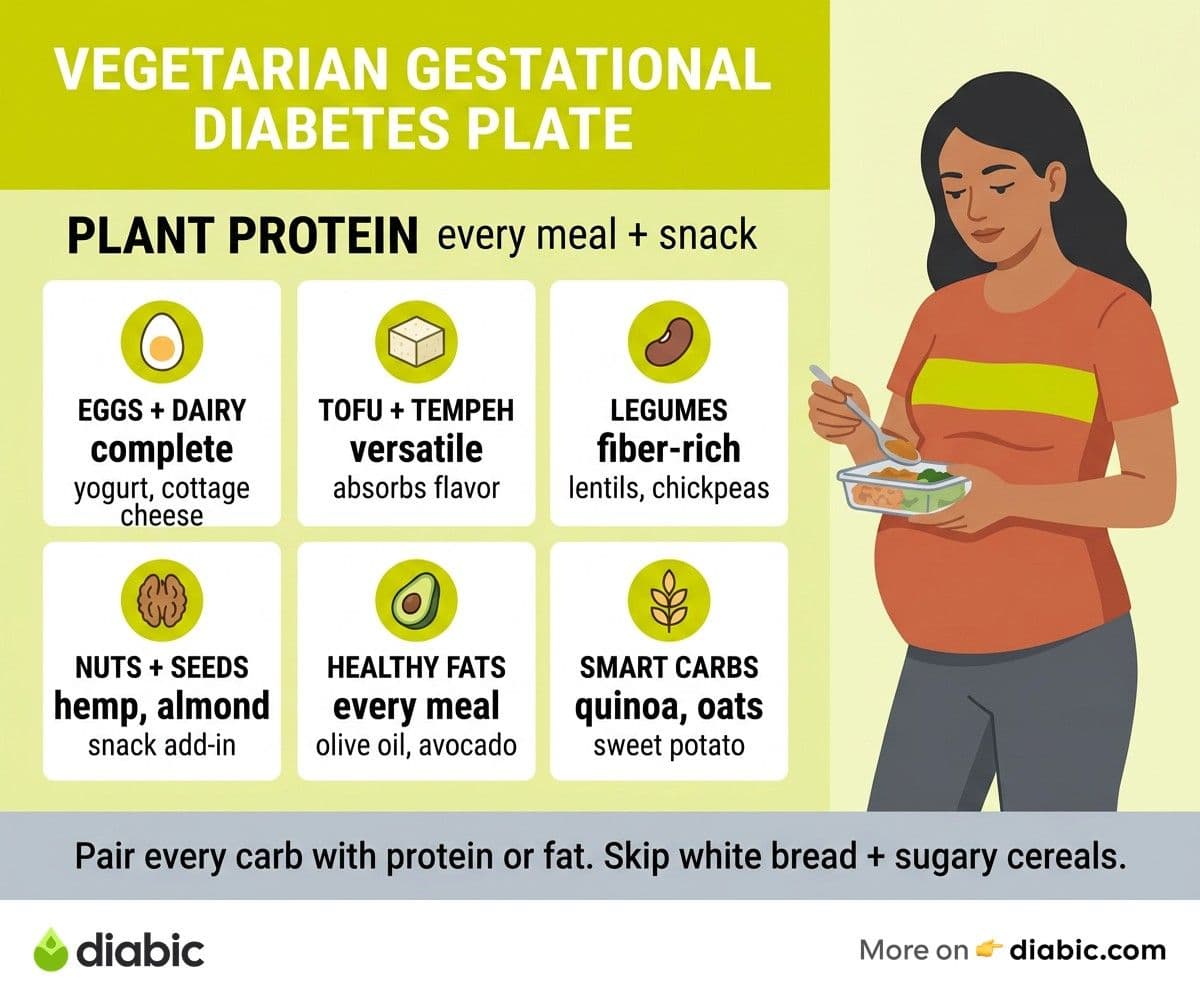
Protein sources that work well
- Eggs (one of the most complete plant-friendly proteins)
- Greek yogurt and cottage cheese, both higher in protein than regular yogurt
- Tofu and tempeh, which absorb whatever flavors you cook them with
- Lentils, chickpeas, and black beans
- Nuts and seeds, especially hemp seeds, pumpkin seeds, and almonds
Healthy fats to pair with meals
- Avocado on toast or in salads
- Olive oil for cooking and dressings
- Nut butters with apple or whole grain toast
- Tahini in dressings or on roasted vegetables
Smart carbs in controlled portions
- Quinoa, which carries protein along with the carbs
- Sweet potatoes for steady release energy
- Steel-cut or rolled oats with cinnamon and nuts
- Whole grain bread and tortillas, watched by portion size
A practical session of meal prep can lock in steady eating for the week. Roast a tray of vegetables, cook a pot of lentils, hard boil eggs, and prep cut produce. Our 7-day gestational diabetes meal plan shows how to build a full week with the same kind of structure, and the salad ideas in our diabetes salad recipes collection make easy lunches that pack protein and fiber. The NIH recommends a thoughtful approach to plant-based protein during pregnancy, especially for adequate amino acid coverage.
A Sample Vegetarian Day
Here's what a healthy meal plan for gestational diabetes might look like across a single day. Adjust portions to your blood sugar response and your dietitian's targets.
Breakfast (around 30g carbs) Scrambled eggs with sautéed spinach and a slice of sprouted-grain toast topped with a thin layer of avocado. The eggs and avocado slow the carbs from the toast, which keeps morning numbers in range when many women are most insulin resistant.
Mid-morning snack (around 15g carbs) A small bowl of plain Greek yogurt with a handful of walnuts and a sprinkle of cinnamon. Cinnamon adds flavor and a small blood-sugar-friendly bonus.
Lunch (around 45g carbs) A bowl of lentil soup with a side salad of mixed greens, cherry tomatoes, cucumber, and pumpkin seeds, dressed with olive oil and lemon. The lentils bring 18g of protein per cup, plus the fiber that helps post-lunch numbers.
Afternoon snack (around 15g carbs) Apple slices (half a medium apple) with two tablespoons of almond butter. Pair the natural sugar in the apple with the protein and fat in the almond butter to flatten the curve.
Dinner (around 45g carbs) Tofu stir-fry with broccoli, bell peppers, snap peas, and ginger over half a cup of brown rice. Use a sauce built around tamari, sesame oil, garlic, and a squeeze of lime, and skip pre-made sauces that hide added sugar.
Evening snack (around 15g carbs) A small slice of cheese with a few whole grain crackers, or half a cup of cottage cheese with sliced cucumber. Bedtime snacks help prevent overnight lows and keep morning numbers from rising too much. Our broader healthy diet for gestational diabetes guide explains why pairing protein with carbs at every meal matters so much during pregnancy.
From my experience: Living with diabetes for more than a decade taught me that a "plain" breakfast (toast and fruit on its own) almost always backfires on blood sugar. Adding eggs, nuts, or yogurt has been the single most reliable change I have made. The same logic applies during pregnancy, just with smaller portions and more steady timing.
Getting Enough Iron, Protein, and B12 as a Vegetarian
Pregnancy raises the bar for iron, protein, and vitamin B12. Vegetarians can meet these needs, but it takes a little extra planning.
Iron and absorption Plant iron (called non-heme iron) absorbs less easily than the iron in animal foods. Pair iron-rich plant foods like spinach, lentils, beans, and fortified cereals with a vitamin C source (bell pepper, citrus, strawberries, broccoli) at the same meal to boost absorption. Avoid pairing iron-rich meals with coffee or tea, which block absorption.
Protein combinations Most plant proteins are not "complete" on their own, but eating a variety across the day covers all essential amino acids. Combinations like rice and beans, hummus and whole grain pita, or lentil soup with bread give your body the full set without much effort. Greek yogurt, eggs, and quinoa already deliver complete proteins on their own.
Vitamin B12 and supplementation B12 only naturally comes from animal foods and fortified products. Vegetarians who eat dairy and eggs usually get enough, but vegans need a reliable B12 source from fortified cereals, plant milks, or a supplement. Iron supplementation is sometimes needed during pregnancy regardless of diet, especially in the third trimester. According to ACOG, prenatal vitamins help cover the nutritional gaps that food alone may not fill, but the right plan should come from your obstetrician or registered dietitian.
Talk to your healthcare provider about routine iron and B12 testing during pregnancy, especially if you've followed a vegetarian or vegan pattern for years. They can recommend specific supplements and dosing based on your bloodwork.
FAQ
Can you follow a vegetarian diet with gestational diabetes?
Yes. Vegetarian diets can work well for gestational diabetes when you focus on adequate protein from eggs, legumes, tofu, and dairy. The naturally high fiber content of plant-based diets is actually an advantage for blood sugar management. The main thing to watch is the temptation to lean too heavily on refined carbs like white bread, pasta, and crackers when meat is not on the plate.
What vegetarian foods are good for gestational diabetes?
Eggs, Greek yogurt, tofu, tempeh, lentils, chickpeas, nuts, seeds, avocado, and non-starchy vegetables are all excellent choices. Pair these with controlled portions of whole grains like quinoa, oats, and brown rice. Low-glycemic fruits like berries, apples, and pears fit well, especially with a protein or fat for company.
Is a vegan gestational diabetes meal plan safe during pregnancy?
A vegan plan can be safe and balanced when carefully built, but it requires more planning than a vegetarian one. You'll need to be intentional about protein variety, B12 supplementation, omega-3 sources (algae oil), and iron-rich meals paired with vitamin C. Work with a registered dietitian who has experience with both pregnancy and plant-based diets.
How much protein do vegetarians need with gestational diabetes?
Most pregnant women need around 70 to 100 grams of protein per day, with gestational diabetes guidance often pushing toward the higher end of that range. Spread protein across all meals and snacks rather than loading it into dinner. A bedtime snack with protein helps stabilize overnight blood sugar.
A gestational diabetes vegetarian meal plan does not have to feel restrictive when it's built around protein-rich plant foods, fiber, and steady portions. The first week is the hardest. After that, the pattern becomes second nature, and the numbers usually follow.
Dr. Rezwana Parvin Rumpa is an obstetrics and gynaecology specialist with clinical focus on gestational diabetes, PCOS, and fertility. She holds the MRCOG (Final Part) from the Royal College of Obstetricians and Gynaecologists in London, the MRCPI (Final Part) from the Royal College of Physicians of Ireland, and an MBBS from Shaheed Monsur Ali Medical College under Dhaka University. Dr. Rumpa serves as a Senior Medical Officer in the Obs and Gynae department at BRB Hospitals Ltd, where she has spent three years managing prenatal care, emergency obstetric cases, and women's-health surgery. On Diabic, she medically reviews content for women living with diabetes, with particular attention to pregnancy, PCOS, and reproductive-health intersections.
Medically reviewed by
Dr. Shanto Arian is an internal medicine physician now specializing in clinical and aesthetic dermatology, with a parallel academic focus on epidemiology and public health. He holds an MBBS, MPH, MSc (UK), MRCP (UK), MRCPI (Ireland), Diploma in Dermatology (UK), and Diploma in Aesthetic Medicine (USA). Dr. Arian trained in internal medicine, including hospital work on hematology cases such as graft-versus-host disease, before moving toward dermatology. Skin is one of the earliest places diabetes shows itself, from acanthosis nigricans and diabetic dermopathy to slow foot wound healing, and that intersection is where his clinical and Diabic-review work meet. On Diabic, Dr. Arian medically reviews content on diabetes diagnosis, complications, dermatologic manifestations, and pharmacotherapy, ensuring every claim aligns with current ADA, NICE, and peer-reviewed literature.
More from Diabetes Knowledge
View all
Can Diabetics Eat Fruit? Yes, Best Picks and Tips
Can people with diabetes eat fruit? Yes. Here is how to choose the right fruits, manage portions, and pair them smartly to keep blood sugar steady.

Newly Diagnosed Type 2 Diabetes: Where to Start
Newly diagnosed type 2 diabetes feels overwhelming, but the first steps are simpler than you think. Get a clear, calm starting plan from day one.

Secondary Diabetes: When Another Condition Is the Cause
Secondary diabetes develops because of another medical condition or medication. Learn the causes, how it differs from type 2, and how it's managed.
Clinician-reviewed habits, plain-language guides, and honest answers - the small shifts that make living with diabetes feel lighter, every day.