Diabetes Salad Recipes That Keep You Full
Six diabetes salad recipes built with protein, healthy fats, and fiber to keep you full for hours, plus easy homemade dressings and meal-building tips.

In this article(14)
Diabetes salad recipes get a bad reputation for being boring or leaving you hungry an hour later. The salads below are built differently. Each one stacks lean protein, healthy fats, and fiber-rich vegetables so the meal actually behaves like a meal, with steady blood sugar and real staying power.
A salad that keeps you full is not about volume. It is about composition. Get the four building blocks right and a bowl of greens turns into something you would actually want to eat for dinner.
How to Build a Salad That Keeps You Full
The base matters first. Hearty greens like kale, romaine, spinach, arugula, and shredded cabbage hold up to dressings and toppings without going limp. Iceberg has its place, but it does not carry weight in a meal-sized salad. Mixing two greens (say, baby spinach plus shredded romaine) gives you a better texture than either one alone.
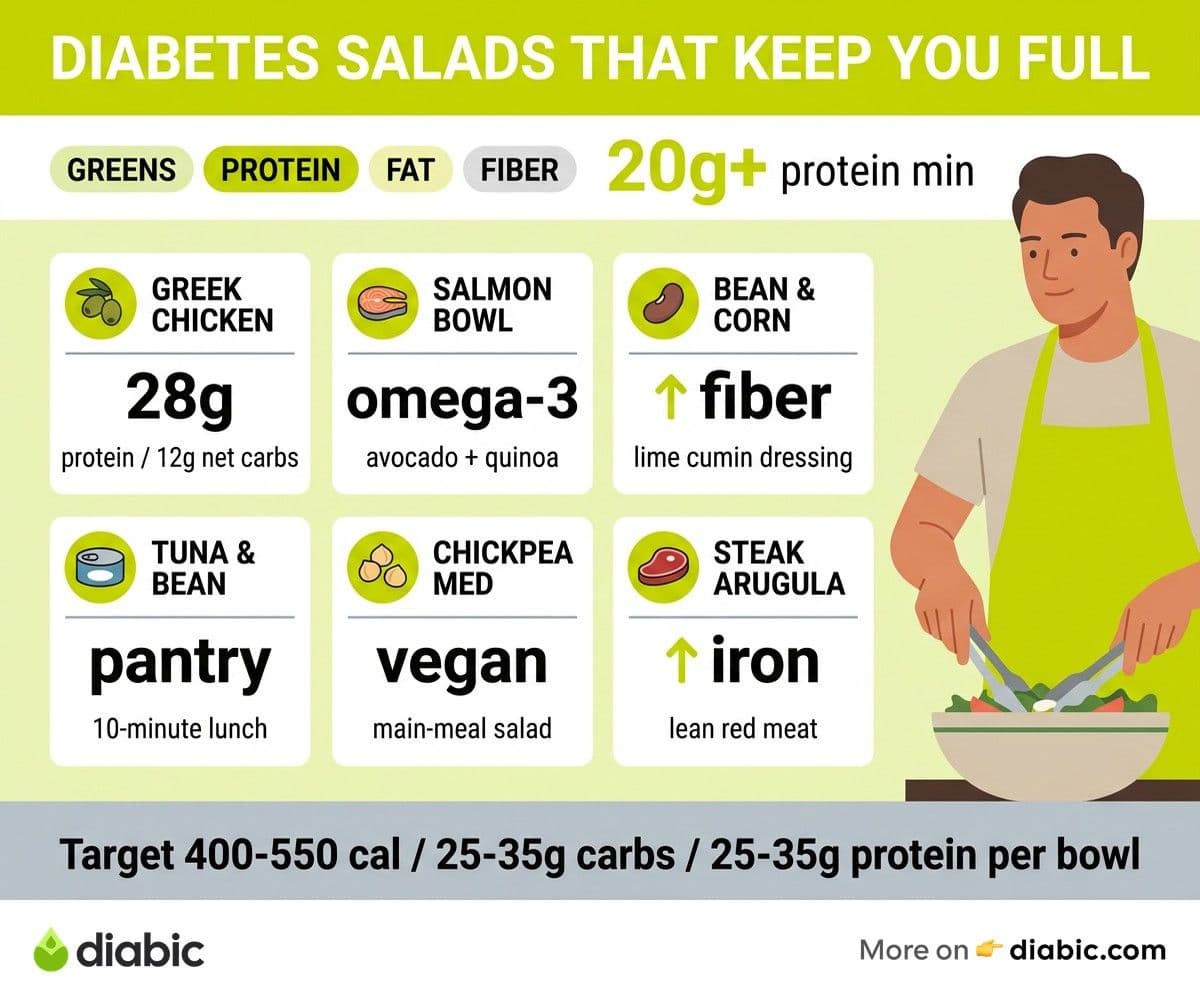
Protein is the second building block. A salad without meaningful protein is a side dish. Aim for at least 20 grams per bowl when the salad is your main meal. Grilled chicken, baked salmon, hard-boiled eggs, canned tuna, leftover steak, chickpeas, or lentils all work. Two of these in combination (eggs plus chickpeas, for example) cover both flavor and satiety.
Healthy fats are the third layer, and they do double duty. Avocado, extra-virgin olive oil, nuts, seeds, and a small amount of cheese add satisfaction and slow how quickly your body absorbs the carbs in the bowl. The American Diabetes Association healthy eating guidelines describe this as part of building a balanced plate, and it lines up cleanly with what registered dietitians teach.
Fiber boosters round out the formula. Beans, lentils, chia seeds, hemp seeds, ground flax, and small amounts of cooked quinoa add texture and slow digestion further. As the CDC's diabetes meal planning guide notes, eating carbs alongside protein, fat, or fiber slows down how quickly blood sugar rises. If you want a meal that holds you for four hours, this is where it happens. For more dinner ideas built on the same template, our collection of dinner recipes for diabetes extends the same logic to warm meals.
Filling Diabetes Salad Recipes Worth Putting on Repeat
These six recipes follow the four-block formula. Each is designed to land in the 400 to 550 calorie range with around 25 to 35 grams of net carbs, 25 to 35 grams of protein, and enough fat to keep you genuinely satisfied. Adjust portions to match your meal plan.
Greek Chicken Salad with Feta and Olives
Serves 1.
Ingredients: 3 cups chopped romaine, 4 oz grilled chicken breast (sliced), 1/2 cup cucumber (diced), 1/2 cup cherry tomatoes (halved), 1/4 small red onion (thinly sliced), 1/4 cup crumbled feta, 8 Kalamata olives, 1 tbsp extra-virgin olive oil, 1 tbsp red wine vinegar, 1/2 tsp dried oregano, salt and black pepper.
Instructions: Whisk olive oil, vinegar, oregano, salt, and pepper in the bottom of a large bowl. Add greens and toss to coat. Layer cucumber, tomatoes, onion, chicken, feta, and olives on top.
Why it works: Roughly 28 grams of protein, healthy monounsaturated fats from olive oil and olives, and only about 12 grams of net carbs. The fat-protein-fiber balance keeps post-meal glucose steady.
Salmon and Avocado Power Bowl
Serves 1.
Ingredients: 2 cups baby spinach, 1 cup chopped kale (massaged with a teaspoon of olive oil), 4 oz baked or pan-seared salmon, 1/2 avocado (sliced), 1/3 cup cooked quinoa (cooled), 2 tbsp pumpkin seeds, 1 tbsp lemon juice, 1 tbsp olive oil, salt and pepper.
Instructions: Massage kale with a small amount of olive oil to soften it. Combine kale and spinach, then top with quinoa, salmon, avocado, and pumpkin seeds. Whisk lemon juice, remaining olive oil, salt, and pepper, then drizzle over the bowl.
Why it works: Omega-3 fats from salmon, fiber from quinoa and seeds, and avocado's monounsaturated fats stretch satiety past the four-hour mark. It is also rich in magnesium and potassium.
Black Bean and Corn Salad with Lime Dressing
Serves 2.
Ingredients: 1 can (15 oz) black beans (drained and rinsed), 1 cup corn (frozen and thawed, or grilled), 1 red bell pepper (diced), 1/2 small red onion (diced), 1/2 cup cherry tomatoes (halved), 1 avocado (diced), 1/4 cup chopped cilantro, juice of 2 limes, 2 tbsp olive oil, 1 tsp ground cumin, salt and pepper. Optional: 1 jalapeno, finely diced.
Instructions: Combine all vegetables and beans in a large bowl. Whisk lime juice, olive oil, cumin, salt, and pepper, then pour over the salad. Toss gently. Best after sitting for 15 minutes.
Why it works: Black beans bring fiber and slow-digesting carbs, the avocado adds satisfying fat, and the lime-cumin dressing is bright enough that you do not miss the sugary store-bought versions. Use the apple cider vinegar recipes for diabetes collection if you want to swap in a vinegar-based dressing for an extra glycemic-response boost.
Tuna and White Bean Salad
Serves 2.
Ingredients: 2 cans (5 oz each) tuna in water (drained), 1 can (15 oz) cannellini beans (drained and rinsed), 1/4 red onion (thinly sliced), 1/2 cucumber (diced), 1 cup baby arugula, 2 tbsp capers, 3 tbsp olive oil, 2 tbsp lemon juice, 1 garlic clove (minced), salt and pepper.
Instructions: In a large bowl, gently fold tuna, beans, onion, cucumber, and capers. Whisk olive oil, lemon juice, garlic, salt, and pepper. Pour over salad and toss. Serve over arugula.
Why it works: Lean protein from tuna pairs with fiber-rich beans for serious staying power. Cannellini beans have a low glycemic load, and the lemon-olive oil dressing brings flavor without sugar.
Asian-Style Chicken Salad with Sesame Ginger Dressing
Serves 2.
Ingredients: 4 cups shredded napa or savoy cabbage, 1 cup shredded carrots, 1 red bell pepper (sliced thin), 6 oz cooked chicken breast (shredded), 1/4 cup sliced scallions, 2 tbsp sesame seeds, 1/4 cup chopped cashews. Dressing: 2 tbsp toasted sesame oil, 2 tbsp rice vinegar, 1 tbsp soy sauce or tamari, 1 tsp grated fresh ginger, 1 garlic clove (minced), 1/2 tsp Dijon mustard.
Instructions: Whisk all dressing ingredients. Toss cabbage, carrots, pepper, chicken, scallions, and sesame seeds with dressing. Top with cashews just before serving.
Why it works: A traditional Asian chicken salad is often loaded with sugary dressing and crunchy fried noodles. This version skips both, leaning on sesame oil and ginger for flavor while the cashews and chicken hold the meal together.
Quinoa Tabbouleh with Chickpeas
Serves 2.
Ingredients: 1 cup cooked quinoa (cooled), 1 can (15 oz) chickpeas (drained and rinsed), 1 cup chopped fresh parsley, 1/4 cup chopped fresh mint, 1 cucumber (diced), 1 cup cherry tomatoes (halved), 1/4 cup diced red onion, 3 tbsp olive oil, 3 tbsp lemon juice, salt and pepper. Optional: 1/2 cup crumbled feta.
Instructions: Combine quinoa, chickpeas, herbs, and vegetables in a large bowl. Whisk olive oil, lemon juice, salt, and pepper, then pour over salad. Toss thoroughly. Let sit 10 minutes before serving so flavors meld.
Why it works: A vegetarian option that does not skimp on protein, with about 15 grams per serving from the chickpeas and quinoa together. For more ways to use the grain, see our quinoa recipes for diabetes collection.
Diabetes-Friendly Salad Dressing Ideas
Bottled dressings are one of the sneakier sources of added sugar in a "healthy" meal. Reading labels matters here, but making your own is faster than most people think. Each of these makes enough for two to four salads.
Olive oil and lemon vinaigrette: 3 tbsp extra-virgin olive oil, 1 tbsp lemon juice, 1 tsp Dijon mustard, 1 small minced garlic clove, salt and pepper. Whisk and use immediately.
Greek yogurt ranch: 1/2 cup plain full-fat Greek yogurt, 2 tbsp olive oil, 1 tbsp lemon juice, 1 tsp dried dill, 1 tsp dried parsley, 1/2 tsp garlic powder, 1/2 tsp onion powder, salt and pepper. Thin with a splash of water if needed.
Tahini lemon dressing: 3 tbsp tahini, 2 tbsp lemon juice, 1 small minced garlic clove, 2 to 3 tbsp warm water, salt to taste. Whisk vigorously until smooth.
Balsamic reduction (use sparingly): Simmer 1/2 cup balsamic vinegar over low heat until reduced by half. Drizzle a teaspoon over salads. Real balsamic carries some natural sugar, so a little goes a long way.
What to skip: most bottled "light" dressings (often heavy on added sugar to compensate for less fat), honey mustard, French, Catalina, Thousand Island, and anything labeled "fat-free." Fat-free usually means sugar-added.
From my experience: after 14 years of managing diabetes, the meal-prep habit that has held up best is making one big jar of vinaigrette every Sunday. When the dressing is already made, building a real meal-sized salad takes five minutes. When it is not, the temptation to grab a bottle (or skip the salad entirely) wins more often than I would like to admit.
FAQ
What salads are good for people with diabetes?
Salads with a base of leafy greens topped with lean protein, healthy fats, and fiber-rich additions work best for steady blood sugar. Pair greens with chicken, fish, eggs, or beans, and add avocado, nuts, or seeds along with an olive oil-based dressing. The combination of protein, fat, and fiber slows carbohydrate absorption and keeps you full for several hours.
What salad dressing is best for people with diabetes?
Olive oil-based vinaigrettes, Greek yogurt-based dressings, and tahini-lemon dressing are all good choices. Avoid bottled dressings with added sugars, including most "light" or "fat-free" varieties. Making your own dressing takes a few minutes and gives you full control over the ingredients.
Can I eat salad every day with diabetes?
Yes. Eating a salad daily is fine and often beneficial, as long as you build it as a real meal with adequate protein and healthy fats rather than a small bowl of plain greens. Vary your protein, greens, and toppings to keep nutrition broad and meals interesting.
How do I make a salad keep me full longer?
Aim for at least 20 grams of protein per bowl, include a serving of healthy fat such as avocado or olive oil, and add fiber-rich extras like beans, lentils, or seeds. Skipping any one of those three components is the most common reason salads leave people hungry an hour later.
The thread running through these diabetes salad recipes is the same one that runs through any meal designed for steady blood sugar: protein, healthy fat, and fiber, in real portions. Once you have two or three favorites in rotation and a homemade dressing in the fridge, weeknight dinners get faster and more predictable, and your numbers usually settle into a friendlier range.
Shahriar P. Shuvo is the founder of Diabic. He has lived with diabetes for over 14 years, and built Diabic to deliver the practical, evidence-based self-management tools he wished existed when he was first diagnosed. By trade, Shahriar is a senior design and frontend engineer with 6+ years shipping products at Agora, Timescale (now Tiger Data), and ShareTrip. He writes from the intersection of lived diabetes experience and product craft, focused on what works in daily management rather than what sounds good in a textbook.
Medically reviewed by
Dr. Shanto Arian is an internal medicine physician now specializing in clinical and aesthetic dermatology, with a parallel academic focus on epidemiology and public health. He holds an MBBS, MPH, MSc (UK), MRCP (UK), MRCPI (Ireland), Diploma in Dermatology (UK), and Diploma in Aesthetic Medicine (USA). Dr. Arian trained in internal medicine, including hospital work on hematology cases such as graft-versus-host disease, before moving toward dermatology. Skin is one of the earliest places diabetes shows itself, from acanthosis nigricans and diabetic dermopathy to slow foot wound healing, and that intersection is where his clinical and Diabic-review work meet. On Diabic, Dr. Arian medically reviews content on diabetes diagnosis, complications, dermatologic manifestations, and pharmacotherapy, ensuring every claim aligns with current ADA, NICE, and peer-reviewed literature.
More from Diet & Fitness
View all
Simple Diabetes Exercise Routine for Beginners
A simple diabetes exercise routine for beginners with a 7-day plan, strength basics, and safety tips to help you move more without feeling overwhelmed.
Diabetes Friendly Smoothie Recipes: 5 No-Spike Picks
Five diabetes friendly smoothie recipes that balance protein, fat, and fiber to keep blood sugar steady. Includes a simple framework for building your own.

Can Exercise Prevent Diabetes? Research Says Yes
Can exercise prevent diabetes? Landmark studies show a 58% lower risk with regular activity. Here's how much you need and which workouts help most.
Clinician-reviewed habits, plain-language guides, and honest answers - the small shifts that make living with diabetes feel lighter, every day.