Healthy Diet for Gestational Diabetes
A healthy diet for gestational diabetes can keep blood sugar steady while nourishing you and baby. Practical meals, snacks, and craving fixes inside.

In this article(12)
A healthy diet for gestational diabetes does not have to be bland or restrictive. With the right approach, you can nourish both yourself and your baby while keeping blood sugar in a healthy range. The key is understanding which foods support steady energy throughout the day, not which ones to fear.
Pregnancy is already full of new rules, new appointments, and a lot of well-meaning advice. Adding a gestational diabetes diagnosis on top of that can feel like one more thing to learn at a moment when you have very little spare brainpower. We get it, and this guide keeps things practical so you can build meals that work in real life.
What a Healthy Diet for Gestational Diabetes Looks Like
A healthy diet for gestational diabetes during pregnancy is built around balance, not deprivation. At every meal, you want a source of protein, plenty of non-starchy vegetables, a measured portion of complex carbohydrates, and a little healthy fat. This combination slows digestion, blunts blood sugar spikes, and gives your baby a steady supply of nutrients.
According to the American Diabetes Association's nutrition guidance, spreading carbohydrates evenly across three meals and 2-3 snacks helps prevent the highs and lows that strain both you and your baby. Many people find their blood sugar tolerates carbs better at lunch and dinner than at breakfast, which is why morning meals often look more protein-forward.
The phrase "controlled portions" can sound scary, but in practice it usually means smaller servings of starches (about a half cup of cooked grains or starchy vegetables) paired generously with everything else on your plate. Our gestational diabetes diet guide walks through specific portions and timing in more detail. Tracking how different foods affect your numbers in the first week or two often reveals patterns you can lean on for the rest of pregnancy.
Why eating regularly matters
Skipping meals during pregnancy with gestational diabetes can backfire. Long gaps between food can lead to fasting glucose spikes the next morning and increased ketone production, which is something your care team will likely watch for. Aiming for a meal or snack every 2-3 hours keeps your energy and blood sugar more even.
A simple rhythm that works for many people is breakfast, mid-morning snack, lunch, afternoon snack, dinner, and a small bedtime snack with protein. The bedtime snack is especially helpful for steadying overnight blood sugar and morning fasting numbers.
Foods That Support a Healthy Pregnancy with Gestational Diabetes
A healthy diet for pregnancy diabetes still needs to cover all the nutritional bases of a typical prenatal eating plan. The good news is that the foods that support a healthy pregnancy almost always support stable blood sugar too, which simplifies things. Think of your shopping list as built around four nutrient groups your baby relies on.
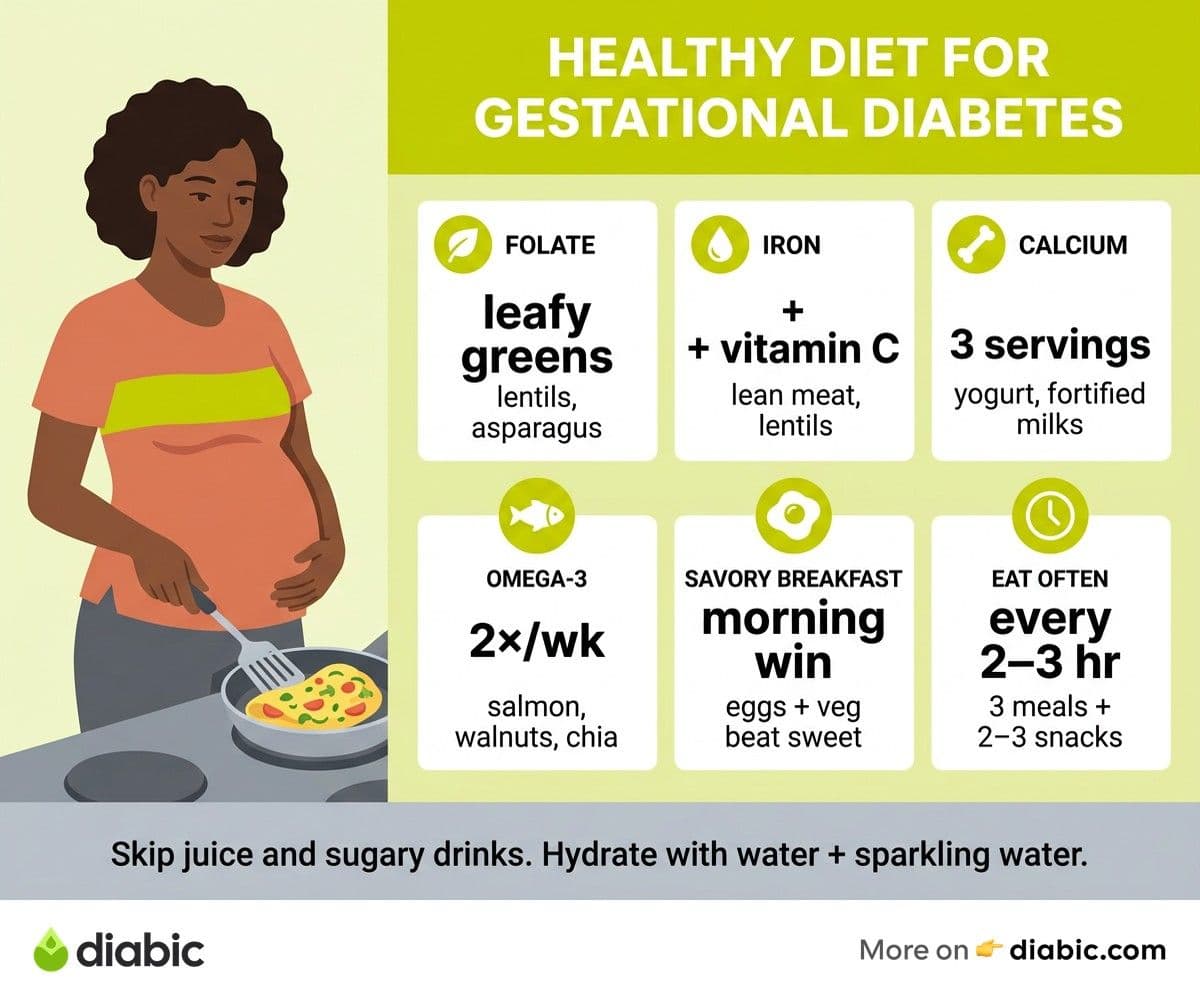
ACOG's prenatal nutrition recommendations emphasize folate, iron, calcium, and omega-3 fatty acids as priorities throughout pregnancy. Each of these has natural food sources that fit well into a gestational-diabetes-friendly plate.
- Folate: leafy greens like spinach and kale, lentils, black beans, asparagus, and fortified whole grains support healthy fetal development without spiking blood sugar.
- Iron: lean beef, chicken thighs, eggs, lentils, and pumpkin seeds help prevent the iron deficiency that pregnancy commonly causes. Pair plant iron sources with vitamin C (bell peppers, strawberries) for better absorption.
- Calcium: plain Greek yogurt, cottage cheese, fortified almond or soy milk, and canned sardines with bones offer calcium without added sugars.
- Omega-3 fatty acids: wild salmon, sardines, walnuts, and chia seeds support brain development and tend to keep you fuller longer.
Hydration matters too. Water, sparkling water, or unsweetened herbal teas (with provider clearance) help your body process glucose and ease the swelling many people experience in the third trimester. Sweet drinks, even 100% fruit juice, are usually best limited because the sugar hits the bloodstream quickly without the buffering effect of fiber and protein.
Building Healthy Meals for Gestational Diabetes
A healthy meal plan for gestational diabetes works best when it draws from foods you already enjoy. Forcing yourself to eat unfamiliar "diet foods" rarely sticks past the first week. Instead, look at your favorite meals and ask what one swap or addition would make them more blood-sugar friendly.
The plate method is a flexible framework many dietitians use with pregnant clients. Half the plate is non-starchy vegetables, a quarter is lean protein, and a quarter is a complex carbohydrate. Add a thumb of healthy fat (avocado, olive oil, nuts) and you have a balanced meal. Our overview of healthy diet rules for type 2 diabetes explains the same principles in a non-pregnancy context if you want a deeper look at the mechanics.
Breakfast ideas that combine protein and fiber
Mornings are tricky because pregnancy hormones make insulin resistance highest at this time of day. Heavy carb breakfasts (cereal, pastries, fruit smoothies on their own) often produce the biggest spikes. Try two scrambled eggs with sautéed spinach and a slice of sprouted whole-grain toast, or plain Greek yogurt with chia seeds and a small handful of berries.
Savory breakfasts often work better than sweet ones for gestational diabetes. A vegetable omelet with feta, leftover roasted vegetables on a bed of cottage cheese, or avocado toast with a fried egg can keep blood sugar steady through the morning.
Lunch options that travel well
Salads with grilled chicken, salmon, or chickpeas hold up nicely in a lunchbox and pack a balanced macro profile. Wraps made with a lower-carb tortilla and stuffed with turkey, hummus, and vegetables work for busy days at the office. Soup with beans or lentils plus a small whole-grain roll and a side salad is another go-to.
If you eat out, ask for sauces and dressings on the side, swap fries or chips for a salad or extra vegetables, and start with a protein-rich appetizer like a hard-boiled egg or a few nuts to take the edge off hunger.
Dinner recipes the whole family can enjoy
The best dinners are the ones that do not require cooking two meals. Sheet-pan salmon with broccoli and a small portion of roasted sweet potato. Stir-fried beef or tofu with bell peppers, snap peas, and a quarter cup of brown rice. Baked chicken thighs with a big green salad and a side of cauliflower mash.
If your household eats pasta or rice regularly, you can still join in by cutting your portion in half and bulking up your plate with extra vegetables and protein. A 7-day gestational diabetes meal plan lays out a full week of family-friendly options if you want a starting point you do not have to design yourself.
Navigating Cravings and Hunger During Pregnancy
Cravings are real, persistent, and rarely logical. Pregnancy hormones, blood sugar fluctuations, and changes in appetite can all drive intense urges for sweets, salty snacks, or specific comfort foods. A gestational diabetes diagnosis does not turn these off, and pretending otherwise is a recipe for frustration.
Mayo Clinic's gestational diabetes diet overview suggests planning for cravings rather than fighting them, which lines up with what most pregnancy dietitians recommend in practice. The trick is having satisfying alternatives ready before the craving hits at 9 p.m.
Healthy swaps that often work:
- Ice cream craving: plain Greek yogurt blended with frozen berries and a drop of vanilla extract, or a small portion (about a third of a cup) of real ice cream eaten alongside a handful of nuts.
- Salty/crunchy craving: roasted chickpeas, cucumber slices with hummus, or air-popped popcorn with olive oil and sea salt.
- Chocolate craving: a square of 85% dark chocolate paired with a few almonds, or a chia pudding made with cocoa powder and unsweetened almond milk.
- Bread/carb craving: sprouted whole-grain toast with avocado and salt, or a small bowl of oatmeal with cinnamon, walnuts, and a tablespoon of nut butter.
Snacks that satisfy without spikes follow a predictable pattern: protein plus fiber plus a little fat. Apple slices with peanut butter, cheese with whole-grain crackers, hard-boiled eggs with cherry tomatoes, or a handful of trail mix with no added sugar all work well between meals.
From my experience: After 14 years of living with diabetes, the single biggest lesson I would pass to anyone newly diagnosed with gestational diabetes is this, the diagnosis is loud, but your numbers will quiet down once you find a few meals that work for your body. You do not need a perfect plan. You need three or four breakfasts, lunches, and dinners that keep your post-meal numbers steady, and you can rotate them for the rest of pregnancy.
FAQ
What is a healthy diet for gestational diabetes during pregnancy?
A healthy gestational diabetes diet includes lean proteins, non-starchy vegetables, healthy fats, and controlled portions of complex carbohydrates at every meal. Eating three meals and 2-3 snacks throughout the day helps maintain stable blood sugar levels. The pattern most people settle into is protein-forward at breakfast, balanced plates at lunch and dinner, and protein-paired snacks in between.
Can you eat fruit with gestational diabetes?
Yes, fruit can be part of a healthy gestational diabetes diet. Choose lower-sugar fruits like berries, kiwi, and citrus, and pair them with a source of protein or fat (such as nuts, cheese, or yogurt) to slow the blood sugar response. Portion control matters more than avoidance. Most people tolerate one small serving of fruit at a time, and tracking your numbers will tell you which fruits work best for your body.
Is bread off-limits with gestational diabetes?
Bread is not off-limits, but the type and portion matter. Sprouted whole-grain bread, sourdough, or 100% whole-wheat bread paired with protein and fat tends to produce a gentler blood sugar response than white bread or sweet pastries. Many people find one slice with a meal works fine while two slices push their post-meal number higher than they want.
A healthy diet for gestational diabetes is less about a rigid list of "good" and "bad" foods and more about how you combine what you eat across the day. With balanced plates, regular meals, and a few craving-friendly swaps in your back pocket, most people find their numbers settle into a comfortable range within the first few weeks. Your care team and a registered dietitian who specializes in pregnancy can help you fine-tune the details for your specific situation.
Dr. Rezwana Parvin Rumpa is an obstetrics and gynaecology specialist with clinical focus on gestational diabetes, PCOS, and fertility. She holds the MRCOG (Final Part) from the Royal College of Obstetricians and Gynaecologists in London, the MRCPI (Final Part) from the Royal College of Physicians of Ireland, and an MBBS from Shaheed Monsur Ali Medical College under Dhaka University. Dr. Rumpa serves as a Senior Medical Officer in the Obs and Gynae department at BRB Hospitals Ltd, where she has spent three years managing prenatal care, emergency obstetric cases, and women's-health surgery. On Diabic, she medically reviews content for women living with diabetes, with particular attention to pregnancy, PCOS, and reproductive-health intersections.
Medically reviewed by
Dr. Shanto Arian is an internal medicine physician now specializing in clinical and aesthetic dermatology, with a parallel academic focus on epidemiology and public health. He holds an MBBS, MPH, MSc (UK), MRCP (UK), MRCPI (Ireland), Diploma in Dermatology (UK), and Diploma in Aesthetic Medicine (USA). Dr. Arian trained in internal medicine, including hospital work on hematology cases such as graft-versus-host disease, before moving toward dermatology. Skin is one of the earliest places diabetes shows itself, from acanthosis nigricans and diabetic dermopathy to slow foot wound healing, and that intersection is where his clinical and Diabic-review work meet. On Diabic, Dr. Arian medically reviews content on diabetes diagnosis, complications, dermatologic manifestations, and pharmacotherapy, ensuring every claim aligns with current ADA, NICE, and peer-reviewed literature.
More from Diabetes Knowledge
View all
6 Safe Dessert for Gestational Diabetes Recipes You Can
Six dessert for gestational diabetes recipes that satisfy your sweet tooth without spiking blood sugar, with carb counts and pairing tips you can use.

8 High Fiber Foods That Help with Prediabetes
Add these 8 high fiber foods for prediabetes to slow glucose absorption, support steady blood sugar, and meet the daily fiber target most people miss.

Mediterranean Diet for Prediabetes: A Practical Guide
The mediterranean diet for prediabetes is one of the best-studied eating patterns for prevention. Here is what to eat, what to avoid, and how to start.
Clinician-reviewed habits, plain-language guides, and honest answers - the small shifts that make living with diabetes feel lighter, every day.