Can Prediabetes Be Reversed? What Research Shows
Can prediabetes be reversed? For many people, yes. Here is what the science says about diet, exercise, timelines, and what works without medication.
In this article(12)
Can prediabetes be reversed? For many people, the answer is yes. A prediabetes diagnosis does not mean type 2 diabetes is inevitable. With the right changes, your blood sugar levels can return to a normal range, and the research behind this is more encouraging than most newly diagnosed patients realize.
About 1 in 3 American adults has prediabetes, and most of them do not know it. If you just got your diagnosis, take a breath. You are not behind, and you are not stuck. You are actually in one of the most actionable health windows you will ever face, and a lot of people walk back out of it.
What Prediabetes Reversal Actually Means
When we ask whether prediabetes can be reversed, we are really asking a more specific question: can blood sugar markers return to a non-prediabetic range and stay there? The answer is yes for many people, but it helps to be precise about what "reversal" means before we talk about how to do it.
Prediabetes is diagnosed when fasting glucose sits between 100 and 125 mg/dL, A1C falls between 5.7% and 6.4%, or an oral glucose tolerance test reads 140-199 mg/dL at the two-hour mark. Reversal means moving those numbers back below the prediabetes threshold. According to the American Diabetes Association's standards of care, this is achievable for a meaningful percentage of people who make sustained lifestyle changes.
Reversal is different from a "cure." The metabolic tendency that produced your prediabetes (insulin resistance, often combined with genetics and lifestyle factors) does not disappear. If you return to old habits, your numbers can drift back up. Think of reversal less like crossing a finish line and more like settling into a new rhythm that keeps your blood sugar in a healthy place.
Why early action matters
The window of opportunity is real. Research shows that the longer prediabetes goes unaddressed, the more strain accumulates on the pancreatic beta cells that produce insulin. Acting early (within the first year or two of diagnosis) tends to produce better outcomes than waiting until you are closer to a type 2 diabetes diagnosis.
Our prediabetes diet guide breaks down which foods help and which to limit if you want a structured starting point. The first 90 days of a new approach are usually when the biggest blood sugar improvements show up.
Can Prediabetes Be Reversed? The Evidence in Plain Terms
The most influential study on whether lifestyle changes can reverse prediabetes is the Diabetes Prevention Program (DPP), funded by the National Institutes of Health. Anyone wondering whether diet and exercise can really move the needle should know what this trial found, because it has shaped almost every clinical recommendation since.
The DPP study, published by the NIH, followed more than 3,000 adults with prediabetes across the United States. Participants were assigned to one of three groups: an intensive lifestyle change program, daily metformin (a common diabetes medication), or a placebo. The lifestyle group aimed for 7% body weight loss and 150 minutes of moderate exercise per week.
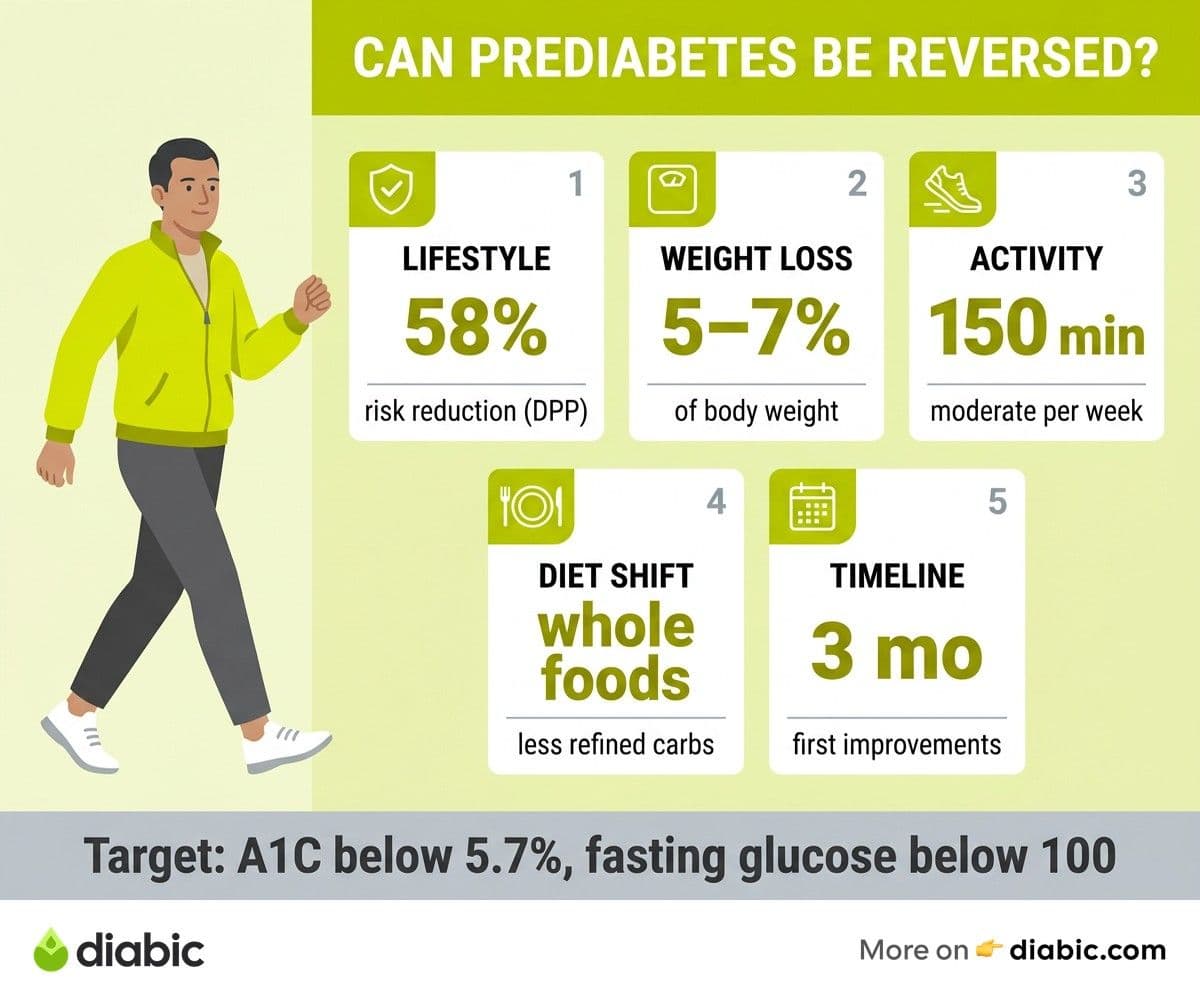
The results were striking. The lifestyle group reduced their risk of progressing to type 2 diabetes by 58% over three years. The metformin group reduced theirs by 31%. In other words, lifestyle changes outperformed medication. Follow-up data published years later in The Lancet showed the protective effect persisted over a decade later, even as the gap between groups narrowed.
For people exploring whether diabetes itself, not just prediabetes, can be improved through lifestyle, our breakdown on whether diabetes can be reversed by diet and exercise covers the more nuanced research on type 2 remission.
How 5-7% body weight loss changes outcomes
The DPP did not require dramatic weight loss. The target was 7%, which for someone weighing 200 pounds means about 14 pounds. That modest loss was enough to dramatically lower diabetes risk because of how visceral fat (the fat around your organs) interacts with insulin sensitivity.
Even a 5% loss produces measurable improvements in fasting glucose, A1C, and triglycerides for most people. If 7% feels far away, 5% is a useful first milestone, and many people find that the changes that get them to 5% are the same ones that carry them further.
Dietary Changes That Help Reverse Prediabetes
A diet for prediabetes that supports reversal is not about cutting out entire food groups. It is about shifting the balance of what you eat toward foods that feed steady energy and away from foods that drive insulin spikes. Most people find this shift easier than they expected once they have a few replacement meals dialed in.
The core moves are well established in the research. Prioritize whole foods (vegetables, beans, whole grains, lean proteins, nuts, seeds, fruit). Reduce refined carbohydrates, sugar-sweetened beverages, and ultra-processed snack foods. Add protein and healthy fats to every meal so your blood sugar rises and falls gently rather than sharply.
- Vegetables and fiber-rich foods at every meal: Aim for fiber from beans, lentils, oats, berries, and non-starchy vegetables. Fiber slows glucose absorption and feeds the gut bacteria that influence insulin sensitivity.
- Sugary drinks first to go: Soda, sweet tea, energy drinks, and most fruit juices deliver fast glucose with no buffering fiber or fat. This is often the single highest-uses swap a person can make.
- Refined carbs in smaller portions: White bread, white rice, pastries, and crackers are not banned, but they tend to drive bigger spikes than whole-grain alternatives. Smaller portions paired with protein and fat soften the impact.
- Protein and healthy fats at every meal: Eggs, fish, chicken, tofu, Greek yogurt, nuts, seeds, avocado, and olive oil keep you full and slow the blood sugar response.
Pairing dietary changes with even modest weight loss for prediabetes tends to produce the largest improvements in A1C and fasting glucose. Most clinical guidelines suggest the food changes happen first, with weight loss following naturally as a result.
From my experience: After 14 years of managing diabetes, I have watched dozens of friends and family members face a prediabetes diagnosis. The ones who do best are not the ones who go on a strict, all-or-nothing plan. They are the ones who change three or four daily habits (a different breakfast, a walk after dinner, water instead of soda, an earlier bedtime) and stick with those for months. Boring, but it works.
Exercise and Physical Activity for Prediabetes Reversal
Exercise is the other half of the equation, and the research on pre diabetes diet and exercise is strikingly consistent. The DPP target of 150 minutes of moderate activity per week is still the benchmark most clinical guidelines reference, including the CDC's National Diabetes Prevention Program. That breaks down to 30 minutes, five days a week, of something that gets your heart rate up.
You do not need a gym membership or a structured program to hit that number. Walking is one of the best-studied and most accessible options. A brisk 30-minute walk after dinner improves both fasting glucose and post-meal blood sugar, and the post-meal walk specifically has been shown to help insulin work more efficiently. If 30 minutes feels like a lot, start with 10 minutes after each meal, three short walks, same total benefit.
Strength training adds a separate layer of protection. Building muscle increases the storage capacity for glucose and improves insulin sensitivity in ways that pure cardio does not. Two short strength sessions per week (bodyweight movements at home count) is enough to see meaningful change in most adults.
Our combined pre diabetes diet and exercise plan walks through how to layer the two so they reinforce each other rather than competing for energy and time. The biggest mistake most people make is doing too much in week one and abandoning everything by week six. Start small, stay consistent.
Can exercise and diet reverse diabetes once it has progressed?
Once prediabetes has crossed into type 2 diabetes, the research uses the word "remission" rather than "reversal," and the path is harder. Studies like the DiRECT trial in the UK have shown that significant weight loss can put a meaningful percentage of people with type 2 diabetes into remission, especially within the first six years of diagnosis. The earlier you act, the better your odds, which is exactly why prediabetes is such a high-uses moment.
How Long Does It Take to Reverse Prediabetes
Timelines depend on starting point, age, genetics, and how consistent your changes are. Research and clinical experience point to a few rough markers most people can use to gauge progress.
At about 3 months, most people who consistently change their diet and add regular activity see their fasting glucose start to come down. A1C, which reflects roughly the previous three months of average blood sugar, often drops by 0.3 to 0.7 percentage points by this point. Energy and sleep usually feel different too, and clothes often fit a little looser even before the scale shows much change.
By 6 to 12 months, many people who hit the 5-7% weight loss target see their A1C and fasting glucose move out of the prediabetes range entirely. Long-term follow-up from the DPP and similar studies suggests that staying out of prediabetes is more about maintaining the new habits than hitting a specific endpoint.
How to track progress in a way that does not become obsessive:
- Get an A1C every 6 months while you are working on reversal, then yearly once you are stable.
- Note your fasting glucose if your provider runs it, and track the trend rather than any single number.
- Pay attention to non-scale signs: energy, sleep, clothing fit, walking pace, recovery after exercise. These often improve before the lab numbers do.
FAQ
How long does it take to reverse prediabetes?
Most research shows measurable improvements in blood sugar levels within 3 to 6 months of consistent lifestyle changes. Full reversal (returning to a normal glucose range) can take 6 months to 2 years depending on individual factors like starting weight, age, and activity level. The DPP study showed that meaningful risk reduction was visible within the first year of changes, and the protective effect persisted for a decade or more in people who maintained the new habits.
Can prediabetes be reversed without medication?
Yes. The Diabetes Prevention Program study showed that lifestyle changes alone (diet improvements plus 150 minutes of weekly exercise) reduced the risk of developing type 2 diabetes by 58%, outperforming metformin, which reduced risk by 31%. Lifestyle changes are the first-line recommendation in most clinical guidelines for that reason. Some people use metformin alongside lifestyle changes, particularly if they have additional risk factors, and that decision is best made with your provider.
Will my prediabetes come back if I stop the changes?
For most people, yes. Prediabetes reflects an underlying tendency toward insulin resistance, and the lifestyle changes that reverse it are the same changes that keep it from returning. Think of the new habits as ongoing, not as a temporary intervention. The good news is that once these patterns become familiar, they take less effort to maintain than they did to build.
A prediabetes diagnosis is one of the more responsive conditions in medicine. Can prediabetes be reversed? For many people, with consistent diet changes, regular movement, and a modest amount of weight loss, the answer is genuinely yes. Talk to your healthcare provider about a plan that fits your starting point, and give yourself a runway of months, not weeks, to see what your body can do.
Shahriar P. Shuvo is the founder of Diabic. He has lived with diabetes for over 14 years, and built Diabic to deliver the practical, evidence-based self-management tools he wished existed when he was first diagnosed. By trade, Shahriar is a senior design and frontend engineer with 6+ years shipping products at Agora, Timescale (now Tiger Data), and ShareTrip. He writes from the intersection of lived diabetes experience and product craft, focused on what works in daily management rather than what sounds good in a textbook.
Medically reviewed by
Dr. Shanto Arian is an internal medicine physician now specializing in clinical and aesthetic dermatology, with a parallel academic focus on epidemiology and public health. He holds an MBBS, MPH, MSc (UK), MRCP (UK), MRCPI (Ireland), Diploma in Dermatology (UK), and Diploma in Aesthetic Medicine (USA). Dr. Arian trained in internal medicine, including hospital work on hematology cases such as graft-versus-host disease, before moving toward dermatology. Skin is one of the earliest places diabetes shows itself, from acanthosis nigricans and diabetic dermopathy to slow foot wound healing, and that intersection is where his clinical and Diabic-review work meet. On Diabic, Dr. Arian medically reviews content on diabetes diagnosis, complications, dermatologic manifestations, and pharmacotherapy, ensuring every claim aligns with current ADA, NICE, and peer-reviewed literature.
More from Diabetes Knowledge
View all
7-Day Gestational Diabetes Meal Plan
A ready-to-use 7-day gestational diabetes meal plan with breakfast, lunch, dinner, snacks, and a grocery list to keep blood sugar steady all week.

Gestational Diabetes Diet: What to Eat
A gestational diabetes diet guide for pregnancy, covering foods to eat, foods to limit, meal structure, and practical tips for steady blood sugar.

Prediabetes Diet: What to Eat and Avoid
A complete prediabetes diet guide covering foods to eat, foods to limit, a sample day of meals, and the research that shows why food choices matter.
Clinician-reviewed habits, plain-language guides, and honest answers - the small shifts that make living with diabetes feel lighter, every day.