Low Glycemic Diet and Diabetes: What to Eat
A low glycemic diet and diabetes go together. See exactly which foods to eat, what to skip, and how to build steady-blood-sugar meals that actually taste.

In this article(27)
You stand in the cereal aisle holding two boxes, both labeled "heart healthy," and you have no idea which one will spike your blood sugar at 9 a.m. on a Tuesday. This is the daily friction of eating with diabetes, and it is exactly where a low glycemic diet starts to earn its keep.
A low glycemic diet and diabetes management work together because the glycemic index measures something that actually matters to you: how fast a food turns into blood sugar. Once you can read foods through that lens, the grocery store stops being a maze of conflicting health claims.
This guide breaks down what low GI really means in plain language, gives you a working list of foods to lean on, and shows how to build meals that keep glucose steady without making eating feel like a chemistry exam. We will also cover the common traps, like assuming watermelon is innocent because it is fruit.
What a Low Glycemic Diet Means for Diabetes
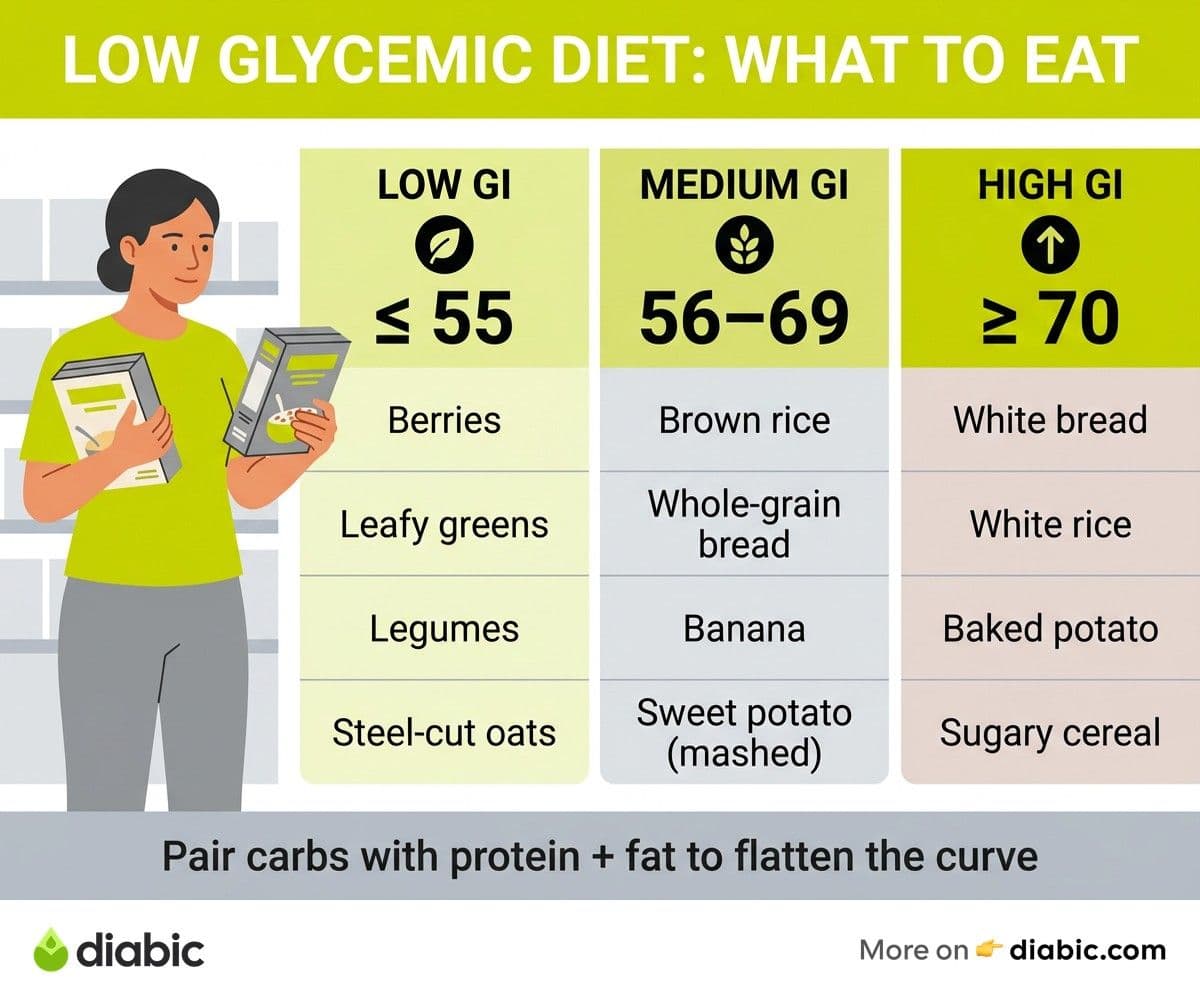
The glycemic index, or GI, is a 0 to 100 scale that ranks how quickly a carb-containing food raises blood glucose compared to pure glucose. Foods scoring 55 or below are low GI, 56 to 69 are medium, and 70 or above are high. A low GI food releases glucose slowly, which is why it tends to produce a gentler rise and a softer return to baseline.
For people with diabetes, that gentler curve is the whole point. Sharp post-meal spikes are tied to higher A1C, more glycemic variability, and over time, increased risk of complications. A low GI approach is one of the simplest food frameworks you can use to flatten those curves without counting every gram.
Why GI matters specifically for people with diabetes
When you eat a high-GI food, glucose floods your bloodstream quickly, your pancreas pushes out a large insulin surge, and the system overshoots. You crash, get hungry, and reach for more carbs. That cycle is rough on anyone, but for someone with insulin resistance or limited insulin production, it is a daily disruption to blood sugar stability.
Low GI eating slows the curve. Your post-meal glucose rises gradually, your insulin response is more measured, and you stay full longer. The American Diabetes Association recognizes that lower-GI eating patterns can support better glycemic outcomes, particularly when combined with overall carb awareness.
The difference between glycemic index and glycemic load
GI tells you how a fixed amount of carbohydrate (50 grams) from a food affects blood sugar. Glycemic load (GL) factors in how much you actually eat. Watermelon is famously high GI (around 76) but its serving has so few carbs that the glycemic load is low.
GL = (GI × grams of carbs in your serving) ÷ 100. Numbers under 10 are low GL, 11 to 19 are medium, 20 and above are high. Most people do not need to do this math at every meal. You just need to know that portion size matters even with low GI foods, and an "average serving" of a high-GI food can still be fine in context. For a deeper look at the eating patterns that pair well with this approach, our guide on insulin resistance diet foods covers the broader picture.
Low Glycemic Index Foods for people with diabetes: A Complete List
Here is the working list, organized by category. None of this is exhaustive, and GI values vary slightly by source, but these are the foods that consistently land in the low GI zone and deserve a regular place on your plate.
The Harvard glycemic index database is one of the most reliable references if you want to look up a specific food. We have cross-checked the foods below against it.
Vegetables
Most non-starchy vegetables are so low in carbs that GI is barely relevant. Leafy greens (spinach, kale, romaine, arugula), broccoli, cauliflower, peppers, tomatoes, cucumbers, zucchini, mushrooms, and asparagus all qualify as essentially free foods from a glycemic perspective.
Starchy vegetables vary. Sweet potato (especially boiled) tends toward medium GI. Carrots are often lower than people assume. White potato, especially baked or mashed, runs high GI, which is why pairing it with protein and fat matters.
Fruits
Berries (strawberries, blueberries, raspberries, blackberries) are the gold standard for diabetes-friendly fruit, low GI and high in fiber and polyphenols. Cherries, apples, pears, plums, peaches, and oranges all sit in the low GI range. Citrus fruits and small stone fruits make easy snacks.
Bananas vary by ripeness. A green-tipped banana sits around medium GI, while a fully ripe one climbs higher. Tropical fruits like ripe pineapple and mango trend higher, so smaller portions or pairing with protein helps.
Whole intact grains
Steel-cut oats and rolled oats (not instant), barley, bulgur, quinoa, farro, and wheat berries are all reliably low to medium GI. The processing matters more than people realize. Steel-cut oats sit around 55, while instant oats can climb past 75 because the grain is pre-cut and partially gelatinized.
Brown rice is medium GI, not low. Basmati rice is lower than jasmine. If rice is part of your culture and your meals, basmati cooked and cooled (then reheated) develops resistant starch that can lower its glycemic impact further.
Legumes
Lentils, chickpeas, black beans, kidney beans, and pinto beans are some of the lowest GI carb sources you can eat, generally between 25 and 35. They also pack fiber and plant protein, which is part of why a high-fiber diet and diabetes management track so closely. A cup of lentil soup or a chickpea salad is one of the easiest low-GI meals you can build.
Proteins and fats that support low-GI meals
Pure protein and fat have minimal direct glycemic impact, but they shape how your body handles the carbs alongside them. Eggs, fish, poultry, lean meat, tofu, tempeh, Greek yogurt (plain), cheese, nuts, seeds, avocado, and olive oil all slow gastric emptying and reduce the post-meal spike when paired with carbs.
This pairing principle is the most useful low-GI hack in real life. A piece of toast alone is a glucose event. The same toast with eggs and avocado is a meal.
How a Low Glycemic Diet and Diabetes Care Connect
A healthy diet for people with diabetes is not a single set of rules, but if you had to pick one organizing principle, glycemic response is among the best. The link between a low glycemic diet and diabetes care is mechanical: this approach changes the speed and shape of the glucose curve after eating.
If you want to see the curve in your own body, what happens to blood sugar after eating walks through what normal post-meal numbers look like and how to read your own response.
How low-GI foods slow glucose absorption
Three things in a food slow glucose absorption: fiber (especially soluble fiber), fat, and protein. Low-GI foods tend to be naturally rich in at least one of these. Fiber slows the rate at which carbs reach the intestinal wall. Fat slows stomach emptying. Protein triggers hormones that further regulate glucose handling.
This is why an apple raises blood sugar less than apple juice, even with similar carb content. The fiber matrix of the whole fruit changes everything about how your body sees that sugar.
Research on A1C improvements
A meta-analysis published in Diabetes Care and other peer-reviewed work has shown that low-GI dietary patterns can produce A1C reductions of roughly 0.3 to 0.5 percentage points compared to higher-GI patterns in people with type 2 diabetes. The effect is real, though smaller than what you might see from significant weight loss or medication changes.
Stack low-GI eating with adequate sleep, regular movement, and weight stability and the gains compound. This is why most diabetes nutrition experts treat low-GI eating as a foundational approach rather than a single intervention.
Benefits beyond blood sugar
Lower-GI patterns are associated with improved cholesterol profiles, lower inflammation markers, and better satiety, which often supports weight management. The energy curve also changes. Many people report fewer afternoon crashes and steadier focus when they shift toward low-GI breakfasts and lunches.
Building a Low-GI Meal Plan for Your Week
You do not need a meal plan to start eating low GI. You need a few reliable templates you can rotate. The point is to make the right choice the easy choice, especially on tired weeknights.
If you are also exploring lower-carb approaches, low-carb eating for diabetes covers how the two frameworks overlap and where they differ.
Sample breakfast ideas
Steel-cut oats cooked in milk with berries, walnuts, and a spoonful of Greek yogurt. Two eggs scrambled with spinach, half an avocado, and a slice of sourdough or whole-grain rye. Plain Greek yogurt with chia seeds, raspberries, and a sprinkle of granola made from rolled oats and nuts.
Skip the boxed cereals, instant oats, and white toast with jam. Even the "healthy" granolas from the supermarket often run high GI because of added sweeteners and refined grains.
Sample lunch and dinner ideas
Lentil soup with a side salad and olive oil dressing. Grilled salmon with quinoa and roasted broccoli. Chicken stir fry over basmati rice with plenty of vegetables. A grain bowl built on bulgur or barley with chickpeas, roasted vegetables, feta, and tahini.
The shared structure across all of these is the same: a low-GI carb base, a protein, plenty of vegetables, and a healthy fat. Build that plate and the math takes care of itself.
Snack swaps
High-GI snacks are easy to swap once you know the pattern. Pretzels become a small handful of almonds and an apple. A granola bar becomes plain Greek yogurt with berries. White rice cakes become sliced cucumber and hummus. Sugary drinks become sparkling water with a squeeze of lime.
Pairing high-GI foods to lower the load
You do not have to ban every high-GI food forever. If you want pasta, pair it with a protein-rich sauce, a generous side of vegetables, and a dressed salad first. The order of eating matters too. Multiple small studies have shown that eating vegetables and protein before the carbohydrate portion of a meal produces lower post-meal glucose than eating the same foods in reverse order.
Common Mistakes When Starting a Low Glycemic Diet
Most people who try a low GI approach and quit have hit one of three traps. The traps are fixable once you can see them clearly.
Assuming all "healthy" foods are low GI
Whole-wheat bread is often medium-to-high GI. Watermelon is high GI. Brown rice is medium. Instant oatmeal is high. Rice cakes, despite their wellness branding, are some of the highest GI foods on the chart. Health halo and glycemic index are different measures, and food marketers know which one sells.
The fix is to look up specific foods you eat often. The Mayo Clinic's overview of glycemic index is a sensible starting point, and Harvard's database covers most common foods.
Ignoring portion sizes
Glycemic load matters. A small serving of a high-GI food is often less impactful than a large serving of a medium-GI food. This is why a few bites of dessert with a meal usually behaves differently than a giant bowl on its own.
Use your hand as a quick portion guide. A cupped palm of carbs at most meals is a sensible default for most adults with diabetes, adjusted based on activity, medications, and your own glucose response.
Cutting too many foods at once
The fastest way to fail a low-GI diet is to throw out everything in your pantry on Sunday and try to eat completely differently by Monday. Diet changes that survive are usually built one swap at a time. Replace one breakfast first. Get comfortable. Then change one lunch. Then one snack.
Two months of gradual swaps will outlast two weeks of perfect eating, every time.
From my experience: Living with diabetes for 14 years has taught me that the best diet is the one you do not have to think about. When I switched from instant oatmeal to steel-cut and started keeping plain Greek yogurt and frozen berries on hand, my morning blood sugar dropped almost overnight, and I did not miss anything. The trick was making the low-GI option easier to grab than the old one. Once your environment is set up, willpower stops being the bottleneck.
FAQ
What foods are low glycemic for people with diabetes?
Low glycemic foods for people with diabetes include most non-starchy vegetables, legumes (lentils, chickpeas, black beans), nuts and seeds, plain Greek yogurt, whole intact grains like steel-cut oats and barley, and fruits such as berries, apples, cherries, and pears. These foods generally score 55 or below on the glycemic index. Proteins and fats like eggs, fish, chicken, olive oil, and avocado have minimal glycemic impact and help slow the absorption of carbs they are eaten alongside.
How does a low glycemic diet help with diabetes?
A low glycemic diet slows the release of glucose into the bloodstream, which prevents the sharp spikes and crashes that drive cravings and contribute to higher A1C over time. Research suggests that consistent low-GI eating can lower A1C by a fraction of a percentage point and reduce day-to-day glucose variability. The benefits extend beyond blood sugar to better satiety, more stable energy, and improved heart health markers.
Is a low glycemic diet the same as a low carb diet?
No, though they overlap. A low-carb diet reduces total carbohydrate intake regardless of source, while a low-GI diet focuses on the type and quality of the carbs you do eat. You can be low-carb without being low-GI (eating mostly meat and dairy) and you can be low-GI without being low-carb (eating lots of legumes, oats, and fruit). Many people with diabetes use a hybrid approach, moderating total carbs while choosing low-GI sources within that budget.
Can I eat fruit on a low glycemic diet?
Yes, with intention. Berries, cherries, apples, pears, plums, peaches, and citrus fruits are all low GI. Tropical fruits like ripe pineapple and mango run higher, and very ripe bananas climb into the medium-to-high range. Whole fruit is almost always a better choice than juice, and pairing fruit with a protein or fat (a handful of nuts, a piece of cheese, plain yogurt) further softens the glucose response.
A low glycemic diet and diabetes management together are not about perfection. They are about steady, repeatable choices that keep your blood sugar curve in a range your body can handle. Start with one meal, watch what your numbers do, and let the data teach you what works.
Shahriar P. Shuvo is the founder of Diabic. He has lived with diabetes for over 14 years, and built Diabic to deliver the practical, evidence-based self-management tools he wished existed when he was first diagnosed. By trade, Shahriar is a senior design and frontend engineer with 6+ years shipping products at Agora, Timescale (now Tiger Data), and ShareTrip. He writes from the intersection of lived diabetes experience and product craft, focused on what works in daily management rather than what sounds good in a textbook.
Medically reviewed by
Dr. Rezwana Parvin Rumpa is an obstetrics and gynaecology specialist with clinical focus on gestational diabetes, PCOS, and fertility. She holds the MRCOG (Final Part) from the Royal College of Obstetricians and Gynaecologists in London, the MRCPI (Final Part) from the Royal College of Physicians of Ireland, and an MBBS from Shaheed Monsur Ali Medical College under Dhaka University. Dr. Rumpa serves as a Senior Medical Officer in the Obs and Gynae department at BRB Hospitals Ltd, where she has spent three years managing prenatal care, emergency obstetric cases, and women's-health surgery. On Diabic, she medically reviews content for women living with diabetes, with particular attention to pregnancy, PCOS, and reproductive-health intersections.
More from Diet & Fitness
View all
Simple Diabetes Exercise Routine for Beginners
A simple diabetes exercise routine for beginners with a 7-day plan, strength basics, and safety tips to help you move more without feeling overwhelmed.
Diabetes Friendly Smoothie Recipes: 5 No-Spike Picks
Five diabetes friendly smoothie recipes that balance protein, fat, and fiber to keep blood sugar steady. Includes a simple framework for building your own.

Can Exercise Prevent Diabetes? Research Says Yes
Can exercise prevent diabetes? Landmark studies show a 58% lower risk with regular activity. Here's how much you need and which workouts help most.
Clinician-reviewed habits, plain-language guides, and honest answers - the small shifts that make living with diabetes feel lighter, every day.