8 Diabetes Soup Recipes You'll Want on Repeat
8 cozy diabetes soup recipes built for stable blood sugar, with carbs, fiber, and protein per bowl plus tips for making each one diabetes-friendly.

In this article(17)
A pot of soup is one of the kindest things you can do for a busy week. These diabetes soup recipes lean on broth, beans, lean protein, and non-starchy vegetables, which means most of them deliver steady carbs, plenty of fiber, and the kind of warmth that makes a Tuesday feel manageable.
Soup also forgives. You can swap vegetables based on what is in the fridge, batch cook on Sunday, and freeze portions for nights when cooking is the last thing you want to do. Pair any of these with a small side of greens or a slice of seeded bread and you have dinner.
From my experience: A pot of lentil soup on Sunday has saved my Tuesday-night blood sugar more times than I can count. With type 1 and a Dexcom on my arm, I can watch a bowl of broth-based bean soup land as a slow, gentle 40 mg/dL rise over two hours instead of the steep climb I get from takeout pad thai. The first time I noticed the difference on the CGM graph, around the winter of 2021, I started keeping freezer portions of two or three of these soups on rotation, and my evening numbers got noticeably steadier without much drama.
Why Soup Works for a person with diabetes Diet
Bowl-based meals make balanced eating almost automatic. Most diabetes recipes soup-style start with broth, get bulked up with non-starchy vegetables, and finish with a protein and a complex carb like beans, lentils, or barley. That combination is the same one the American Diabetes Association recommends for blood-sugar-friendly meals, built right into one pot.
Soup is also unbeatable for portion control. You can ladle out a measured cup or two, see exactly what is in your bowl, and skip the guesswork that comes with mixed casseroles or restaurant entrees. If you like one-pot dinners, our casserole recipes for diabetes follow the same principle.
The freezer is the other reason home cooks come back to soup. Most of the recipes below freeze well in single-serving containers, which means you are stocking yourself with future weeknight dinners every time you cook.
8 Diabetes-Friendly Soup Recipes
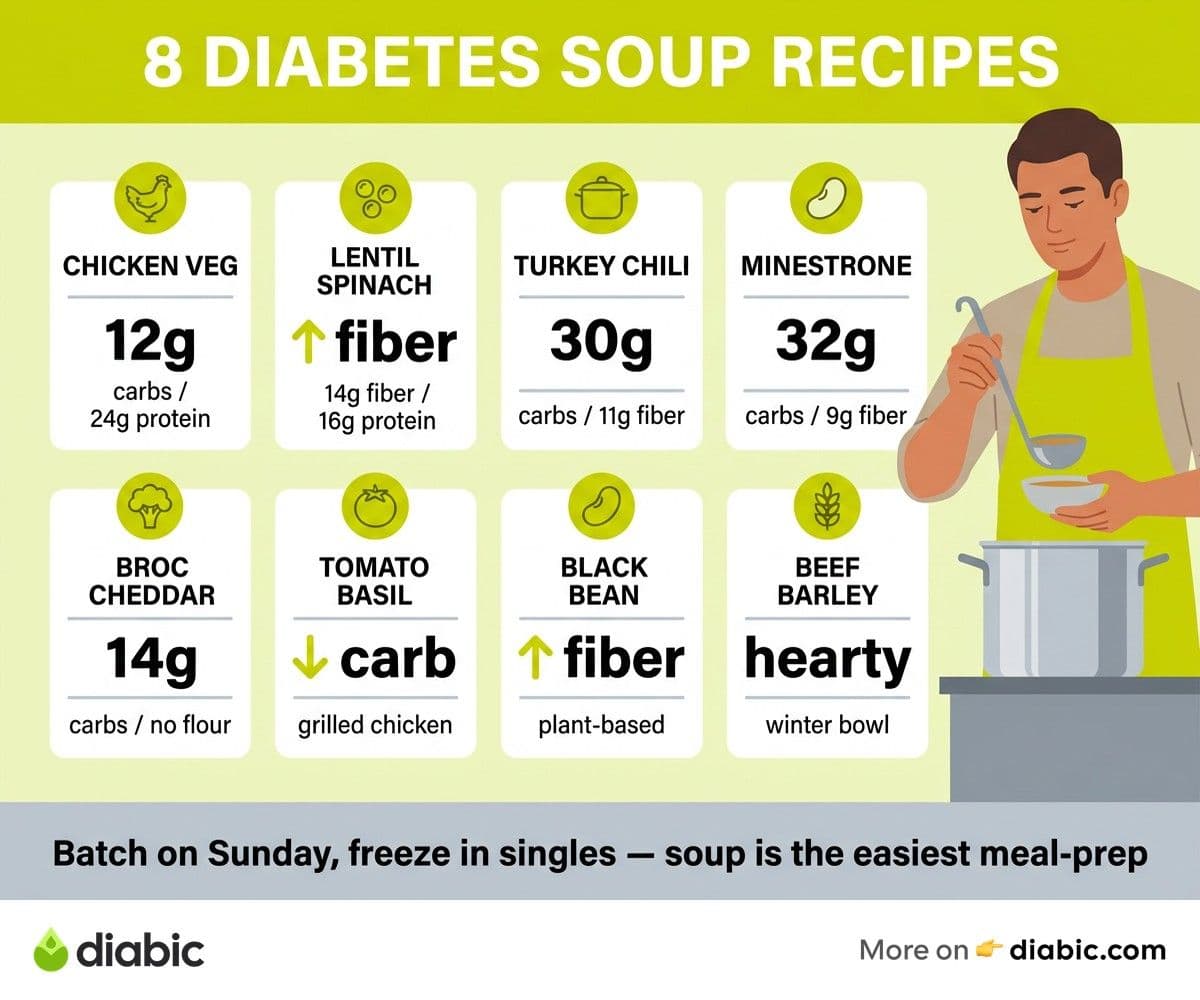
These diabetes soup recipes were chosen because they hit a sweet spot: balanced macros, real flavor, and reasonable prep time. Carb counts below are estimates per serving and will shift slightly based on the exact brands you use.
1. Chicken Vegetable Soup
A reliable starting point for almost any week. Lean protein, lots of vegetables, and a light broth keep it gentle on blood sugar.
Ingredients (serves 6): 1 lb boneless skinless chicken breast, 8 cups low-sodium chicken broth, 1 diced onion, 3 sliced carrots, 3 sliced celery stalks, 2 minced garlic cloves, 1 cup chopped green beans, 1 tsp dried thyme, 1 bay leaf, salt and pepper.
Instructions: Saute onion, carrot, and celery in a large pot for 5 minutes. Add garlic and cook 1 minute. Pour in broth, add chicken, thyme, and bay leaf. Simmer 20 minutes until chicken is cooked through. Shred chicken, return to pot, add green beans, and simmer 5 more minutes.
Per serving: ~180 calories, 12g carbs, 3g fiber, 24g protein. Why it works: high protein and low carbs mean minimal blood sugar impact, and the fiber from vegetables helps slow absorption.
2. Lentil and Spinach Soup
Lentils are a quiet superstar for blood sugar. They digest slowly thanks to their fiber and resistant starch.
Ingredients (serves 6): 1.5 cups dry green or brown lentils, 8 cups vegetable broth, 1 diced onion, 2 carrots, 2 garlic cloves, 1 can diced tomatoes, 4 cups baby spinach, 1 tsp cumin, 1 tsp smoked paprika, juice of half a lemon.
Instructions: Saute onion, carrot, and garlic 5 minutes. Add cumin and paprika, stir 30 seconds. Add lentils, broth, and tomatoes. Simmer 25 to 30 minutes until lentils are tender. Stir in spinach and lemon juice just before serving.
Per serving: ~240 calories, 38g carbs, 14g fiber, 16g protein. Why it works: the high fiber count blunts the carb spike, and lentils have a low glycemic index even at meaningful portions.
3. Turkey Chili
A weeknight classic that loads protein and beans into a single pot. Cumin and chili powder do most of the flavor work.
Ingredients (serves 6): 1 lb lean ground turkey, 1 onion, 1 bell pepper, 3 garlic cloves, 1 can no-salt-added kidney beans, 1 can black beans, 1 can fire-roasted tomatoes, 2 cups low-sodium broth, 2 tbsp chili powder, 1 tbsp cumin, 1 tsp oregano.
Instructions: Brown turkey in a pot, breaking it up. Add onion, pepper, and garlic, saute 5 minutes. Stir in spices, then beans, tomatoes, and broth. Simmer 25 minutes uncovered to thicken.
Per serving: ~310 calories, 30g carbs, 11g fiber, 28g protein. Why it works: protein-and-fiber-forward, with carbs almost entirely from beans, which have a gentler blood sugar curve than rice or pasta.
4. Minestrone with White Beans
A vegetable-forward Italian classic, swapping most of the pasta for extra beans.
Ingredients (serves 6): 1 onion, 2 carrots, 2 celery stalks, 3 garlic cloves, 1 zucchini, 1 cup green beans, 1 can no-salt diced tomatoes, 1 can cannellini beans, 6 cups vegetable broth, 1/2 cup whole-wheat ditalini pasta, 2 tbsp olive oil, 1 tsp oregano, 1 tsp basil, fresh parsley.
Instructions: Saute onion, carrot, and celery in olive oil 6 minutes. Add garlic and herbs. Pour in broth and tomatoes, simmer 10 minutes. Add zucchini, green beans, and cannellini, simmer 8 minutes. Add pasta, cook until just al dente, about 7 minutes. Top with parsley.
Per serving: ~220 calories, 32g carbs, 9g fiber, 10g protein. Why it works: keeping pasta to half a cup total spreads the carbs across six bowls, while beans and vegetables carry the volume.
5. Lightened-Up Broccoli Cheddar Soup
Most broccoli cheddar recipes are flour-and-cream bombs. This one keeps the flavor and skips the spike.
Ingredients (serves 4): 5 cups broccoli florets, 1 onion, 2 garlic cloves, 4 cups low-sodium chicken or vegetable broth, 1 cup low-fat milk, 1 cup shredded sharp cheddar, 2 tbsp olive oil, 1 tbsp Dijon mustard, salt and pepper.
Instructions: Saute onion and garlic in olive oil 5 minutes. Add broccoli and broth, simmer 12 minutes until tender. Blend half the soup until smooth, return to pot. Stir in milk, cheese, and Dijon over low heat until cheese melts. Do not boil.
Per serving: ~260 calories, 14g carbs, 4g fiber, 16g protein. Why it works: blending half the broccoli replaces the thickening role of flour, so carbs stay low while the soup still feels creamy.
6. Tomato Basil Soup with Grilled Chicken
A comfort-food classic upgraded with protein so it actually keeps you full.
Ingredients (serves 4): 2 cans no-salt diced tomatoes, 1 onion, 3 garlic cloves, 4 cups low-sodium broth, 1/2 cup low-fat milk or Greek yogurt, 1/4 cup fresh basil, 2 tbsp olive oil, 2 grilled chicken breasts (sliced).
Instructions: Saute onion and garlic in olive oil 5 minutes. Add tomatoes and broth, simmer 15 minutes. Blend until smooth. Stir in milk or yogurt off heat. Top each bowl with sliced grilled chicken and fresh basil.
Per serving: ~280 calories, 18g carbs, 4g fiber, 28g protein. Why it works: adding chicken transforms a carb-leaning starter into a balanced main, and the acidity of tomatoes pairs well with protein for slower digestion.
7. Black Bean Soup with Cumin
A pantry-friendly soup that comes together in 30 minutes.
Ingredients (serves 4): 2 cans no-salt black beans (drained), 1 onion, 1 bell pepper, 3 garlic cloves, 4 cups low-sodium broth, 1 tbsp cumin, 1 tsp smoked paprika, 1 tsp oregano, juice of 1 lime, 2 tbsp olive oil.
Instructions: Saute onion, pepper, and garlic in olive oil 5 minutes. Add spices, stir 30 seconds. Add beans and broth, simmer 15 minutes. Blend half the soup until smooth, return to pot. Finish with lime juice. Top with diced avocado or a dollop of plain Greek yogurt.
Per serving: ~290 calories, 40g carbs, 14g fiber, 16g protein. Why it works: black beans have a low glycemic index, and the high fiber per serving meaningfully slows the rise in blood sugar after eating.
8. Thai Coconut Shrimp Soup
A light, fragrant soup that feels indulgent without the carb load of pad thai.
Ingredients (serves 4): 1 lb shrimp (peeled, deveined), 1 can light coconut milk, 4 cups low-sodium chicken broth, 1 tbsp red curry paste, 1 cup sliced mushrooms, 1 cup snap peas, 1 small red bell pepper, 2 garlic cloves, 1 tbsp grated ginger, juice of 1 lime, fresh cilantro and basil.
Instructions: Simmer broth, coconut milk, curry paste, garlic, and ginger 5 minutes. Add mushrooms and bell pepper, simmer 4 minutes. Add shrimp and snap peas, cook 3 minutes until shrimp turns pink. Finish with lime juice and fresh herbs.
Per serving: ~260 calories, 11g carbs, 3g fiber, 26g protein. Why it works: shrimp is almost pure lean protein, and the light coconut milk gives richness without flooding the bowl with carbs.
For more weeknight ideas to rotate alongside these, browse our dinner recipes for diabetes and chicken recipes for diabetes.
Tips for Keeping Diabetes Soup Recipes Blood-Sugar Friendly
A few small habits keep these recipes working in your favor over time. The first is choosing broth-based soups over cream-based as the default. Cream soups can fit, but they need a careful hand with portions and pairing.
Watch sodium, especially with canned ingredients. The USDA's Dietary Guidelines recommend keeping sodium under 2,300 mg per day for most adults, and a single bowl of store-bought soup can blow through more than a third of that. Use low-sodium or no-salt-added broths and beans whenever possible, and salt to taste at the end of cooking.
Load up on non-starchy vegetables like spinach, zucchini, mushrooms, peppers, and green beans. They add volume, fiber, and nutrients without adding meaningful carbs, and Mayo Clinic's chart of high-fiber foods is a useful reference if you want to swap in higher-fiber options pot by pot. If your soup feels light, more vegetables almost always solve it.
Skip or reduce starchy add-ons. Crackers, white bread, and croutons can quickly turn a balanced bowl into a blood sugar spike. If you want crunch, a small serving of whole-grain crackers or a slice of seeded bread is a friendlier choice.
Add protein to every pot. Chicken, turkey, fish, beans, lentils, tofu, or eggs (yes, eggs) help slow digestion and stretch satiety. A bowl with at least 15 to 20 grams of protein tends to keep blood sugar steadier in the hours after eating.
FAQ
What soups are good for people with diabetes?
Broth-based soups built around non-starchy vegetables, lean protein, and legumes are the strongest choices. Lentil soup, chicken vegetable soup, bean chili, minestrone, and clear chicken soups are all reliable. Cream-heavy soups, soups loaded with white pasta or white rice, and very salty canned options are worth limiting.
Can people with diabetes eat soup every day?
Yes, soup can be a daily habit for most people with diabetes, especially when you vary ingredients and watch sodium. Homemade soup gives you the most control over carbs, fiber, and salt. The key is rotating recipes so you get a wide range of nutrients across the week.
Are canned soups okay for diabetes?
Some canned soups work, but read labels carefully. Look for at least 8 grams of protein per serving, less than 600 mg of sodium, and ideally 3 or more grams of fiber. Lentil, bean, and chicken-and-vegetable canned soups tend to be safer bets than cream-based or noodle-heavy options.
Do soups raise blood sugar?
It depends on what is in the bowl. Cream-based, noodle-heavy, or rice-heavy soups can raise blood sugar quickly. Broth-based soups built on vegetables, legumes, and protein usually produce a slow, steady rise that is easier to manage.
Can soup help with weight management?
Research suggests broth-based soups may help with satiety because they combine high water content with fiber and protein. That can support steadier energy and fewer cravings between meals. Talk to your doctor or a registered dietitian about how to fit soups into a meal plan that works for your goals.
A pot of one of these diabetes soup recipes on Sunday afternoon means three or four nights of dinner already handled. That is the kind of small win that adds up across a year of managing diabetes, one bowl at a time.
Shahriar P. Shuvo is the founder of Diabic. He has lived with diabetes for over 14 years, and built Diabic to deliver the practical, evidence-based self-management tools he wished existed when he was first diagnosed. By trade, Shahriar is a senior design and frontend engineer with 6+ years shipping products at Agora, Timescale (now Tiger Data), and ShareTrip. He writes from the intersection of lived diabetes experience and product craft, focused on what works in daily management rather than what sounds good in a textbook.
Medically reviewed by
Dr. Shanto Arian is an internal medicine physician now specializing in clinical and aesthetic dermatology, with a parallel academic focus on epidemiology and public health. He holds an MBBS, MPH, MSc (UK), MRCP (UK), MRCPI (Ireland), Diploma in Dermatology (UK), and Diploma in Aesthetic Medicine (USA). Dr. Arian trained in internal medicine, including hospital work on hematology cases such as graft-versus-host disease, before moving toward dermatology. Skin is one of the earliest places diabetes shows itself, from acanthosis nigricans and diabetic dermopathy to slow foot wound healing, and that intersection is where his clinical and Diabic-review work meet. On Diabic, Dr. Arian medically reviews content on diabetes diagnosis, complications, dermatologic manifestations, and pharmacotherapy, ensuring every claim aligns with current ADA, NICE, and peer-reviewed literature.
More from Diet & Fitness
View all
7 Sweet Potato Diabetes Recipes That Keep Blood Sugar Steady
Seven sweet potato diabetes recipes with balanced macros, plus the cooking methods and portion tips that keep this naturally sweet vegetable blood-sugar.

Diabetes Pasta Recipes That Won't Spike Blood Sugar
Five diabetes pasta recipes that keep blood sugar steady, plus the cooking trick and pasta swaps that lower glycemic impact for everyday meals.
Chinese Recipes for Diabetes That Taste Like Takeout
Chinese recipes for diabetes that recreate takeout favorites at home with low-sugar swaps, controlled portions, and stir-fries that keep blood sugar.
Clinician-reviewed habits, plain-language guides, and honest answers - the small shifts that make living with diabetes feel lighter, every day.