Can Diabetes Be Reversed by Diet and Exercise?
Can diabetes be reversed by diet and exercise? Learn what remission really means, what the research shows, and how lifestyle changes can shift type 2.

In this article(8)
Few questions land in our inbox more often than this one: can diabetes be reversed by diet and exercise? It is a hopeful question, and for many people with type 2 diabetes the honest answer is more encouraging than the headlines suggest. The word "reversal" is doing a lot of work, though, and the details matter.
What researchers and clinicians actually talk about is remission, not a permanent cure. Remission means blood sugar has returned to a non-diabetic range without medication, and lifestyle changes have made it possible. That distinction shapes everything that follows in this article, including what to expect, what works, and how to set goals you can live with.
What Diabetes Reversal Actually Means
When people ask if you can exercise and diet reverse diabetes, they often picture a clean break, the kind where you wake up one morning and the diagnosis is gone. The reality is gentler and more conditional. The American Diabetes Association and an international consensus panel define remission as an A1C below 6.5 percent for at least three months without any glucose-lowering medication.
Remission is not the same as cure. The underlying tendency toward insulin resistance and beta-cell stress can return if old habits do, which is why ongoing maintenance is part of the picture. Still, achieving remission is meaningful. It often means lower medication burden, reduced complication risk, and a real shift in how your body handles food.
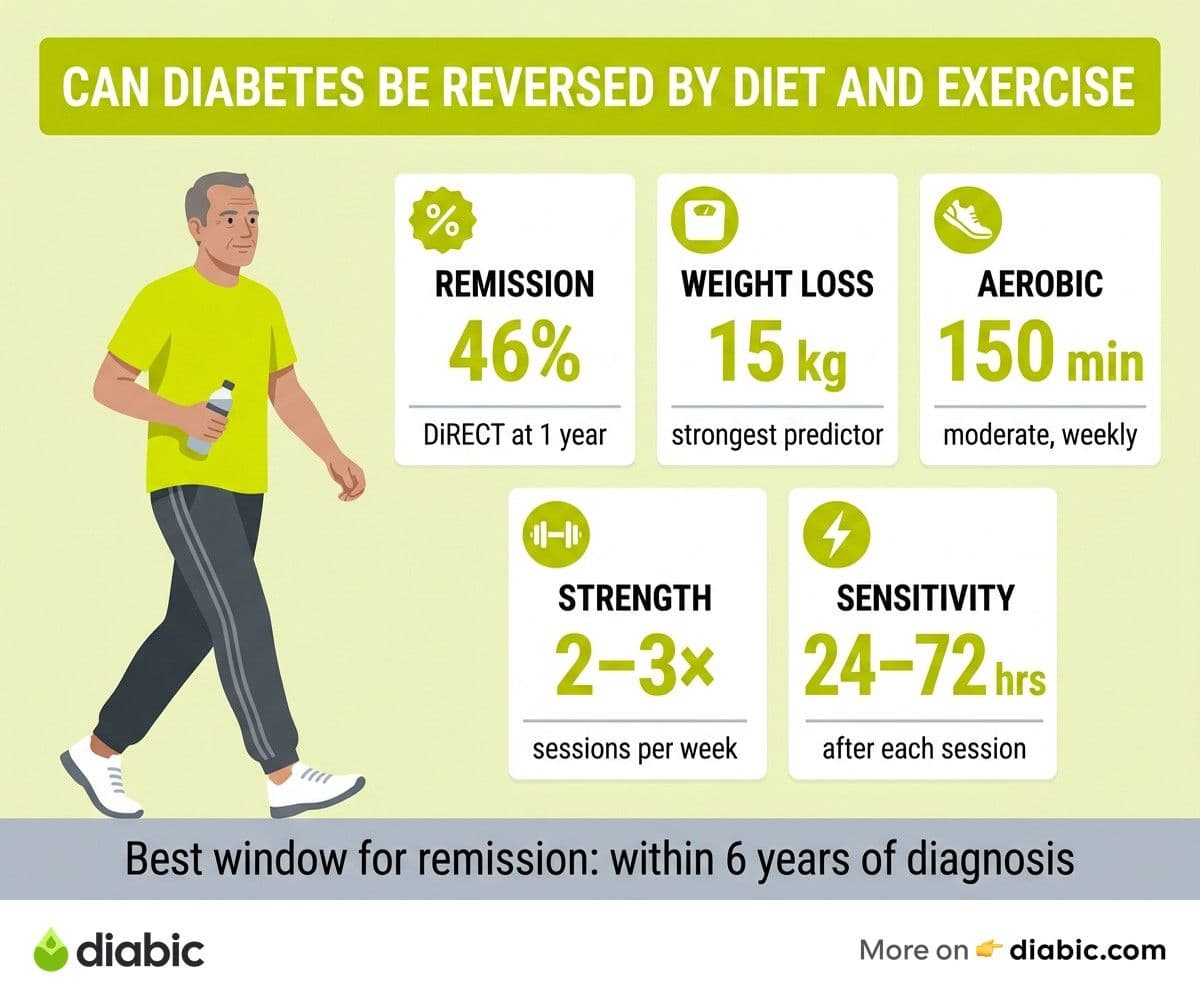
Your odds of remission are highest when you are recently diagnosed (within the first six years), have a higher baseline A1C that responds quickly to weight loss, and can sustain meaningful changes in body weight. None of these are absolute requirements. They simply describe the people who tend to see the strongest results in studies.
Can Diabetes Be Reversed by Diet and Exercise: The Research
The most cited evidence on type 2 diabetes diet exercise comes from the DiRECT trial, published in The Lancet. Researchers placed adults with type 2 diabetes on a structured low-calorie diet (around 825 to 853 calories per day for 12 to 20 weeks), followed by a careful return to normal eating with weight maintenance support.
After one year, about 46 percent of participants in the intervention group achieved remission, compared with 4 percent in the control group. After two years, 36 percent maintained remission. The strongest predictor of success was sustained weight loss, particularly losing 15 kilograms (about 33 pounds) or more, though even smaller losses produced meaningful improvements.
Exercise plays its own role independent of diet. Regular activity improves insulin sensitivity for 24 to 72 hours after each session, and consistent training lowers A1C even without major weight loss. If you are curious whether activity alone can prevent the condition from progressing, our piece on whether can exercise prevent diabetes digs into the prevention side of the same question.
Combined, diet and exercise produce stronger metabolic improvements than either approach alone. Diet drives most of the weight loss and the calorie deficit. Exercise protects lean muscle, supports long-term weight maintenance, and adds an insulin-sensitivity boost that diet alone does not produce.
Dietary Strategies That Support Reversal
There is no single magic diet for type 2 diabetes diet and exercise success. The patterns that consistently appear in remission research share a few features: meaningful calorie reduction, lower refined carbohydrate intake, more whole foods, and enough protein to preserve muscle during weight loss.
Three approaches have the most supporting evidence. A structured low-calorie diet, like the one used in DiRECT, can produce rapid weight loss and rapid blood sugar improvements when supervised. A low-carbohydrate diet reduces post-meal glucose spikes and often leads to spontaneous calorie reduction. A Mediterranean pattern, rich in vegetables, olive oil, fish, and legumes, is the most studied long-term eating style and is endorsed by major diabetes organizations.
The 5 to 10 percent body weight loss threshold is where many people start to see real changes in fasting glucose and A1C. Beyond that, every additional kilogram of weight loss tends to translate into measurable metabolic benefit, up to a point. For practical guidance on what actually works, see our breakdown of weight loss and type 2 diabetes.
If you have prediabetes rather than full type 2 diabetes, the math is even more in your favor. Our article on whether can prediabetes be reversed covers what the same lifestyle tools can do at an earlier stage.
Exercise Protocols That Help
The exercise side of remission research is straightforward. The Diabetes Care guidelines recommend at least 150 minutes per week of moderate-intensity aerobic activity, spread across at least three days, with no more than two consecutive days off. That level is enough to improve insulin sensitivity and support cardiovascular health.
Strength training matters too, and is often underrated. Two to three resistance sessions per week build and preserve muscle mass, which acts as a glucose sink. More muscle generally means better insulin sensitivity, easier weight maintenance, and a stronger foundation for everyday movement.
A practical weekly mix might look like 30 minutes of brisk walking on five days, plus two short strength sessions covering the major muscle groups. You do not need fancy equipment or a gym membership. Bodyweight exercises, resistance bands, and basic dumbbells are enough to get the metabolic benefits.
Setting Realistic Expectations
From my experience: After fourteen years of living with diabetes, I have watched friends achieve remission, watched others get close, and watched a few stay stable on the same medication for a decade with no progression. All of those outcomes are valid wins. The trap is treating remission as the only acceptable result.
Not everyone achieves full remission, and that is not a personal failure. Type 2 diabetes is influenced by genetics, age, duration of diagnosis, and beta-cell function, all of which sit outside your control. Lifestyle changes still help even when remission is not the outcome. Lower medication doses, fewer complications, more energy, and better A1C are real and worth celebrating.
Maintenance is the harder half of the story. Studies that follow people past the first year show that those who maintain their weight loss and activity patterns also maintain their improvements. Those who drift back tend to see their numbers drift with them. This is not about willpower. It is about building habits and support systems you can sustain when life gets busy.
FAQ
Can type 2 diabetes be reversed with diet and exercise alone?
Some people with type 2 diabetes can achieve remission through diet and exercise alone, especially when diagnosed early and able to lose meaningful weight. The DiRECT trial showed that about 46 percent of participants achieved remission after one year of intensive lifestyle changes. Results vary based on age, duration of diabetes, and how much weight is lost.
How long does it take to reverse diabetes with lifestyle changes?
Meaningful improvements in blood sugar can show up within weeks of dietary changes, especially if calorie reduction is substantial. Full remission, defined as A1C below 6.5 percent without medication for at least three months, typically takes 3 to 12 months of consistent lifestyle changes. The exact timeline depends on starting weight, baseline A1C, and how quickly weight loss happens.
The honest answer to "can diabetes be reversed by diet and exercise" sits between the two extremes you usually hear. It is neither a guaranteed cure nor an empty promise. For many people with type 2 diabetes, sustained lifestyle changes can shift the condition into remission, and even when they do not, they tend to make daily management easier and complications less likely.
If you are considering a serious lifestyle change with remission as a goal, talk to your doctor first. Medication adjustments may be needed quickly as blood sugar improves, and a registered dietitian or diabetes educator can help you build a plan that fits your life.
Shahriar P. Shuvo is the founder of Diabic. He has lived with diabetes for over 14 years, and built Diabic to deliver the practical, evidence-based self-management tools he wished existed when he was first diagnosed. By trade, Shahriar is a senior design and frontend engineer with 6+ years shipping products at Agora, Timescale (now Tiger Data), and ShareTrip. He writes from the intersection of lived diabetes experience and product craft, focused on what works in daily management rather than what sounds good in a textbook.
Medically reviewed by
Dr. Shanto Arian is an internal medicine physician now specializing in clinical and aesthetic dermatology, with a parallel academic focus on epidemiology and public health. He holds an MBBS, MPH, MSc (UK), MRCP (UK), MRCPI (Ireland), Diploma in Dermatology (UK), and Diploma in Aesthetic Medicine (USA). Dr. Arian trained in internal medicine, including hospital work on hematology cases such as graft-versus-host disease, before moving toward dermatology. Skin is one of the earliest places diabetes shows itself, from acanthosis nigricans and diabetic dermopathy to slow foot wound healing, and that intersection is where his clinical and Diabic-review work meet. On Diabic, Dr. Arian medically reviews content on diabetes diagnosis, complications, dermatologic manifestations, and pharmacotherapy, ensuring every claim aligns with current ADA, NICE, and peer-reviewed literature.
More from Diet & Fitness
View all
7 Sweet Potato Diabetes Recipes That Keep Blood Sugar Steady
Seven sweet potato diabetes recipes with balanced macros, plus the cooking methods and portion tips that keep this naturally sweet vegetable blood-sugar.

Diabetes Pasta Recipes That Won't Spike Blood Sugar
Five diabetes pasta recipes that keep blood sugar steady, plus the cooking trick and pasta swaps that lower glycemic impact for everyday meals.

Chinese Recipes for Diabetes That Taste Like Takeout
Chinese recipes for diabetes that recreate takeout favorites at home with low-sugar swaps, controlled portions, and stir-fries that keep blood sugar.
Clinician-reviewed habits, plain-language guides, and honest answers - the small shifts that make living with diabetes feel lighter, every day.