8 High Fiber Foods That Help with Prediabetes
Add these 8 high fiber foods for prediabetes to slow glucose absorption, support steady blood sugar, and meet the daily fiber target most people miss.

In this article(17)
- Why Fiber Matters for Prediabetes
8 High Fiber Foods for Prediabetes Worth Adding
- 1. Lentils (about 15g fiber per cup, cooked)
- 2. Black Beans (about 15g per cup, cooked)
- 3. Raspberries (about 8g per cup)
- 4. Chia Seeds (about 10g per ounce)
- 5. Oats (about 4g per cup, cooked)
- 6. Avocado (about 10g per whole fruit)
- 7. Broccoli (about 5g per cup, cooked)
- 8. Barley (about 6g per cup, cooked)
- Easy Ways to Work These Foods into Your Meals
- How to Increase Fiber Without Digestive Discomfort
A prediabetes diagnosis often comes with a long list of things to change, and it can feel like every food label is suddenly working against you. Eating more high fiber foods for prediabetes is one of the simplest dietary shifts you can make, and the research backing it is strong. Fiber slows how quickly sugar enters your bloodstream, which is exactly what your body needs when blood sugar is creeping upward.
The good news is that fiber-rich foods are usually familiar, affordable, and easy to add to meals you already eat. You do not need a special grocery store or a complicated plan. You just need a clearer picture of which foods deliver the most fiber per serving and how to fit them into your week.
This guide walks through eight high-fiber options worth keeping on your shopping list, why they help, and the small swaps that make adding fiber feel manageable instead of overwhelming.
Why Fiber Matters for Prediabetes
Fiber is the part of plant foods your body cannot fully digest. That sounds unhelpful at first, but it is exactly why a high fiber diet and diabetes prevention go hand in hand. When fiber moves through your digestive tract, it slows the breakdown of carbohydrates and the absorption of glucose, which softens the blood sugar spike you would otherwise see after eating.
Soluble fiber, the type found in oats, beans, and many fruits, forms a gel-like layer in your gut that delays glucose entry into the bloodstream. Insoluble fiber, found in whole grains and vegetables, supports digestion and helps you feel full on fewer calories. Both types matter, and most fiber-rich foods contain a mix of the two.
The research is consistent on this. A large systematic review published in The Lancet found that people eating the highest amounts of dietary fiber had significantly lower rates of type 2 diabetes, heart disease, and stroke compared to those eating the least. MedlinePlus's dietary fiber overview and the American Diabetes Association both recommend getting 25 to 30 grams of fiber per day from food, with extra emphasis on soluble fiber for people managing blood sugar.
Most adults in the US eat about 15 grams a day, roughly half the target. Closing that gap is one of the highest-uses changes you can make. If you are also looking at carbohydrate quality, our guide to whole grains for prediabetes pairs well with the foods below.
8 High Fiber Foods for Prediabetes Worth Adding
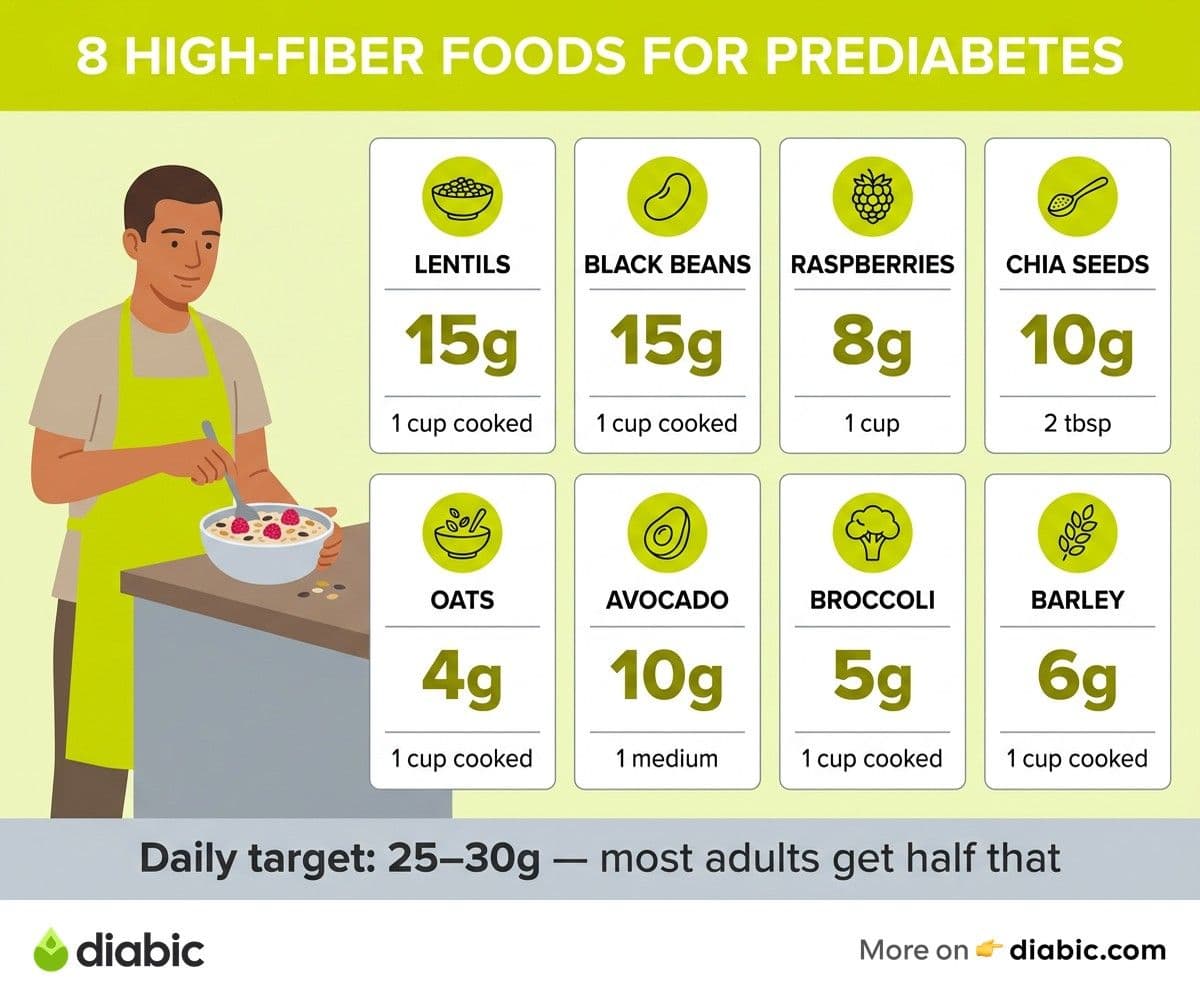
Here are eight high-fiber diet diabetes-friendly staples worth rotating through your week. Fiber counts come from the USDA FoodData Central database and are based on standard serving sizes.
1. Lentils (about 15g fiber per cup, cooked)
Lentils are one of the most fiber-dense foods you can buy, and they cook in about 20 minutes without soaking. A single cup delivers half the daily fiber target along with plant-based protein and iron. They work in soups, curries, grain bowls, and even as a meatloaf extender.
Red lentils break down into a creamy texture that thickens stews, while green and brown lentils hold their shape for salads. Either way, you are getting steady, slow-digesting carbohydrates that have far less impact on blood sugar than refined grains.
2. Black Beans (about 15g per cup, cooked)
Black beans match lentils for fiber and bring a different flavor profile that fits Latin-inspired meals, breakfast bowls, and even brownies. Canned versions are a reasonable shortcut if you rinse them to lower the sodium.
The combination of fiber and resistant starch in black beans has been linked to better post-meal glucose responses in clinical studies. A half-cup serving alongside eggs, rice, or roasted vegetables stretches a meal and steadies the blood sugar curve.
3. Raspberries (about 8g per cup)
Berries punch above their weight on fiber per calorie, and raspberries lead the pack. A full cup has about 8 grams of fiber for around 65 calories, which is rare in the fruit aisle.
Frozen raspberries cost less than fresh and work just as well in oatmeal, smoothies, or yogurt. They also make a low-impact dessert when paired with a small handful of nuts or a spoon of Greek yogurt.
4. Chia Seeds (about 10g per ounce)
Chia seeds are tiny but they hold up to ten times their weight in liquid, which is why a tablespoon stirred into yogurt thickens overnight into pudding. That same gelling action happens in your gut, slowing digestion and supporting blood sugar stability.
Two tablespoons (about one ounce) deliver roughly 10 grams of fiber along with omega-3 fats and a small dose of plant protein. Sprinkle them on oatmeal, blend them into smoothies, or make overnight chia pudding with unsweetened almond milk.
5. Oats (about 4g per cup, cooked)
Oats contain a specific type of soluble fiber called beta-glucan, which has been studied extensively for its effects on cholesterol and post-meal blood sugar. Steel-cut and rolled oats keep more of their structure than instant varieties, which means slower digestion and a gentler glucose response.
A cup of cooked oats topped with chia seeds and raspberries adds up to nearly 20 grams of fiber in one breakfast, which is a strong start to the daily target.
6. Avocado (about 10g per whole fruit)
Avocados are one of the few fruits where the fiber comes packaged with healthy monounsaturated fats. A medium avocado has about 10 grams of fiber and around 240 calories, so a quarter or half is usually enough at one meal.
Mashed avocado works as a spread on whole-grain toast, a topping for chili, or a base for a quick salad dressing with lime juice and olive oil. The combination of fat and fiber is especially good at flattening blood sugar spikes after carb-heavy meals.
7. Broccoli (about 5g per cup, cooked)
Broccoli is not the highest-fiber vegetable, but it is one of the easiest to eat in larger portions. Two cups of roasted broccoli deliver around 10 grams of fiber and fit on the side of almost any dinner plate.
Roasting at high heat with olive oil and garlic gives broccoli a crispy texture that tends to win over even reluctant vegetable eaters. Frozen florets are inexpensive, last for months, and lose very little nutritional value compared to fresh.
8. Barley (about 6g per cup, cooked)
Barley is an underused whole grain that swaps in nicely for rice. A cup of cooked pearled barley brings about 6 grams of fiber, much of it the same beta-glucan found in oats. Hulled barley has even more fiber but takes longer to cook.
Use it in mushroom soup, grain bowls, or as a base for a Mediterranean-style salad with cucumbers, feta, and chickpeas. The chewy texture is satisfying, and the slow digestion makes it a smart base for lunch when you want to avoid a mid-afternoon energy dip.
Easy Ways to Work These Foods into Your Meals
Knowing the foods is one thing. Building them into a real week of meals is what actually moves the needle. The good news is that a fiber-friendly diet for prediabetes does not require new recipes, just a few smart swaps.
Start by adding beans or lentils to dishes you already make. A can of black beans turns a green salad into a complete lunch. A handful of lentils thickens a marinara sauce and adds protein without changing the flavor much. Soups are especially forgiving with legumes.
Top your morning yogurt or oatmeal with raspberries and a tablespoon of chia seeds. That single combination can deliver 12 to 15 grams of fiber before you have left the kitchen. Use avocado as a spread instead of mayonnaise on sandwiches, and mash it onto eggs at breakfast.
Swap white rice for barley a few nights a week, especially in dishes with strong flavors like curry or stir-fry where the chewier texture works in your favor. For a deeper look at how fiber fits into a broader plan, our article on a high-fiber diet and diabetes covers the mechanisms in more detail. Our prediabetes diet guide lays out a full eating framework you can plug these foods into.
From my experience: When I was first told to eat more fiber, I tried to overhaul everything at once and ended up with stomach cramps and a fridge full of food I did not want to eat. What worked was picking one meal a day, usually breakfast, and making it fiber-forward. Oats, berries, and chia seeds in the morning set a baseline, and the rest of the day felt easier to manage.
How to Increase Fiber Without Digestive Discomfort
Adding fiber too fast is the most common reason people give up on it. If your typical day has 15 grams of fiber and you suddenly jump to 30, your gut bacteria need time to adjust. Bloating, gas, and cramping are signals to slow down, not stop.
A reasonable pace is to add 3 to 5 grams per day every few days. That might look like adding a tablespoon of chia seeds to breakfast this week, then a half-cup of beans to lunch the next. Spreading the increase over two or three weeks usually prevents most digestive issues.
Drink more water as you eat more fiber. Fiber pulls water into your digestive tract, and not drinking enough can cause constipation rather than relief. An extra glass or two per day is usually enough, especially when you are eating drier sources like bran cereals or seeds.
Cooked legumes are easier to digest than raw vegetables for most people, which is helpful to know if you are sensitive. Soaking dried beans, draining the soaking water, and cooking them well reduces some of the compounds that cause gas. Canned beans rinsed under cold water work the same way.
FAQ
What high fiber foods are best for prediabetes?
Legumes (lentils, black beans), berries (raspberries), seeds (chia), oats, avocado, broccoli, and barley are among the best options. They provide substantial fiber along with other nutrients that support blood sugar management, including protein, healthy fats, and antioxidants. Rotating several of these foods through the week is usually easier than relying on a single source.
How much fiber should you eat with prediabetes?
Aim for 25 to 30 grams of fiber per day, which aligns with general dietary guidelines and ADA recommendations. Most people eat about half that amount, so increasing gradually over a few weeks helps your body adjust without digestive discomfort. If you have a specific gastrointestinal condition, talk to your doctor about what fiber level is right for you.
Can fiber alone reverse prediabetes?
Fiber is one piece of a larger picture. Research suggests that a high fiber diet, combined with weight management, regular activity, and improved sleep, can move blood sugar levels back into the normal range for many people. The CDC's National Diabetes Prevention Program shows that modest lifestyle changes can cut the risk of progressing from prediabetes to type 2 diabetes by more than half. No single food or nutrient does the work alone, but high-fiber foods for prediabetes are one of the most consistently supported pieces of the puzzle.
Are fiber supplements as good as food?
Whole foods come packaged with vitamins, minerals, and other compounds that supplements miss. Fiber pills or powders can fill a small gap, but they are not a replacement for fiber-rich meals. If your provider recommends a supplement, it is usually meant to support a real-food approach rather than replace it.
Building a fiber-friendly plate is a slow build, not a one-week reset. Pick two or three of the high fiber foods for prediabetes above, work them into your routine over the next month, and notice how your meals feel different. That is usually where lasting change starts.
Shahriar P. Shuvo is the founder of Diabic. He has lived with diabetes for over 14 years, and built Diabic to deliver the practical, evidence-based self-management tools he wished existed when he was first diagnosed. By trade, Shahriar is a senior design and frontend engineer with 6+ years shipping products at Agora, Timescale (now Tiger Data), and ShareTrip. He writes from the intersection of lived diabetes experience and product craft, focused on what works in daily management rather than what sounds good in a textbook.
Medically reviewed by
Dr. Rezwana Parvin Rumpa is an obstetrics and gynaecology specialist with clinical focus on gestational diabetes, PCOS, and fertility. She holds the MRCOG (Final Part) from the Royal College of Obstetricians and Gynaecologists in London, the MRCPI (Final Part) from the Royal College of Physicians of Ireland, and an MBBS from Shaheed Monsur Ali Medical College under Dhaka University. Dr. Rumpa serves as a Senior Medical Officer in the Obs and Gynae department at BRB Hospitals Ltd, where she has spent three years managing prenatal care, emergency obstetric cases, and women's-health surgery. On Diabic, she medically reviews content for women living with diabetes, with particular attention to pregnancy, PCOS, and reproductive-health intersections.
More from Diabetes Knowledge
View all
6 Safe Dessert for Gestational Diabetes Recipes You Can
Six dessert for gestational diabetes recipes that satisfy your sweet tooth without spiking blood sugar, with carb counts and pairing tips you can use.

Mediterranean Diet for Prediabetes: A Practical Guide
The mediterranean diet for prediabetes is one of the best-studied eating patterns for prevention. Here is what to eat, what to avoid, and how to start.

Nutrition Plan for Gestational Diabetes
A structured nutrition plan for gestational diabetes with macronutrient targets, sample meals, key nutrients, and tips to adjust based on blood sugar.
Clinician-reviewed habits, plain-language guides, and honest answers - the small shifts that make living with diabetes feel lighter, every day.