Prediabetes Diet: What to Eat and Avoid
A complete prediabetes diet guide covering foods to eat, foods to limit, a sample day of meals, and the research that shows why food choices matter.

In this article(29)
A prediabetes diet built around the right foods can make a meaningful difference in whether your blood sugar stays stable or keeps climbing toward type 2 diabetes. The good news is that you do not need a complicated plan or a long list of forbidden foods. Knowing what to eat, what to limit, and how to put meals together gives you a clear path forward.
Most people leave the doctor's office with a printout, a vague warning, and very little practical direction. We want to fix that. This guide walks through the foods that help, the foods that get in the way, the research that explains why, and how to start without overhauling your whole life in one weekend.
What a Prediabetes Diet Looks Like
A diet for prediabetes is not a punishment plan. It is a way of eating that keeps your blood sugar steadier across the day so your pancreas does not have to work overtime. The eating principles are simple even if the habits take time to build.
The core idea is balance. You want meals that combine fiber-rich carbs, lean protein, and healthy fat so glucose enters your bloodstream slowly rather than in a sharp spike. According to the American Diabetes Association, there is no single "diabetes diet," but consistent patterns built on whole foods, vegetables, and minimally processed carbs show the best results.
You will also benefit from eating at predictable times. Skipping meals and then eating a large one late in the day tends to produce bigger blood sugar swings than three or four steady meals. Stable input leads to stable output.
The point is not perfection. The point is to give your body fewer reasons to push insulin into overdrive. Many people in this stage want to know whether prediabetes can be reversed, and food choices are one of the biggest levers you have.
The role of blood sugar stability
Spikes are not the enemy on their own. Repeated, large spikes day after day are what wear down insulin sensitivity. Your meals are the most direct tool you have to influence those spikes.
Stability also makes the rest of life easier. Energy stays more even, hunger feels more manageable, and cravings tend to soften within a few weeks of consistent eating. People often notice this before any number on a scale or lab report changes.
Foods to Eat for Prediabetes
A healthy diet for people with diabetes and people with prediabetes shares a lot of common ground. The foods below help in three ways: they keep glucose release slow, they fill you up, and they support insulin sensitivity over time.
You do not need to eat all of these every day. Build meals from a rotating set you actually enjoy. The best diet is the one you can keep eating six months from now.
Non-starchy vegetables
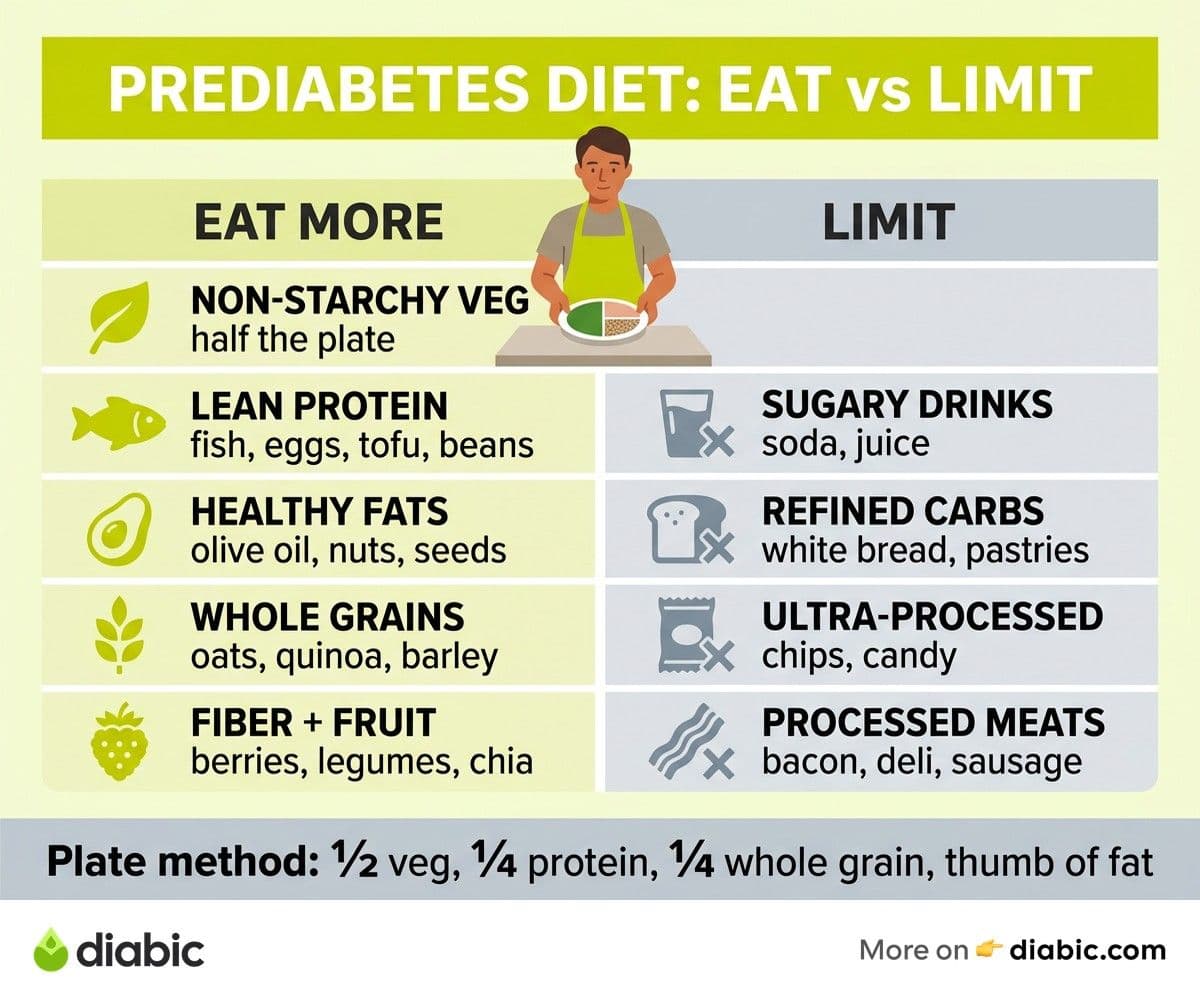
Leafy greens, broccoli, cauliflower, peppers, zucchini, cucumbers, mushrooms, and tomatoes are the easiest win. They are low in carbs, high in fiber, and fill half your plate without driving blood sugar up.
Aim to make non-starchy vegetables the visual base of lunch and dinner. Roasted, sauteed, raw, or in soup, the form matters less than the volume.
Lean proteins
Protein at every meal helps slow digestion and keeps you full longer. Chicken, turkey, fish (especially salmon, sardines, and trout for omega-3s), eggs, tofu, tempeh, Greek yogurt, and cottage cheese all fit easily.
Legumes deserve a special mention. Lentils, chickpeas, black beans, and kidney beans give you protein and fiber together, and they happen to be among the most studied foods for blood sugar stability.
Healthy fats
Fat is not the villain it was made out to be in the 1990s. Olive oil, avocado, nuts, seeds, and fatty fish help meals feel satisfying and slow the absorption of carbs eaten alongside them.
A Mediterranean diet for prediabetes leans heavily on these fats and is one of the most evidence-backed eating patterns for people in your situation. It is flexible, food-forward, and easy to keep up with.
Low-glycemic and whole-grain carbs
Carbs are not off-limits. The trick is choosing carbs that come with fiber and a slower glucose release. Steel-cut or rolled oats, quinoa, barley, farro, sweet potatoes, and whole-grain bread that lists "whole" as the first ingredient are all good choices.
Watch portions rather than fearing the food itself. A cup of cooked oats with berries and nuts behaves very differently in your body than a bowl of sugary cereal, even if both technically contain carbs.
Fiber-rich foods
Fiber is the unsung hero of this eating pattern. It feeds your gut, slows glucose absorption, and helps you feel full on fewer calories.
Berries, apples with the skin, pears, beans, lentils, chia seeds, flaxseeds, and most non-starchy vegetables are dense in fiber. Most adults fall short of the recommended 25 to 38 grams a day, so this is often the easiest place to upgrade. We have a deeper list of high fiber foods for prediabetes if you want concrete swaps.
Foods to Avoid or Limit with Prediabetes
"Avoid" is a strong word, and we do not love it. A more useful frame is "limit" or "save for less often." A rigid no-list usually backfires within a few weeks.
That said, some foods consistently push blood sugar in the wrong direction. Knowing them helps you make conscious trades rather than mindless ones.
Sugary drinks
This is the single biggest swap for most people. Soda, sweet tea, sweetened coffee drinks, energy drinks, and fruit juice deliver a fast load of sugar with no fiber, protein, or fat to slow it down.
Even 100% fruit juice, which has a healthy halo, can spike blood sugar quickly. A whole orange behaves very differently from the juice of three oranges in a glass.
Refined carbohydrates
White bread, white rice, pastries, crackers, and most boxed cereals are stripped of fiber during processing. They digest fast and tend to leave you hungrier soon after.
You do not have to swear them off forever. Smaller portions, less often, and paired with protein and fat are how most people make peace with these foods.
Ultra-processed snacks
Packaged cookies, chips, candy, frozen desserts, and most "snack mix" style foods are engineered to be easy to overeat. Combining refined carbs with cheap fats and added sugars hits reward pathways in a way that whole foods rarely do.
If a food has a long ingredient list with items you do not recognize, treat it as an occasional choice rather than a daily staple.
Excess red and processed meats
Bacon, sausage, deli meats, and hot dogs have been linked in observational studies to higher type 2 diabetes risk. The mechanisms are still being studied, but the pattern is consistent enough that limiting them is a safe call.
Unprocessed red meat in moderation is less clear-cut. The bigger issue is usually what it crowds out. A plate built around steak and white rice has less room for vegetables, legumes, and the fiber your body wants.
How Diet and Exercise Work Together for Prediabetes
Diet and exercise are stronger together than either is alone. This is not a marketing line. It is one of the most consistent findings in diabetes prevention research over the last 25 years.
The Diabetes Prevention Program, a landmark study supported by the National Institutes of Health, followed more than 3,000 adults with prediabetes. The lifestyle group, which combined modest dietary changes with 150 minutes of weekly physical activity, lowered their risk of developing type 2 diabetes by 58%. In adults over 60, that number climbed to 71%.
What makes this finding so useful is what the lifestyle group did not do. They did not eliminate carbs, run marathons, or follow extreme restrictions. They aimed for 5 to 7% weight loss and walked, biked, or did similar moderate activity most days.
That target translates to roughly 10 to 14 pounds for someone who weighs 200 pounds. Achievable, durable, and supported by decades of follow-up data. We unpack this further in our guide to weight loss for prediabetes.
Why exercise amplifies dietary changes
When you move your muscles, they pull glucose out of the bloodstream without needing as much insulin to do it. A 15-minute walk after a meal can flatten the after-meal spike noticeably for many people.
Strength training adds another lever. More muscle means more glucose storage capacity, which means your body has somewhere to put carbs other than fat cells. You do not need a gym for this. Bodyweight exercises, resistance bands, or basic dumbbells at home work fine.
Pairing the two in real life
The best results come from pairing food changes with activity that fits your week, not an idealized version of your week. Two short walks beat one perfect 60-minute workout you keep skipping.
Pairing also extends to specific meals. The principles in our low glycemic diet for diabetes guide work especially well alongside daily movement, because the two strategies attack the same problem from different sides.
Sample Prediabetes Meal Plan for One Day
A sample day helps the principles feel real. This is one example, not a prescription. Swap proteins, vegetables, and grains based on what you actually like to eat.
Breakfast: Two eggs scrambled with spinach and tomato, a slice of whole-grain toast with avocado, and a cup of coffee or tea (unsweetened or lightly sweetened).
Mid-morning snack (optional): A small apple with a tablespoon of almond butter.
Lunch: A bowl with mixed greens, half a cup of cooked quinoa, grilled chicken, chickpeas, cucumber, peppers, olive oil, and lemon.
Afternoon snack: Plain Greek yogurt with a small handful of berries and walnuts.
Dinner: Baked salmon, a sweet potato (small to medium), and roasted broccoli with olive oil and garlic.
Optional evening: A square of dark chocolate or a few strawberries if you want something sweet.
Using the plate method
If meal planning feels like a lot, the plate method is a simpler shortcut. Fill half your plate with non-starchy vegetables, a quarter with lean protein, and a quarter with a fiber-rich carb. Add a thumb of healthy fat, and you have a balanced meal without measuring anything.
This approach is endorsed by the ADA and shows up in nearly every credible diabetes nutrition resource because it works without math. You can use it at home, at a restaurant, or at a family dinner without making a scene.
A starter grocery list
Stock the basics so a balanced meal is the easiest option in the kitchen. Eggs, plain Greek yogurt, frozen berries, frozen broccoli, spinach, tomatoes, peppers, onions, garlic, sweet potatoes, oats, quinoa, canned beans, lentils, chicken thighs, salmon, olive oil, almonds, peanut butter, and a few spices will carry you through a week of meals without much repetition.
Practical Tips for Sticking with a Prediabetes Diet
Knowing what to eat and actually eating that way are different problems. The second one is where most plans quietly fall apart in the third or fourth week.
The Mayo Clinic and most diabetes educators echo the same advice on this front: small, sustainable changes beat dramatic ones. The goal is to build a way of eating you can keep up with through stress, travel, holidays, and busy weeks.
Start with one meal at a time
Pick the meal where change feels easiest. For many people, that is breakfast. Once a balanced breakfast becomes automatic, move on to lunch. Trying to overhaul every meal at once tends to last about ten days.
Prep a little in advance
You do not need a full Sunday meal-prep ritual. Even cooking one extra portion of dinner so lunch is handled, or chopping vegetables once for the whole week, removes a huge amount of friction from weeknight decisions.
Find swaps you actually enjoy
If you hate cauliflower rice, do not eat cauliflower rice. There are dozens of ways to build a balanced meal, and the only swaps that stick are the ones you would choose even without a health reason.
From my experience: After 14 years of living with diabetes, the single biggest shift for me was letting go of the all-or-nothing mindset. The week I had pizza twice and still walked after each meal, and ate vegetables at every other meal, was a better week than the one where I ate "perfectly" for four days, gave up, and ate nothing but takeout for the next three. Consistency over a year beats a perfect week every time.
Plan for the hard moments
Hunger, stress, travel, and social events are where good intentions tend to break. Keep a default snack you trust at home and at work. Have a few go-to restaurant orders. Decide ahead of time how you want to handle the office candy bowl. Decisions made in advance are easier than decisions made when you are hungry and tired.
FAQ
What should you eat if you have prediabetes?
Focus on non-starchy vegetables, lean proteins, healthy fats, and whole grains in modest portions. Legumes, berries, nuts, and fatty fish are particularly helpful because they combine fiber, protein, and slow-digesting nutrients in one food.
The simple rule is to choose foods that release glucose slowly and keep you feeling full between meals. If you build most meals from that list and limit sugary drinks and refined snacks, you have already done most of the work.
Can you reverse prediabetes with diet alone?
Diet alone can make a significant impact, especially if your starting point includes a lot of sugary drinks, refined carbs, and skipped meals. Many people see meaningful improvements in fasting glucose and A1C from food changes by themselves.
That said, the strongest evidence comes from combining dietary changes with regular physical activity and modest weight loss of 5 to 7%. The Diabetes Prevention Program found that this combination reduced the risk of developing type 2 diabetes by 58% over three years. Diet sets the foundation, and movement amplifies it.
How long does it take to see results from a prediabetes diet?
Many people notice changes in energy, hunger, and cravings within two to four weeks. Lab markers like A1C reflect the previous two to three months of blood sugar, so meaningful changes there usually show up at the three-to-six-month follow-up.
Be patient with the lab numbers and pay attention to the daily signals in the meantime. They are often the early evidence that the changes are working before any blood test confirms it.
Do I have to give up carbs entirely?
No. Carbs are not the enemy. The type, portion, and pairing of carbs are what matter for prediabetes.
A small bowl of oats with berries, nuts, and Greek yogurt will behave very differently in your body than a sweetened pastry, even though both contain carbs. Whole, fiber-rich carbs eaten alongside protein and fat fit easily into a balanced plate.
The path forward with a prediabetes diet is rarely about willpower. It is about setting up your meals, your kitchen, and your week so the easy choice and the helpful choice are the same choice. Small, repeatable shifts over months are what change the trajectory, and most people who build a steady prediabetes diet around the basics here look back surprised at how doable it actually was.
Shahriar P. Shuvo is the founder of Diabic. He has lived with diabetes for over 14 years, and built Diabic to deliver the practical, evidence-based self-management tools he wished existed when he was first diagnosed. By trade, Shahriar is a senior design and frontend engineer with 6+ years shipping products at Agora, Timescale (now Tiger Data), and ShareTrip. He writes from the intersection of lived diabetes experience and product craft, focused on what works in daily management rather than what sounds good in a textbook.
Medically reviewed by
Dr. Shanto Arian is an internal medicine physician now specializing in clinical and aesthetic dermatology, with a parallel academic focus on epidemiology and public health. He holds an MBBS, MPH, MSc (UK), MRCP (UK), MRCPI (Ireland), Diploma in Dermatology (UK), and Diploma in Aesthetic Medicine (USA). Dr. Arian trained in internal medicine, including hospital work on hematology cases such as graft-versus-host disease, before moving toward dermatology. Skin is one of the earliest places diabetes shows itself, from acanthosis nigricans and diabetic dermopathy to slow foot wound healing, and that intersection is where his clinical and Diabic-review work meet. On Diabic, Dr. Arian medically reviews content on diabetes diagnosis, complications, dermatologic manifestations, and pharmacotherapy, ensuring every claim aligns with current ADA, NICE, and peer-reviewed literature.
More from Diabetes Knowledge
View all
Can Prediabetes Be Reversed? What Research Shows
Can prediabetes be reversed? For many people, yes. Here is what the science says about diet, exercise, timelines, and what works without medication.

7-Day Gestational Diabetes Meal Plan
A ready-to-use 7-day gestational diabetes meal plan with breakfast, lunch, dinner, snacks, and a grocery list to keep blood sugar steady all week.

Gestational Diabetes Diet: What to Eat
A gestational diabetes diet guide for pregnancy, covering foods to eat, foods to limit, meal structure, and practical tips for steady blood sugar.
Clinician-reviewed habits, plain-language guides, and honest answers - the small shifts that make living with diabetes feel lighter, every day.