Mediterranean Diet for Prediabetes: A Practical Guide
The mediterranean diet for prediabetes is one of the best-studied eating patterns for prevention. Here is what to eat, what to avoid, and how to start.

In this article(9)
The mediterranean diet for prediabetes ranks among the most studied and recommended eating patterns for preventing type 2 diabetes. Built around vegetables, olive oil, fish, legumes, and whole grains, it feels less like a restrictive plan and more like a way of enjoying food while quietly protecting your health.
What makes it so appealing for prediabetes is how naturally it slots into everyday life. There is no calorie counting required, no banned food groups, and no specialty products you have to hunt down at a niche grocery store. You build meals around whole, minimally processed foods, season them well, and eat slowly enough to enjoy them.
This guide walks through why the pattern works for prediabetes, what to eat, what a sample day looks like, and a few small steps you can take this week without overhauling your kitchen.
Why the Mediterranean Diet Works for Prediabetes
A good diet for prediabetes does three things at once. It steadies blood sugar, reduces inflammation, and supports a healthy weight. The Mediterranean pattern hits all three through the foods it includes rather than through restriction.
The pattern is rich in fiber from vegetables, legumes, and whole grains, which slows the absorption of carbohydrates and tempers post-meal glucose spikes. The healthy fats in olive oil, nuts, and fish help blunt those same spikes and may directly improve insulin sensitivity. The herbs, vegetables, and fruits at the heart of the pattern deliver the antioxidants that help quiet the chronic, low-grade inflammation often linked to insulin resistance.
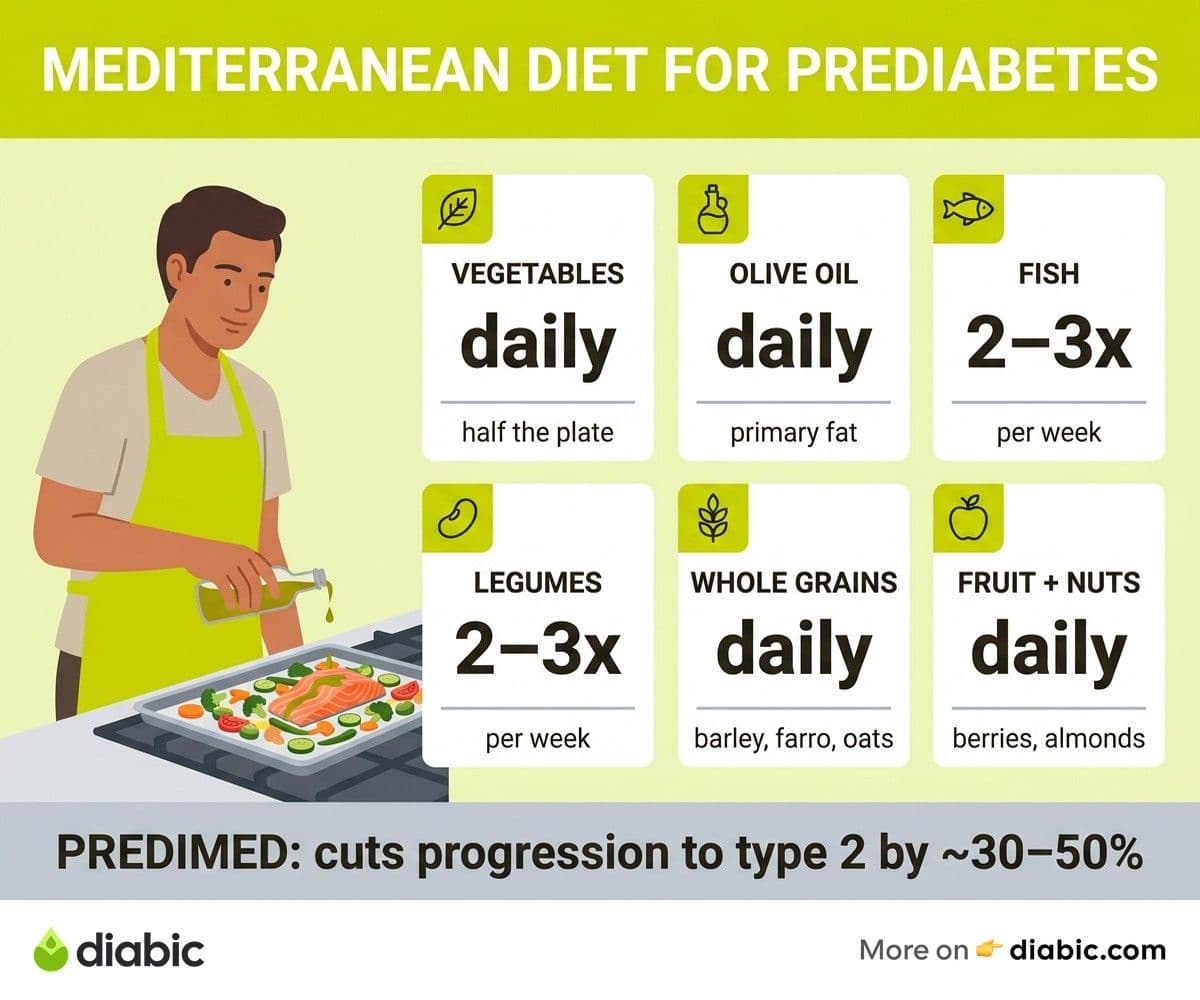
The most cited piece of evidence is the PREDIMED trial, published in the New England Journal of Medicine. It followed thousands of adults at high cardiovascular risk and found that those who followed a Mediterranean diet supplemented with extra-virgin olive oil or mixed nuts had significantly lower rates of progression to type 2 diabetes compared with a low-fat control group. The American Diabetes Association lists the Mediterranean pattern among the eating styles that may help prevent or manage type 2 diabetes.
For broader context on what to eat and avoid across the prediabetes range, our prediabetes diet guide is a useful companion to this article.
What to Eat on a Mediterranean Diet for Prediabetes
The Mediterranean diet diabetes research keeps pointing to is not built around any single superfood. It is built around a daily pattern of plants, healthy fats, lean proteins, and minimally processed grains.
Vegetables and legumes form the base of every meal. Aim to fill half your plate with non-starchy vegetables, then add legumes such as chickpeas, lentils, white beans, or fava beans several times a week. Legumes are particularly helpful because they combine plant protein with slow-digesting carbohydrates and fiber, a combination that supports steadier blood sugar.
Olive oil is the primary cooking fat. Extra-virgin olive oil is associated with the strongest evidence for improving insulin sensitivity and cardiovascular health. Use it for dressings, drizzling on cooked vegetables, and most of your stovetop cooking. The Mayo Clinic notes that olive oil is one of the defining elements of the Mediterranean pattern and a key reason for its health benefits.
Fish and seafood appear two to three times a week. Fatty fish like salmon, sardines, mackerel, and trout deliver omega-3 fatty acids, which support cardiovascular health and may help reduce inflammation. White fish, shrimp, and other seafood round out the protein options.
Whole grains, nuts, seeds, and fruits round out the pattern. Choose whole grains like barley, farro, bulgur, brown rice, and oats over refined options. A daily handful of nuts (walnuts, almonds, pistachios) adds healthy fat and fiber. Fruit is welcome, with a slight emphasis on lower-glycemic options like berries, apples, pears, and citrus. Our guide to whole grains for prediabetes goes deeper on which to choose and how to portion them.
Red meat appears occasionally, not daily. Dairy is moderate, often in the form of plain yogurt or small amounts of cheese. Sweets are reserved for special occasions, not nightly habits. Wine, when included at all, is small in quantity, with meals, and only when your healthcare provider approves it.
A Sample Mediterranean Day for Prediabetes
A healthy diet for people with diabetes or anyone in the prediabetes range does not need to look exotic. Here is a realistic day that follows the Mediterranean pattern without requiring an unusual shopping list.
Breakfast could be a vegetable frittata made with two eggs, sauteed spinach, tomatoes, and a small crumble of feta. A side of fresh berries and an espresso or unsweetened tea fills out the meal. The protein and fat keep you satisfied, and the fiber from the vegetables and berries gives steady energy without a glucose spike.
Lunch might be a chickpea salad bowl. Combine canned chickpeas with chopped cucumber, cherry tomatoes, red onion, parsley, a few olives, and a small amount of feta. Dress it with olive oil, lemon juice, salt, and pepper. Add a slice of whole grain sourdough on the side if you want a heartier meal.
Dinner could be baked salmon brushed with olive oil and lemon, served alongside roasted vegetables (zucchini, bell peppers, eggplant) and a small portion of quinoa. A simple green salad with olive oil dressing rounds out the plate. For other ideas in this category, our fish recipes for diabetes collection has weeknight-friendly options.
Snacks stay simple. A few tablespoons of hummus with cucumber slices and bell pepper strips, or a small handful of almonds with an apple. Plain Greek yogurt with a sprinkle of walnuts and cinnamon works well too.
If you want a deeper look at building this pattern over time, our guide to a Mediterranean diet for diabetes covers meal planning, shopping lists, and how the pattern adapts when diabetes is already established.
From my experience: When I was first diagnosed with type 2 diabetes 14 years ago, the dietitian I saw mentioned the Mediterranean pattern almost in passing, as if it were too simple to be the answer. I tried it the way many people do, half-heartedly, treating it as a backdrop while I chased trendier diets. The pattern only started working for me when I stopped treating it as a diet and started treating it as how my kitchen runs. Olive oil instead of butter. Lentils on Sunday for the week. Fish twice a week, no debate. The change came from the boring repetition, not the inspiration.
Simple Steps to Start This Week
You do not need to overhaul your kitchen to begin. Most people see better results from small, sustainable shifts than from dramatic restarts that fade within a month.
Replace butter with olive oil for cooking and finishing dishes. Keep a good extra-virgin olive oil on the counter so it is the default fat you reach for.
Add one legume-based meal each week. A pot of lentil soup, a chickpea salad, or a white bean stew gives you leftovers and an easy entry point into a key part of the pattern.
Swap a processed snack for a handful of nuts or a piece of fruit. The shift is small but compounds quickly across a week.
Try herbs and spices instead of salt. Fresh parsley, oregano, basil, mint, garlic, and lemon do most of the flavor work in Mediterranean cooking, which is part of why the pattern is enjoyable rather than punishing.
Frequently Asked Questions
Is the mediterranean diet good for prediabetes?
Yes. Multiple studies, including the PREDIMED trial, show that the Mediterranean diet can improve insulin sensitivity, lower fasting blood sugar, and reduce inflammation. The American Diabetes Association recommends it as one of the eating patterns that may help prevent the progression from prediabetes to type 2 diabetes. Results are most consistent when the pattern is followed over months and years rather than weeks.
What to eat on a mediterranean diet for prediabetes?
Prioritize vegetables, legumes, whole grains, fish, olive oil, nuts, and fruits. Limit red meat, processed foods, refined carbohydrates, and added sugars. The focus is on whole, minimally processed foods prepared with healthy fats and fresh herbs. The goal is a daily pattern, not perfect adherence at every meal.
Can the mediterranean diet reverse prediabetes?
For many people, sustained changes in diet and physical activity can return blood sugar levels to the normal range. The Mediterranean diet is one of the eating patterns that supports this outcome. Individual results depend on starting point, weight, activity, sleep, and genetics. A conversation with your provider helps set realistic expectations.
Is olive oil safe for people with prediabetes?
Yes, in fact extra-virgin olive oil is one of the most studied fats in the Mediterranean pattern and is associated with improvements in insulin sensitivity and cardiovascular health. Use it as your primary cooking fat and in dressings.
The mediterranean diet for prediabetes is less a program than a way of eating that gradually replaces what was there before. The goal is not perfection or transformation in a week. It is a kitchen that quietly supports your health every time you open the fridge, and a plate that you actually look forward to.
Shahriar P. Shuvo is the founder of Diabic. He has lived with diabetes for over 14 years, and built Diabic to deliver the practical, evidence-based self-management tools he wished existed when he was first diagnosed. By trade, Shahriar is a senior design and frontend engineer with 6+ years shipping products at Agora, Timescale (now Tiger Data), and ShareTrip. He writes from the intersection of lived diabetes experience and product craft, focused on what works in daily management rather than what sounds good in a textbook.
Medically reviewed by
Dr. Rezwana Parvin Rumpa is an obstetrics and gynaecology specialist with clinical focus on gestational diabetes, PCOS, and fertility. She holds the MRCOG (Final Part) from the Royal College of Obstetricians and Gynaecologists in London, the MRCPI (Final Part) from the Royal College of Physicians of Ireland, and an MBBS from Shaheed Monsur Ali Medical College under Dhaka University. Dr. Rumpa serves as a Senior Medical Officer in the Obs and Gynae department at BRB Hospitals Ltd, where she has spent three years managing prenatal care, emergency obstetric cases, and women's-health surgery. On Diabic, she medically reviews content for women living with diabetes, with particular attention to pregnancy, PCOS, and reproductive-health intersections.
More from Diabetes Knowledge
View all
6 Safe Dessert for Gestational Diabetes Recipes You Can
Six dessert for gestational diabetes recipes that satisfy your sweet tooth without spiking blood sugar, with carb counts and pairing tips you can use.

8 High Fiber Foods That Help with Prediabetes
Add these 8 high fiber foods for prediabetes to slow glucose absorption, support steady blood sugar, and meet the daily fiber target most people miss.

Nutrition Plan for Gestational Diabetes
A structured nutrition plan for gestational diabetes with macronutrient targets, sample meals, key nutrients, and tips to adjust based on blood sugar.
Clinician-reviewed habits, plain-language guides, and honest answers - the small shifts that make living with diabetes feel lighter, every day.