Diabetes Recipes for Cookies: 5 Low-Carb Bakes
Diabetes recipes for cookies that taste like real treats. Five blood-sugar-friendly recipes with carb counts, baking tips, and smart sweetener swaps.
In this article(15)
Diabetes recipes cookies fans want do not have to taste like cardboard or leave you missing the real thing. With a few smart ingredient swaps, you can bake cookies that are genuinely satisfying without sending your blood sugar on a roller coaster. The trick is understanding why traditional cookies spike blood sugar in the first place, then swapping the parts that cause the spike.
A diabetes diagnosis does not mean a permanent goodbye to dessert. It just means rethinking the recipe.
From my experience: I went through a long phase around 2018 where I assumed any cookie would wreck my Dexcom graph for three hours, so I stopped baking entirely. Switching to almond flour with a monk fruit blend changed that. I still remember the first batch where I watched my CGM stay almost flat after two cookies and a glass of whole milk, and it felt like getting a small piece of normal back.
Why Cookies Can Fit a Diabetes-Friendly Diet
Standard cookies pack a triple punch of refined flour, white sugar, and butter, which together produce a fast and steep blood sugar rise. The blood sugar response is driven mostly by the type and amount of carbohydrate, not by the existence of dessert itself. Swap the high-glycemic ingredients for lower-glycemic ones, and you change the whole equation.
Almond flour and coconut flour bring fat, fiber, and protein along with their carbs, which slows digestion. Nut butters do the same. Sweeteners like monk fruit, stevia, and erythritol provide sweetness without raising glucose. Combine these and you get a cookie that tastes like a cookie but behaves more like a snack.
Portion awareness still matters. Even a low-carb cookie can push your numbers up if you eat six of them in one sitting. Pair one or two with a glass of milk or a handful of nuts, eat them after a meal rather than on an empty stomach, and your blood sugar will usually stay steady. Our roundup of easy diabetes dessert recipes covers more options for when you want variety beyond cookies.
Diabetes Recipes Cookies You Can Bake This Week
Each recipe below uses lower-glycemic flours and sweeteners, includes a per-cookie nutrition estimate, and explains why it tends to work for diabetes. These are diabetes dessert recipes easy enough for a weeknight bake, not project recipes that need a free Saturday.
Almond flour chocolate chip cookies
Almond flour is the workhorse of low-carb baking. It is high in fat and protein, which keeps the carb count per cookie low and slows the blood sugar response.
Ingredients (makes 12 cookies):
- 2 cups almond flour
- 1/4 cup granular monk fruit sweetener (or erythritol blend)
- 1/4 teaspoon baking soda
- 1/4 teaspoon salt
- 1/4 cup melted butter or coconut oil
- 1 egg
- 1 teaspoon vanilla extract
- 1/3 cup sugar-free dark chocolate chips
Instructions:
- Preheat oven to 350°F (175°C). Line a baking sheet with parchment.
- Whisk almond flour, sweetener, baking soda, and salt in a bowl.
- Stir in melted butter, egg, and vanilla until a dough forms. Fold in chocolate chips.
- Scoop tablespoon-sized balls onto the sheet, flatten gently, and bake 10-12 minutes until edges are golden.
- Cool on the sheet for 5 minutes before moving (they firm up as they cool).
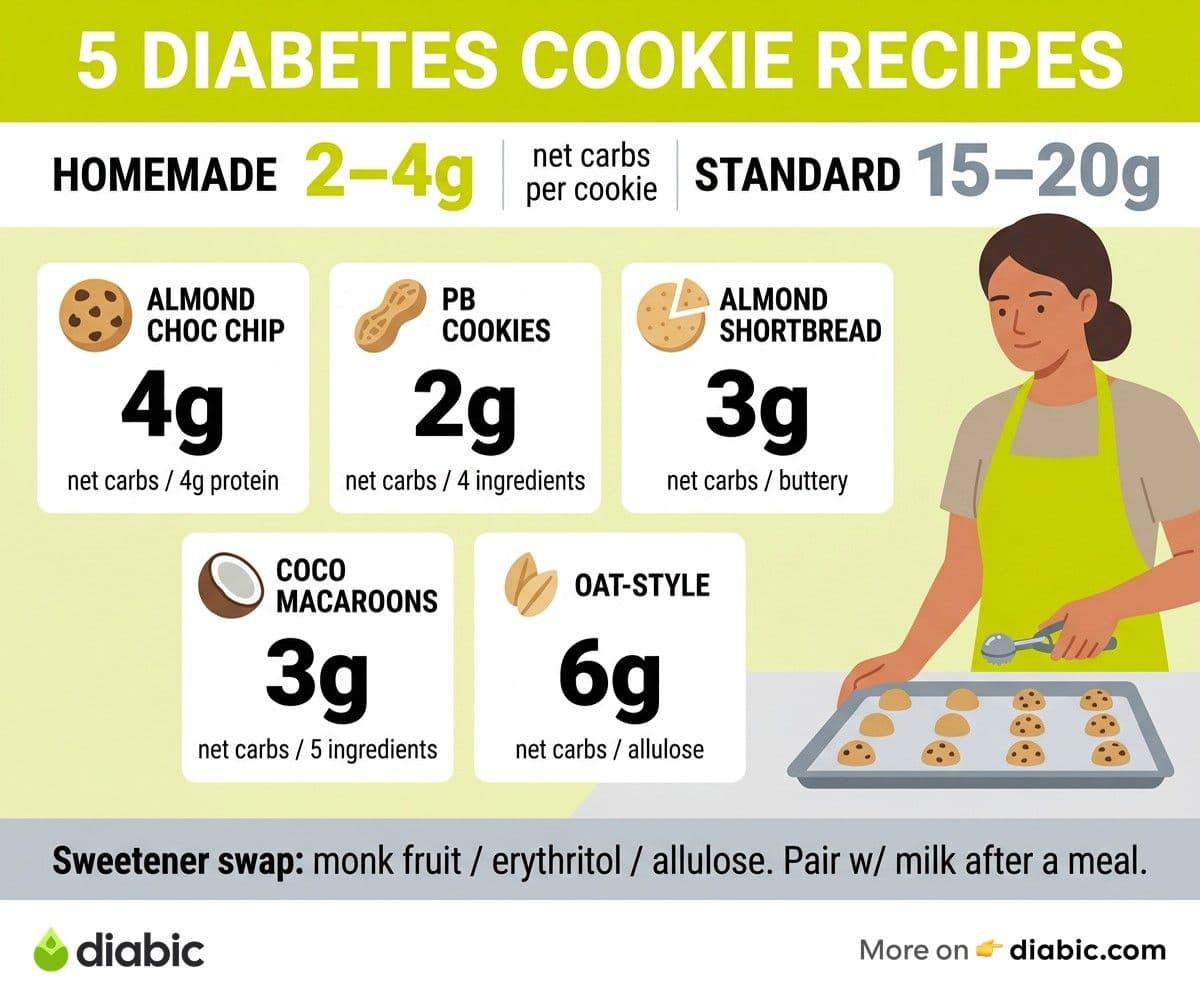
Per cookie: about 130 calories, 4g net carbs, 2g fiber, 4g protein. The combination of fat from almonds and sugar-free chocolate keeps the blood sugar response gentle.
Peanut butter cookies (naturally low-carb)
This recipe is one of the simplest and lowest-carb cookies you can bake. With just four ingredients and no flour at all, it leans on peanut butter for structure and flavor.
Ingredients (makes 16 cookies):
- 1 cup natural peanut butter (no added sugar)
- 1/2 cup granular monk fruit sweetener
- 1 large egg
- 1 teaspoon vanilla extract
Instructions:
- Preheat oven to 350°F (175°C). Line a baking sheet.
- Mix all ingredients in a bowl until smooth.
- Roll into 16 small balls, place on the sheet, and press with a fork in a crosshatch pattern.
- Bake 10 minutes. Let cool fully on the sheet (they are fragile when warm).
Per cookie: about 95 calories, 3g net carbs, 1g fiber, 4g protein. The protein and fat from peanut butter blunt the small amount of carb in the cookie.
Oatmeal cinnamon cookies with raisins
Oats contain beta-glucan fiber, which research has linked to improved post-meal blood sugar response. Cinnamon adds warmth and may also support insulin sensitivity, which is why we lean on it in our cinnamon recipes for diabetes collection.
Ingredients (makes 14 cookies):
- 1 1/2 cups rolled oats (old-fashioned, not instant)
- 1/2 cup almond flour
- 1/3 cup granular monk fruit sweetener
- 1 teaspoon cinnamon
- 1/2 teaspoon baking soda
- 1/4 teaspoon salt
- 1/4 cup melted butter
- 1 egg
- 1 teaspoon vanilla
- 1/4 cup raisins
Instructions:
- Preheat oven to 350°F (175°C). Line a baking sheet.
- Combine oats, almond flour, sweetener, cinnamon, baking soda, and salt.
- Stir in butter, egg, and vanilla. Fold in raisins.
- Drop tablespoon-sized scoops onto the sheet and flatten slightly.
- Bake 12-14 minutes until lightly golden. Cool 5 minutes on the sheet.
Per cookie: about 110 calories, 9g net carbs, 1.5g fiber, 3g protein. This is the highest-carb cookie on the list, so it pairs especially well with a glass of milk or a small handful of nuts to slow absorption.
Coconut macaroons
Coconut macaroons are naturally lower in carbs than most cookies because the bulk of the cookie is shredded coconut, which is mostly fat and fiber. Three ingredients, fifteen minutes, and they look impressive enough for company.
Ingredients (makes 12 macaroons):
- 2 1/2 cups unsweetened shredded coconut
- 1/3 cup granular monk fruit sweetener
- 2 large egg whites
- 1/2 teaspoon vanilla extract
- Pinch of salt
Instructions:
- Preheat oven to 325°F (165°C). Line a baking sheet.
- Whisk egg whites until frothy. Stir in sweetener, vanilla, and salt.
- Fold in shredded coconut until well coated.
- Scoop tablespoon-sized mounds onto the sheet.
- Bake 18-20 minutes until tops are lightly golden. Cool fully before moving.
Per macaroon: about 90 calories, 2g net carbs, 2g fiber, 1g protein. Coconut's fat and fiber make these one of the gentlest options for blood sugar.
No-bake energy bites
These are technically cookies in spirit, no oven required. Great for an afternoon snack and they keep in the fridge for up to a week.
Ingredients (makes 12 bites):
- 1 cup rolled oats
- 1/2 cup natural almond butter
- 2 tablespoons chia seeds
- 2 tablespoons unsweetened cocoa powder
- 3 tablespoons monk fruit sweetener (or to taste)
- 1 teaspoon vanilla
- 2-3 tablespoons unsweetened almond milk
Instructions:
- Mix all ingredients in a bowl until a sticky dough forms. Add almond milk one tablespoon at a time if needed.
- Roll into 12 balls.
- Refrigerate at least 30 minutes before eating.
Per bite: about 105 calories, 6g net carbs, 3g fiber, 4g protein. The chia seeds and almond butter add fiber and fat that buffer the blood sugar response from the oats.
Baking Tips for Blood Sugar-Friendly Cookies
The same principles work across almost any cookie recipe you want to adapt. Once you know the swaps, you can rework family favorites instead of starting from scratch every time. These diabetes-friendly dessert recipes are easier to dial in when you understand which ingredients are doing the work.
Best flour alternatives
Almond flour adds fat, protein, and a tender texture. It works in most cookie recipes as a 1:1 swap for white flour, though you may want to add a little extra binding (an egg yolk or a tablespoon of psyllium husk) since it has no gluten. Coconut flour absorbs liquid like a sponge, so use only about 1/4 the amount called for in regular flour and add an extra egg or two. Oat flour (just blended rolled oats) works well in chewy cookies and adds beta-glucan fiber.
Sweetener options
The American Diabetes Association's guidance on non-nutritive sweeteners supports sweeteners like stevia, monk fruit, and sugar alcohols (erythritol) as alternatives to sugar for people with diabetes. Each has its quirks. Monk fruit is probably the most neutral in flavor and bakes well. Erythritol can have a cooling aftertaste in larger amounts. Stevia is intensely sweet and works best blended with other sweeteners.
Mayo Clinic's overview of sugar substitutes is a useful reference if you want to compare the options before stocking your pantry. Most low-carb baking sweeteners come in a "1:1 sugar replacement" form that simplifies the swap.
Adding protein to slow sugar absorption
Even small additions help. A tablespoon of nut butter, a scoop of unflavored protein powder (or a vanilla one if it suits the recipe), or a few extra ground flax seeds increase the protein content of a cookie and slow the blood sugar response. Pairing your cookie with a glass of milk, a few nuts, or a piece of cheese works similarly if you do not want to change the recipe itself.
For more baked goods that follow these same principles, see our collection of diabetes muffin recipes, which use almost identical swaps.
FAQ
What cookies can people with diabetes eat?
Cookies made with almond flour, coconut flour, or oat flour and sweetened with monk fruit, stevia, or erythritol are generally better options than traditional cookies. Peanut butter cookies, oatmeal cookies, and coconut macaroons all tend to work well because they include protein, fiber, and fat that buffer the blood sugar response. Portion size still matters, one or two cookies after a meal usually fits a diabetes-friendly diet better than a whole batch on an empty stomach.
How do you make sugar-free cookies for diabetes?
Replace regular sugar with monk fruit sweetener, stevia, or erythritol (or a blend of them). Use almond flour, coconut flour, or oat flour instead of white flour. Add nut butter, eggs, or a scoop of protein powder for richness, structure, and to slow the blood sugar response. Most regular cookie recipes can be adapted with a 1:1 sugar replacement and an almond-flour-for-white-flour swap, with small tweaks to liquid and binding ingredients.
Are sugar-free cookies always safe for diabetes?
Not always. Sugar-free does not mean carb-free, and many "sugar-free" store-bought cookies still contain refined flour that can spike blood sugar. Read the nutrition label and look at total carbs and fiber, not just the sugar line. Homemade diabetes recipes cookies give you control over both the sugar and the flour, which is why they tend to produce better blood sugar outcomes than packaged versions.
Baking your own cookies is one of those small pleasures that does not need to come off the table after a diabetes diagnosis. With the right flours, sweeteners, and a little portion awareness, the diabetes recipes cookies in this collection can stay in your weekly rotation and keep your blood sugar in a place you are happy with.
Shahriar P. Shuvo is the founder of Diabic. He has lived with diabetes for over 14 years, and built Diabic to deliver the practical, evidence-based self-management tools he wished existed when he was first diagnosed. By trade, Shahriar is a senior design and frontend engineer with 6+ years shipping products at Agora, Timescale (now Tiger Data), and ShareTrip. He writes from the intersection of lived diabetes experience and product craft, focused on what works in daily management rather than what sounds good in a textbook.
Medically reviewed by
Dr. Shanto Arian is an internal medicine physician now specializing in clinical and aesthetic dermatology, with a parallel academic focus on epidemiology and public health. He holds an MBBS, MPH, MSc (UK), MRCP (UK), MRCPI (Ireland), Diploma in Dermatology (UK), and Diploma in Aesthetic Medicine (USA). Dr. Arian trained in internal medicine, including hospital work on hematology cases such as graft-versus-host disease, before moving toward dermatology. Skin is one of the earliest places diabetes shows itself, from acanthosis nigricans and diabetic dermopathy to slow foot wound healing, and that intersection is where his clinical and Diabic-review work meet. On Diabic, Dr. Arian medically reviews content on diabetes diagnosis, complications, dermatologic manifestations, and pharmacotherapy, ensuring every claim aligns with current ADA, NICE, and peer-reviewed literature.
More from Diet & Fitness
View all
Easy Diabetes Dessert Recipes That Keep Blood Sugar Steady
Six diabetes dessert recipes easy enough for any weeknight, with smart baking swaps, carb counts, and tips to enjoy sweets without the glucose spike.

8 Fish Recipes for Diabetes: Easy Weeknight Meals
Eight easy fish recipes for diabetes packed with omega-3s, lean protein, and almost zero carbs. Simple weeknight meals that support stable blood sugar.

Foods That Spike Blood Sugar (and What to Eat Instead)
Wondering what food spikes blood sugar the most? Get a clear list of trigger foods, the science behind them, and practical swaps for steadier glucose.
Clinician-reviewed habits, plain-language guides, and honest answers - the small shifts that make living with diabetes feel lighter, every day.