Easy Diabetes Muffin Recipes for a Steady-Blood-Sugar
Five easy diabetes muffin recipes with simple ingredient swaps that keep flavor in and blood sugar steady. Includes baking tips, freezer storage, and FAQs.

In this article(13)
A warm muffin and a cup of coffee feels like the easiest breakfast in the world, until you read the label on the bakery version and realize it has more sugar than a slice of cake. The good news is that diabetes muffin recipes can taste just as good once you swap out a few of the worst offenders. The even better news is they take about twenty minutes to make and freeze beautifully for the rest of the week.
We pulled together five recipes our community keeps coming back to, plus the baking tweaks that make them work for steadier blood sugar. None of them require fancy equipment or hard-to-find ingredients. If you can stir batter and scoop it into a tin, you can bake every one of these.
Why Muffins Can Work for a Diabetes Diet
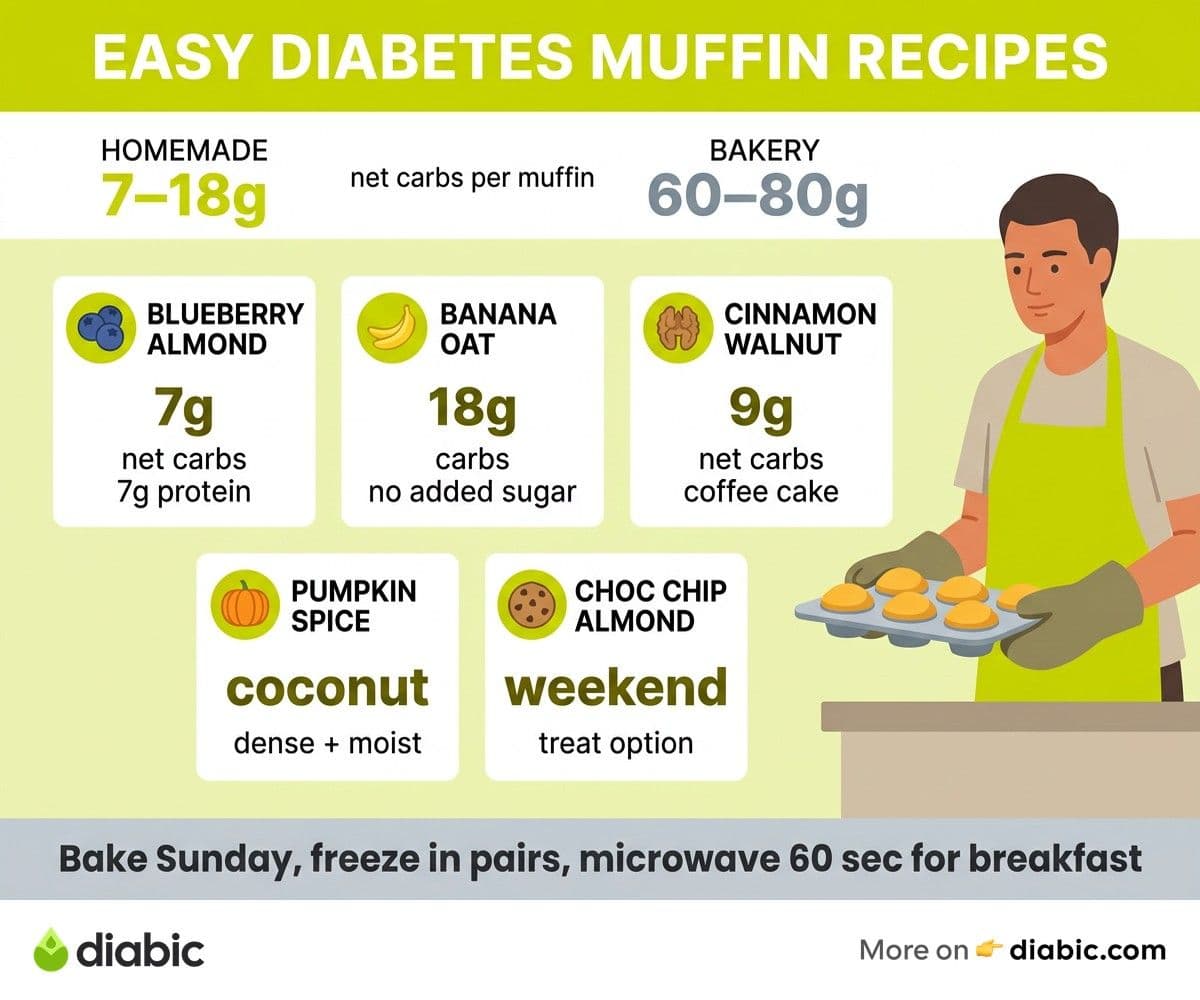
A typical bakery muffin clocks in around 60 to 80 grams of carbs, most of it refined flour and added sugar. That kind of load can send glucose climbing fast, especially first thing in the morning when insulin sensitivity tends to be lower according to the NIDDK. The same is often true of muffins from grocery store mixes, which is why so many people in our community ask the same question we hear about diabetes bread recipes: is there a version that actually works?
The short answer is yes. The longer answer is that diabetes-friendly muffins use three core swaps. First, they replace refined wheat flour with almond flour, oat flour, or coconut flour, which slows digestion and adds fiber. Second, they cut added sugar in favor of mashed fruit, monk fruit, or a small amount of pure maple syrup. Third, they boost protein and healthy fat with eggs, Greek yogurt, nuts, or seeds, which blunts the blood sugar response.
Muffins also happen to be one of the easiest meal-prep items in any kitchen. Bake a dozen on Sunday, freeze them in pairs, and pull one out each morning. With a side of eggs or a scoop of cottage cheese, you have a balanced breakfast that travels well and reheats in under a minute.
Easy Muffin Recipes for Diabetes
These five diabetes dessert recipes easy enough for a weeknight bake all use the same general approach: nutrient-dense flours, minimal added sugar, and enough fiber and protein to keep blood sugar from spiking. Bake times run between 18 and 25 minutes, and most yield 10 to 12 muffins.
1. Blueberry Almond Flour Muffins
These are the closest thing to a classic blueberry muffin we have found. Almond flour gives them a tender crumb without the carb load of wheat flour.
Ingredients: 2 cups almond flour, 2 large eggs, 1/3 cup unsweetened almond milk, 1/4 cup monk fruit sweetener, 2 tablespoons melted coconut oil, 1 teaspoon vanilla extract, 1 teaspoon baking powder, 1/4 teaspoon salt, 1 cup fresh or frozen blueberries.
Instructions: Preheat oven to 350°F and line a muffin tin. Whisk eggs, almond milk, sweetener, oil, and vanilla. Stir in almond flour, baking powder, and salt until just combined. Fold in blueberries. Divide into 10 cups and bake 22 to 25 minutes.
Per muffin: about 175 calories, 7g net carbs, 3g fiber, 7g protein. The combination of almond flour and eggs keeps the carb count low while the berries deliver antioxidants and a hint of natural sweetness.
2. Banana Oat Muffins (No Added Sugar)
The bananas do all the sweetening here, which makes these a favorite for kids and a nice option when you want a treat without any sugar substitutes.
Ingredients: 2 ripe bananas (mashed), 2 cups rolled oats, 2 eggs, 1/2 cup plain Greek yogurt, 1 teaspoon baking soda, 1 teaspoon cinnamon, 1/4 cup chopped walnuts.
Instructions: Blend oats into a coarse flour. Mix all ingredients in one bowl. Scoop into 10 muffin cups and bake at 350°F for 20 minutes.
Per muffin: about 140 calories, 18g net carbs, 3g fiber, 6g protein. Oats are a slow-digesting whole grain, and the Greek yogurt adds protein that helps soften the glucose curve. Pair with a hard-boiled egg for a more balanced breakfast.
3. Cinnamon Walnut Muffins
Cinnamon brings warmth and a touch of natural sweetness, and walnuts add omega-3s and crunch. If you like a coffee-cake vibe in the morning, this is the one.
Ingredients: 1 1/2 cups almond flour, 1/2 cup oat flour, 2 eggs, 1/3 cup unsweetened applesauce, 1/4 cup monk fruit sweetener, 2 teaspoons cinnamon, 1 teaspoon baking powder, 1/2 cup chopped walnuts.
Instructions: Mix wet ingredients, fold in dry ingredients and walnuts, bake at 350°F for 20 to 22 minutes.
Per muffin: about 190 calories, 9g net carbs, 3g fiber, 6g protein. For more ideas in this flavor family, our cinnamon recipes for diabetes post has additional baked goods worth trying.
4. Pumpkin Spice Muffins with Coconut Flour
Coconut flour is incredibly absorbent, so a little goes a long way. These muffins are dense, moist, and taste like fall in a wrapper.
Ingredients: 1/2 cup coconut flour, 4 eggs, 3/4 cup pumpkin puree, 1/4 cup monk fruit sweetener, 1/4 cup melted butter, 1 teaspoon pumpkin pie spice, 1/2 teaspoon baking soda.
Instructions: Whisk eggs, pumpkin, sweetener, and butter. Stir in coconut flour, spices, and baking soda. Let batter rest 5 minutes (it thickens). Bake at 350°F for 22 minutes.
Per muffin: about 130 calories, 5g net carbs, 3g fiber, 5g protein. Coconut flour is one of the lowest-carb baking flours available, and pumpkin adds vitamin A and a creamy texture without extra sugar.
5. Zucchini Chocolate Chip Muffins
Yes, chocolate chips. Use the sugar-free or 85% dark variety, keep the portion modest, and you get a treat that fits a balanced eating plan.
Ingredients: 1 cup almond flour, 1/2 cup oat flour, 1 cup grated zucchini (squeezed dry), 2 eggs, 1/4 cup monk fruit sweetener, 1/4 cup unsweetened almond milk, 1 teaspoon baking powder, 1/3 cup sugar-free chocolate chips.
Instructions: Combine all ingredients in one bowl. Bake at 350°F for 20 to 22 minutes in lined muffin cups.
Per muffin: about 165 calories, 8g net carbs, 3g fiber, 6g protein. The zucchini disappears into the batter and adds moisture without flavor. If you like sweeter baked goods, our diabetes-friendly cookie recipes follow the same general approach.
Muffin Baking Tips for Blood Sugar Management
The recipes above work as written, but a few habits will make any muffin recipe more diabetes-friendly. The first is leaning on eggs and Greek yogurt for moisture instead of oil or extra liquid. Eggs add about 6 grams of protein each, and a half-cup of Greek yogurt brings another 10 grams. That protein helps slow how quickly carbs hit the bloodstream.
Sweeteners are the second lever. The American Heart Association's overview of non-nutritive sweeteners explains that options like monk fruit, stevia, allulose, and erythritol can replace sugar in baking with little to no impact on blood glucose. Mashed banana, unsweetened applesauce, and a small amount of pure maple syrup also work, though those add some carbs. We tend to combine a small amount of fruit-based sweetness with monk fruit to get the best flavor.
Storage matters more than people think. Freshly baked muffins keep at room temperature for two days, in the fridge for five, and in the freezer for three months. Wrap them individually in parchment, then store in a freezer bag. Reheat from frozen at 30 seconds in the microwave or 10 minutes in a 300°F oven. A frozen-then-reheated muffin actually has slightly lower glucose impact than a fresh one because some of the starch becomes resistant starch.
From my experience: After 14 years of living with diabetes, the muffin question I asked myself most often was simple. Could I have one without watching my CGM climb for the next two hours? The answer turned out to be yes, but only after I stopped trying to recreate bakery muffins and accepted that almond-flour muffins are their own thing. Pair one with two scrambled eggs, and my morning numbers stay flat. Eat one alone on an empty stomach, and the rise is real even with the cleanest recipe.
Frequently Asked Questions About Diabetes Muffin Recipes
What muffin recipes are safe for people with diabetes?
Muffins made with almond flour, oat flour, or coconut flour and sweetened with monk fruit, stevia, or mashed banana are safer options than traditional bakery muffins. Adding nuts, seeds, eggs, or Greek yogurt boosts protein and fiber, which helps slow the blood sugar response. Aim for muffins with at least 3 grams of fiber and under 15 grams of net carbs per serving.
Can people with diabetes eat muffins for breakfast?
Yes, when made with diabetes-friendly ingredients and paired thoughtfully. A muffin alone, even a healthy one, is still mostly carbs and can spike blood sugar in the morning when insulin sensitivity is lower. Pair the muffin with eggs, Greek yogurt, cottage cheese, or a small handful of nuts to create a balanced breakfast. Research suggests that protein and fat alongside carbs lead to a flatter glucose response.
How many carbs should a diabetes-friendly muffin have?
We aim for 8 to 18 grams of net carbs per muffin, depending on the flour. Almond and coconut flour muffins typically come in lower, while oat-based muffins land in the middle. Talk to your doctor or a registered dietitian about the carb target that fits your meal plan.
Can these muffin recipes be made gluten-free?
Yes. Almond flour, coconut flour, and certified gluten-free oat flour are all naturally gluten-free. Just check that your baking powder and any add-ins (like chocolate chips) are also labeled gluten-free.
A simple swap of flour, a different sweetener, and a thoughtful pairing turn the morning muffin from a glucose spike into a satisfying part of the day. Bake a batch this weekend and see which one becomes your regular. Keeping a few of these diabetes muffin recipes in the freezer is one of the small habits that makes the rest of the week easier.
Shahriar P. Shuvo is the founder of Diabic. He has lived with diabetes for over 14 years, and built Diabic to deliver the practical, evidence-based self-management tools he wished existed when he was first diagnosed. By trade, Shahriar is a senior design and frontend engineer with 6+ years shipping products at Agora, Timescale (now Tiger Data), and ShareTrip. He writes from the intersection of lived diabetes experience and product craft, focused on what works in daily management rather than what sounds good in a textbook.
Medically reviewed by
Dr. Rezwana Parvin Rumpa is an obstetrics and gynaecology specialist with clinical focus on gestational diabetes, PCOS, and fertility. She holds the MRCOG (Final Part) from the Royal College of Obstetricians and Gynaecologists in London, the MRCPI (Final Part) from the Royal College of Physicians of Ireland, and an MBBS from Shaheed Monsur Ali Medical College under Dhaka University. Dr. Rumpa serves as a Senior Medical Officer in the Obs and Gynae department at BRB Hospitals Ltd, where she has spent three years managing prenatal care, emergency obstetric cases, and women's-health surgery. On Diabic, she medically reviews content for women living with diabetes, with particular attention to pregnancy, PCOS, and reproductive-health intersections.
More from Diet & Fitness
View all
Simple Diabetes Exercise Routine for Beginners
A simple diabetes exercise routine for beginners with a 7-day plan, strength basics, and safety tips to help you move more without feeling overwhelmed.

Diabetes Friendly Smoothie Recipes: 5 No-Spike Picks
Five diabetes friendly smoothie recipes that balance protein, fat, and fiber to keep blood sugar steady. Includes a simple framework for building your own.

Can Exercise Prevent Diabetes? Research Says Yes
Can exercise prevent diabetes? Landmark studies show a 58% lower risk with regular activity. Here's how much you need and which workouts help most.
Clinician-reviewed habits, plain-language guides, and honest answers - the small shifts that make living with diabetes feel lighter, every day.