Pre Diabetes Diet and Exercise Plan
A practical pre diabetes diet and exercise plan with weekly meals, walks, and strength sessions to help lower A1C and prevent type 2 diabetes.

In this article(10)
A pre diabetes diet and exercise plan gives you a clear roadmap for tackling prediabetes from two angles at once. Research shows that combining dietary changes with regular physical activity is the most effective strategy for preventing progression to type 2 diabetes, and it works across most ages, body types, and starting points.
What follows is not a crash plan or a 30-day reset. It is the kind of weekly structure that fits into a real life, builds slowly, and shows up in your numbers over a few months. The goal is steady A1C movement, better energy, and a routine you can actually keep.
Why Combining Diet and Exercise Matters
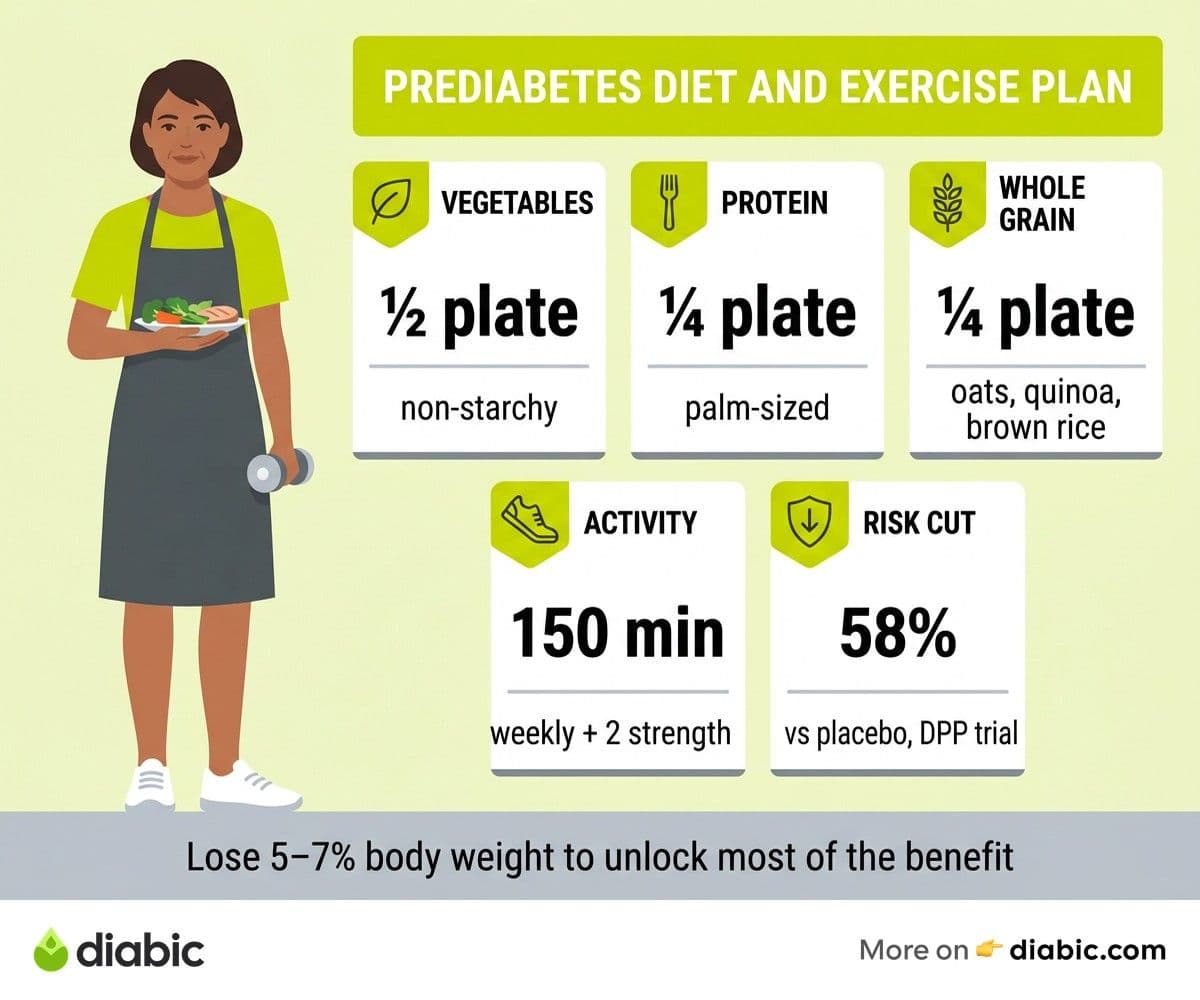
The diabetes exercise diet pairing is not just a nice idea. It is the most-studied approach to reversing prediabetes, and the data behind it is strong. The landmark Diabetes Prevention Program, funded by the NIH, found that combining lifestyle changes (modest weight loss, healthier eating, and 150 minutes of weekly exercise) reduced the risk of progressing to type 2 diabetes by 58% over three years. That outperformed metformin in the same trial.
The two halves of any pre diabetes diet and exercise plan do different jobs, which is why one without the other gives you a smaller result. Diet lowers the blood sugar load you are asking your body to handle. Exercise improves how efficiently your muscles pull glucose out of the bloodstream, with or without insulin. You need both the input side and the output side working together.
Weight is part of the picture, but a smaller part than many people assume. Losing 5 to 7% of body weight produced most of the benefit in the prevention trials. That is roughly 10 to 15 pounds for someone who weighs 200, not a dramatic transformation. For more on this, see our piece on weight loss for prediabetes, which breaks down the realistic targets and timelines.
Exercise alone produces meaningful effects too, but smaller. Diet alone helps, but tends to plateau. The combined approach compounds. Our deeper write-up on can exercise prevent diabetes covers the mechanisms in detail.
The Diet Side of Your Plan
Diet and exercise for type 2 diabetes prevention starts in the kitchen, because what lands on your plate sets the floor for everything your blood sugar has to do that day. The eating pattern that has the strongest evidence is not exotic. It looks a lot like a Mediterranean-style plate with portion awareness layered in.
The American Diabetes Association summarizes the core moves clearly: emphasize non-starchy vegetables, lean proteins, whole grains, legumes, and healthy fats; reduce refined carbs, added sugars, and ultra-processed snacks; and watch portion sizes, especially for grains and starchy sides.
A few practical anchors:
- Build half your plate from non-starchy vegetables. Leafy greens, broccoli, peppers, zucchini, cauliflower, and tomatoes are foundational.
- Add a palm-sized portion of lean protein at each meal. Fish, chicken, eggs, tofu, tempeh, beans, and Greek yogurt all qualify.
- Choose intact whole grains over refined. Oats, barley, quinoa, and brown rice digest more slowly than bread, white rice, and pasta.
- Cut sugary drinks first. Soda, sweet tea, fruit juice, and flavored coffees are the highest-uses swap most people can make.
- Eat at regular times. Steady meal timing keeps blood sugar more predictable than long fasts followed by big meals.
For a fuller meal-by-meal breakdown, our prediabetes diet guide covers what to eat and what to avoid in detail.
From my experience: After 14 years with diabetes, I can say the eating change that moved my numbers most was not a dramatic diet. It was simply pairing every carbohydrate with a protein and a fiber source. Toast became toast plus eggs plus avocado. Rice became rice plus chicken plus a big pile of vegetables. The plate stayed familiar, and the curves on my monitor flattened out.
The Exercise Side of Your Plan
Type 2 diabetes exercise and diet routines fail when the exercise side is too ambitious. Almost no one sustains a five-day-a-week gym schedule from a standing start. The plan below is built around the CDC National Diabetes Prevention Program targets, broken down into pieces that fit into a normal week.
The two numbers that matter:
- 150 minutes of moderate-intensity activity per week. This breaks down to 30 minutes, five days a week, or 25 minutes, six days, or any combination that adds up.
- Two strength training sessions per week. Bodyweight, resistance bands, or weights all work. Sessions can be 20 to 30 minutes.
Walking is the most underrated tool here. A brisk walk where you can talk but not sing comfortably hits the moderate-intensity zone for most people. Walks after meals are particularly effective. Studies show that a 10 to 15 minute post-meal walk can blunt the glucose spike from that meal by 20 to 30%, which adds up across a week.
Strength training matters because muscle is metabolically active tissue. The more lean muscle you carry, the more glucose your body can pull out of the bloodstream and store. Two sessions a week is enough to build and maintain enough muscle to make a real difference.
Tracking helps. Not because you need to be obsessive about it, but because what gets measured tends to get done. A simple step counter, a calendar with checkmarks, or a free app is enough.
A Sample Pre Diabetes Diet and Exercise Plan Week
Here is what the combined plan can look like in a normal week. Adjust the timing to match your schedule. The structure matters more than the specific day:
- Monday: Breakfast: oats with berries, walnuts, and Greek yogurt. Lunch: large salad with grilled chicken, chickpeas, olive oil. Dinner: salmon, quinoa, roasted vegetables. Activity: 30-minute brisk walk after dinner.
- Tuesday: Breakfast: vegetable omelet with avocado. Lunch: lentil soup, side salad. Dinner: stir-fried tofu with mixed vegetables and brown rice. Activity: 25-minute strength session (squats, push-ups, rows, planks).
- Wednesday: Breakfast: Greek yogurt with chia seeds and a small handful of berries. Lunch: turkey and hummus wrap on whole-grain tortilla. Dinner: chicken thighs, roasted sweet potato, broccoli. Activity: 30-minute walk, ideally after the largest meal.
- Thursday: Breakfast: scrambled eggs with spinach and one slice of whole-grain toast. Lunch: tuna salad over greens. Dinner: turkey chili with beans. Activity: rest or gentle stretching.
- Friday: Breakfast: smoothie with unsweetened protein powder, spinach, frozen berries, and almond milk. Lunch: leftover chili. Dinner: shrimp tacos in lettuce cups with black beans. Activity: 25-minute strength session (slightly heavier or harder than Tuesday).
- Saturday: A more flexible day. Breakfast and lunch from your favorites within the framework. Dinner out is fine if you favor protein, vegetables, and watch refined carbs and added sugars. Activity: 45 to 60 minutes of something you enjoy (hiking, cycling, swimming, dancing).
- Sunday: Meal prep day. A roasted protein, two vegetable sides, and a grain prepared in bulk for the week. Activity: 20 to 30 minute walk, plus any prep movement.
The weekly total: roughly 150 minutes of moderate cardio, two strength sessions, and three meals a day built on the same simple template. Nothing exotic, nothing punishing, and nothing that requires a perfect week to deliver results.
If your schedule is tight, shrink the units rather than skipping the day. A 10-minute walk beats a planned 30-minute walk that does not happen. Three 10-minute walks across the day give you the same metabolic benefit as one 30-minute walk.
FAQ
What diet and exercise plan works for prediabetes?
A combination of whole-food-focused eating (emphasizing vegetables, lean proteins, whole grains, and healthy fats) with 150 minutes of moderate exercise per week has the strongest evidence. The Diabetes Prevention Program showed this approach reduces diabetes risk by 58% over three years, even with modest weight loss of 5 to 7% of body weight.
How much exercise do you need for prediabetes?
Aim for 150 minutes of moderate-intensity exercise per week (like brisk walking) plus 2 sessions of strength training. Even 10-minute walks after meals provide meaningful blood sugar benefits and count toward your weekly total. Consistency beats intensity in the early months.
How long does it take for diet and exercise to lower A1C?
Most people see measurable A1C improvement within 3 to 6 months of consistent changes. Glucose readings often respond within days or weeks, but A1C reflects an average over about 3 months, so it lags behind. Talk to your doctor about the right testing schedule for your situation.
Can prediabetes be reversed with diet and exercise alone?
For many people, yes. Studies show that a meaningful percentage of people with prediabetes can return to normal blood sugar levels through lifestyle changes alone, especially when caught early. Reversal becomes harder the longer prediabetes has been present, which is why starting now matters more than starting perfectly.
What if I cannot do 150 minutes of exercise right away?
Start where you are. Even 10 minutes of daily walking produces benefits, and adding 5 minutes per week is a sustainable way to build up. The risk of doing too much too soon is injury and burnout, which sets you back further than a slower start would.
The pre diabetes diet and exercise plan that actually moves your numbers is the one you can keep doing in week 12 and week 26, not the one that looks impressive in week one. Pick a starting point smaller than feels exciting, repeat it, and let the months do the work. Talk to your healthcare provider about your specific targets and any conditions that might shape the plan, and check in with your A1C every three to six months to see how it is trending.
Shahriar P. Shuvo is the founder of Diabic. He has lived with diabetes for over 14 years, and built Diabic to deliver the practical, evidence-based self-management tools he wished existed when he was first diagnosed. By trade, Shahriar is a senior design and frontend engineer with 6+ years shipping products at Agora, Timescale (now Tiger Data), and ShareTrip. He writes from the intersection of lived diabetes experience and product craft, focused on what works in daily management rather than what sounds good in a textbook.
Medically reviewed by
Dr. Shanto Arian is an internal medicine physician now specializing in clinical and aesthetic dermatology, with a parallel academic focus on epidemiology and public health. He holds an MBBS, MPH, MSc (UK), MRCP (UK), MRCPI (Ireland), Diploma in Dermatology (UK), and Diploma in Aesthetic Medicine (USA). Dr. Arian trained in internal medicine, including hospital work on hematology cases such as graft-versus-host disease, before moving toward dermatology. Skin is one of the earliest places diabetes shows itself, from acanthosis nigricans and diabetic dermopathy to slow foot wound healing, and that intersection is where his clinical and Diabic-review work meet. On Diabic, Dr. Arian medically reviews content on diabetes diagnosis, complications, dermatologic manifestations, and pharmacotherapy, ensuring every claim aligns with current ADA, NICE, and peer-reviewed literature.
More from Diet & Fitness
View all
Simple Diabetes Exercise Routine for Beginners
A simple diabetes exercise routine for beginners with a 7-day plan, strength basics, and safety tips to help you move more without feeling overwhelmed.

Diabetes Friendly Smoothie Recipes: 5 No-Spike Picks
Five diabetes friendly smoothie recipes that balance protein, fat, and fiber to keep blood sugar steady. Includes a simple framework for building your own.

Can Exercise Prevent Diabetes? Research Says Yes
Can exercise prevent diabetes? Landmark studies show a 58% lower risk with regular activity. Here's how much you need and which workouts help most.
Clinician-reviewed habits, plain-language guides, and honest answers - the small shifts that make living with diabetes feel lighter, every day.