Best Order to Eat Food for Blood Sugar
The best order to eat food for blood sugar can cut post-meal spikes by up to 37%. Here is what research shows and how to apply it at every meal.

In this article(12)
Imagine sitting down to a plate of grilled chicken, roasted vegetables, and rice. Same plate, same calories, same carbs. Now imagine that the order in which you eat those three foods could change how high your blood sugar climbs in the next hour. That is the idea behind meal sequencing, and the research supporting it is more solid than most diabetes nutrition tips you have probably tried.
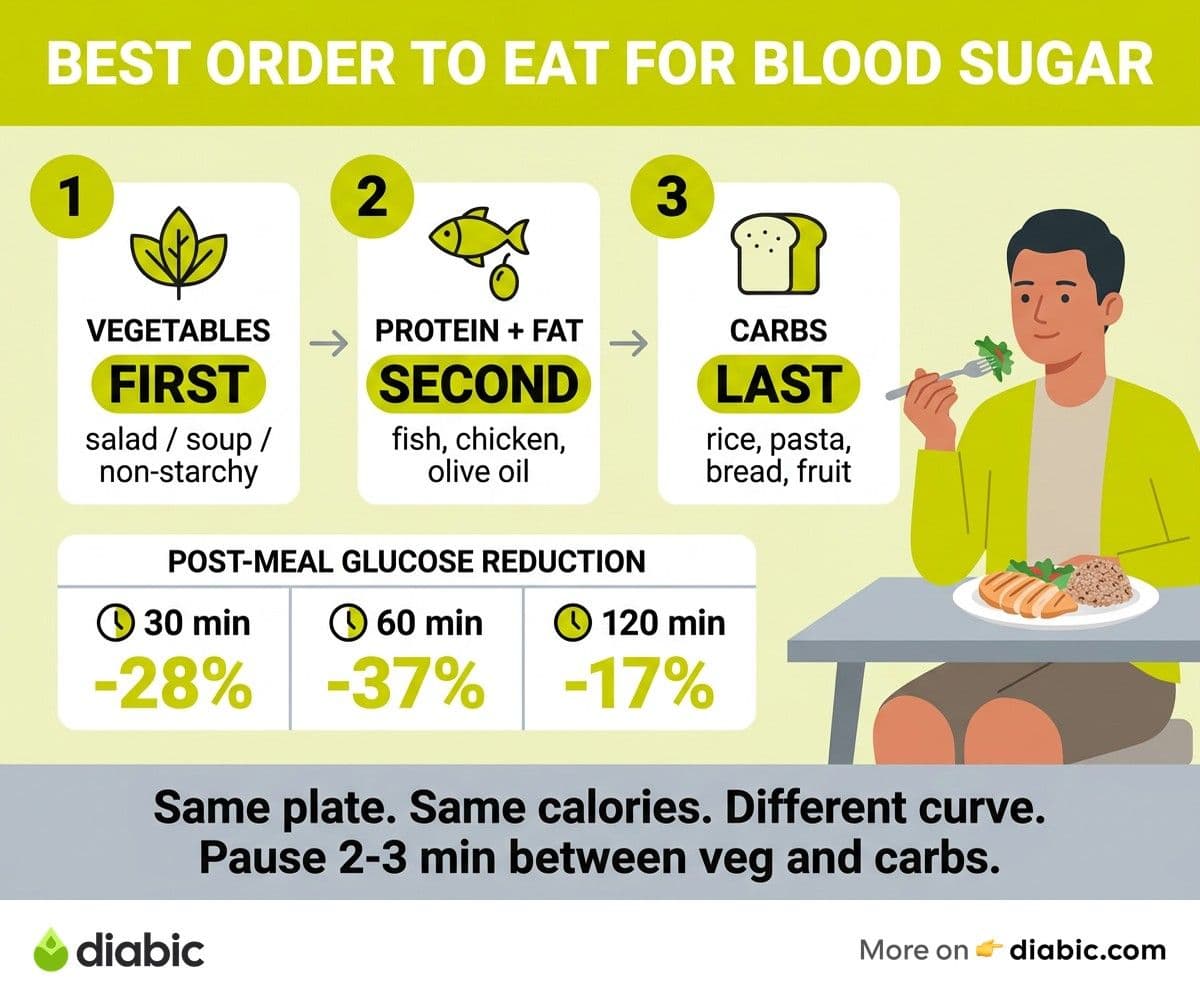
The best order to eat food for blood sugar is straightforward. Vegetables first, protein and fat second, carbohydrates last. Studies on people with type 2 diabetes have found this simple change can reduce post-meal glucose spikes by 30 to 40 percent without changing the food itself.
We want to walk you through why this works, what the evidence actually shows, and how to use it at home, at restaurants, and in real life when there is a kid asking for ketchup and dinner is getting cold.
Does the Order You Eat Food Actually Affect Blood Sugar?
When meal sequencing first started circulating online, plenty of clinicians were skeptical. The idea seemed almost too simple. Then the data started accumulating. The pivotal study came from researchers at Weill Cornell Medical College, published in Diabetes Care. Eleven adults with type 2 diabetes ate the exact same meal (ciabatta, orange juice, chicken, salad, broccoli) on three different days, in three different orders. When they ate vegetables and protein first and carbs last, their post-meal glucose was 28% lower at 30 minutes, 36.7% lower at 60 minutes, and 16.8% lower at 120 minutes.
The mechanism is not mysterious. Fiber from vegetables slows gastric emptying, which is the rate at which food leaves the stomach and enters the small intestine where carbohydrates get absorbed. Protein triggers the release of GLP-1, an incretin hormone that further slows gastric emptying and prompts insulin release before glucose hits the bloodstream. By the time the carbohydrates arrive, the system is primed to handle them more gradually.
A separate study published in BMJ Open Diabetes Research and Care examined Japanese participants and found similar results with vegetable-first eating sustained over months. Participants saw improvements not just in post-meal glucose but in HbA1c over time.
The most compelling part of these findings is what is not changing. Portions are the same. Macronutrients are the same. Total calories are the same. The reduction in glucose response comes purely from the order of consumption. For anyone tired of being told to give up the foods they love, this approach offers something different: keep the foods, change the choreography.
Foods That Stabilize Blood Sugar When Eaten First
If you ask what food stabilizes blood sugar when you eat it before everything else, the research points clearly toward two categories: non-starchy vegetables and protein. Both work through complementary mechanisms.
Non-starchy vegetables top the list because they deliver fiber with very few carbohydrates. A serving of leafy greens, broccoli, cauliflower, peppers, cucumbers, zucchini, asparagus, or green beans creates a fibrous mat in the stomach that slows everything that follows. The European salad-before-pasta tradition turns out to be more than cultural habit. It is functional metabolism.
Protein sources slow glucose absorption through hormonal signaling. Fish, chicken, eggs, tofu, Greek yogurt, cottage cheese, and lean cuts of beef or pork all qualify. Eating a few bites of protein before your starches gives your gut time to release GLP-1 and prepare for what is coming. Even small amounts (a couple of ounces) appear to make a measurable difference in glucose response.
Healthy fats deserve a mention too. Olive oil, avocado, nuts, and seeds slow gastric emptying further. A drizzle of olive oil on the salad you eat first, or a small handful of almonds before a carb-heavy meal, contributes to the buffer effect. This is one reason a Mediterranean-style meal often produces gentler glucose curves than a low-fat alternative with the same carb count.
The flip side is worth knowing. Foods that hit your bloodstream fast on an empty stomach (white bread, sugary drinks, fruit juices, refined cereals, candy) are the ones we want to push to the end of the meal. We have a deeper guide on foods that spike blood sugar if you want to map out which carbs in your kitchen tend to cause the steepest climbs.
How Food Order Affects Blood Sugar After Meals
The way food order changes blood sugar after food is most visible in continuous glucose monitor (CGM) data. When people wear CGMs and eat the same meal in different orders, the pattern is consistent: a sharp peak when carbs come first, a more rolling, lower peak when carbs come last.
In the Cornell study, the carbs-first peak was nearly twice the height of the carbs-last peak at the one-hour mark. The area under the glucose curve, which is a better measure of total glycemic impact than peak alone, was significantly smaller for the carbs-last group. This is not a small effect. For someone with type 2 diabetes, it can mean the difference between a post-meal reading in the 130s versus the 200s.
The benefit appears to last for the duration of that meal's digestion, roughly two to three hours. It does not carry forward to the next meal. So meal sequencing is something you do at every meal, not a once-a-day intervention. Knowing what normal blood sugar after food looks like helps you read your own CGM patterns and understand whether the order change is making a real difference for you.
The effect tends to be more pronounced in people with type 2 diabetes than in people with normal glucose tolerance. This is partly because folks with diabetes have more impaired insulin response, so anything that gives the pancreas more time to react helps more. People with prediabetes also see meaningful benefits. People without any glucose issues see smaller, but still measurable, changes.
Foods That Help Regulate Blood Sugar
When asking what food regulates blood sugar across the broader meal, fiber leads the conversation. The American Diabetes Association recommends 25 to 38 grams of fiber per day for most adults. The ADA's Nutrition Therapy Recommendations emphasize that high-fiber meals are associated with improved glycemic control and lower cardiovascular risk in people with diabetes.
Beyond fiber, a few specific foods show up repeatedly in glucose research. Vinegar, particularly apple cider vinegar, has been studied for its blunting effect on post-meal glucose. A tablespoon in water before a carb-containing meal, or as part of a vinaigrette on the salad you eat first, may reduce glucose response by an additional 10 to 20 percent in some studies. The mechanism appears to involve slower gastric emptying and improved insulin sensitivity at the muscle level.
Resistant starch is another worth mentioning. Cooked and cooled potatoes, cooked and cooled rice, green bananas, and oats contain starch that resists digestion in the small intestine, behaving more like fiber than a fast carb. Reheating cooked-and-cooled rice does not eliminate the resistant starch. This is a useful trick for keeping rice on the menu while reducing its glycemic punch.
Combining strategies multiplies the effect. Vegetables first, protein second, vinegar dressing on the salad, and a 10-minute walk after the meal can together cut a glucose spike substantially. None of these is a silver bullet. Stacked, they become powerful.
Putting the Best Order to Eat Food for Blood Sugar Into Practice
Reading the research is one thing. Actually eating in this order at every meal, in real conditions, is another. Here is the protocol we use and recommend, kept simple on purpose. The best order to eat food for blood sugar works because it is repeatable, not because it is fancy.
Start with vegetables. A small salad, a few forkfuls of roasted broccoli, a cup of vegetable soup, or a serving of pickled or fermented vegetables works. Eat at least a third to half of the vegetables before moving on. If your meal does not have visible vegetables, you have a clue about what to add.
Move to protein and fat next. The chicken, fish, eggs, tofu, or beans, plus any oil, butter, cheese, or avocado on the plate. Eat the bulk of this before the carbs. Two to three minutes is often enough.
Finish with carbohydrates. The rice, pasta, bread, potatoes, fruit, or sweet item. By this point, your stomach is partly full of fiber and protein, your gut hormones are activated, and the glucose impact will be substantially smaller. The ADA's nutrition guidance supports flexible meal patterns that emphasize vegetables and lean protein, and meal sequencing fits naturally inside that framework.
Here is how the three steps stack up at a glance:
The rows are sequential, not optional. Even a two- to three-minute pause between vegetables and carbs is usually enough to capture most of the benefit.
Restaurants are easier than people expect. Order a salad as a starter and finish most of it before the main course arrives. With pasta dishes, eat the side vegetables first. With sandwiches, eat the lettuce, tomato, and protein before working on the bread. With sushi, start with edamame or seaweed salad, then sashimi, then rolls.
Common dishes adapt well. For a rice bowl, push the rice to one side and eat the protein and vegetables first. For pasta night, start with a large green salad and eat half before the pasta. For pizza, start with a salad and eat protein toppings off one slice before eating the crust. None of this requires giving up the foods you love. It just changes the order they enter your stomach.
There are moments when meal order matters less. Snacks of a single food, very small meals, and meals that are mostly protein and fat anyway will not benefit much. The bigger the carb load and the more mixed the plate, the more meal sequencing helps.
Should You Eat Vegetables Before Carbs?
The question of whether you should eat vegetables before carbs for blood sugar comes up often enough that it deserves a focused answer. The research consistently supports it. A study published in the Journal of Clinical Biochemistry and Nutrition on Japanese adults with type 2 diabetes found that eating vegetables before carbohydrates over 24 months produced significantly better HbA1c outcomes than calorie counting alone.
Practical challenges show up in real life. Family meals are often served all at once. Restaurants bring everything together. Cultural norms can make eating salad first feel awkward. The workaround is rarely dramatic. You can request the salad as a starter when ordering. You can serve yourself vegetables first at home and take a few bites before plating the rest. You can keep raw cherry tomatoes, cucumber slices, or carrot sticks on the table to nibble while waiting.
Explaining this to family and friends usually takes one sentence. "I am trying to eat my vegetables first because it helps my blood sugar." Most people are curious rather than judgmental. Some will start doing it themselves.
This approach pairs naturally with the diabetes plate method explained, which sets up half your plate as non-starchy vegetables, a quarter as lean protein, and a quarter as carbohydrates. Meal sequencing simply adds a time dimension to the plate method's space dimension. You build the plate the right way, then you eat it in the right order.
From my experience: I started practicing meal sequencing about three years into my diabetes management, well after I had already adjusted my carb amounts and exercise routine. I expected a small effect at most. What I actually saw on my CGM was a flatter post-meal curve at every meal where I led with vegetables, even when the carb content was identical. It became one of the easiest, lowest-friction changes I have made, and the best order to eat food for blood sugar is now just how I eat.
Frequently Asked Questions
Does the order you eat food affect blood sugar?
Yes. Research shows that eating vegetables and protein before carbohydrates significantly reduces post-meal blood sugar spikes. One Cornell study found that eating carbs last reduced glucose at 60 minutes by nearly 37% compared to eating carbs first, even with identical foods and portions. The benefit comes from slowed gastric emptying and improved hormonal response to the meal.
Should you eat vegetables before carbs for blood sugar?
Studies consistently support this approach. Eating vegetables first delivers fiber that slows digestion, creating a buffer before carbohydrates reach the small intestine. Protein eaten second further slows gastric emptying and triggers GLP-1 release. The result is a lower, more gradual rise in blood sugar after the meal.
How long does the meal sequencing benefit last?
The blood sugar benefit applies to the meal you are eating. It does not carry forward to your next meal. To get the effect at every meal, you need to use the vegetables-first, carbs-last order each time you eat.
Does meal order help if I do not have diabetes?
The effect tends to be smaller in people without diabetes because their insulin response is already efficient. People with prediabetes, insulin resistance, or PCOS often see meaningful improvements. Even people with normal glucose tolerance show modest reductions in post-meal glucose with meal sequencing.
Can I drink water or have a beverage during the meal?
Yes. Water, unsweetened tea, or coffee with the meal does not affect the order benefit. Sugary drinks, juice, or soda act like fast carbs and should be limited or saved for the end of the meal.
If you want one habit to test for the next two weeks, try the best order to eat food for blood sugar at your largest meal of the day and watch your post-meal numbers. Most people notice a flatter curve within the first few meals, and the change costs nothing extra in time, money, or effort. From there, you can layer in a short walk after eating, a vinegar dressing on the starter salad, or any of the other small levers we covered above.
Shahriar P. Shuvo is the founder of Diabic. He has lived with diabetes for over 14 years, and built Diabic to deliver the practical, evidence-based self-management tools he wished existed when he was first diagnosed. By trade, Shahriar is a senior design and frontend engineer with 6+ years shipping products at Agora, Timescale (now Tiger Data), and ShareTrip. He writes from the intersection of lived diabetes experience and product craft, focused on what works in daily management rather than what sounds good in a textbook.
Medically reviewed by
Dr. Shanto Arian is an internal medicine physician now specializing in clinical and aesthetic dermatology, with a parallel academic focus on epidemiology and public health. He holds an MBBS, MPH, MSc (UK), MRCP (UK), MRCPI (Ireland), Diploma in Dermatology (UK), and Diploma in Aesthetic Medicine (USA). Dr. Arian trained in internal medicine, including hospital work on hematology cases such as graft-versus-host disease, before moving toward dermatology. Skin is one of the earliest places diabetes shows itself, from acanthosis nigricans and diabetic dermopathy to slow foot wound healing, and that intersection is where his clinical and Diabic-review work meet. On Diabic, Dr. Arian medically reviews content on diabetes diagnosis, complications, dermatologic manifestations, and pharmacotherapy, ensuring every claim aligns with current ADA, NICE, and peer-reviewed literature.
More from Diet & Fitness
View all
Simple Diabetes Exercise Routine for Beginners
A simple diabetes exercise routine for beginners with a 7-day plan, strength basics, and safety tips to help you move more without feeling overwhelmed.
Diabetes Friendly Smoothie Recipes: 5 No-Spike Picks
Five diabetes friendly smoothie recipes that balance protein, fat, and fiber to keep blood sugar steady. Includes a simple framework for building your own.

Can Exercise Prevent Diabetes? Research Says Yes
Can exercise prevent diabetes? Landmark studies show a 58% lower risk with regular activity. Here's how much you need and which workouts help most.
Clinician-reviewed habits, plain-language guides, and honest answers - the small shifts that make living with diabetes feel lighter, every day.