Low Blood Pressure and Diabetes: Signs and Causes
Low blood pressure diabetes can cause dizziness and falls. Learn the causes, symptoms, and practical management tips for hypotension when you have.

In this article(11)
High blood pressure usually steals the spotlight in diabetes care, but the opposite problem can sneak up on you too. Low blood pressure diabetes is a real combination, and it can lead to dizziness, falls, and fainting if you do not know what to watch for. Certain medications, nerve changes, and even meal timing can drop your readings further than expected.
If you have ever stood up from the couch and felt the room tilt, or noticed a sudden wave of fatigue after lunch, your blood pressure may be playing a part. People living with diabetes face a few unique reasons their pressure can drop, and recognizing the pattern early helps you and your provider make smart adjustments.
Can Low Blood Pressure Be a Problem with Diabetes?
Yes, and it shows up more often than people expect. While much of the conversation around blood pressure and diabetes focuses on hypertension, low readings can be just as disruptive. Hypotension diabetes pairings often trace back to nerve damage, medication interactions, or simple dehydration.
The autonomic nervous system controls things you do not think about, like heart rate, sweating, digestion, and blood vessel tone. According to the NIDDK guidance on autonomic neuropathy, long-term high blood sugar can damage these nerves over time. When that happens, your body loses some of its ability to keep blood pressure stable as you change positions or eat.
Orthostatic hypotension is the most common form of this issue. It happens when your blood pressure drops within a few minutes of standing up, leaving you dizzy or lightheaded. People with longer-standing diabetes are more likely to experience it, and it can affect daily activities like getting out of bed, climbing stairs, or even standing during a phone call.
What Causes Low Blood Pressure in people with diabetes?
Several factors can pull blood pressure lower in people who live with diabetes. Understanding why blood pressure and diabetes both matter helps frame why the body reacts the way it does. The reasons rarely act alone, which is why a careful conversation with your provider matters more than self-diagnosis.
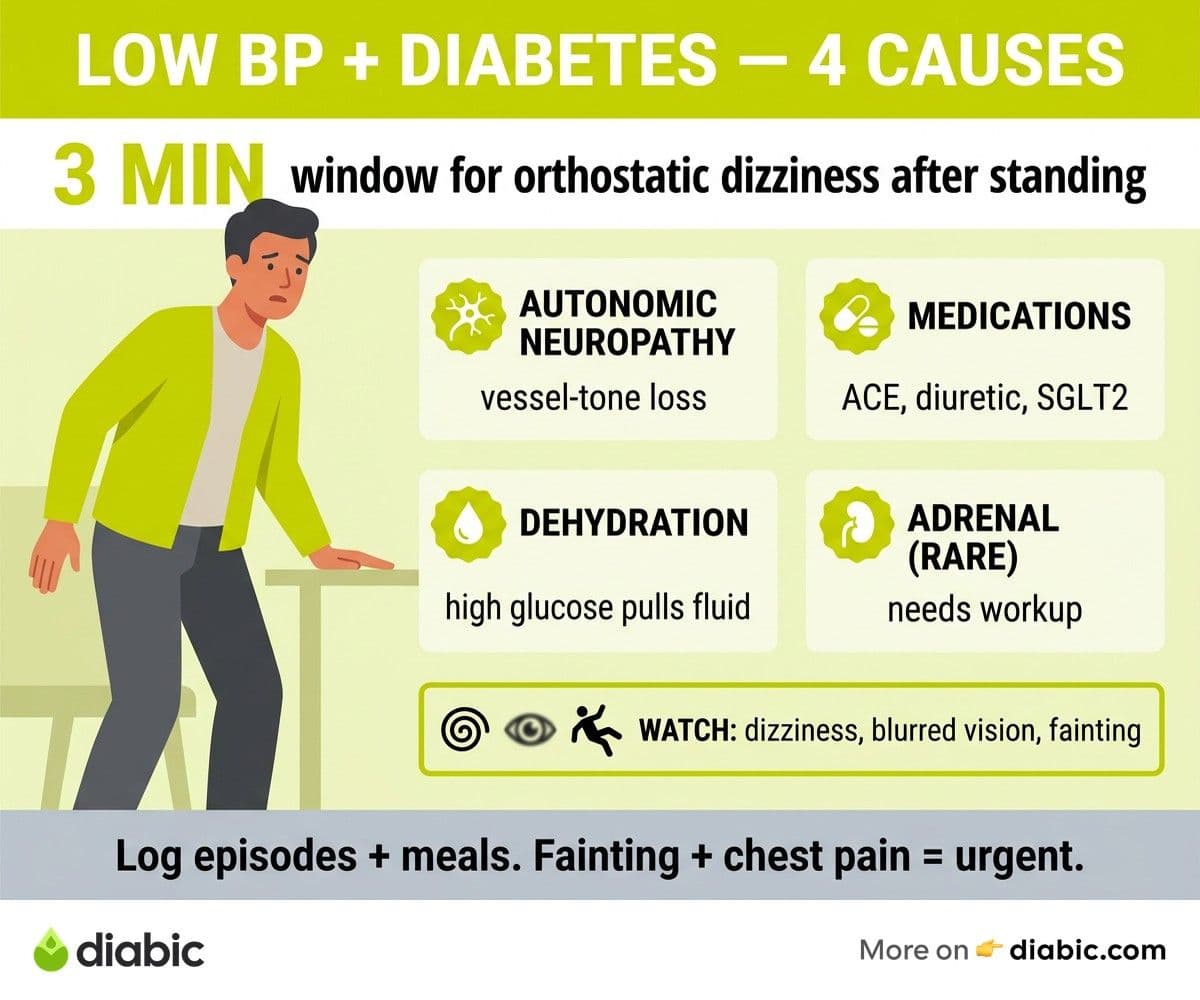
Autonomic neuropathy is a leading cause. The American Diabetes Association Standards of Care recognize autonomic neuropathy as a complication that can affect blood vessel tone and heart rate response. When the nerves that signal your blood vessels to constrict are damaged, gravity wins and blood pools in the legs after you stand.
Medication side effects are another common driver. Blood pressure medications such as ACE inhibitors, diuretics, and alpha blockers can lower readings further than intended. Certain diabetes drugs, particularly SGLT2 inhibitors, can also reduce blood volume by increasing urination, which may lead to lower readings.
Dehydration deserves a special mention. High blood sugar pulls fluid out of cells, increases urination, and quietly leaves you under-hydrated. Hot weather, intense exercise, vomiting, or skipping fluids during a busy day can compound the problem. In rarer cases, adrenal insufficiency can also contribute to chronic low blood pressure and warrants a workup.
Recognizing Low Blood Pressure Symptoms
The signs of low blood pressure can feel subtle at first. Many people brush off mild dizziness as tiredness or low blood sugar, but checking your numbers tells a clearer story. If you also want to know your ideal blood pressure targets, tracking both ends of the range gives you context.
Common symptoms include dizziness or lightheadedness when standing, blurred vision, fatigue, difficulty concentrating, nausea, and in more serious cases, fainting. The Mayo Clinic overview of orthostatic hypotension describes a clear pattern of symptoms that come on within three minutes of standing and resolve once you sit or lie down.
Some moments deserve quicker attention. If you faint, fall, hit your head, or experience confusion, chest pain, or trouble breathing along with low readings, treat it as urgent. Recurrent fainting is not something to wait out, especially if you take insulin or sulfonylureas, since hypoglycemia can produce overlapping symptoms and complicate the picture.
From my experience: After fourteen years with type 1 diabetes, I learned to keep a small notebook of when dizzy spells happen, what I ate, and what my blood sugar and blood pressure were at the time. That pattern helped my doctor adjust one medication and add a hydration habit that quietly fixed months of afternoon lightheadedness.
How Low Blood Pressure Relates to Diabetes Management
Blood pressure diabetes care is rarely about one number. The two conditions are linked through the cardiovascular and nervous systems, which means changes in one can ripple into the other. Hypoglycemia and hypotension can also share symptoms, which makes self-detection trickier.
Low blood sugar can cause sweating, shakiness, lightheadedness, and rapid heartbeat. Low blood pressure can cause dizziness and lightheadedness too. When both happen at once, it is hard to know which to treat first, so checking your glucose first is usually the safer move because untreated hypoglycemia is dangerous on its own.
Balancing blood pressure medication with diabetes is its own puzzle. Drugs that protect kidneys, such as ACE inhibitors or ARBs, are often part of a diabetes care plan. They lower blood pressure as a feature, not a bug, but the dose may need to come down if you experience repeated low readings or symptoms.
Blood Pressure Medication Adjustments
Sometimes the most important conversation is whether your dose still fits your life. Research published in journals like the American Heart Association Hypertension resources highlights that overly aggressive blood pressure lowering can cause more harm than benefit in some older adults or people with autonomic neuropathy.
Signs your medication may be too aggressive include frequent dizziness on standing, falls, fatigue that does not match your activity level, and home readings that consistently fall below your provider's target range. Bring those numbers to your next appointment instead of stopping a medication on your own.
For more on questions to ask, our guide on blood pressure medication considerations walks through specifics. Your provider may suggest a lower dose, a different drug class, or splitting a dose so peak effects do not collide with the times you are most active. Small adjustments often solve big problems.
Practical Tips for Managing Low Blood Pressure Diabetes
Lifestyle moves can support medication changes and reduce day-to-day symptoms. None of these replace medical advice, but they may help you feel steadier between visits.
- Stand up slowly. Sit at the edge of the bed or chair for a few seconds, then rise. This gives your circulation time to adjust.
- Stay hydrated. Aim for steady water intake throughout the day, not big gulps at once. Talk to your doctor about appropriate fluid goals if you have heart or kidney concerns.
- Eat smaller, more frequent meals. Large meals can cause postprandial hypotension, where blood pressure drops sharply after eating, especially in older adults with diabetes.
- Wear compression stockings if your provider recommends them. They help blood return from the legs and may reduce orthostatic symptoms.
- Limit alcohol. Alcohol dilates blood vessels and can deepen low blood pressure dips.
- Track your readings. Home monitoring twice a day for a couple of weeks helps you and your provider see trends instead of one-off numbers.
Pairing these habits with consistent blood sugar management may help you avoid the dizziest moments. Research suggests lifestyle adjustments work best when paired with the right medication plan, so keep your provider in the loop. Most people who manage low blood pressure diabetes find a working rhythm within a few weeks of small, consistent changes.
FAQ
Can low blood pressure be a problem with diabetes?
Yes. Low blood pressure can cause dizziness, falls, and fainting. People with diabetes are at higher risk because of autonomic neuropathy, medication effects, and dehydration, which is why monitoring your readings regularly is worthwhile even when high blood pressure is the main concern.
What causes low blood pressure in people with diabetes?
Common causes include autonomic neuropathy that affects blood vessel regulation, side effects of blood pressure or diabetes medications such as diuretics or SGLT2 inhibitors, dehydration from high blood sugar, and in rare cases, adrenal insufficiency. A provider can help sort out which factors are most likely.
When should I worry about low blood pressure with diabetes?
If you faint, fall, feel confused, or have chest pain or trouble breathing, treat it as urgent and seek care. Recurring symptoms that interfere with daily life also deserve a conversation with your provider, especially if you take insulin or blood pressure medications.
Can low blood sugar feel like low blood pressure?
Yes. Both can cause dizziness, lightheadedness, and weakness. Checking your glucose first is usually the safer step because untreated hypoglycemia is more immediately dangerous. Talk to your doctor about how to tell the two apart in your own pattern.
Low blood pressure diabetes care is about small adjustments, steady tracking, and a good partnership with your healthcare team. If today's takeaway is one thing, make it this: write down the moments you feel dizzy and bring them to your next visit so your plan can match your real life.
Shahriar P. Shuvo is the founder of Diabic. He has lived with diabetes for over 14 years, and built Diabic to deliver the practical, evidence-based self-management tools he wished existed when he was first diagnosed. By trade, Shahriar is a senior design and frontend engineer with 6+ years shipping products at Agora, Timescale (now Tiger Data), and ShareTrip. He writes from the intersection of lived diabetes experience and product craft, focused on what works in daily management rather than what sounds good in a textbook.
Medically reviewed by
Dr. Rezwana Parvin Rumpa is an obstetrics and gynaecology specialist with clinical focus on gestational diabetes, PCOS, and fertility. She holds the MRCOG (Final Part) from the Royal College of Obstetricians and Gynaecologists in London, the MRCPI (Final Part) from the Royal College of Physicians of Ireland, and an MBBS from Shaheed Monsur Ali Medical College under Dhaka University. Dr. Rumpa serves as a Senior Medical Officer in the Obs and Gynae department at BRB Hospitals Ltd, where she has spent three years managing prenatal care, emergency obstetric cases, and women's-health surgery. On Diabic, she medically reviews content for women living with diabetes, with particular attention to pregnancy, PCOS, and reproductive-health intersections.
More from Health & Complications
View all
Blood Pressure Medication and Diabetes: A Practical Guide
How blood pressure medication and diabetes interact, which classes protect your kidneys and heart, and what to ask your doctor about your treatment plan.

Diabetes and Dental Implants: What to Know First
Diabetes dental implants guide covering safety, A1C targets, recovery expectations, gum health prep, and what to ask your oral surgeon before surgery.

Burning Mouth Syndrome and Diabetes Explained
Burning mouth syndrome diabetes link explained, including neuropathy, dry mouth, and thrush causes plus treatment options that may bring real relief.
Clinician-reviewed habits, plain-language guides, and honest answers - the small shifts that make living with diabetes feel lighter, every day.