Diabetes and Dental Implants: What to Know First
Diabetes dental implants guide covering safety, A1C targets, recovery expectations, gum health prep, and what to ask your oral surgeon before surgery.

In this article(21)
The decision to get dental implants tends to bring a small storm of questions when you live with diabetes. Will my body heal the way it needs to? Will my dentist say no? Is it worth the cost if my A1C has been sliding around? Diabetes dental implants are not the long-shot procedure many people assume they are, but the preparation matters in ways that go beyond what someone without diabetes would think about.
Implants involve placing a titanium post into the jawbone, then waiting for the bone to fuse to that post in a process called osseointegration. Healing well during that window is the key to a stable implant that lasts decades. People with diabetes can absolutely heal well, but blood sugar in the months around surgery has a real effect on the outcome.
This guide walks through what the research shows about safety, how diabetes affects recovery, and what to handle before you sit in the surgical chair. The goal is straightforward, evidence-based information you can take to your dentist or oral surgeon and use to make the call that fits your situation.
Are Diabetes Dental Implants Safe and What the Research Shows
For most people with reasonably well-managed diabetes, implants are a safe option. A meta-analysis published in the Journal of Dental Research and similar reviews indexed by the National Library of Medicine have found that long-term implant survival rates in people with controlled diabetes are comparable to those without diabetes, often in the 90 to 95 percent range over five years. That is reassuring data.
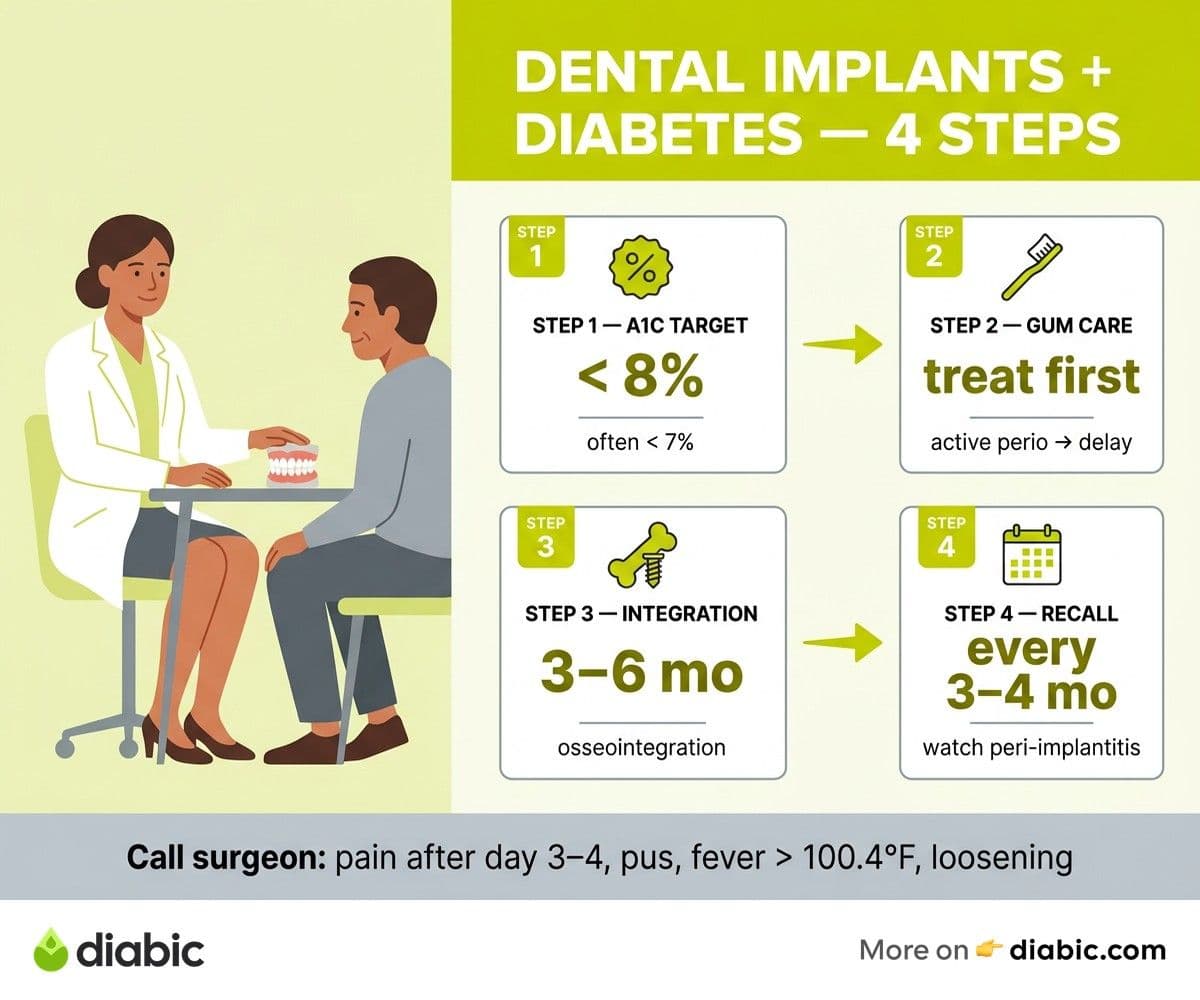
The picture changes when blood sugar is poorly managed at the time of surgery. Studies linking higher A1C levels with reduced osseointegration and higher early failure rates are consistent enough that most oral surgeons will ask for a recent A1C before scheduling. The American Dental Association does not set a single hard cutoff, but many surgeons aim for an A1C below 8 percent before elective implant surgery, with some preferring closer to 7. This is something to discuss specifically with your dental team rather than assume.
Implants may not be the right call if you have:
- An A1C that has been consistently above 9 percent and is not being addressed
- Active, untreated gum disease or significant bone loss
- Other complications such as advanced kidney disease that affect healing
- A history of bisphosphonate use, which can affect jaw bone healing
These are not absolute disqualifiers, but they shift the conversation. In several cases your team may suggest stabilizing one issue first before moving forward.
How Does Diabetes Affect Dental Implant Recovery
The implant itself is a fairly quick procedure. The recovery is what changes when you have diabetes. Three pieces of the healing process are particularly affected.
Slower wound healing
Healing tissue depends on a steady supply of oxygen and nutrients delivered through small blood vessels, plus a coordinated immune response that fights off bacteria while building new tissue. Persistent hyperglycemia interferes with all of these steps, which is why people with elevated glucose often see slower recovery from any surgical wound. Our piece on supporting diabetic wound healing covers the underlying biology in more detail.
For implants specifically, this slower healing affects osseointegration. The bone needs roughly three to six months to fully bond with the titanium post. If glucose runs high during that window, the bond can be weaker or take longer to form.
Higher infection risk
Diabetes raises the risk of post-surgical infection across procedures, and dental implant placement is no exception. Bacteria from the mouth have a direct path to the implant site, and a less robust immune response gives those bacteria a head start. Most cases are caught early at follow-up visits, but it is one reason your surgeon will be specific about post-op rinses and oral hygiene.
A1C and recovery timelines
Research published in the International Journal of Oral and Maxillofacial Surgery suggests that higher pre-surgical A1C correlates with longer healing times and a higher rate of early implant failure. Many surgeons use A1C as a practical proxy for whether the body is in a position to heal predictably. It is not the only factor, but it is the easiest one to measure.
If your A1C is higher than your team would like, that does not mean implants are off the table. It often means a few months of focused work on glucose management first, then re-evaluating. People who put in that prep time generally see better outcomes.
Preparing for Dental Implants with Diabetes
The months before surgery do more for diabetes dental implants outcomes than the day of surgery itself. Three areas usually need attention.
Stabilize blood sugar
Work with your endocrinologist or primary care provider to bring your A1C as close to your target as you reasonably can. This may involve medication adjustments, dietary changes, or working with a diabetes educator. If you use a CGM, look at time in range as well as A1C, since both affect healing.
Pre-surgical dental evaluation
Your dentist or oral surgeon will examine your gums, take imaging of the jawbone, and check for any active infection. Untreated gum disease needs to be addressed first. Some people also need a bone graft if jaw bone has been lost in the implant area, which adds time to the overall timeline.
Coordinate your care team
Bring your oral surgeon into your diabetes care conversation. They should know your current A1C, your medications, who manages your diabetes, and any other complications. Likewise, your endocrinologist should know an implant procedure is on the calendar so they can help you plan medication timing around surgery day.
A few practical questions to ask your surgeon:
- What A1C range do you want to see before scheduling
- How long will the osseointegration phase take in my case
- What are the warning signs of infection or healing problems
- Will I need adjustments to my diabetes medications around surgery
Dental Care for the Implant Process
Daily oral hygiene is non-negotiable when you have implants. Plaque around an implant can lead to a condition called peri-implantitis, which we will cover in a moment. The good news is that the routine is not complicated, just consistent.
Before surgery, your dentist may want you to professionally clean your teeth and start using an antimicrobial mouth rinse. They may also recommend specific tools for after the procedure, such as a soft-bristled toothbrush, interdental brushes that fit around the implant, and floss designed for use around restorations.
In the days right after surgery, you will likely be asked to use a chlorhexidine rinse, avoid brushing the surgical site directly for a short period, and stick to soft foods. Follow-up appointments at one week, several weeks, and then at the abutment placement stage are standard. Bring your blood glucose meter or CGM data to those visits if your team finds it useful.
Long-term maintenance with an implant looks a lot like regular dental care, with two emphases. First, you should not skip professional cleanings, ideally every three to four months rather than the standard six. Second, any sign of gum redness, bleeding around the implant, or loosening should prompt a call to your dentist sooner rather than later. Our daily dental care routine for people with diabetes post offers a routine that pairs well with implant care, and our tooth decay and diabetes overview covers the related risks worth tracking between cleanings.
Gum Health and Implant Success
An implant is only as stable as the bone and gum tissue holding it. People with diabetes are more prone to periodontal disease, and active gum disease is one of the most common reasons implant placement gets delayed.
The connection runs both ways. High blood sugar contributes to gum inflammation, and gum inflammation can make blood sugar harder to manage. Treating periodontal disease before implant surgery usually means scaling and root planing, sometimes with localized antibiotics, plus a renewed daily routine. For some people this stage takes a few months. It is worth the time. Our piece on diabetes and gum disease prevention covers what that treatment looks like in practice.
Once the implant is in place, the risk that gets a special name is peri-implantitis. This is inflammation around the implant, often with bone loss, and it is the implant equivalent of advanced gum disease. People with diabetes have a higher rate of peri-implantitis than the general population, especially when glucose runs high or oral hygiene slips. Catching it early, when it is still peri-mucositis (just gum inflammation, no bone loss), gives you the best shot at reversing it before the implant is at risk.
From my experience: When I had a wisdom tooth pulled a few years into my T1D diagnosis, I underestimated how much my CGM patterns would matter for healing. The site took longer than I expected to settle. Since then, I treat any planned dental work as a reason to tighten up time in range for the weeks before and after, the same way I would for any other surgery. It made a meaningful difference the next time around.
Wound Healing Considerations
A dental implant is a surgical wound that happens to be inside your mouth. The same factors that affect healing on a foot or a surgical incision apply here, just in a smaller and more contained space.
How elevated blood sugar slows healing
When glucose is high, neutrophil function is impaired, collagen production drops, and small blood vessels that deliver oxygen to healing tissue can be less efficient. This is the NIDDK's framing of why people with diabetes often experience delayed wound healing. For an implant, slower healing means a longer osseointegration period and a higher chance of complications.
Nutrition and habits that support healing
A few practical pieces help. Adequate protein intake supports tissue repair. Vitamin C, zinc, and vitamin D play roles in healing as well, though most people get enough through a regular diet. Hydration matters. Avoiding tobacco is one of the strongest non-glucose factors, since smoking is a known risk for implant failure regardless of diabetes status. Alcohol in moderation around surgery is generally fine, but heavy drinking can interfere with both healing and blood sugar management.
Sleep is sometimes overlooked. The body does most of its repair work overnight, and short sleep tends to nudge insulin resistance up. Trying to land 7 to 9 hours during the recovery period gives healing tissue a fairer chance.
Signs to call your provider
Some swelling and tenderness in the first few days is expected. What is not expected:
- Pain that worsens after the third or fourth day
- Pus, foul taste, or persistent foul odor at the site
- Fever over 100.4 F
- Numbness that does not resolve, or tingling that gets worse
- The implant feeling loose or shifting
Any of these warrants a call to your oral surgeon, ideally the same day.
FAQ
Are dental implants safe for people with diabetes?
For most people with reasonably well-managed diabetes, yes. Implant survival rates are comparable to people without diabetes when blood sugar is in a healthy range around the time of surgery and during the healing period. Poorly managed diabetes increases the risk of failure and infection, which is why most surgeons want to see your recent A1C before scheduling.
How does diabetes affect dental implant recovery?
Diabetes can slow wound healing, increase the risk of infection, and lengthen the time needed for the implant to bond with the jawbone. A1C in the months before and during recovery is the most useful predictor most surgeons look at. Talk to your doctor about getting your numbers as close to your target as possible before surgery.
What A1C is needed for dental implants?
There is no universal cutoff, and decisions are individualized. Many surgeons prefer an A1C below 7 to 8 percent before elective implant surgery. People with higher A1C may be asked to spend a few months on diabetes management before scheduling. This is a question worth asking your specific surgeon directly.
How long do dental implants last with diabetes?
When initial healing goes well and oral hygiene stays consistent, implants in people with diabetes last as long as they do in people without diabetes, often 15 to 25 years or more. The big factor is steady gum care and attention to glucose patterns over the years.
Will my insurance cover dental implants if I have diabetes?
Coverage varies widely by plan and country. Diabetes itself rarely changes coverage, though some plans require pre-authorization for implant procedures. Check with your insurer and ask your dental office to walk you through the estimate before you commit.
If you are weighing whether diabetes dental implants make sense for you, the most useful first step is a conversation with your dentist that includes recent A1C, a gum health assessment, and a clear treatment timeline. From there, the path forward is usually a matter of preparation rather than risk, and the months you put into glucose stability before surgery do more for the long-term outcome than any single decision in the surgical chair.
Shahriar P. Shuvo is the founder of Diabic. He has lived with diabetes for over 14 years, and built Diabic to deliver the practical, evidence-based self-management tools he wished existed when he was first diagnosed. By trade, Shahriar is a senior design and frontend engineer with 6+ years shipping products at Agora, Timescale (now Tiger Data), and ShareTrip. He writes from the intersection of lived diabetes experience and product craft, focused on what works in daily management rather than what sounds good in a textbook.
Medically reviewed by
Dr. Shanto Arian is an internal medicine physician now specializing in clinical and aesthetic dermatology, with a parallel academic focus on epidemiology and public health. He holds an MBBS, MPH, MSc (UK), MRCP (UK), MRCPI (Ireland), Diploma in Dermatology (UK), and Diploma in Aesthetic Medicine (USA). Dr. Arian trained in internal medicine, including hospital work on hematology cases such as graft-versus-host disease, before moving toward dermatology. Skin is one of the earliest places diabetes shows itself, from acanthosis nigricans and diabetic dermopathy to slow foot wound healing, and that intersection is where his clinical and Diabic-review work meet. On Diabic, Dr. Arian medically reviews content on diabetes diagnosis, complications, dermatologic manifestations, and pharmacotherapy, ensuring every claim aligns with current ADA, NICE, and peer-reviewed literature.
More from Health & Complications
View all
Burning Mouth Syndrome and Diabetes Explained
Burning mouth syndrome diabetes link explained, including neuropathy, dry mouth, and thrush causes plus treatment options that may bring real relief.

Dental Care for people with diabetes: Tips That Help
Practical dental care diabetics need, with real tips for protecting teeth and gums when diabetes raises your risk for oral health problems.

Diabetes and Tooth Decay: The Real Connection
Diabetes tooth decay is more than a sugar issue. Learn the real biological connection and how to prevent cavities when blood sugar runs high.
Clinician-reviewed habits, plain-language guides, and honest answers - the small shifts that make living with diabetes feel lighter, every day.