Blood Pressure Medication and Diabetes: What to Ask
Smart questions to ask about blood pressure medication and diabetes, including how drugs interact, kidney-protective options, and side effects.

In this article(15)
If you live with diabetes and high blood pressure, the conversation about blood pressure medication and diabetes treatment deserves real attention. Not every drug class affects blood sugar the same way, and the right choice can do double duty by protecting your kidneys at the same time. Walking into your next appointment with a clear list of questions changes the quality of the answers you get back.
Roughly two out of three adults with diabetes have high blood pressure, according to the American Diabetes Association. The combination puts extra strain on the heart, kidneys, and small blood vessels in the eyes. That is why most diabetes care guidelines treat blood pressure as a top priority alongside blood sugar.
This guide walks through the major medication classes, the side effects that matter, and the questions that help you and your doctor pick a plan that fits your full picture rather than just one number on a chart.
How Does Blood Pressure Medication Interact With Diabetes Drugs
Blood pressure medications come in several classes, and each works on a different part of the system that regulates pressure. The four most common in diabetes care are ACE inhibitors, ARBs, calcium channel blockers, and diuretics, with beta-blockers playing a more selective role. The American Heart Association lays out how each class works and what people should know before starting one.
Some classes affect blood sugar directly. Thiazide diuretics can nudge fasting glucose upward in some people, especially at higher doses. Older beta-blockers can mask the early warning symptoms of low blood sugar, such as a fast heartbeat or shakiness, which is something every person with diabetes who uses insulin or sulfonylureas should know about. Newer beta-blockers tend to have less of this effect, but the conversation is still worth having.
ACE inhibitors and ARBs typically do not raise blood sugar and may slightly improve insulin sensitivity. They also offer kidney protection, which makes them a frequent first choice when diabetes and high blood pressure appear together. You can read more about why blood pressure and diabetes both matter for the bigger picture on how the two conditions feed each other.
Drug-to-drug interactions matter too. Certain blood pressure medications can change how your kidneys clear other drugs, which can affect dosing of metformin or some newer diabetes medications. Your doctor and pharmacist watch for these, but bringing up every prescription, supplement, and over-the-counter remedy at your visit helps them do it well.
Questions to Ask Your Doctor About Blood Pressure Medication and Diabetes
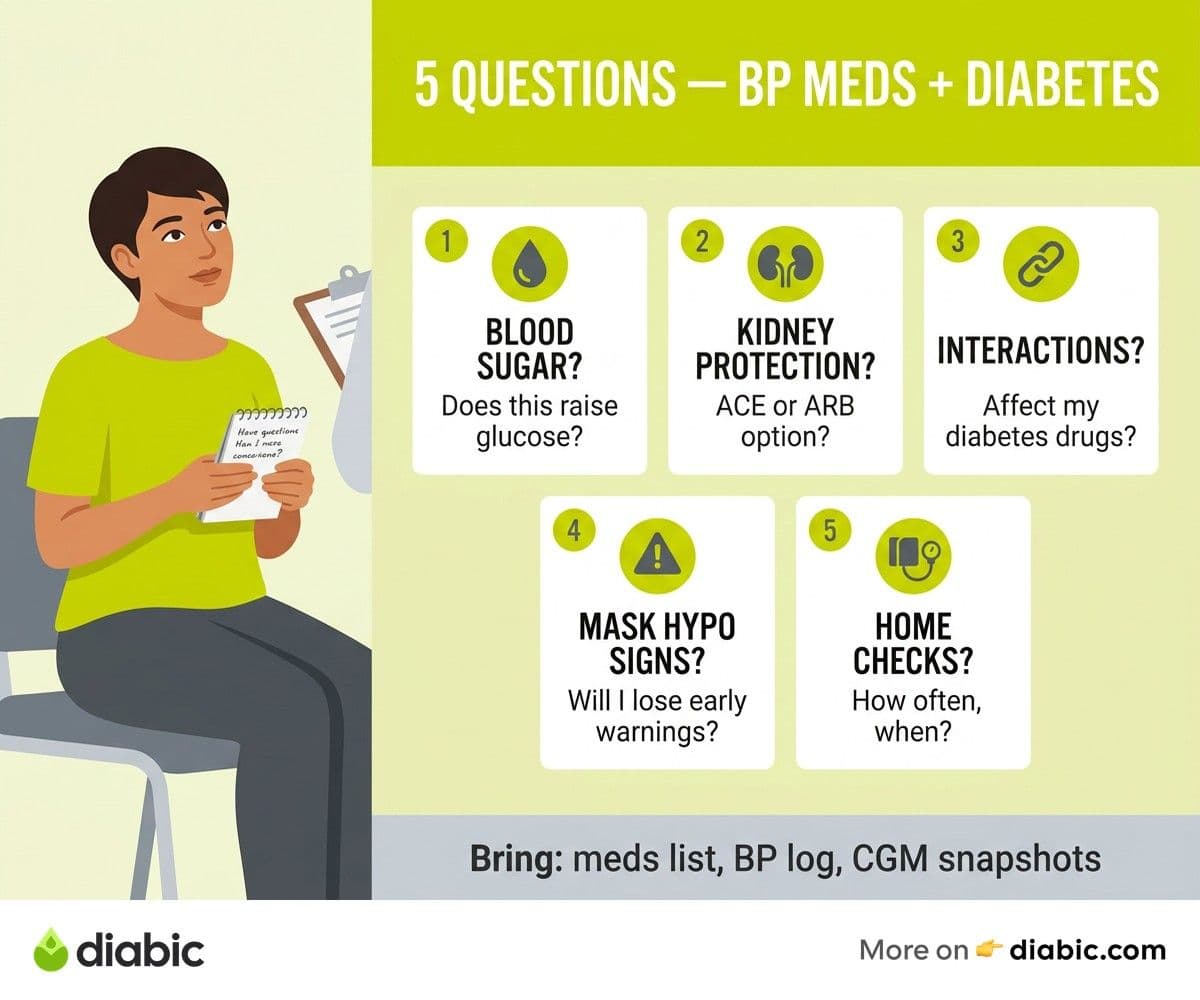
A short list of focused questions tends to produce better answers than open-ended ones. The goal is not to challenge your doctor but to make sure the medication chosen for you fits your whole health picture, not just your blood pressure reading. The following five questions cover most of what matters.
Will this medication affect my blood sugar levels?
This is the first question worth asking. Some classes are blood sugar neutral, others can raise it modestly, and a few can mask the symptoms of hypoglycemia. Knowing where your medication sits on that spectrum helps you plan how often to check your blood sugar in the first weeks after starting or adjusting a dose. If you wear a continuous glucose monitor, watch for new patterns and bring screenshots to your follow-up.
Are there kidney-protective options I should consider?
ACE inhibitors and ARBs have decades of evidence supporting their role in slowing kidney disease in people with diabetes. The National Institute of Diabetes and Digestive and Kidney Diseases notes that these medications are usually the first choice when albumin is found in the urine. If you are already showing early kidney changes, ask whether one of these classes would do more for you than another option. For deeper context, our piece on kidney disease medication considerations walks through how decisions get made when kidney function is part of the equation.
How will this interact with my diabetes medications?
Bring a full list of what you take, including over-the-counter pain relievers and supplements. Nonsteroidal anti-inflammatory drugs, for example, can blunt the effect of some blood pressure medications and stress the kidneys. Your pharmacist is an excellent resource here too, and many will run an interaction check at no cost.
What side effects should I watch for?
ACE inhibitors are well known for a dry cough that affects roughly one in ten users. ARBs typically do not cause this cough and are often the next step if it appears. Diuretics can lower potassium or sodium and may increase urination, especially in the first few weeks. Calcium channel blockers can cause ankle swelling or constipation in some people. Knowing the common side effects in advance helps you tell signal from noise and avoid stopping a medication that just needs time.
When is the best time to take this medication?
Timing can matter more than people expect. Some studies suggest taking certain blood pressure medications in the evening may improve nighttime blood pressure control, though guidance is still evolving. Diuretics are usually taken in the morning so they do not disrupt sleep. Ask what works best for the specific drug you have been prescribed, and whether timing should be adjusted around meals or other medications.
Common Blood Pressure Medications for People With Diabetes
Understanding the strengths and trade-offs of each class makes the conversation with your doctor easier. The same blood pressure number can be addressed by very different drugs, and the right pick depends on your kidney function, blood sugar patterns, and other health factors.
ACE inhibitors include lisinopril, enalapril, and ramipril, among others. They relax blood vessels by blocking a hormone that narrows them, and they reduce protein loss in the urine. The ADA Standards of Care list ACE inhibitors as a preferred starting point for people with diabetes who also have albuminuria or established kidney disease. The most common side effect is the dry cough mentioned above, and a much rarer but more serious side effect is angioedema, which involves swelling of the face or throat and requires urgent care.
ARBs, or angiotensin receptor blockers, include losartan, valsartan, and irbesartan. They share the kidney-protective benefits of ACE inhibitors without the cough, which is why they are often the alternative when ACE inhibitors cannot be tolerated. Cost has dropped substantially as generics became available, so price is rarely the deciding factor anymore.
Calcium channel blockers such as amlodipine are often added when ACE inhibitors or ARBs alone are not enough to reach target. They are effective in older adults and in people of African descent, who sometimes respond less strongly to ACE inhibitors as a first-line drug. Ankle swelling is the most common nuisance side effect.
Diuretics, especially thiazide-type drugs like hydrochlorothiazide and chlorthalidone, are inexpensive and effective. They can mildly raise blood sugar and lower potassium, so periodic blood tests help track those values. Beta-blockers are not first-line for blood pressure in diabetes unless there is another reason to use them, such as a previous heart attack or heart failure. When they are needed, newer options like carvedilol tend to be friendlier to blood sugar than older ones.
Understanding Your Blood Pressure and Diabetes Together
Treating blood pressure and blood sugar as separate problems misses the way they reinforce each other. High blood pressure speeds up the small vessel damage that high glucose starts, which is why kidney disease, eye disease, and nerve disease all show up faster when both conditions go uncontrolled.
The Centers for Disease Control and Prevention reports that managing blood pressure well in people with diabetes reduces the risk of heart disease and stroke by about a third, and slows kidney disease meaningfully. Those numbers come from large clinical trials, and they hold up across different populations and ages.
The practical implication is that a small reduction in blood pressure usually buys more cardiovascular protection in someone with diabetes than the same reduction would in someone without. That is part of why many guidelines suggest a target below 130/80 for adults with diabetes, though ideal blood pressure targets for diabetes can vary based on age, kidney function, and risk of falls.
Stopping blood pressure medication on your own, even if numbers look great for a few weeks, often leads to a rebound that is harder to manage than the original reading. If side effects feel intolerable, the right move is a phone call to your doctor's office, not a self-directed pause. Most issues can be addressed with a switch to a related drug or a dose adjustment.
From my experience: Fourteen years with type 1 diabetes have taught me that the appointments where I came in with written questions were the ones that actually changed my care plan. The first time I asked specifically about kidney protection rather than just lower numbers, my doctor walked me through ACE inhibitors and ARBs in a way that felt collaborative rather than rushed. The medication did not change that day, but the framing of why we were watching for albumin every year did. That single shift in the conversation has shaped how I prepare for every visit since.
Medication Adjustments Over Time
Your blood pressure medication plan is not a one-time decision. Bodies change, kidney function shifts, and the relationship between blood sugar and blood pressure evolves over years. Expect your doctor to revisit the plan at least annually, and more often if anything is changing.
When blood sugar improves, blood pressure sometimes drifts down on its own, especially if weight has come off in the process. That can mean a lower dose, a switch to a single combined pill, or in some cases stepping down a medication entirely. The reverse also happens. When kidney function declines, the dose of certain medications needs to be adjusted because those drugs are partly cleared through the kidneys.
Regular monitoring at home builds a more accurate picture than the occasional in-office reading. A validated upper-arm cuff used at the same times each day for a week before your appointment gives your doctor real data to work with. Bring those readings, ideally written down or in an app, and your visit will get more from less time.
Lifestyle Alongside Medication
Medication works best when paired with the daily choices that move blood pressure on their own. The two are not in competition. Exercise, salt awareness, and good sleep all amplify what the pills do, and sometimes they reduce how many pills you need.
Modest weight loss, even five to ten percent of body weight, often lowers systolic blood pressure by several points. Reducing sodium intake matters more for some people than others, but the general goal of staying under 2,300 milligrams a day, with many adults benefiting from less, is a reasonable starting point. The Mayo Clinic notes that the DASH eating pattern consistently lowers blood pressure in clinical trials and works well for people with diabetes when carbohydrate portions are appropriate for their plan.
Movement is the other anchor. A brisk thirty-minute walk on most days improves both blood pressure and insulin sensitivity. Strength training a couple of times a week adds further benefit, especially as we age. The point is not perfection. The point is that medication and lifestyle together do far more than either alone, and that the goal is steady, sustainable management rather than replacing one with the other.
FAQ
How does blood pressure medication interact with diabetes drugs?
Some blood pressure medications can affect blood sugar levels. Beta-blockers may mask the early symptoms of hypoglycemia, while certain thiazide diuretics can raise blood sugar slightly. ACE inhibitors and ARBs are often preferred because they offer kidney protection without worsening blood sugar, and they generally play well with most diabetes medications. Always share your full medication list with your provider so they can flag interactions.
What should I ask my doctor about blood pressure medication and diabetes?
Five focused questions cover most of what matters. Ask whether the medication will affect your blood sugar, whether kidney-protective options like ACE inhibitors or ARBs are right for you, how the drug interacts with your other medications, what side effects to watch for, and the best time of day to take it. Writing the questions down before your appointment helps you remember to ask them all.
Are ACE inhibitors safe for people with diabetes?
ACE inhibitors are not only generally safe for people with diabetes, they are often preferred because they slow kidney disease progression. The most common side effect is a dry cough that affects roughly one in ten users. If the cough appears, an ARB usually delivers the same kidney benefits without it. Talk to your doctor about which option fits your situation.
The right blood pressure medication and diabetes plan is the one that fits your kidney health, your blood sugar patterns, and your daily life. Bring questions, bring numbers, and treat the appointment as a partnership. That habit alone will shape years of better outcomes more reliably than any single prescription.
Shahriar P. Shuvo is the founder of Diabic. He has lived with diabetes for over 14 years, and built Diabic to deliver the practical, evidence-based self-management tools he wished existed when he was first diagnosed. By trade, Shahriar is a senior design and frontend engineer with 6+ years shipping products at Agora, Timescale (now Tiger Data), and ShareTrip. He writes from the intersection of lived diabetes experience and product craft, focused on what works in daily management rather than what sounds good in a textbook.
Medically reviewed by
Dr. Shanto Arian is an internal medicine physician now specializing in clinical and aesthetic dermatology, with a parallel academic focus on epidemiology and public health. He holds an MBBS, MPH, MSc (UK), MRCP (UK), MRCPI (Ireland), Diploma in Dermatology (UK), and Diploma in Aesthetic Medicine (USA). Dr. Arian trained in internal medicine, including hospital work on hematology cases such as graft-versus-host disease, before moving toward dermatology. Skin is one of the earliest places diabetes shows itself, from acanthosis nigricans and diabetic dermopathy to slow foot wound healing, and that intersection is where his clinical and Diabic-review work meet. On Diabic, Dr. Arian medically reviews content on diabetes diagnosis, complications, dermatologic manifestations, and pharmacotherapy, ensuring every claim aligns with current ADA, NICE, and peer-reviewed literature.
More from Health & Complications
View all
Diabetes and Dental Implants: What to Know First
Diabetes dental implants guide covering safety, A1C targets, recovery expectations, gum health prep, and what to ask your oral surgeon before surgery.

Burning Mouth Syndrome and Diabetes Explained
Burning mouth syndrome diabetes link explained, including neuropathy, dry mouth, and thrush causes plus treatment options that may bring real relief.

Dental Care for people with diabetes: Tips That Help
Practical dental care diabetics need, with real tips for protecting teeth and gums when diabetes raises your risk for oral health problems.
Clinician-reviewed habits, plain-language guides, and honest answers - the small shifts that make living with diabetes feel lighter, every day.