Blood Pressure Target for Diabetes: Ideal Numbers
What is the ideal blood pressure target diabetes care recommends? Learn the ADA-backed numbers, why targets differ, and how to monitor at home with.

In this article(11)
- What Is the Ideal Blood Pressure for a person with diabetes?
- What Blood Pressure Reading Is Too High for people with diabetes?
- Understanding Blood Pressure Numbers
- Why the Blood Pressure Target Diabetes Care Sets Is Tighter
- How to Monitor Your Blood Pressure at Home
- Reaching and Maintaining Your Blood Pressure Target
If you have ever stared at the cuff after a reading and wondered what the right number actually is, you are not alone. The blood pressure target diabetes care recommends is often tighter than the general population's, and that small difference can shape big decisions about medications, lifestyle, and follow-up. Knowing your target gives you a clear yardstick for progress.
The numbers are not a finish line. They are a guide, set with your provider, that reflects your age, kidney function, fall risk, and other health factors. With a clear target in hand, home readings stop feeling random and start telling a story.
What Is the Ideal Blood Pressure for a person with diabetes?
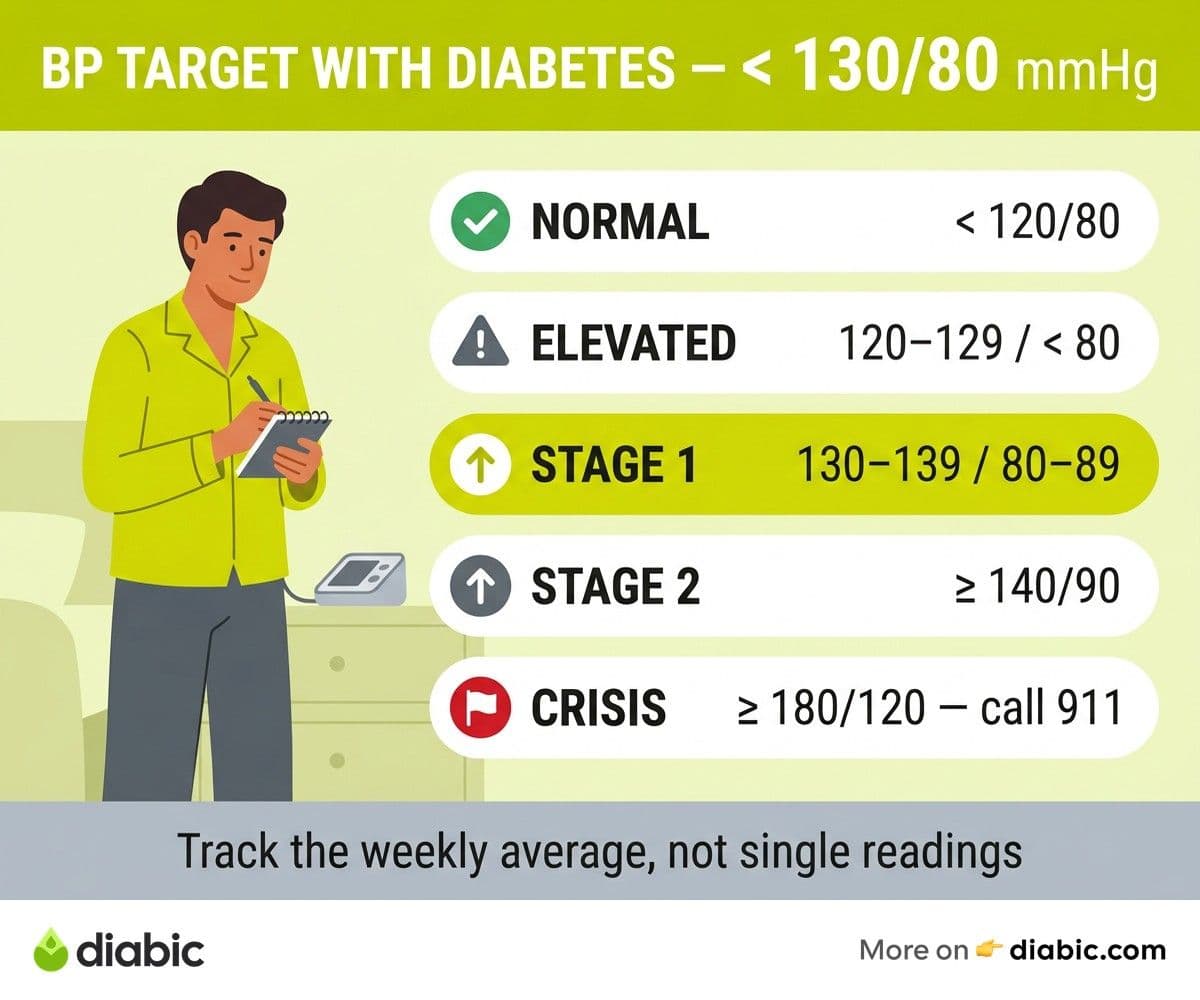
For most adults with diabetes, the American Diabetes Association Standards of Care recommend a blood pressure goal below 130/80 mmHg. This target is more aggressive than the general population guidance because diabetes already raises cardiovascular risk, and tighter management may help reduce the chance of heart attack, stroke, and kidney disease.
The American Heart Association blood pressure guidelines align closely. They classify readings of 130/80 mmHg or higher as stage 1 hypertension, and they emphasize individualized care for people with chronic conditions. Your provider may aim slightly higher or lower depending on your overall picture.
Targets are individualized for good reasons. Older adults at higher risk of falls, people with significant orthostatic hypotension, and those with limited life expectancy may not benefit from very aggressive lowering. Pregnant people, people with kidney disease, and younger adults may have different goals as well. The right number is the one that lowers risk without causing side effects you cannot live with.
What Blood Pressure Reading Is Too High for people with diabetes?
Blood pressure diabetes management treats consistent readings above 140/90 mmHg as a clear concern. The cardiovascular risk climbs further when those numbers stay high over time. The AHA categorizes readings of 140/90 mmHg or higher as stage 2 hypertension, and treatment intensification is usually recommended at that point.
Readings of 180/120 mmHg or higher signal a hypertensive crisis. If you also have chest pain, shortness of breath, weakness on one side, vision changes, or severe headache, treat it as a medical emergency and call for help right away. If the reading is high but you have no symptoms, take it again after five minutes of rest before assuming the worst.
Stages and what they mean in practice:
- Normal: less than 120/80 mmHg
- Elevated: 120 to 129 systolic and less than 80 diastolic
- Stage 1 hypertension: 130 to 139 systolic or 80 to 89 diastolic
- Stage 2 hypertension: 140/90 mmHg or higher
- Hypertensive crisis: higher than 180/120 mmHg
For people with diabetes, even the elevated and stage 1 ranges deserve attention because of the layered cardiovascular risk. Tracking patterns over weeks beats reacting to a single reading.
Understanding Blood Pressure Numbers
Blood pressure has two numbers, and each tells a different story. The systolic number, the top one, measures the pressure in your arteries when your heart beats. The diastolic number, the bottom one, measures the pressure between beats while your heart rests.
Both matter. A high systolic reading is a strong predictor of cardiovascular events, especially in older adults. A high diastolic reading still matters for younger adults and can signal stiffer blood vessels or volume issues. Neither number alone tells the full story, which is why your provider looks at both.
Accuracy depends on how the measurement is taken. Sit quietly for five minutes before a reading, with your back supported, feet flat on the floor, and arm resting at heart level. Avoid caffeine, exercise, and smoking for at least 30 minutes beforehand. Take two readings about a minute apart and average them for a clearer picture.
Why the Blood Pressure Target Diabetes Care Sets Is Tighter
Diabetes and high blood pressure are a high-risk pair. Together they accelerate damage to small blood vessels in the kidneys, eyes, and nerves, and to large blood vessels in the heart and brain. Understanding how diabetes causes high blood pressure makes the case for tighter management more concrete.
Insulin resistance, kidney changes, and stiffer arteries all push blood pressure higher in diabetes. The result is that even modest hypertension carries more cardiovascular risk than it would in someone without diabetes. Research suggests that lowering blood pressure may help reduce stroke, heart attack, and kidney disease risk, especially when paired with good blood sugar and cholesterol management.
The landmark SPRINT trial, summarized by the National Heart, Lung, and Blood Institute, suggested that intensive blood pressure lowering can reduce cardiovascular events in some adults at high risk. SPRINT did not include people with diabetes, but its findings shaped the broader conversation around lower targets, and follow-up research in people with diabetes has supported individualized, generally tighter goals.
The balance is real. Aggressive targets can mean more medications, more side effects, and in some people, more falls or kidney function changes. That is why your provider weighs benefits and risks for you specifically. For deeper context on why blood pressure and diabetes both matter, the connection runs through every part of your cardiovascular system.
How to Monitor Your Blood Pressure at Home
Home monitoring is one of the most useful habits a person with diabetes can build. Office readings can be inflated by stress, the rush to get there, or simply the white-coat effect. Home readings, taken consistently, often paint a more accurate picture.
Choosing the right monitor matters. Look for an upper-arm cuff that has been validated by the validatebp.org list or recommended by the AHA. Wrist monitors are convenient but less reliable. Make sure the cuff fits your arm properly, since a too-small or too-large cuff produces inaccurate readings.
Best practices for home readings:
- Take readings at the same times each day, ideally morning and evening
- Sit quietly for five minutes first, with feet flat and back supported
- Skip caffeine, exercise, and smoking for 30 minutes beforehand
- Take two readings a minute apart and write down the average
- Bring your log to every provider visit
How often to check depends on your situation. New diagnosis or recent medication change may call for daily readings for a couple of weeks. Stable, well-managed blood pressure may need only a few readings per week. Your provider can tailor the schedule.
From my experience: After fourteen years with type 1 diabetes, I started home blood pressure tracking the same way I track glucose, with a simple weekly average instead of obsessing over single readings. That shift, from data point to trend, helped my doctor see the picture clearly and adjusted my plan in a way single readings never would have shown.
Reaching and Maintaining Your Blood Pressure Target
Getting to your number usually combines lifestyle and medication. Lifestyle changes can lower blood pressure by a meaningful amount, and they often boost the effect of medication too. Our guide on natural ways to lower blood pressure covers six evidence-based strategies you can start working on this week.
Medication adherence is the other half. Skipping doses or stopping a medication when readings improve is one of the most common reasons blood pressure climbs back up. If side effects bother you, bring them up rather than going silent. There are usually alternatives within or across drug classes.
Consistency beats perfection. A few readings above your target do not mean failure, and a streak of readings at goal does not mean you can stop the plan that got you there. Steady habits, regular monitoring, and honest conversations with your provider keep your blood pressure target diabetes plan working over the long run.
FAQ
What is the ideal blood pressure for a person with diabetes?
The ADA recommends a blood pressure target below 130/80 mmHg for most adults with diabetes. Your provider may set a different goal based on your age, kidney function, fall risk, and other conditions, so the right number is one decided together.
What blood pressure reading is too high for people with diabetes?
Readings consistently at or above 140/90 mmHg are concerning, especially with diabetes. A reading at or above 180/120 mmHg, particularly with symptoms like chest pain, vision changes, or severe headache, requires immediate medical attention.
How often should people with diabetes check blood pressure?
After a new diagnosis or medication change, daily home readings for a couple of weeks may help. Once readings are stable, a few times per week is usually enough. Your provider can recommend a schedule that matches your situation.
Can lifestyle changes alone lower blood pressure with diabetes?
Lifestyle changes such as a DASH-style diet, regular exercise, weight management, and reduced sodium intake may help lower blood pressure by 5 to 15 mmHg. Many people still need medication, but lifestyle work often reduces the dose needed and improves overall outcomes.
A clear blood pressure target diabetes plan turns scattered numbers into a story you can act on. Talk to your doctor about your individualized target, set up a simple home monitoring routine, and review your numbers together at each visit.
Shahriar P. Shuvo is the founder of Diabic. He has lived with diabetes for over 14 years, and built Diabic to deliver the practical, evidence-based self-management tools he wished existed when he was first diagnosed. By trade, Shahriar is a senior design and frontend engineer with 6+ years shipping products at Agora, Timescale (now Tiger Data), and ShareTrip. He writes from the intersection of lived diabetes experience and product craft, focused on what works in daily management rather than what sounds good in a textbook.
Medically reviewed by
Dr. Shanto Arian is an internal medicine physician now specializing in clinical and aesthetic dermatology, with a parallel academic focus on epidemiology and public health. He holds an MBBS, MPH, MSc (UK), MRCP (UK), MRCPI (Ireland), Diploma in Dermatology (UK), and Diploma in Aesthetic Medicine (USA). Dr. Arian trained in internal medicine, including hospital work on hematology cases such as graft-versus-host disease, before moving toward dermatology. Skin is one of the earliest places diabetes shows itself, from acanthosis nigricans and diabetic dermopathy to slow foot wound healing, and that intersection is where his clinical and Diabic-review work meet. On Diabic, Dr. Arian medically reviews content on diabetes diagnosis, complications, dermatologic manifestations, and pharmacotherapy, ensuring every claim aligns with current ADA, NICE, and peer-reviewed literature.
More from Health & Complications
View all
Diabetes and Dental Implants: What to Know First
Diabetes dental implants guide covering safety, A1C targets, recovery expectations, gum health prep, and what to ask your oral surgeon before surgery.

Burning Mouth Syndrome and Diabetes Explained
Burning mouth syndrome diabetes link explained, including neuropathy, dry mouth, and thrush causes plus treatment options that may bring real relief.

Dental Care for people with diabetes: Tips That Help
Practical dental care diabetics need, with real tips for protecting teeth and gums when diabetes raises your risk for oral health problems.
Clinician-reviewed habits, plain-language guides, and honest answers - the small shifts that make living with diabetes feel lighter, every day.