Blood Pressure Medication and Diabetes: A Practical Guide
How blood pressure medication and diabetes interact, which classes protect your kidneys and heart, and what to ask your doctor about your treatment plan.

In this article(9)
If your doctor recently added a blood pressure pill to your prescription list, you might be wondering why diabetes care so often comes packaged with hypertension care. The truth is that blood pressure medication and diabetes are deeply linked, and the choices made about which pill goes in the bottle can shape your kidney, heart, and eye health for decades to come. Understanding the basics will help you walk into your next appointment ready to ask sharper questions and make decisions you feel good about.
We will not pretend this is simple. There are at least five drug classes commonly used to lower blood pressure, and each one behaves a little differently when blood sugar enters the picture. The goal of this guide is to give you a clear map so the language your doctor or pharmacist uses starts to feel familiar rather than overwhelming.
Why Blood Pressure Matters When You Have Diabetes
People living with diabetes are roughly twice as likely to develop high blood pressure compared with people who do not have diabetes, according to the American Diabetes Association. When the two conditions show up together, they amplify each other in ways that quietly raise the risk of complications. Insulin resistance can stiffen blood vessels, and high blood pressure puts extra strain on the small vessels in your kidneys and eyes that diabetes is already stressing.
The complications that show up most often when both conditions are uncontrolled are not minor. We are talking about kidney disease, heart attack, stroke, retinopathy, and peripheral artery disease. Treating both at the same time is not about checking boxes. It is about slowing the cascade so the small vessels in your body keep doing their job for as long as possible.
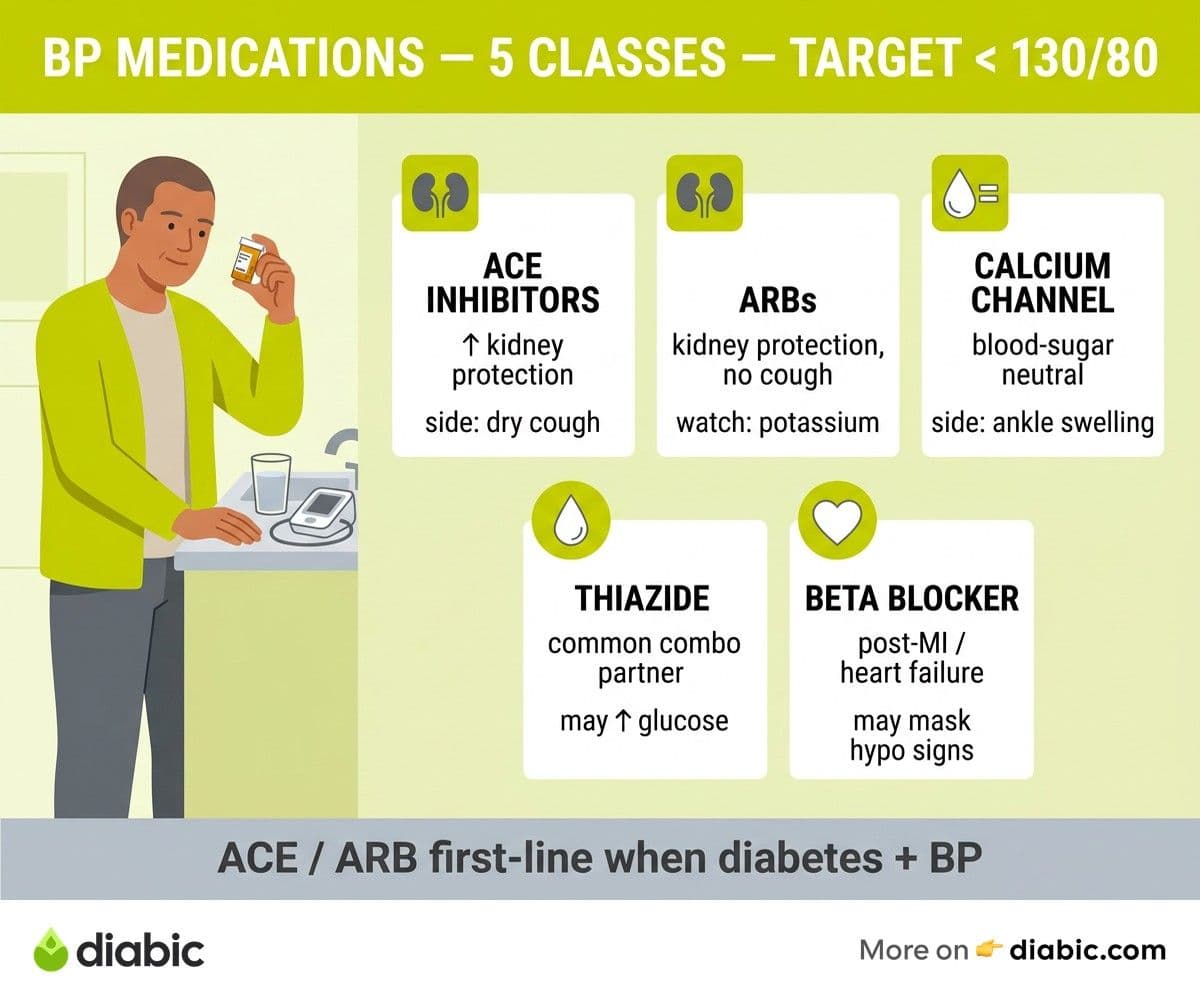
Current ADA Standards of Care recommend a blood pressure target of below 130/80 mmHg for most adults with diabetes, and lower targets may be considered when you can reach them safely without side effects. Your specific number may be different based on age, fall risk, and other conditions, which is why the conversation with your provider matters more than any chart. The point is that even a 5 mmHg reduction in blood pressure has been shown to meaningfully cut cardiovascular events in people with diabetes.
Treating both conditions together produces better long-term outcomes than treating either alone. Studies tracked by the National Institute of Diabetes and Digestive and Kidney Diseases show that addressing blood pressure, blood sugar, and cholesterol together cuts the risk of heart attack and stroke far more than addressing one at a time. That is the framing your care team is using when they layer medications.
Blood Pressure Medication Classes Used in Diabetes Management
There are five medication classes you are most likely to encounter. Each works through a different mechanism, and each has its own personality when it comes to diabetes management.
ACE inhibitors include drugs like lisinopril, enalapril, and ramipril. They relax blood vessels by blocking the angiotensin-converting enzyme, and they have a particularly useful side effect for people with diabetes: they reduce pressure inside the kidney filters and slow the progression of diabetic kidney disease. A dry cough is the most common reason people switch off them.
ARBs (angiotensin receptor blockers) such as losartan, valsartan, and irbesartan offer similar kidney protection without the cough. They block the same hormone pathway one step downstream and are often the chosen alternative when an ACE inhibitor is not tolerated. Both classes are first-line for people who have diabetes with hypertension or any sign of kidney involvement.
Calcium channel blockers like amlodipine work well as a second medication when an ACE inhibitor or ARB alone is not enough. They are blood-sugar neutral, which makes them a friendly partner. Thiazide diuretics such as hydrochlorothiazide and chlorthalidone are also frequently combined, though they can modestly raise blood sugar and uric acid in some people. Beta blockers like metoprolol and carvedilol have specific uses, particularly after a heart attack or in heart failure, but they sit lower on the list for routine hypertension in diabetes.
For a broader look at how these fit into the larger picture, our guide to type 2 diabetes treatment options covers how blood pressure care sits alongside glucose-lowering therapy.
How Blood Pressure Medications Interact with Diabetes
The interaction story is more nuanced than people expect, and it is worth knowing because it shapes day-to-day life. ACE inhibitors and ARBs may slightly improve insulin sensitivity, which is one more reason they are often the first prescribed when both conditions show up. The effect is small, but it points in the right direction rather than the wrong one.
Thiazide diuretics can modestly raise fasting blood sugar in some people, particularly at higher doses. The effect is usually small and predictable, and most providers consider it an acceptable trade-off given how effective thiazides are at lowering blood pressure and reducing cardiovascular events. If you notice your numbers creeping up after starting one, mention it at your next visit so dosing can be reviewed.
Beta blockers deserve a special note for anyone using insulin or sulfonylureas. They can blunt the early warning signs of hypoglycemia, particularly the racing heart and tremor that usually tell you your blood sugar is dropping. Sweating tends to still come through, but you may need to lean more on glucose monitoring rather than symptoms, which is one of the situations where a CGM alarm at, say, 73 mg/dL becomes much more than a convenience. If you have a history of severe lows, this is worth flagging with your provider, and our piece on what metformin side effects to expect touches on similar interaction issues.
From my experience: Living with type 1 for fourteen years, I have come to rely on the racing heart and slight hand tremor as my earliest cue that I am dropping. The first time a doctor brought up adding a beta blocker, my immediate question was what happens to those signals, because the way a 3am low feels different from a 3pm low already keeps me on my toes. I leaned harder on Dexcom alerts during the trial, set my low alarm at 80 instead of 70, and looped my endocrinologist in before any dose change.
Drug interactions go beyond just the diabetes medication list. NSAIDs like ibuprofen can blunt the effect of ACE inhibitors and stress the kidneys, and over-the-counter cold medicines often contain decongestants that raise blood pressure. Tell your pharmacist every prescription, supplement, and OTC you take so they can flag combinations that are working against you.
Which Blood Pressure Medications Are Best for People with Diabetes
The short answer, backed by the American Heart Association and ADA guidelines, is an ACE inhibitor or an ARB as the starting point. Both classes lower blood pressure effectively, and both reduce protein loss through the kidneys, which is the earliest sign of diabetic kidney disease. KDIGO clinical practice guidelines published at kdigo.org reinforce this recommendation for anyone with diabetes and chronic kidney disease.
Kidney protection matters as much as the blood pressure number itself. Once protein starts spilling into the urine, the kidneys are signaling that the small filters are under strain. ACE inhibitors and ARBs reduce the pressure inside those filters, which slows the loss of function over years. This is why providers often start them even when blood pressure is only modestly elevated, particularly if there is any albuminuria. You can read more about this in our guide to diabetes medication for kidney disease.
Combination therapy is the rule rather than the exception. Most people with diabetes need two or more medications to reach their blood pressure target, and the typical pairings are an ACE inhibitor or ARB with either a calcium channel blocker or a thiazide diuretic. Combining an ACE inhibitor and an ARB is generally avoided because it raises the risk of kidney injury and high potassium without adding much benefit.
Your doctor will balance several factors when picking the next pill. Kidney function, potassium levels, other medications you take, your age, and whether you have heart failure or have had a heart attack all weigh into the decision. The mix you start with is rarely the mix you stay on forever, and small adjustments are normal as your body changes.
Managing Blood Pressure Medication and Diabetes Day to Day
The practical side of taking blood pressure medication and diabetes treatment together is often where people get stuck. Timing is one common question. Most blood pressure medications can be taken at any time of day, though some research suggests bedtime dosing of certain agents may improve overnight blood pressure. Stick with whatever schedule helps you remember, and ask your pharmacist whether your specific combination has a preferred timing.
Lifestyle changes do double duty here, which is one of the encouraging parts of having both conditions. Reducing sodium, moving regularly, losing modest weight if your provider recommends it, and limiting alcohol all lower blood pressure and improve insulin sensitivity at the same time. The DASH eating pattern, recommended by the NIDDK, aligns well with most diabetes-friendly eating approaches.
Home blood pressure monitoring gives you and your provider better data than office readings alone. White-coat effects are real, and treatment decisions made on a single high office reading can lead to overtreatment. An upper-arm cuff, used in the morning and evening for a week before your appointment, will tell a much truer story.
Regular lab work keeps the plan safe. Expect kidney function and electrolyte checks within a few weeks of starting or adjusting an ACE inhibitor, ARB, or diuretic, then periodically after that. If you ever feel symptoms like sudden weakness, fainting, severe dizziness, or chest pain, those are not wait-until-Monday situations. Our guide to when to go to the ER for diabetes walks through which symptoms warrant urgent evaluation.
Frequently Asked Questions
Which blood pressure medication is best for people with diabetes?
ACE inhibitors like lisinopril and ARBs like losartan are generally recommended as first-line blood pressure medication for people with diabetes. Both classes lower blood pressure effectively and offer kidney protection that is particularly valuable when diabetes is in the mix. Your healthcare provider will choose based on your kidney function, potassium levels, other medications, and whether you have any specific contraindications.
Can blood pressure medication raise blood sugar?
Some can, modestly. Thiazide diuretics may nudge fasting blood sugar upward, and beta blockers can both raise blood sugar slightly and mask the early warning signs of hypoglycemia. ACE inhibitors and ARBs, by contrast, may slightly improve insulin sensitivity. If you notice meaningful changes in your readings after starting a new blood pressure pill, bring it up with your provider rather than stopping the medication on your own.
Should I check my blood pressure at home if I take medication for diabetes?
Yes, home monitoring is one of the most useful things you can do. Office readings alone can miss both undertreatment and overtreatment, and home numbers give your provider a fuller picture. Aim for an upper-arm cuff and take readings at the same times each day for at least a week before your appointment.
The takeaway on blood pressure medication and diabetes is that the two conditions are best treated as one project, not two. The right combination protects your kidneys and heart for years longer than treating either piece in isolation, and the small adjustments along the way are a normal part of good care, not a sign that anything is going wrong.
Shahriar P. Shuvo is the founder of Diabic. He has lived with diabetes for over 14 years, and built Diabic to deliver the practical, evidence-based self-management tools he wished existed when he was first diagnosed. By trade, Shahriar is a senior design and frontend engineer with 6+ years shipping products at Agora, Timescale (now Tiger Data), and ShareTrip. He writes from the intersection of lived diabetes experience and product craft, focused on what works in daily management rather than what sounds good in a textbook.
Medically reviewed by
Dr. Shanto Arian is an internal medicine physician now specializing in clinical and aesthetic dermatology, with a parallel academic focus on epidemiology and public health. He holds an MBBS, MPH, MSc (UK), MRCP (UK), MRCPI (Ireland), Diploma in Dermatology (UK), and Diploma in Aesthetic Medicine (USA). Dr. Arian trained in internal medicine, including hospital work on hematology cases such as graft-versus-host disease, before moving toward dermatology. Skin is one of the earliest places diabetes shows itself, from acanthosis nigricans and diabetic dermopathy to slow foot wound healing, and that intersection is where his clinical and Diabic-review work meet. On Diabic, Dr. Arian medically reviews content on diabetes diagnosis, complications, dermatologic manifestations, and pharmacotherapy, ensuring every claim aligns with current ADA, NICE, and peer-reviewed literature.
More from Health & Complications
View all
Low Blood Pressure and Diabetes: Signs and Causes
Low blood pressure diabetes can cause dizziness and falls. Learn the causes, symptoms, and practical management tips for hypotension when you have.

Diabetes and Dental Implants: What to Know First
Diabetes dental implants guide covering safety, A1C targets, recovery expectations, gum health prep, and what to ask your oral surgeon before surgery.

Burning Mouth Syndrome and Diabetes Explained
Burning mouth syndrome diabetes link explained, including neuropathy, dry mouth, and thrush causes plus treatment options that may bring real relief.
Clinician-reviewed habits, plain-language guides, and honest answers - the small shifts that make living with diabetes feel lighter, every day.