Neonatal Diabetes: What Parents Should Know
Neonatal diabetes is rare and treatable. Learn the causes, how it differs from type 1, and what parents can expect from diagnosis through treatment.

In this article(10)
A diabetes diagnosis in a newborn is rare, and for parents who hear the word in the NICU, it is frightening in a way that is hard to put into words. Neonatal diabetes occurs in the first six months of life and behaves differently from the type 1 diabetes more commonly seen in older children. The good news is that genetic understanding has changed treatment for many families, and some infants who once would have needed lifelong insulin can now take a daily pill instead.
This guide covers what the condition is, how it is caused, how it differs from type 1, and what families can reasonably expect from diagnosis through the months and years that follow. Our aim is to give you a clearer picture so the next conversation with your pediatric endocrinologist feels a little less overwhelming.
If your baby has just been diagnosed, take a breath. The condition is uncommon, but the path forward is well mapped, and there is a strong international research community focused on improving outcomes for these infants.
What Neonatal Diabetes Is
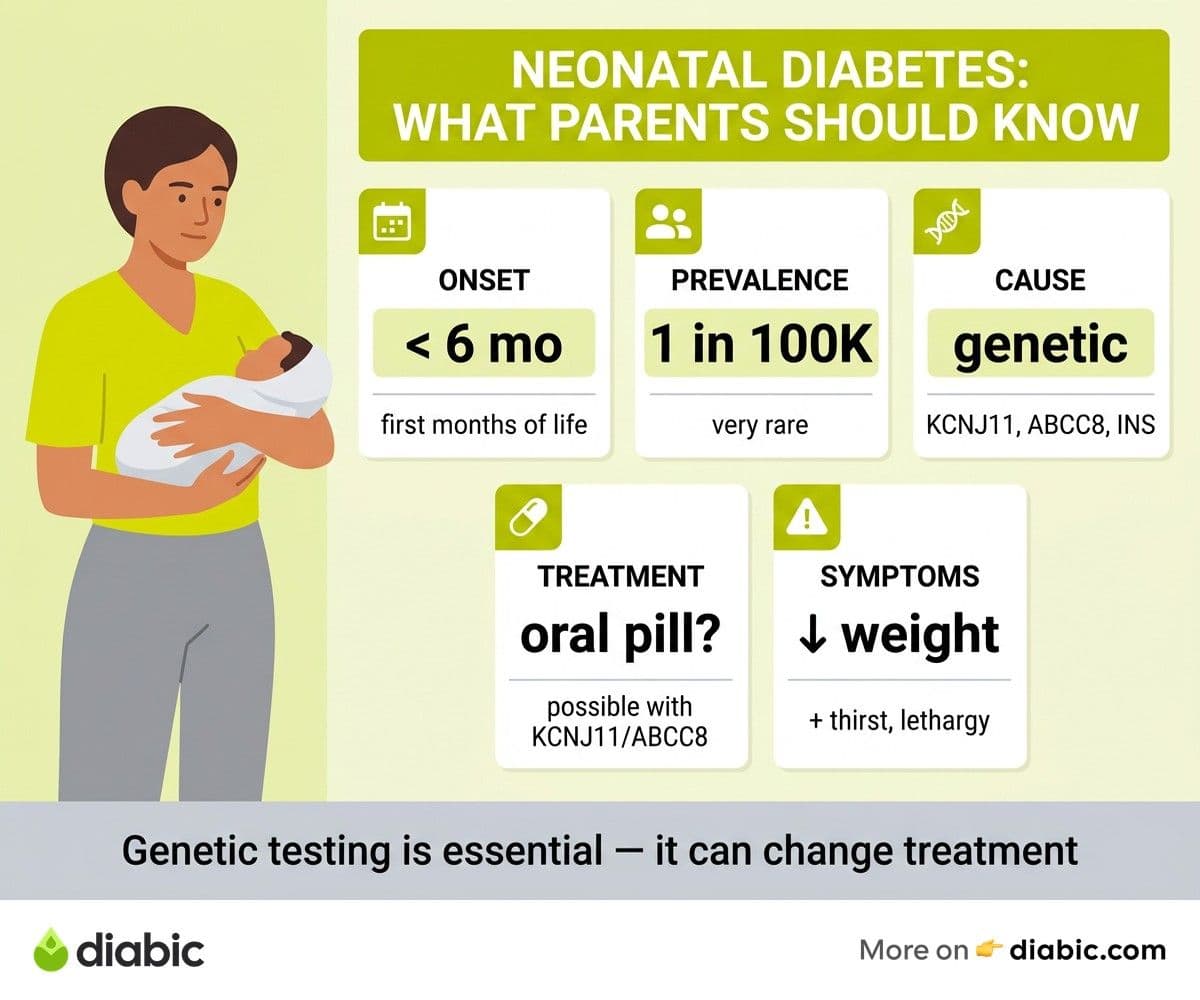
This is a form of diabetes diagnosed within the first six months of life, almost always due to genetic mutations that affect how the pancreas produces or releases insulin. According to the NIDDK, the condition is extremely rare, affecting roughly 1 in every 100,000 to 500,000 births depending on the population studied.
There are two broad forms. The transient form resolves on its own within weeks to months, although it sometimes returns later in life, often in adolescence or early adulthood. The permanent form does not resolve and requires lifelong management, although the form of that management has changed dramatically with modern genetic testing.
Both share a common feature: the pancreas cannot regulate insulin in the way a healthy newborn pancreas should. The result is high blood sugar that, left untreated, can cause dehydration, slow weight gain, and metabolic crises. Many of the diabetes mellitus misconceptions parents come across early on assume that newborn diabetes is the same condition as childhood type 1, when the underlying biology is quite different.
Symptoms in a newborn can be subtle and easy to miss. Babies may have trouble gaining weight, urinate more than expected, seem unusually thirsty, or appear lethargic. Because these signs overlap with other newborn issues, blood sugar testing in the hospital or pediatrician's office is what usually leads to the diagnosis.
How It Differs From Type 1
Although both involve insufficient insulin, this newborn-onset condition and type 1 diabetes have different roots, and the distinction matters for treatment. Type 1 is an autoimmune condition, meaning the body's immune system attacks the insulin-producing beta cells in the pancreas. The newborn form is not autoimmune. Autoantibody testing comes back negative, and the cause sits in the genes themselves.
The age window is the other clear marker. Diabetes diagnosed in the first six months of life is almost never type 1. The American Diabetes Association notes on its About Diabetes page that monogenic forms are a recognized but underdiagnosed category that requires genetic confirmation rather than the standard autoantibody panel used for older children.
For families who want a foundational refresher on how insulin works in the body before diving into the specifics, our overview of what is diabetes covers the basics in plain language. The differences between type 1 diabetes causes and the genetic newborn form show up clearly when you understand the underlying mechanisms.
The treatment implications are significant. Some infants can transition off insulin entirely once genetic testing identifies the specific mutation. That outcome is not possible in type 1 diabetes, where insulin is always required. The shift in care is one of the most striking examples of precision medicine in pediatric endocrinology.
Causes and Genetic Factors
The condition is caused by mutations in genes that play a central role in how pancreatic beta cells produce or release insulin. The three most common culprits are KCNJ11, ABCC8, and INS, although researchers indexed on PubMed have identified more than 20 different genes that can lead to it.
KCNJ11 and ABCC8 mutations affect the potassium channels that beta cells use to control insulin release. When these channels do not work properly, the cell cannot trigger insulin release in response to rising glucose, even though the insulin itself may be present and intact. This is the mechanism that makes oral medication possible for many infants with these mutations, because certain pills can bypass the broken channel and prompt insulin release through a different pathway.
INS gene mutations directly affect the insulin protein. The insulin produced may be misfolded, unstable, or not produced in sufficient quantity. Treatment for INS mutations usually requires insulin therapy, since the underlying problem is the hormone itself rather than the release mechanism.
The transient form is more often linked to chromosome 6 abnormalities involving the gene 6q24. This pattern typically resolves within the first months of life as the infant's metabolic system adapts, though it can recur later. The permanent form more commonly involves KCNJ11 or ABCC8 mutations, and these are also the subtypes most responsive to oral therapy.
Diagnosis and Treatment
Diagnosis usually begins with a blood sugar test in a symptomatic newborn or one with concerning weight gain. Once persistent hyperglycemia is confirmed, the pediatric team typically orders genetic testing through a specialized lab. Results take a few weeks, and the specific mutation identified guides every treatment decision that follows.
Initial treatment is almost always insulin, often through a continuous infusion in the hospital setting until blood sugar stabilizes. As the infant grows, families transition to subcutaneous insulin delivery, sometimes with the help of an insulin pump designed for very small bodies. Mayo Clinic and other major pediatric centers offer resources and team-based care for families navigating this early phase.
The transformative moment for many families comes when genetic testing confirms a KCNJ11 or ABCC8 mutation. In these cases, the infant can often switch from insulin to sulfonylureas, an older class of oral medication that has been safely used in adults for decades. Studies have shown that most children who switch achieve excellent blood sugar with fewer episodes of hypoglycemia and a far lower daily care burden than insulin requires.
For families exploring how genetic forms of diabetes connect across the lifespan, our overview of MODY diabetes covers a related condition that shares the monogenic theme but appears later in life. The shared lesson is that the right diagnosis points to the right treatment, and that work begins with asking for genetic testing when the picture does not fit standard categories.
What Parents Can Expect
Managing a newborn's blood sugar is genuinely hard work, and we want to be honest about that. Feeding schedules, frequent finger-stick checks, and small insulin doses delivered to a tiny body all require precision and patience. Many parents describe the first months as exhausting, and they are. The intensity does ease once the diagnosis is confirmed and the treatment plan settles into a rhythm.
Working with a pediatric endocrinologist is essential, ideally one with experience in monogenic diabetes. The care team often includes a dietitian, a diabetes educator, and sometimes a geneticist who can walk you through the inheritance picture. Many academic medical centers run specialty clinics for rare pediatric diabetes, and a referral early on is worth pursuing.
Growth and development are usually closely monitored. Babies with this condition typically meet developmental milestones on the same timeline as their peers once blood sugar is well managed, although some genetic syndromes that include it affect other systems and require additional support. Your care team will help you understand what to watch for based on the specific genetic finding.
The long-term outlook depends on the form. Children with the transient version often have years or decades without symptoms, then need monitoring as they approach adolescence. Children with permanent forms grow up with diabetes as part of their daily life, and many transition to adult care with strong management skills built over a lifetime. Our overview of whether is diabetes genetic covers the inheritance picture for the whole family in more depth.
Frequently Asked Questions
What causes neonatal diabetes in newborns?
The condition is caused by genetic mutations that affect how the pancreas produces or releases insulin, with the most common involving the KCNJ11, ABCC8, or INS genes. Unlike type 1 diabetes, it is not caused by an autoimmune process, which is why autoantibody testing comes back negative. Genetic testing identifies the specific mutation, and the result guides treatment, including whether oral medication may replace insulin.
Is the newborn form the same as type 1?
No, the two are different conditions even though both involve insufficient insulin. The newborn form is caused by specific genetic mutations and appears within the first six months of life, while type 1 is an autoimmune condition that typically develops later. Some forms of newborn-onset diabetes can be treated with oral medications rather than insulin, which is not possible with type 1.
Can it be cured?
The transient form resolves on its own within weeks to months, although it can return in adolescence or adulthood. The permanent form does not resolve and requires lifelong management, although many children with KCNJ11 or ABCC8 mutations can live well on a daily oral medication rather than insulin. Talk to your doctor about what genetic testing reveals for your child.
How is it treated long term?
Long-term treatment depends on the specific genetic mutation. Some children remain on insulin throughout life, while others transition to sulfonylurea pills after genetic confirmation, often with excellent blood sugar and a lighter daily care load. Regular follow-up with a pediatric endocrinologist, attention to growth and development, and education about diabetes self-management as the child matures are central pieces of long-term care.
If you are caring for a baby with a recent diagnosis of neonatal diabetes, you are not alone. Reach out to your pediatric endocrinologist, ask about genetic testing if it has not yet been done, and consider connecting with parent communities that understand this rare condition. Our broader other-types library has more reading on the rarer forms of diabetes for families who want to keep learning.
Shahriar P. Shuvo is the founder of Diabic. He has lived with diabetes for over 14 years, and built Diabic to deliver the practical, evidence-based self-management tools he wished existed when he was first diagnosed. By trade, Shahriar is a senior design and frontend engineer with 6+ years shipping products at Agora, Timescale (now Tiger Data), and ShareTrip. He writes from the intersection of lived diabetes experience and product craft, focused on what works in daily management rather than what sounds good in a textbook.
Medically reviewed by
Dr. Rezwana Parvin Rumpa is an obstetrics and gynaecology specialist with clinical focus on gestational diabetes, PCOS, and fertility. She holds the MRCOG (Final Part) from the Royal College of Obstetricians and Gynaecologists in London, the MRCPI (Final Part) from the Royal College of Physicians of Ireland, and an MBBS from Shaheed Monsur Ali Medical College under Dhaka University. Dr. Rumpa serves as a Senior Medical Officer in the Obs and Gynae department at BRB Hospitals Ltd, where she has spent three years managing prenatal care, emergency obstetric cases, and women's-health surgery. On Diabic, she medically reviews content for women living with diabetes, with particular attention to pregnancy, PCOS, and reproductive-health intersections.
More from Diabetes Knowledge
View all
Can Diabetics Eat Fruit? Yes, Best Picks and Tips
Can people with diabetes eat fruit? Yes. Here is how to choose the right fruits, manage portions, and pair them smartly to keep blood sugar steady.

Newly Diagnosed Type 2 Diabetes: Where to Start
Newly diagnosed type 2 diabetes feels overwhelming, but the first steps are simpler than you think. Get a clear, calm starting plan from day one.

Secondary Diabetes: When Another Condition Is the Cause
Secondary diabetes develops because of another medical condition or medication. Learn the causes, how it differs from type 2, and how it's managed.
Clinician-reviewed habits, plain-language guides, and honest answers - the small shifts that make living with diabetes feel lighter, every day.