MODY Diabetes: The Genetic Type Often Misdiagnosed
MODY diabetes is a genetic form often misdiagnosed as type 1 or type 2. Learn what it is, how it's diagnosed, and why correct identification matters.

In this article(10)
MODY diabetes affects an estimated 1 to 5 percent of all people with diabetes, yet most have never heard of it. Maturity-onset diabetes of the young is a genetic form that is frequently misdiagnosed as type 1 or type 2, leading to years of treatment that may not be the right fit. The cost of that misdiagnosis is more than inconvenience. It can mean unnecessary insulin injections, missed family screening, and a lingering sense that something about your diabetes does not quite add up.
We hear from readers who finally received a MODY diagnosis after a decade of being told they had type 1, only to switch to a daily pill and feel transformed. Stories like these are not rare in the genetics literature. They are part of why awareness of MODY matters for anyone whose diabetes presentation looks unusual.
This post covers what MODY is, how it differs from the more common types, how it is diagnosed, and why the right label can change a person's treatment for the rest of their life.
What MODY Diabetes Is
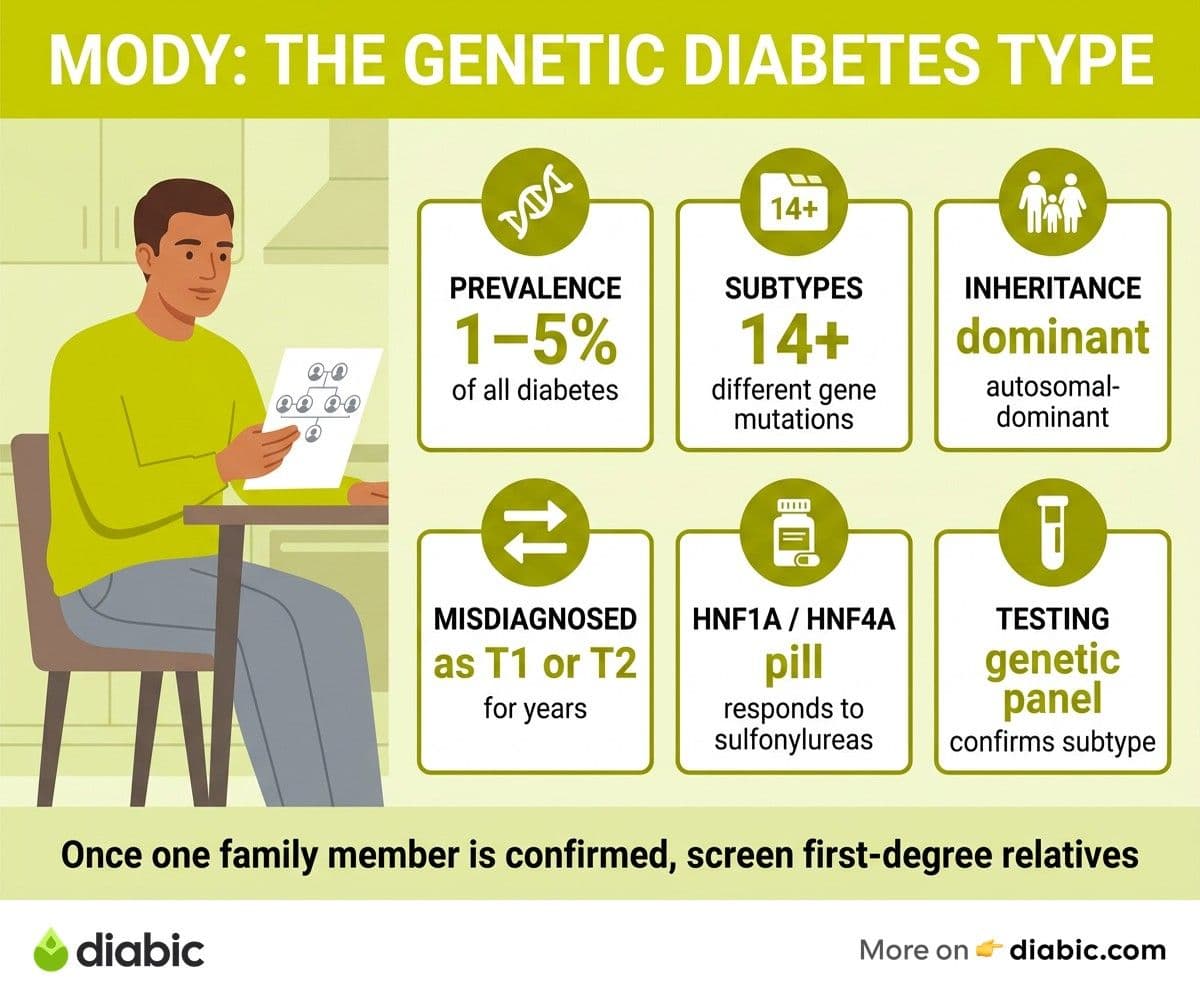
MODY is a monogenic form of diabetes, meaning it is caused by a mutation in a single gene rather than the combination of genes and lifestyle factors that drive type 2. According to the NIDDK, at least 14 different MODY subtypes have been identified so far, each linked to a specific gene that affects how the pancreas produces or releases insulin.
The condition is typically diagnosed before age 25, although it can appear at any point in life. Some people are picked up at routine pediatric visits when fasting blood sugar comes back slightly elevated. Others are diagnosed in their thirties or forties when a doctor finally orders genetic testing after years of confusing lab results.
What makes MODY diabetes distinctive is what it is not. It is not autoimmune like type 1, so the body is not attacking its own beta cells. It is not driven by insulin resistance from weight, inactivity, or metabolic stress like type 2. It is a genetic blueprint issue. Many of the diabetes mellitus misconceptions we encounter in everyday conversation come from the assumption that all diabetes fits into two boxes, when the reality is far more varied.
The inheritance pattern is also unusual. MODY follows what geneticists call autosomal dominant inheritance, which means a single copy of the mutated gene from one parent is enough to pass the condition along. This explains why MODY families often show diabetes in every generation, sometimes with several affected siblings, parents, and grandparents.
How MODY Is Different From Type 1 and Type 2
Telling these conditions apart matters because the treatments are not interchangeable. A person with MODY 2 placed on insulin may have nearly perfect blood sugar without any medication at all. A person with MODY 3 may do beautifully on a low-cost daily pill. The clinical features that point toward MODY tend to cluster in a recognizable pattern.
There are usually no autoantibodies present, which is one of the clearest ways to distinguish MODY from type 1. People with MODY also tend to have a body weight in the normal range, which separates the typical presentation from type 2. The family history is often striking, with diabetes appearing in roughly half of close relatives across multiple generations.
For a deeper look at the foundational differences between common forms, our overview of what is diabetes covers the basics in plain language. The type 1 vs type 2 differences guide pairs well alongside it for context on the more common pathways.
The American Diabetes Association notes on its About Diabetes resource that monogenic forms like MODY remain underdiagnosed, partly because clinicians are trained to think first about the two most common categories. When someone presents with diabetes that does not fit either pattern cleanly, MODY deserves a place on the differential diagnosis list.
There is also a practical consequence of getting it right. Some MODY subtypes do not progress in the way type 2 does, and others have a notably mild course. People with MODY 2, for example, often live for decades with mildly elevated fasting glucose and no measurable complications. That changes how aggressively a clinician should treat the numbers.
Diagnosing MODY
Genetic testing is the only definitive way to diagnose MODY. A simple blood draw is sent to a specialized lab that sequences the genes most commonly involved, and the results identify both the presence of a mutation and the specific subtype. Mayo Clinic and other large academic centers offer this testing routinely, and many endocrinologists can refer patients into testing programs once MODY is suspected.
The challenge is that genetic testing is rarely the first thing ordered. Most newly diagnosed adults are tested for HbA1c, fasting glucose, and sometimes autoantibodies, and the diagnosis settles into either type 1 or type 2 based on the picture. MODY is often suspected only when the picture does not fit, which can take years.
Clues that should prompt a closer look include diagnosis at a young age without obesity, negative results on autoantibody testing, a strong multigenerational family history of diabetes, and an unusual response to standard therapies. People with MODY 1 or MODY 3 sometimes notice that small doses of certain pills work surprisingly well, while the insulin doses prescribed for presumed type 1 seem mismatched to their actual blood sugar pattern.
Misdiagnosis is common enough that researchers studying what is LADA diabetes have raised similar concerns about underdiagnosed adult-onset autoimmune diabetes. The lesson across these rarer forms is the same. When the picture is atypical, asking questions and seeking specialist input often pays off.
The cost of testing has fallen substantially over the past decade, and many insurers now cover MODY panels when family history or clinical clues justify it. If you suspect MODY in yourself or a family member, it is worth asking your endocrinologist directly about a referral.
Treatment by MODY Subtype
The treatment of MODY varies dramatically by subtype, which is the practical reason genetic testing is so valuable. A correct subtype designation translates into a treatment plan that may be simpler, cheaper, and more effective than what was prescribed before.
MODY 2, caused by mutations in the GCK gene, often needs no medication at all. People with this subtype have a slightly higher fasting glucose set point, but they do not develop the complications associated with type 2 over time. Treatment usually consists of monitoring rather than active intervention, and many endocrinologists describe MODY 2 as a "leave it alone" condition once correctly identified.
MODY 3, linked to HNF1A mutations, is the most common subtype in many populations. People with MODY 3 tend to respond beautifully to sulfonylureas, an older and inexpensive class of pills that prompt the pancreas to release more insulin. Many adults previously placed on insulin for presumed type 1 are able to switch to sulfonylureas with excellent results, often using doses far lower than what is typical for type 2.
MODY 1, caused by HNF4A mutations, behaves similarly to MODY 3 and usually responds to the same medication class. Other subtypes, including those affecting the HNF1B and IPF1 genes, may have additional features such as kidney cysts or pancreatic structural changes, which call for individualized care from a specialist team.
A small share of MODY subtypes do require insulin, and some progress to need it over time. The point is not that MODY is always mild or always treatable with pills, but that knowing the subtype lets the treatment match the biology.
Why Correct Diagnosis Changes Everything
The downstream effects of getting MODY right reach beyond the individual. The first benefit is treatment that actually fits. Avoiding unnecessary insulin in subtypes that do not need it can ease the daily burden of diabetes management considerably, freeing up time, money, and mental energy for other priorities.
Genetic counseling for family members is another piece. Because MODY is inherited in an autosomal dominant pattern, children of a person with MODY have a 50 percent chance of carrying the same mutation. Early testing in family members can lead to earlier identification, smoother treatment transitions, and better long-term outcomes. Our overview of whether is diabetes genetic explores this hereditary picture in more detail.
Pregnancy planning also benefits from accurate diagnosis. Some MODY subtypes affect blood sugar in ways that interact with pregnancy hormones, and knowing which subtype is involved helps the obstetric team plan testing, monitoring, and any medication adjustments. Standard gestational diabetes protocols may not be the right fit when MODY is in the picture.
Finally, knowing the diagnosis brings a kind of clarity that many people describe as a quiet relief. The vague sense that something about their diabetes did not quite match the textbook finally has an explanation, and the path forward becomes clearer.
Frequently Asked Questions
What is MODY and how is it diagnosed?
MODY is a genetic form of diabetes caused by a mutation in a single gene, and it is diagnosed through genetic testing. Testing is usually prompted when someone develops diabetes at a young age, has a strong family history across multiple generations, and tests negative for autoantibodies. At least 14 subtypes exist, each with different treatment needs, so identifying the specific gene involved guides the rest of the care plan.
Is MODY genetic?
Yes, MODY is entirely genetic and follows an autosomal dominant inheritance pattern. This means a child has a 50 percent chance of inheriting the gene mutation if one parent carries it, which is why a strong multigenerational family history of diabetes is one of the key indicators that the condition should be considered. Genetic counseling is often recommended once a diagnosis is confirmed.
Can MODY be cured?
MODY cannot be cured because the underlying gene mutation is present from birth, but several subtypes can be managed with little or no medication. People with MODY 2 often need only periodic monitoring, and people with MODY 3 typically respond well to inexpensive oral medications. Talk to your doctor about whether genetic testing makes sense based on your personal and family history.
Is MODY worse than type 2 diabetes?
MODY is not inherently worse or better than type 2 diabetes, and the answer depends on the subtype. Some forms of MODY follow a milder course with fewer complications than typical type 2, while others require closer attention. The most important factor is matching treatment to the specific subtype, which is why genetic testing is central to long-term outcomes for people living with MODY.
If MODY diabetes sounds like it could be part of your story, consider talking with your healthcare provider about genetic testing. A correct diagnosis can reshape your treatment plan and bring real peace of mind, especially when family members may benefit from screening too. You can also explore our other-types library for more on MODY diabetes and other rarer forms that often go unrecognized in standard care.
Shahriar P. Shuvo is the founder of Diabic. He has lived with diabetes for over 14 years, and built Diabic to deliver the practical, evidence-based self-management tools he wished existed when he was first diagnosed. By trade, Shahriar is a senior design and frontend engineer with 6+ years shipping products at Agora, Timescale (now Tiger Data), and ShareTrip. He writes from the intersection of lived diabetes experience and product craft, focused on what works in daily management rather than what sounds good in a textbook.
Medically reviewed by
Dr. Shanto Arian is an internal medicine physician now specializing in clinical and aesthetic dermatology, with a parallel academic focus on epidemiology and public health. He holds an MBBS, MPH, MSc (UK), MRCP (UK), MRCPI (Ireland), Diploma in Dermatology (UK), and Diploma in Aesthetic Medicine (USA). Dr. Arian trained in internal medicine, including hospital work on hematology cases such as graft-versus-host disease, before moving toward dermatology. Skin is one of the earliest places diabetes shows itself, from acanthosis nigricans and diabetic dermopathy to slow foot wound healing, and that intersection is where his clinical and Diabic-review work meet. On Diabic, Dr. Arian medically reviews content on diabetes diagnosis, complications, dermatologic manifestations, and pharmacotherapy, ensuring every claim aligns with current ADA, NICE, and peer-reviewed literature.
More from Diabetes Knowledge
View all
6 Safe Dessert for Gestational Diabetes Recipes You Can
Six dessert for gestational diabetes recipes that satisfy your sweet tooth without spiking blood sugar, with carb counts and pairing tips you can use.

8 High Fiber Foods That Help with Prediabetes
Add these 8 high fiber foods for prediabetes to slow glucose absorption, support steady blood sugar, and meet the daily fiber target most people miss.

Mediterranean Diet for Prediabetes: A Practical Guide
The mediterranean diet for prediabetes is one of the best-studied eating patterns for prevention. Here is what to eat, what to avoid, and how to start.
Clinician-reviewed habits, plain-language guides, and honest answers - the small shifts that make living with diabetes feel lighter, every day.