8 Fish Recipes for Diabetes: Easy Weeknight Meals
Eight easy fish recipes for diabetes packed with omega-3s, lean protein, and almost zero carbs. Simple weeknight meals that support stable blood sugar.

In this article(17)
Fish is one of the few proteins that ticks nearly every box when you are managing diabetes. Lean, virtually carb-free, rich in omega-3 fatty acids, and forgiving in the kitchen if you know a few basic techniques. These fish recipes for diabetes are built for weeknight cooking, with short ingredient lists, minimal added sugar, and pairings that keep your post-meal blood sugar gentle.
We pulled together eight recipes our team actually rotates through, from simple lemon herb baked salmon to pan-seared halibut with asparagus. Each one assumes you do not have an hour to spend at the stove, and each one pairs well with the kinds of non-starchy vegetables that round out a balanced plate.
Why Fish Is Great for Diabetes
When we think about diabetes fish recipes, the first thing worth saying is that fish brings macronutrients that work in your favor. Most fish has zero carbohydrates, meaning it will not raise your blood sugar on its own. The protein helps slow the glucose absorption of whatever carbs are on the rest of the plate. And the fats in fatty fish are the kind that support heart health, which matters because cardiovascular disease is the leading cause of death for people with type 2 diabetes.
The American Diabetes Association recommends including fish (particularly fatty fish high in omega-3s) at least twice per week as part of a heart-healthy eating pattern. Salmon, mackerel, sardines, herring, and trout are the standouts. The American Heart Association makes the same recommendation, citing evidence that omega-3 fatty acids may help reduce triglycerides, blood pressure, and overall inflammation.
White fish like cod, tilapia, halibut, and haddock have less omega-3 but still deliver lean protein with no carbs. They are also milder in flavor, which makes them a useful starter fish for people who do not love the taste of salmon. Pairing fish with our other favorite seafood, shrimp recipes for diabetes, gives you a wider weekly rotation without leaning on red meat.
8 Diabetes-Friendly Fish Recipes
These recipes are written for two servings each. Scale up or down as needed. Each one is built to work as the protein anchor of a plate that follows the diabetes plate method: half non-starchy vegetables, a quarter lean protein, a quarter (or less) of a smart carb.
1. Lemon Herb Baked Salmon
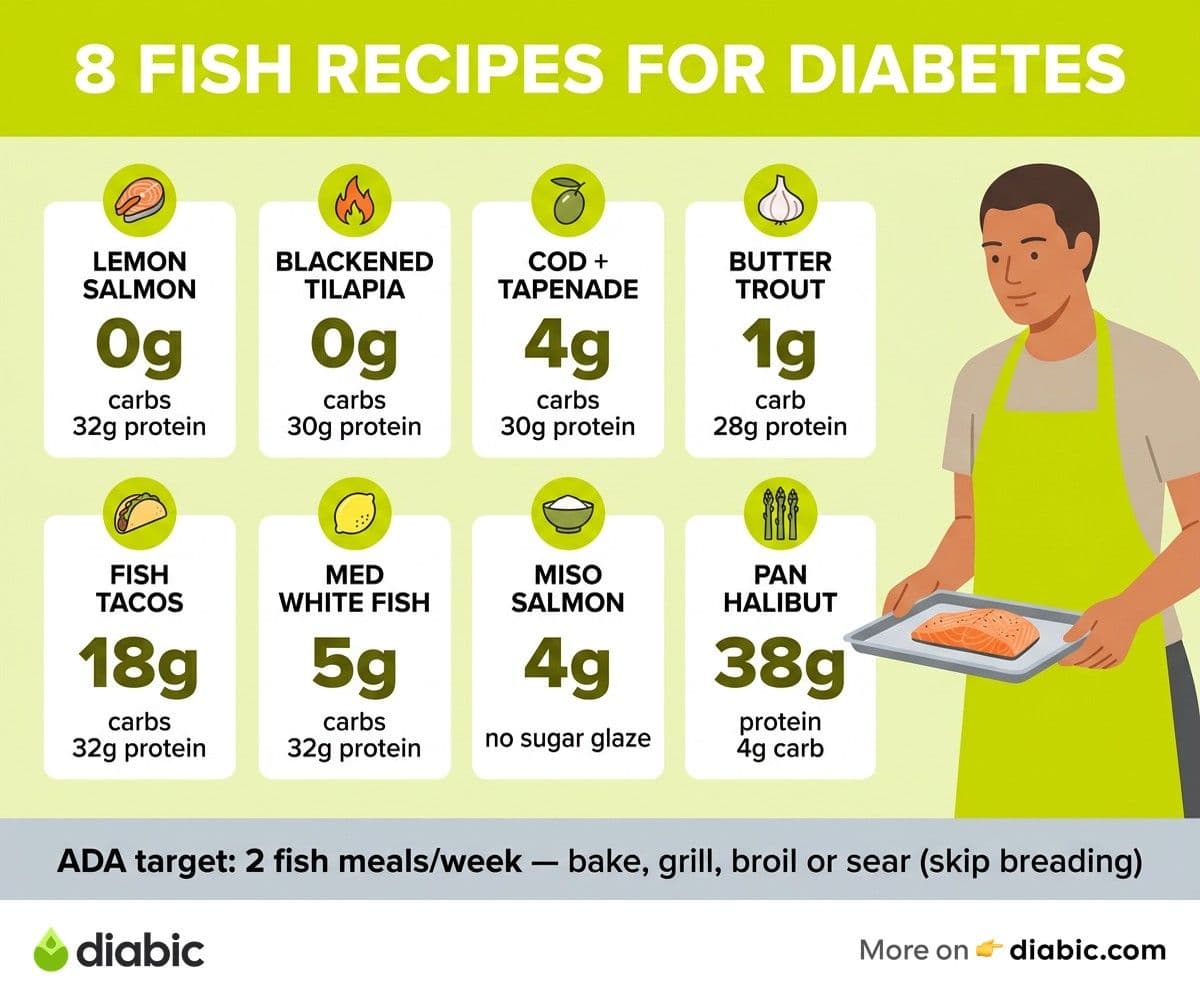
Two 5-ounce salmon fillets, 1 tablespoon olive oil, juice of half a lemon, 2 cloves garlic minced, 1 teaspoon fresh dill, salt and pepper. Preheat oven to 400°F. Place salmon on a parchment-lined sheet pan. Whisk olive oil, lemon juice, garlic, and dill, then spoon over salmon. Bake 12 to 14 minutes until the flesh flakes. Serve with roasted asparagus.
Per serving (salmon only): roughly 290 calories, 32 g protein, 17 g fat, 0 g carbs. The omega-3 in salmon is the standout nutritional benefit here.
2. Blackened Tilapia with Roasted Vegetables
Two 5-ounce tilapia fillets, 1 tablespoon blackening seasoning (paprika, garlic powder, oregano, thyme, black pepper, cayenne), 1 tablespoon olive oil. Pat fillets dry, rub with seasoning. Heat oil in a cast iron pan over medium-high. Cook fillets 3 to 4 minutes per side. Serve over a bed of roasted bell peppers and zucchini.
Per serving (fish only): roughly 200 calories, 30 g protein, 8 g fat, 0 g carbs. Tilapia is mild and quick-cooking, which makes it a friendly weeknight option.
3. Cod with Tomato and Olive Tapenade
Two 6-ounce cod fillets, 1/2 cup cherry tomatoes halved, 1/4 cup pitted Kalamata olives chopped, 1 tablespoon capers, 1 tablespoon olive oil, 1 clove garlic. Season cod with salt and pepper. Sear 3 minutes per side in olive oil. Combine tomatoes, olives, capers, and garlic in the pan, cook 2 minutes, spoon over fish.
Per serving: roughly 250 calories, 30 g protein, 12 g fat, 4 g carbs. The Mediterranean flavors make this feel like a restaurant dish without the restaurant carbs.
4. Garlic Butter Trout
Two 5-ounce trout fillets, 1 tablespoon butter, 1 tablespoon olive oil, 3 cloves garlic minced, juice of half a lemon, fresh parsley. Heat oil and butter in a skillet. Add trout skin-side down, cook 3 minutes. Flip, add garlic, cook another 2 minutes. Finish with lemon juice and parsley.
Per serving: roughly 280 calories, 28 g protein, 18 g fat, 1 g carb. Trout is one of the most underrated fatty fish for diabetes meals.
5. Fish Tacos with Cabbage Slaw
Two 5-ounce mahi-mahi or cod fillets, 1 teaspoon cumin, 1 teaspoon chili powder, 2 small low-carb tortillas, 1 cup shredded green cabbage, 1/4 cup Greek yogurt, juice of 1 lime, fresh cilantro. Season fish, pan-sear 3 minutes per side. Whisk yogurt and lime for the slaw dressing, toss with cabbage. Build tacos with fish and slaw.
Per serving (two tacos): roughly 320 calories, 32 g protein, 10 g fat, 18 g carbs (mostly from tortillas). Use a low-carb tortilla to keep the carb count gentle, or skip the tortilla and serve as a bowl.
6. Mediterranean Baked White Fish
Two 6-ounce halibut, sea bass, or cod fillets, 1/2 cup cherry tomatoes, 1/4 cup chopped artichoke hearts, 2 tablespoons olive oil, 1 lemon sliced, fresh oregano. Place fish in a baking dish. Surround with tomatoes, artichokes, and lemon slices. Drizzle olive oil. Bake at 400°F for 18 to 20 minutes.
Per serving: roughly 270 calories, 32 g protein, 13 g fat, 5 g carbs. The whole approach pairs naturally with the broader Mediterranean diet for diabetes, which research consistently shows supports better glycemic outcomes.
7. Miso-Glazed Salmon (Low-Sugar Glaze)
Two 5-ounce salmon fillets, 2 tablespoons white miso paste, 1 tablespoon rice vinegar, 1 teaspoon grated ginger, 1 teaspoon sesame oil, 1 teaspoon allulose or monk fruit sweetener (optional, in place of mirin or sugar). Whisk glaze ingredients. Marinate salmon 15 minutes. Broil 6 to 8 minutes until caramelized on top. Serve with steamed bok choy.
Per serving: roughly 300 calories, 32 g protein, 17 g fat, 4 g carbs. Traditional miso glazes use mirin and brown sugar; the swap here keeps the umami without the spike.
8. Pan-Seared Halibut with Asparagus
Two 6-ounce halibut fillets, 1 bunch asparagus trimmed, 1 tablespoon olive oil, 1 tablespoon butter, 2 cloves garlic, juice of half a lemon. Pat halibut dry, season. Heat oil in a skillet, sear halibut 4 minutes per side. Remove fish, add butter, garlic, and asparagus, cook 5 minutes. Finish with lemon. Plate together.
Per serving: roughly 320 calories, 38 g protein, 16 g fat, 4 g carbs. Halibut is a special-occasion fish but cooks like any other firm white fish, and the price often drops mid-week at fish counters.
Cooking Tips That Make These Fish Recipes for Diabetes Work
A few habits separate diabetes-friendly dinner recipes from versions that quietly add carbs and sugar. The first is the cooking method. Bake, grill, broil, poach, or pan-sear. Skip breading and deep-frying. A 4-ounce serving of pan-seared cod has zero carbs. The same fish breaded and fried can carry 15 to 25 grams of carbs and a much higher calorie load.
Sauces are where many fish dishes go wrong. Teriyaki, sweet chili, honey-mustard, BBQ, and most bottled "Asian" glazes are sugar-heavy. Read labels and watch for ingredients ending in "-ose" (glucose, sucrose, fructose) or syrup. Better swaps include lemon and herbs, olive oil with garlic, fresh tomato salsas, salsa verde, chimichurri, tahini-yogurt sauces, and sugar-free mustards. Our roundup of dinner recipes for diabetes leans hard on these techniques.
Pairing matters as much as preparation. Plate fish with a generous portion of non-starchy vegetables (half the plate or more) and a small portion of a smart carb if you want one (a half-cup of quinoa, brown rice, or a small sweet potato). Eat the vegetables first, then the fish, then the carb. That sequence consistently produces a smaller blood sugar response than eating it all mixed up.
From my experience: when I started cooking fish at home twice a week, the change I noticed first was not in my numbers, but in how I felt the next morning. Less inflammation in my hands, easier mornings, fewer cravings later in the day. The blood sugar improvement followed, but the day-to-day energy difference was what kept me cooking it.
Frequently Asked Questions
What fish is best for people with diabetes to eat?
Fatty fish like salmon, trout, sardines, mackerel, and herring provide the highest levels of omega-3 fatty acids, which support heart health and may help reduce inflammation in people with diabetes. White fish like cod, tilapia, halibut, and haddock are also excellent lean protein options. All fish are naturally carb-free, so any unbreaded preparation works well for blood sugar.
How to cook fish for a person with diabetes meal?
Bake, grill, broil, poach, or pan-sear fish using olive oil, butter, or avocado oil. Season with herbs, citrus, garlic, and spices instead of sugary marinades or sweet glazes. Serve with a generous portion of non-starchy vegetables and a small portion of a slow-digesting carb like quinoa or sweet potato if you want one. Avoid breading and deep-frying, which add carbs and unhealthy fats.
How often should someone with diabetes eat fish?
The American Diabetes Association recommends eating fish at least twice per week, with an emphasis on fatty fish high in omega-3 fatty acids. This pattern is associated with better cardiovascular outcomes, which matter especially for people with diabetes. Talk to your doctor if you take blood thinners, since high omega-3 intake can affect bleeding risk.
Are canned fish like tuna and sardines good for diabetes?
Yes. Canned tuna, salmon, and sardines are convenient, affordable, and just as nutritious as fresh in most cases. Choose options packed in water or olive oil rather than soybean oil, and watch for added sugars in flavored varieties. Sardines in particular are high in omega-3s and calcium, and they make a fast lunch on a bed of greens.
Can I eat fried fish if I have diabetes?
Occasional fried fish is unlikely to cause a major problem if your overall pattern is balanced, but the breading adds quick-digesting carbs and the frying oils are often inflammatory. If you want a crispy texture, try air-frying with a thin almond flour or pork rind coating, or oven-baking with a panko crust on a single piece rather than a full plate.
These fish recipes for diabetes work because they are built around simple ingredients, gentle cooking methods, and pairings that respect your post-meal numbers. Pick two or three to start, build them into your weekly rotation, and the rest will follow as you learn which flavors hold up best on your plate.
Shahriar P. Shuvo is the founder of Diabic. He has lived with diabetes for over 14 years, and built Diabic to deliver the practical, evidence-based self-management tools he wished existed when he was first diagnosed. By trade, Shahriar is a senior design and frontend engineer with 6+ years shipping products at Agora, Timescale (now Tiger Data), and ShareTrip. He writes from the intersection of lived diabetes experience and product craft, focused on what works in daily management rather than what sounds good in a textbook.
Medically reviewed by
Dr. Shanto Arian is an internal medicine physician now specializing in clinical and aesthetic dermatology, with a parallel academic focus on epidemiology and public health. He holds an MBBS, MPH, MSc (UK), MRCP (UK), MRCPI (Ireland), Diploma in Dermatology (UK), and Diploma in Aesthetic Medicine (USA). Dr. Arian trained in internal medicine, including hospital work on hematology cases such as graft-versus-host disease, before moving toward dermatology. Skin is one of the earliest places diabetes shows itself, from acanthosis nigricans and diabetic dermopathy to slow foot wound healing, and that intersection is where his clinical and Diabic-review work meet. On Diabic, Dr. Arian medically reviews content on diabetes diagnosis, complications, dermatologic manifestations, and pharmacotherapy, ensuring every claim aligns with current ADA, NICE, and peer-reviewed literature.
More from Diet & Fitness
View all
Simple Diabetes Exercise Routine for Beginners
A simple diabetes exercise routine for beginners with a 7-day plan, strength basics, and safety tips to help you move more without feeling overwhelmed.

Diabetes Friendly Smoothie Recipes: 5 No-Spike Picks
Five diabetes friendly smoothie recipes that balance protein, fat, and fiber to keep blood sugar steady. Includes a simple framework for building your own.

Can Exercise Prevent Diabetes? Research Says Yes
Can exercise prevent diabetes? Landmark studies show a 58% lower risk with regular activity. Here's how much you need and which workouts help most.
Clinician-reviewed habits, plain-language guides, and honest answers - the small shifts that make living with diabetes feel lighter, every day.