Diabetes Friendly Smoothie Recipes: 5 No-Spike Picks
Five diabetes friendly smoothie recipes that balance protein, fat, and fiber to keep blood sugar steady. Includes a simple framework for building your own.
In this article(13)
That smoothie shop you pass on your way to work probably serves drinks with more sugar than a can of soda. We have walked into one, ordered something that sounded healthy, and watched a continuous glucose monitor light up like a pinball machine an hour later. The problem is not smoothies themselves. The problem is what most cafes put in them.
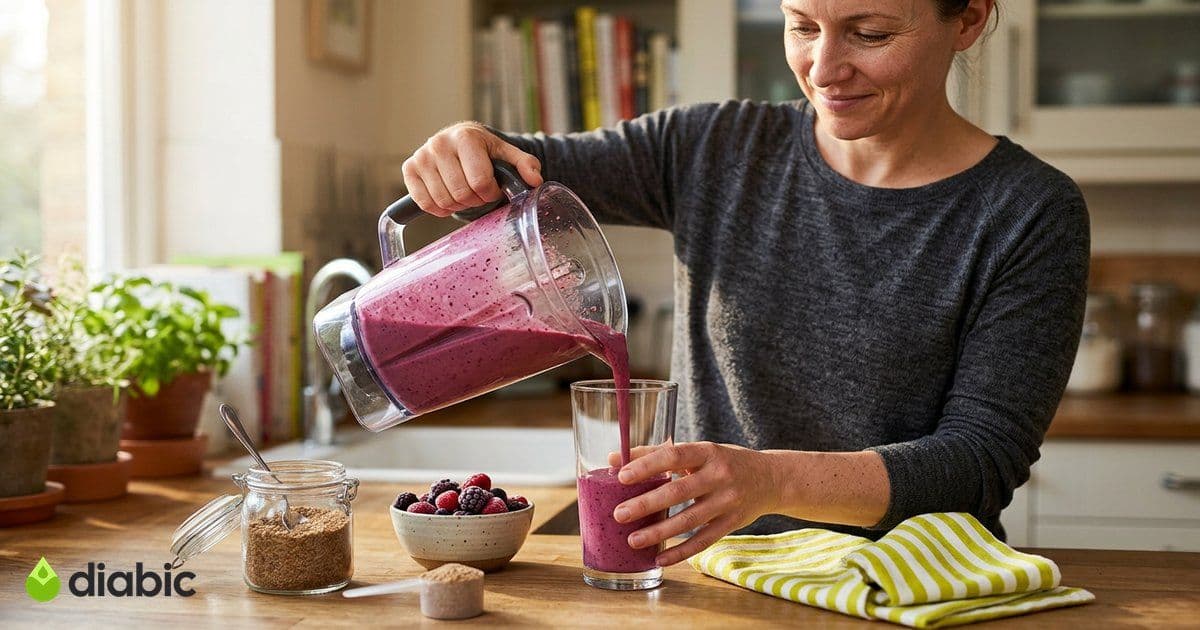
Diabetes friendly smoothie recipes can absolutely fit into a balanced eating plan when you build them with the right ingredients. The trick is balancing fruit with protein, fat, and fiber so glucose enters your bloodstream slowly rather than all at once. Done well, a smoothie becomes a fast breakfast, an easy snack, or a portable lunch that keeps your numbers in a place you feel good about.
This guide walks through why most blended drinks misbehave, gives you five tested recipes with full nutrition context, and ends with a simple formula you can use to build your own.
Why Most Smoothies Are a Blood Sugar Trap
Whole fruit comes with built-in fiber that slows sugar absorption. The moment you blend a banana into a smoothie, that fiber gets mechanically broken down, and the natural sugars hit your system much faster. Add a scoop of fruit juice, sweetened yogurt, or honey, and a single drink can deliver 60 to 80 grams of carbohydrate before you have even sat down.
The Mayo Clinic notes that smoothies can pack hundreds of calories and large amounts of added sugar, particularly when made with sweetened bases or large fruit portions. For someone managing diabetes, that means a quick spike followed by a hard crash. The good news is that this is a fixable problem, not a reason to swear off smoothies forever. We cover this same dynamic in our guide to easy diabetes dessert recipes, where the same balancing principles apply.
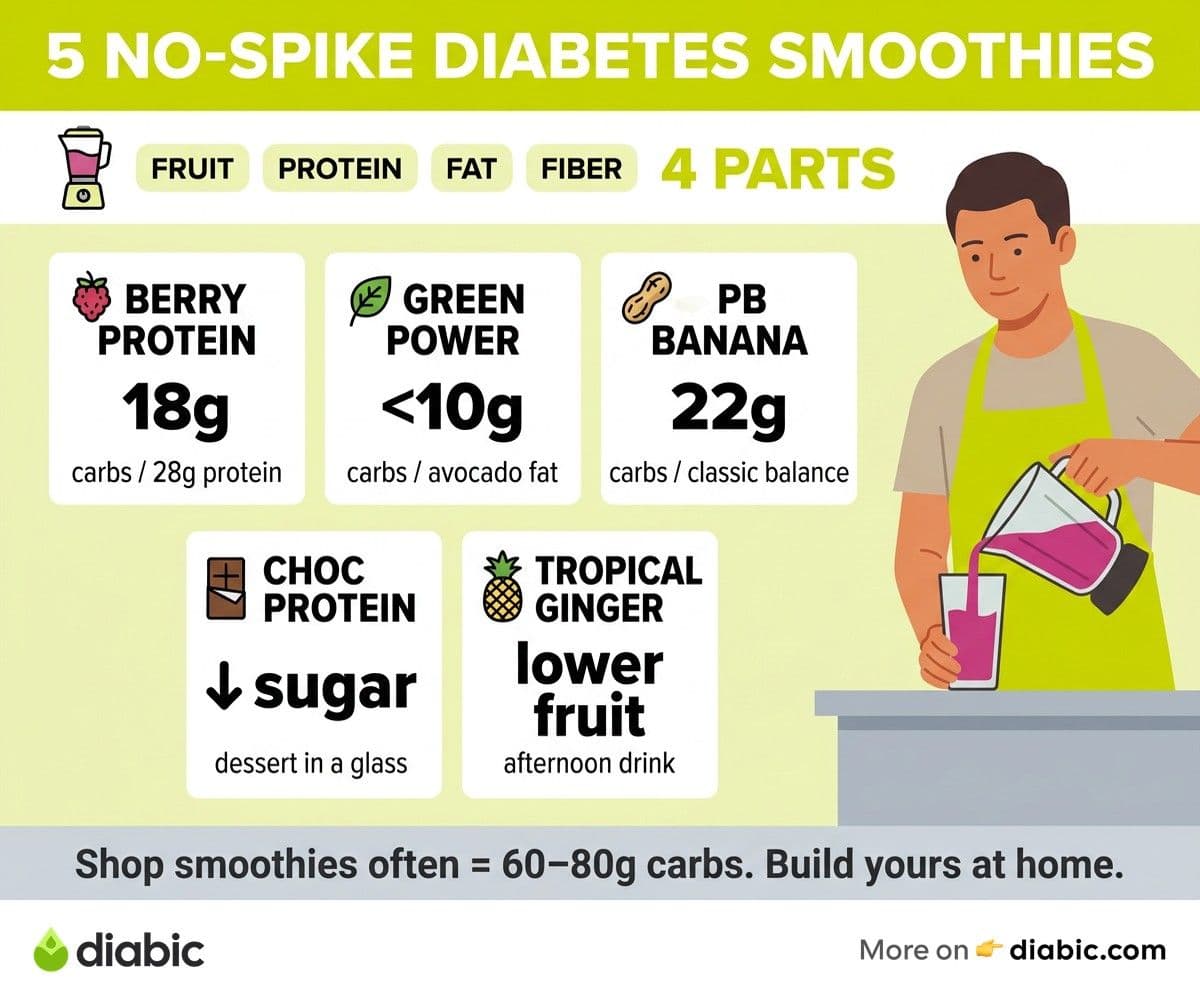
To slow the glucose response, every smoothie needs three things: a portion-controlled amount of fruit, a source of protein, and a healthy fat. Fiber from greens, seeds, or oats is the bonus that ties everything together. Once those four boxes are checked, blending becomes a tool that works with your body rather than against it.
Diabetes Friendly Smoothie Recipes That Steady Blood Sugar
These five smoothies all follow the same balancing principle. Each one delivers protein, fat, and fiber alongside a measured amount of fruit, so the carb load stays in a range most people with diabetes can handle. Nutrition values are estimates based on USDA FoodData Central and will shift slightly based on the brands you use.
1. Berry Protein Smoothie
Berries have one of the lowest sugar profiles of any fruit, and the antioxidants are a nice bonus. Pair them with whey or plant protein for a drink that feels like dessert.
Ingredients (1 serving)
- 3/4 cup frozen mixed berries (strawberries, blueberries, raspberries)
- 1 scoop unsweetened protein powder (about 25 g protein)
- 1 cup unsweetened almond milk
- 1 tablespoon ground flaxseed
- Ice as needed
Instructions
- Add almond milk to the blender first, then protein powder, berries, and flaxseed.
- Blend on high for 45 to 60 seconds until smooth.
- Add ice if you want a thicker texture.
Nutrition (approximate): 230 calories, 18 g carbs, 8 g fiber, 28 g protein, 5 g fat. The high protein and fiber blunt the glucose response from the berries.
2. Green Power Smoothie
Spinach has a neutral flavor in smoothies, and avocado adds a creamy texture along with monounsaturated fat that slows digestion. This one drinks more like a savory shake than a dessert.
Ingredients (1 serving)
- 2 cups baby spinach
- 1/4 ripe avocado
- 1/2 cucumber, peeled
- Juice of 1/2 lemon
- 1 cup unsweetened coconut water or filtered water
- 1 scoop unflavored protein powder (optional but recommended)
Instructions
- Add liquid first, then leafy greens, then everything else.
- Blend on high for 60 seconds.
- Taste and add more lemon if you want extra brightness.
Nutrition (approximate): 180 calories, 12 g carbs, 6 g fiber, 22 g protein, 7 g fat. Practically zero fruit sugar makes this one of the most blood-sugar-friendly options on the list.
3. Chocolate Peanut Butter Smoothie
A small amount of banana goes a long way here. The cocoa, peanut butter, and protein keep the glucose curve gentle while delivering that milkshake feeling.
Ingredients (1 serving)
- 1/2 small banana (frozen works best)
- 1 tablespoon unsweetened cocoa powder
- 1 tablespoon natural peanut butter
- 1 cup unsweetened almond milk
- 1 scoop chocolate or vanilla protein powder
- Pinch of cinnamon
Instructions
- Add liquid, then powders, then banana and peanut butter.
- Blend until completely smooth, about 60 seconds.
Nutrition (approximate): 280 calories, 20 g carbs, 6 g fiber, 28 g protein, 11 g fat. The fat from peanut butter and the protein from the powder offset the modest banana carbs.
4. Tropical Coconut Smoothie
Mango has more sugar than berries, so we keep the portion small and lean on coconut milk and chia seeds to slow absorption. The result tastes like a vacation in a glass.
Ingredients (1 serving)
- 1/2 cup frozen mango chunks
- 1/2 cup full-fat canned coconut milk
- 1/2 cup unsweetened almond milk
- 1 tablespoon chia seeds
- 1 scoop vanilla protein powder
- Squeeze of lime
Instructions
- Soak chia seeds in the almond milk for 5 minutes so they bloom.
- Add everything to the blender and blend until smooth.
Nutrition (approximate): 290 calories, 22 g carbs, 7 g fiber, 22 g protein, 14 g fat. The combination of coconut fat and chia fiber makes this one of the most filling on the list.
5. Cinnamon Oat Smoothie
Steel-cut or rolled oats add slow-digesting carbs and beta-glucan fiber, which research suggests may support healthier post-meal glucose. Cinnamon brings warmth and may add modest blood sugar benefits.
Ingredients (1 serving)
- 1/3 cup rolled oats (raw)
- 1 tablespoon almond butter
- 1 cup unsweetened almond milk
- 1 scoop vanilla protein powder
- 1 teaspoon ground Ceylon cinnamon
- Splash of vanilla extract
- Ice
Instructions
- Blend oats and milk first for 30 seconds to break down the oats.
- Add the rest of the ingredients and blend until smooth.
Nutrition (approximate): 320 calories, 28 g carbs, 6 g fiber, 28 g protein, 10 g fat. This one works well as a meal replacement, not just a snack.
If you like the idea of using functional ingredients in everyday drinks, our roundup of ACV recipes for diabetes covers another simple addition some people find helpful. Pairing what you drink with what you eat is a quieter strategy than chasing trends, and it often works better. The same logic helps you spot foods that spike blood sugar before they reach your blender.
Smoothie Building Rules for Blood Sugar
Once you understand the formula, you do not need a recipe at all. These four rules will turn almost any combination of ingredients into a diabetes friendly dessert recipe or breakfast.
Rule 1: Limit fruit to 1/2 to 1 cup per smoothie. That portion gives you flavor and nutrients without overloading the carb count. The American Diabetes Association suggests berries, cherries, and citrus as smart fruit choices because they are higher in fiber and lower in sugar than tropical fruits.
Rule 2: Always include a protein source. A scoop of protein powder, half a cup of plain Greek yogurt, a tablespoon of nut butter, or two tablespoons of hemp seeds all work. Aim for at least 15 to 20 grams of protein per smoothie.
Rule 3: Add a healthy fat. Avocado, flaxseed, chia seeds, hemp seeds, full-fat coconut milk, or nut butter slow gastric emptying and reduce the glucose spike. A tablespoon or two is plenty.
Rule 4: Use unsweetened liquid bases. Unsweetened almond, soy, coconut, or pea-protein milks all keep the carb count low. Skip fruit juice as a base, which strips fiber and concentrates sugar.
From my experience: After 14 years of living with type 1, I have learned that the order I add things to the blender matters less than the ratio I follow. When I get lazy and skip the protein scoop, my CGM tells on me within 30 minutes. When I hit the formula above, a smoothie behaves more like a balanced meal than a sugar bomb. The framework is what makes diabetes friendly desserts recipes actually friendly.
Frequently Asked Questions
What smoothies can people with diabetes drink?
The best smoothies for people with diabetes are made with limited fruit (1/2 to 1 cup), a protein source like Greek yogurt or unsweetened protein powder, and a healthy fat such as nut butter, avocado, or chia seeds. Use unsweetened almond or coconut milk as the base, and consider adding leafy greens for extra fiber and nutrients. The five recipes above all follow this formula.
Are fruit smoothies good for people with diabetes?
Fruit-only smoothies often spike blood sugar quickly because blending mechanically breaks down the fiber that would normally slow sugar absorption. They are not automatically off limits, but they work much better when you add protein, fat, and limit the fruit portion. A pure fruit smoothie acts more like juice than a meal, so think of it as a treat rather than a daily option.
How much sugar should a person with diabetes smoothie have?
There is no single number that works for everyone, but most people with diabetes do well aiming for under 25 grams of total carbohydrates per snack-sized smoothie and 30 to 45 grams for a meal-sized one, with most of those carbs coming from fiber-rich sources. Your registered dietitian or care team can help you set a target based on your medication, activity, and goals.
Can I drink a smoothie every day with diabetes?
Yes, if it is built with balance. A daily diabetes friendly smoothie recipe works fine as part of a varied eating plan. Rotate ingredients so you are getting different nutrients across the week, and pay attention to how each smoothie affects your numbers so you can fine-tune your formula.
Smoothies do not have to be the enemy of stable blood sugar. Build them with intention, treat fruit as a flavor accent rather than the main event, and the blender becomes one of the more useful tools in a diabetes friendly kitchen. Save the diabetes friendly smoothie recipes you actually like, write the formula on a sticky note inside your cabinet, and the morning rush stops being a glucose problem.
Shahriar P. Shuvo is the founder of Diabic. He has lived with diabetes for over 14 years, and built Diabic to deliver the practical, evidence-based self-management tools he wished existed when he was first diagnosed. By trade, Shahriar is a senior design and frontend engineer with 6+ years shipping products at Agora, Timescale (now Tiger Data), and ShareTrip. He writes from the intersection of lived diabetes experience and product craft, focused on what works in daily management rather than what sounds good in a textbook.
Medically reviewed by
Dr. Rezwana Parvin Rumpa is an obstetrics and gynaecology specialist with clinical focus on gestational diabetes, PCOS, and fertility. She holds the MRCOG (Final Part) from the Royal College of Obstetricians and Gynaecologists in London, the MRCPI (Final Part) from the Royal College of Physicians of Ireland, and an MBBS from Shaheed Monsur Ali Medical College under Dhaka University. Dr. Rumpa serves as a Senior Medical Officer in the Obs and Gynae department at BRB Hospitals Ltd, where she has spent three years managing prenatal care, emergency obstetric cases, and women's-health surgery. On Diabic, she medically reviews content for women living with diabetes, with particular attention to pregnancy, PCOS, and reproductive-health intersections.
More from Diet & Fitness
View all
Simple Diabetes Exercise Routine for Beginners
A simple diabetes exercise routine for beginners with a 7-day plan, strength basics, and safety tips to help you move more without feeling overwhelmed.

Can Exercise Prevent Diabetes? Research Says Yes
Can exercise prevent diabetes? Landmark studies show a 58% lower risk with regular activity. Here's how much you need and which workouts help most.

5 Apple Cider Vinegar Recipes for Diabetes
Try 5 simple apple cider vinegar recipes for diabetes that may help support blood sugar response after meals, plus safety tips for daily use.
Clinician-reviewed habits, plain-language guides, and honest answers - the small shifts that make living with diabetes feel lighter, every day.