Simple Diabetes Exercise Routine for Beginners
A simple diabetes exercise routine for beginners with a 7-day plan, strength basics, and safety tips to help you move more without feeling overwhelmed.

In this article(9)
A diabetes exercise routine does not need a gym membership, fancy equipment, or hours of free time. If you are starting from scratch, the goal is to find a plan you can actually repeat next week, and the week after that. This beginner-friendly routine is built for people with diabetes who want to move more, feel better, and see steadier blood sugar numbers without feeling overwhelmed.
The routine below uses short sessions, plain bodyweight moves, and walking. You can do most of it in your living room or around your block. We will walk through why consistency matters, share a 7-day plan you can copy, and cover the safety basics that often get skipped in generic workout content.
Why a Diabetes Exercise Routine Matters
Movement helps muscles pull glucose out of the bloodstream, which is one reason exercise is one of the best exercise for type 2 diabetes management tools we have. The benefit is real, but it is also short-lived. A single workout improves insulin sensitivity for roughly 24 to 48 hours, which is why the American Diabetes Association recommends spreading activity across the week rather than cramming it into one or two long sessions.
Consistency lowers blood sugar more reliably than occasional bursts of effort. A 20-minute walk five days a week tends to do more for your A1C than a 90-minute workout once a week followed by six rest days. Steady, repeated movement keeps your muscles primed to use glucose efficiently. It also keeps your nervous system used to the demand, so workouts feel easier over time.
A routine matters for another reason that has nothing to do with physiology. It removes decision fatigue. When Monday already says "20-minute walk," you do not waste mental energy debating whether to exercise, what to do, or for how long. You just put on shoes and go. That predictability is what turns a good intention into a habit.
The widely cited target is 150 minutes of moderate aerobic activity per week, plus two strength sessions. That number can feel intimidating on day one. The smarter approach is to build up to it. Start with 10 to 15 minutes a day, add five minutes each week, and let your body adjust. The 150 minutes is a destination, not a starting line.
From my experience: After 14 years of living with diabetes, the single biggest shift in my numbers came when I stopped chasing perfect workouts and started doing imperfect ones. Some days my "exercise" is a slow 15-minute walk after dinner. It still works. The routine that gets done beats the routine that gets skipped.
A Simple Weekly Diabetes Exercise Routine
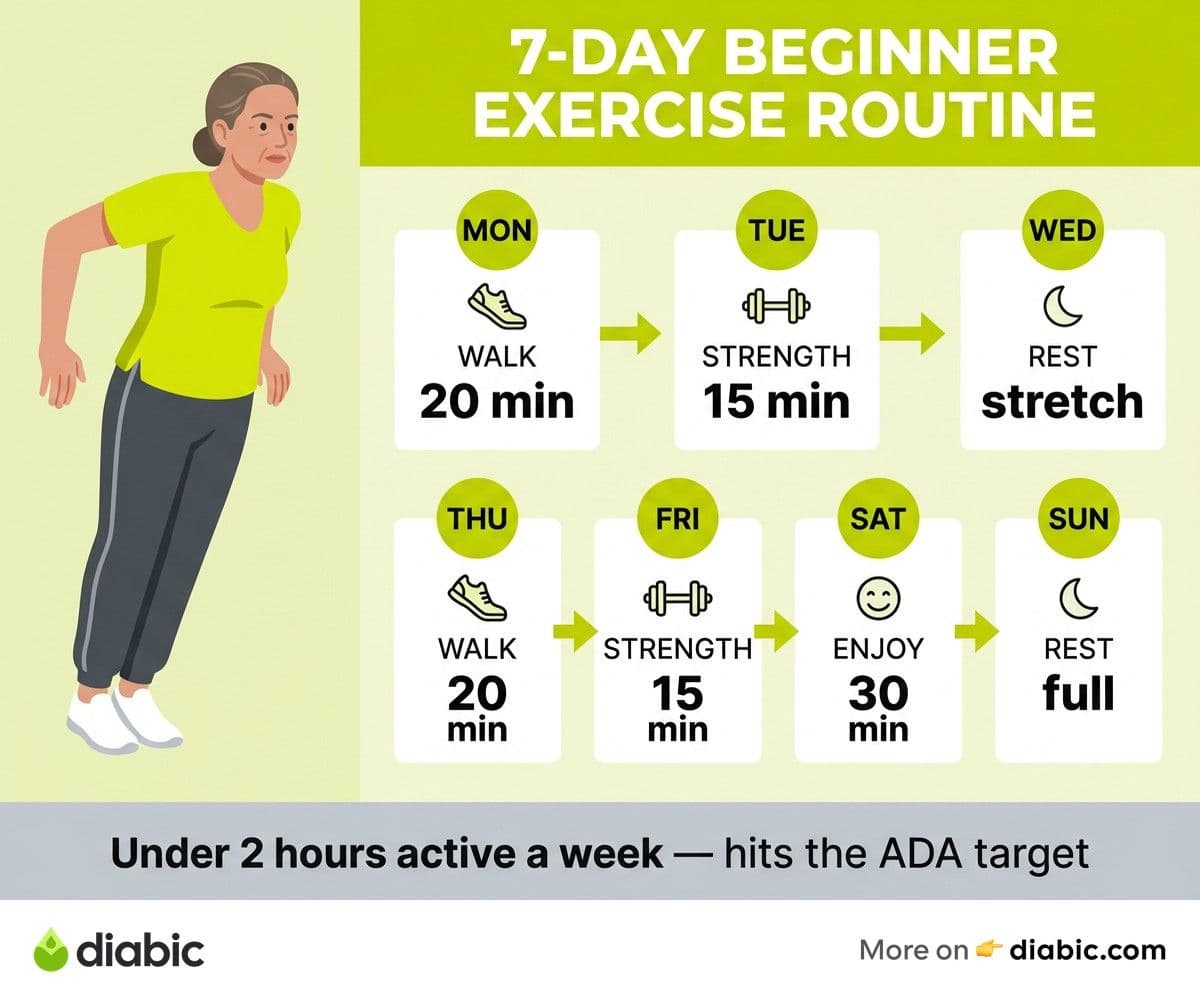
Here is a 7-day beginner plan that hits the ADA targets without burning you out. Each session is short on purpose. You can do this whole week in under two hours of active movement, and the aerobic exercise and diabetes benefits start showing up within the first few weeks.
- Monday: 20-minute brisk walk, ideally after a meal so you ride the post-meal glucose rise down with movement.
- Tuesday: 15-minute bodyweight strength session. Three rounds of 10 squats, 10 wall push-ups, and 10 chair dips, with one minute of rest between rounds.
- Wednesday: Rest, or 10 minutes of gentle stretching if your body is asking for it.
- Thursday: 20-minute brisk walk. If the weather is bad, walk in a mall, hallway, or in place during a TV show.
- Friday: 15-minute bodyweight strength session. Same three exercises as Tuesday, or swap in lunges and standing rows with a resistance band.
- Saturday: 30 minutes of an activity you actually enjoy. Swimming, cycling, dancing in your kitchen, hiking, or playing with kids or grandkids all count.
- Sunday: Full rest. Recovery is when your muscles repair and your insulin sensitivity gains lock in.
The CDC's beginner physical activity guidance lines up with this structure. Two to three days of strength work, four to five days of moderate cardio, and at least one full rest day. If a 20-minute walk feels too long in week one, do 10 minutes. If 15 minutes of strength is too much, do one round instead of three. The shape of the week matters more than the volume.
Strength Training Basics for Diabetes
Cardio gets most of the attention in diabetes content, but strength training is one of the most underrated tools for blood sugar. Muscle is metabolically active tissue, which means more muscle gives your body more places to store glucose. A 2022 review in Diabetes Care found that resistance training improved insulin sensitivity and A1C in adults with type 2 diabetes, even without significant weight loss. That last part matters if you are also working on losing weight with insulin resistance and feeling stuck.
You do not need a barbell or a gym to build strength. Beginner-friendly moves include bodyweight squats, wall or counter push-ups, chair dips, glute bridges, and standing rows with a resistance band. These exercises target the largest muscle groups in your body, which is exactly where you want the metabolic benefit. Aim for 8 to 12 reps per move, two to three sets, with rest between sets.
Progress slowly and predictably. In week one, do one set of each move. In week two, add a second set. By week four, you should be doing three sets, or holding each move slightly longer, or using a heavier resistance band. The point is not to push to failure. The point is to give your muscles a small reason to adapt, week after week.
If you have neuropathy, balance issues, or any joint pain, modify rather than skip. Wall push-ups instead of floor push-ups. Chair-supported squats instead of free-standing ones. Seated resistance band rows instead of standing ones. A modified strength session is exercise good for diabetes. A skipped one is not.
Staying Safe During Exercise
Safety basics get repeated for a reason. The same workout can affect two people with diabetes very differently, depending on medications, hydration, time of day, and what they last ate. The point of these checks is not to make exercise scary. It is to help you spot patterns and adjust.
Check your blood sugar before and after exercise, especially in the first few weeks of a new routine. The NIDDK's guidance on diabetes and physical activity suggests being cautious if your fasting blood glucose is below 100 mg/dL or above 250 mg/dL before starting. A small carb snack can help with the low end. A delay or a lighter session may be smarter at the high end. Talk to your doctor about target ranges that fit your situation.
Hydrate before, during, and after sessions. Dehydration can falsely raise blood sugar readings and make workouts feel harder than they are. Wear shoes that fit, with no rough seams or pressure points, and check your feet daily for blisters or hot spots. People with neuropathy may not feel small injuries until they become bigger problems. Clean cotton or moisture-wicking socks help, and so does cutting workouts short if something feels off.
Stop exercising if you feel dizzy, unusually short of breath, lightheaded, or shaky. Those signs can mean low blood sugar, low blood pressure, or something else worth checking. A skipped session is never a setback when the alternative is an injury or a hypo. You can pick up the routine the next day.
FAQ
What is a good exercise routine for people with diabetes?
A good routine combines aerobic exercise three to four days per week with strength training two days per week, plus at least one rest day. Sessions can be short, 15 to 30 minutes is plenty for beginners. The most important thing is that you can repeat it next week and the week after.
How often should a person with diabetes exercise?
The ADA suggests at least 150 minutes of moderate-intensity aerobic activity per week, with no more than two consecutive days off. That works out to roughly 20 to 30 minutes most days. Add two days of strength training, and you have hit the standard target for adults with diabetes.
Can I do this routine if I have not exercised in years?
Yes, with two adjustments. Start at half the volume listed (10-minute walks, one set of strength moves) for the first two weeks. And talk to your doctor before starting, especially if you have heart issues, neuropathy, eye complications, or take insulin. They can help you set safe targets and flag anything to watch for.
How long until I see blood sugar improvements?
Many people notice steadier post-meal numbers within the first one to two weeks, especially after walks taken after eating. A1C changes take longer, usually 8 to 12 weeks of consistent activity. The early wins help build the habit. The bigger metabolic shifts come later.
A simple diabetes exercise routine works because it is sustainable, not because it is impressive. Pick one walk this week. Add a second next week. Keep the bar low enough that you can clear it on a tired Tuesday, and let the rest build from there.
Shahriar P. Shuvo is the founder of Diabic. He has lived with diabetes for over 14 years, and built Diabic to deliver the practical, evidence-based self-management tools he wished existed when he was first diagnosed. By trade, Shahriar is a senior design and frontend engineer with 6+ years shipping products at Agora, Timescale (now Tiger Data), and ShareTrip. He writes from the intersection of lived diabetes experience and product craft, focused on what works in daily management rather than what sounds good in a textbook.
Medically reviewed by
Dr. Shanto Arian is an internal medicine physician now specializing in clinical and aesthetic dermatology, with a parallel academic focus on epidemiology and public health. He holds an MBBS, MPH, MSc (UK), MRCP (UK), MRCPI (Ireland), Diploma in Dermatology (UK), and Diploma in Aesthetic Medicine (USA). Dr. Arian trained in internal medicine, including hospital work on hematology cases such as graft-versus-host disease, before moving toward dermatology. Skin is one of the earliest places diabetes shows itself, from acanthosis nigricans and diabetic dermopathy to slow foot wound healing, and that intersection is where his clinical and Diabic-review work meet. On Diabic, Dr. Arian medically reviews content on diabetes diagnosis, complications, dermatologic manifestations, and pharmacotherapy, ensuring every claim aligns with current ADA, NICE, and peer-reviewed literature.
More from Diet & Fitness
View all
Diabetes Friendly Smoothie Recipes: 5 No-Spike Picks
Five diabetes friendly smoothie recipes that balance protein, fat, and fiber to keep blood sugar steady. Includes a simple framework for building your own.

Can Exercise Prevent Diabetes? Research Says Yes
Can exercise prevent diabetes? Landmark studies show a 58% lower risk with regular activity. Here's how much you need and which workouts help most.

5 Apple Cider Vinegar Recipes for Diabetes
Try 5 simple apple cider vinegar recipes for diabetes that may help support blood sugar response after meals, plus safety tips for daily use.
Clinician-reviewed habits, plain-language guides, and honest answers - the small shifts that make living with diabetes feel lighter, every day.