5 Apple Cider Vinegar Recipes for Diabetes
Try 5 simple apple cider vinegar recipes for diabetes that may help support blood sugar response after meals, plus safety tips for daily use.

In this article(13)
Apple cider vinegar recipes for diabetes have moved from folk-remedy territory into actual research conversations. Small studies suggest that the acetic acid in ACV may help blunt the post-meal glucose spike, especially after a carb-heavy plate. The catch is that nobody wants to slug back a tablespoon of straight vinegar before dinner, and they shouldn't.
The good news is that you can fold ACV into food you would already eat. A bright dressing, a quick marinade, or a morning tonic does the same job without the throat burn. Here are five recipes that taste like food, not medicine.
What the Research Says About ACV and Blood Sugar
A frequently cited paper in Diabetes Care found that two tablespoons of vinegar before a high-carb meal lowered post-meal glucose in adults with insulin resistance. Other small trials have shown similar modest effects on glycemic response. The mechanism is thought to involve slower carbohydrate digestion and improved insulin sensitivity at the meal that follows.
These results are promising, but they are not a green light to skip your medication or your vegetables. Researchers are quick to point out that the effects are small, the studies are short, and ACV is best treated as one tool inside a larger plan. Pairing it with fiber-forward meals, like the ones we cover in our roundup of diabetes salad recipes that keep you full, tends to make a bigger difference than vinegar alone.
A reasonable starting dose, based on the research, is one to two tablespoons diluted in water or used in cooking, taken once or twice a day with food. If you take insulin or sulfonylureas, talk to your doctor before adding ACV regularly, since combining glucose-lowering tools can stack effects in unpredictable ways.
From my experience: After 14 years of living with diabetes, I learned the hard way that ACV is not a miracle. What it does well, in my own kitchen, is round out a meal in a way that keeps me satisfied longer. A salad with a tangy ACV dressing simply tracks better on my CGM than the same salad with a sweet bottled dressing, and that is the kind of small win worth chasing.
5 Apple Cider Vinegar Recipes for Diabetes
These recipes lean on whole ingredients, lower-glycemic produce, and reasonable portions. Each one uses raw, unfiltered ACV with the cloudy "mother" intact, which is what most studies have used. After you treat yourself to one of these, it can also be useful to glance at what your numbers do an hour or two later, an idea we explore in our guide to blood sugar after food and what's normal.
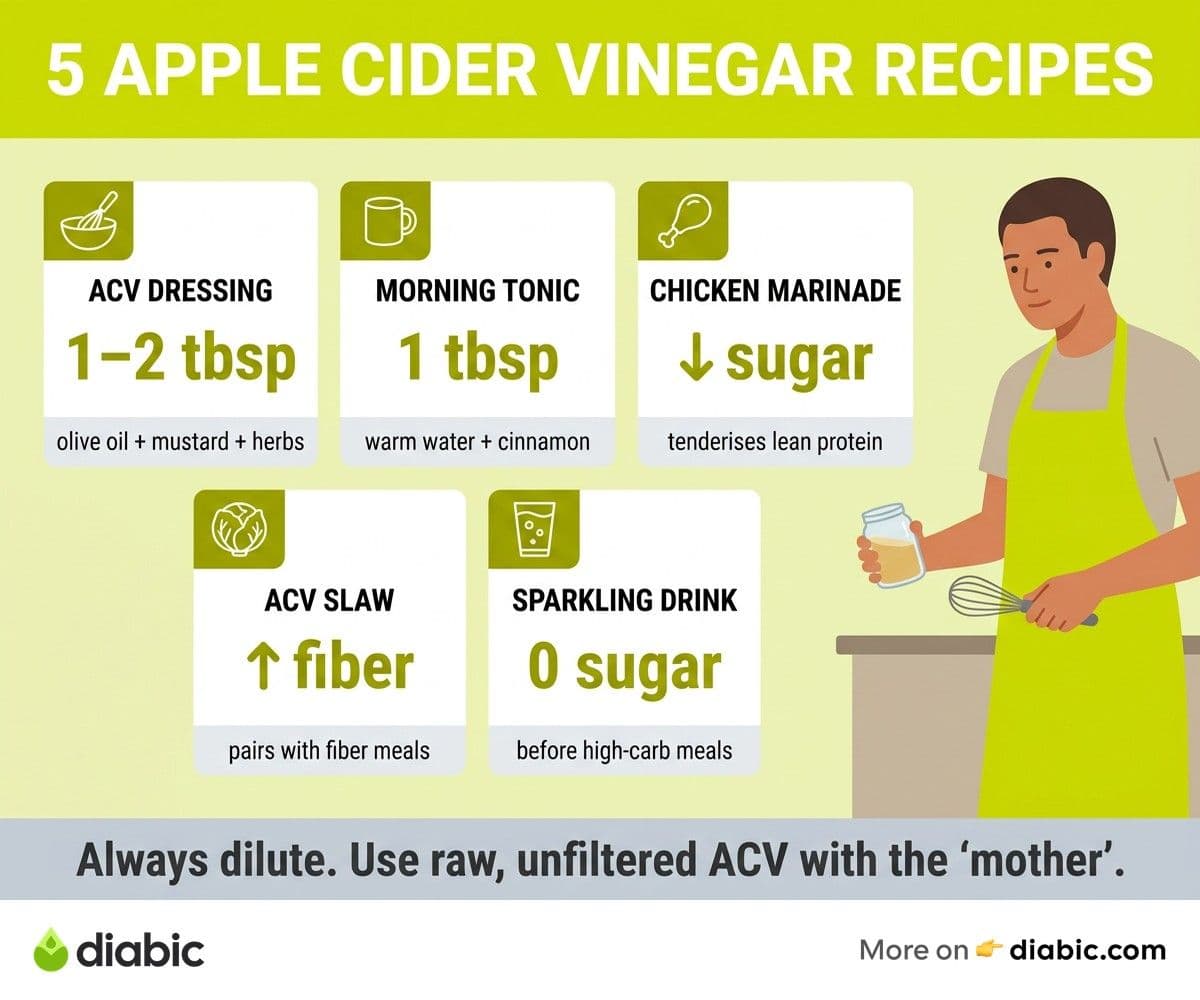
1. ACV Salad Dressing With Olive Oil and Herbs
This is the workhorse. It pairs with leafy greens, roasted vegetables, or grain bowls and gives you ACV in a form your taste buds actually enjoy.
Ingredients (makes about 1/2 cup):
- 3 tablespoons raw apple cider vinegar
- 1/4 cup extra virgin olive oil
- 1 teaspoon Dijon mustard
- 1 small garlic clove, minced
- 1 teaspoon dried oregano or fresh chopped basil
- Salt and pepper to taste
Instructions:
- Whisk vinegar, mustard, and garlic in a small bowl until combined.
- Stream in the olive oil while whisking to create an emulsion.
- Stir in herbs, salt, and pepper. Store in a jar in the fridge for up to a week.
Why it works: Each two-tablespoon serving carries about one teaspoon of ACV, plus heart-healthy monounsaturated fat from olive oil. Almost no carbs, around 90 calories per serving, and it makes plain greens feel like a real meal.
2. ACV Morning Tonic With Cinnamon
A gentler alternative to coffee on the days you want something warming. Cinnamon brings its own modest blood-sugar credentials to the cup.
Ingredients (1 serving):
- 1 tablespoon raw apple cider vinegar
- 1 cup warm (not hot) water
- 1/4 teaspoon ground cinnamon
- A squeeze of fresh lemon
- Optional: 1/2 teaspoon of monk fruit or stevia
Instructions:
- Stir cinnamon into the warm water until mostly dissolved.
- Add vinegar, lemon, and sweetener if using.
- Sip slowly, then rinse your mouth with plain water.
Why it works: One tablespoon of ACV, essentially zero carbs, and a calm way to start the morning before a carb-containing breakfast.
3. ACV Marinade for Grilled Chicken
Vinegar tenderizes lean protein and brings a layer of flavor that does not depend on sugar or breading.
Ingredients (for 1.5 lb chicken):
- 1/4 cup raw apple cider vinegar
- 3 tablespoons olive oil
- 2 tablespoons low-sodium soy sauce or tamari
- 1 tablespoon Dijon mustard
- 2 garlic cloves, minced
- 1 teaspoon smoked paprika
- 1/2 teaspoon black pepper
Instructions:
- Whisk all ingredients in a glass dish.
- Add chicken thighs or breasts, turn to coat, and refrigerate 1 to 4 hours.
- Grill or pan-sear until internal temperature reaches 165°F.
Why it works: A serving of chicken with this marinade is high-protein, low-carb, and the vinegar gets folded into the meal rather than hitting your stomach all at once.
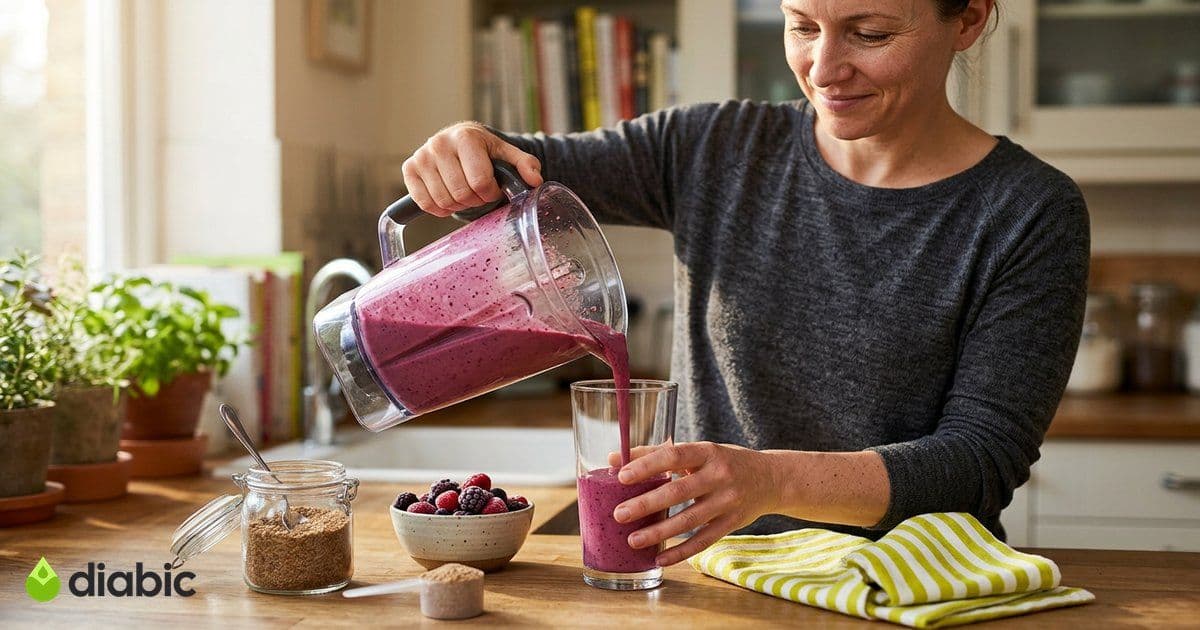
4. ACV Smoothie With Spinach and Berries
If you like green smoothies, this is a tidy way to add ACV without it taking over the flavor. It also fits naturally alongside our other diabetes-friendly smoothie recipes when you want more variety.
Ingredients (1 serving):
- 1 cup unsweetened almond milk
- 1 large handful baby spinach
- 1/2 cup frozen mixed berries
- 1 tablespoon chia seeds
- 1 tablespoon raw apple cider vinegar
- 1/2 scoop unflavored or vanilla protein powder
- Ice as needed
Instructions:
- Add liquids first, then spinach, then frozen berries and chia.
- Blend on high for 45 to 60 seconds until smooth.
- Pour into a tall glass and drink soon after blending.
Why it works: Around 12 to 15 grams of carbs, mostly from berries, balanced by 15 to 20 grams of protein and several grams of fiber. The fat and fiber slow things down, which is what you want from a diabetes-friendly smoothie.
5. ACV Coleslaw With Greek Yogurt Dressing
Classic creamy slaw, rebuilt without the sugar dump that usually comes with it.
Ingredients (4 servings):
- 4 cups shredded green and red cabbage
- 1 cup shredded carrot
- 1/2 cup plain nonfat Greek yogurt
- 2 tablespoons raw apple cider vinegar
- 1 tablespoon olive oil
- 1 teaspoon Dijon mustard
- 1 teaspoon celery seed
- Salt and pepper to taste
Instructions:
- Whisk yogurt, vinegar, oil, mustard, and seasonings in a large bowl.
- Add cabbage and carrot, toss until coated.
- Refrigerate 30 minutes before serving so flavors can settle.
Why it works: A side that brings vinegar to the meal without the brown-sugar finish of traditional slaw. Around 6 to 8 grams of carbs per serving, plus a hit of protein from the yogurt.
How to Use ACV Safely
Tasty recipes only matter if you can keep using them long-term. According to Mayo Clinic guidance on apple cider vinegar, ACV is generally safe in small culinary amounts but can cause issues if you go heavy on the dose or skip dilution.
A few habits keep it friendly to your body:
- Always dilute. Straight vinegar can irritate the throat and esophagus. Mix it into water, dressing, or food.
- Start small. Begin with one teaspoon to one tablespoon per serving and see how your stomach handles it.
- Protect your teeth. Acid softens enamel. Sip through a straw when possible, then rinse with plain water and wait 30 minutes before brushing.
- Watch for medication interactions. ACV may amplify the glucose-lowering effects of insulin, sulfonylureas, and some blood pressure medications. Talk to your doctor before using it daily if you take these.
- Skip it if you have gastroparesis. Slowed stomach emptying can be made worse by vinegar.
If ACV agrees with you, the easiest way to make it stick is to fold it into things you already eat. The same logic applies to drinks. If your morning tonic feels like a chore, swap it for one of the diabetes smoothie recipes and add a tablespoon of vinegar there instead.
These five apple cider vinegar recipes for diabetes are not magic, but they are practical. Used consistently alongside balanced meals, regular movement, and the rest of your management plan, they may help take a small edge off post-meal spikes.
FAQ
How to use apple cider vinegar for diabetes?
Dilute one to two tablespoons in a glass of water and drink before a carb-containing meal, or fold it into salad dressings, marinades, smoothies, and slaws. Always dilute it to protect your teeth and throat, start with smaller amounts to see how your stomach responds, and talk to your doctor first if you take diabetes medications that lower blood sugar.
Does apple cider vinegar help lower blood sugar?
Some small studies suggest that ACV may modestly reduce post-meal blood sugar by slowing carbohydrate digestion and improving insulin sensitivity. The effect is real but small, and research is still limited in size and length. ACV should be viewed as a supportive food habit, not a replacement for medication, balanced meals, or movement.
How much apple cider vinegar is safe per day for someone with diabetes?
Most studies have used one to two tablespoons per day, diluted, taken with meals. Going much higher does not appear to add benefit and can cause stomach upset, low potassium, and tooth enamel damage. If you are unsure what is right for your situation, ask your healthcare provider.
Can I drink apple cider vinegar at night before bed?
A diluted teaspoon to tablespoon of ACV in water at night is fine for most people, though some find it triggers reflux when lying down. If you take insulin and dose for a bedtime snack, factor in that ACV may slightly extend the effect of that insulin overnight, so check your numbers before sleep. Folding ACV into food, using the apple cider vinegar recipes for diabetes above, is usually easier on the stomach than drinking it straight before bed.
Shahriar P. Shuvo is the founder of Diabic. He has lived with diabetes for over 14 years, and built Diabic to deliver the practical, evidence-based self-management tools he wished existed when he was first diagnosed. By trade, Shahriar is a senior design and frontend engineer with 6+ years shipping products at Agora, Timescale (now Tiger Data), and ShareTrip. He writes from the intersection of lived diabetes experience and product craft, focused on what works in daily management rather than what sounds good in a textbook.
Medically reviewed by
Dr. Rezwana Parvin Rumpa is an obstetrics and gynaecology specialist with clinical focus on gestational diabetes, PCOS, and fertility. She holds the MRCOG (Final Part) from the Royal College of Obstetricians and Gynaecologists in London, the MRCPI (Final Part) from the Royal College of Physicians of Ireland, and an MBBS from Shaheed Monsur Ali Medical College under Dhaka University. Dr. Rumpa serves as a Senior Medical Officer in the Obs and Gynae department at BRB Hospitals Ltd, where she has spent three years managing prenatal care, emergency obstetric cases, and women's-health surgery. On Diabic, she medically reviews content for women living with diabetes, with particular attention to pregnancy, PCOS, and reproductive-health intersections.
More from Diet & Fitness
View all
Simple Diabetes Exercise Routine for Beginners
A simple diabetes exercise routine for beginners with a 7-day plan, strength basics, and safety tips to help you move more without feeling overwhelmed.
Diabetes Friendly Smoothie Recipes: 5 No-Spike Picks
Five diabetes friendly smoothie recipes that balance protein, fat, and fiber to keep blood sugar steady. Includes a simple framework for building your own.

Can Exercise Prevent Diabetes? Research Says Yes
Can exercise prevent diabetes? Landmark studies show a 58% lower risk with regular activity. Here's how much you need and which workouts help most.
Clinician-reviewed habits, plain-language guides, and honest answers - the small shifts that make living with diabetes feel lighter, every day.