When to Go to the ER for Diabetes: A Triage Guide
Knowing when to go to the ER for diabetes can save your life. Learn the blood sugar thresholds, symptoms, and triage rules that mean hospital care now.

In this article(11)
- Blood Sugar Levels That Require Emergency Care
- Signs of Diabetic Ketoacidosis That Need the ER
- Recognizing Hyperglycemic Hyperosmolar Syndrome
- Severe Hypoglycemia: When Low Blood Sugar Becomes an Emergency
- Other Diabetes-Related Reasons to Visit the ER
- When to Go to ER for Diabetes vs Urgent Care vs Your Doctor
- What to Expect at the ER for a Diabetes Emergency
Figuring out when to go to ER for diabetes is genuinely difficult because blood sugar swings are part of daily life, and most of them resolve at home with a snack, a correction dose, or a glass of water. But some situations cross a line where waiting it out becomes dangerous, and the difference between a rough afternoon and a true emergency is not always obvious in the moment. We wrote this guide on when to go to ER for diabetes to help you tell those apart, with clear thresholds, symptom checklists, and a triage framework you can rely on when you are scared and tired and just need an answer.
The stakes here are real. According to the Centers for Disease Control and Prevention, people with diabetes account for millions of emergency department visits each year in the United States, and a significant share of those visits involve preventable complications caught too late. The goal is not to live in fear of the ER, but to know exactly when it is the right call so you can act without second-guessing yourself.
From my experience: Living with type 1 for 14 years has taught me that a 3am low feels different from a 3pm low. The middle-of-the-night ones come with a kind of slow-motion fog where the urge to lie back down outpaces the urge to grab juice. The closest I ever came to needing the ER was not a number on the meter, it was the realization that I had been awake for ten minutes and still had not opened the fridge. Now I keep glucose tabs on the nightstand within arm's reach, because a Dexcom alarm at 65 only helps if my hands actually move.
Blood Sugar Levels That Require Emergency Care
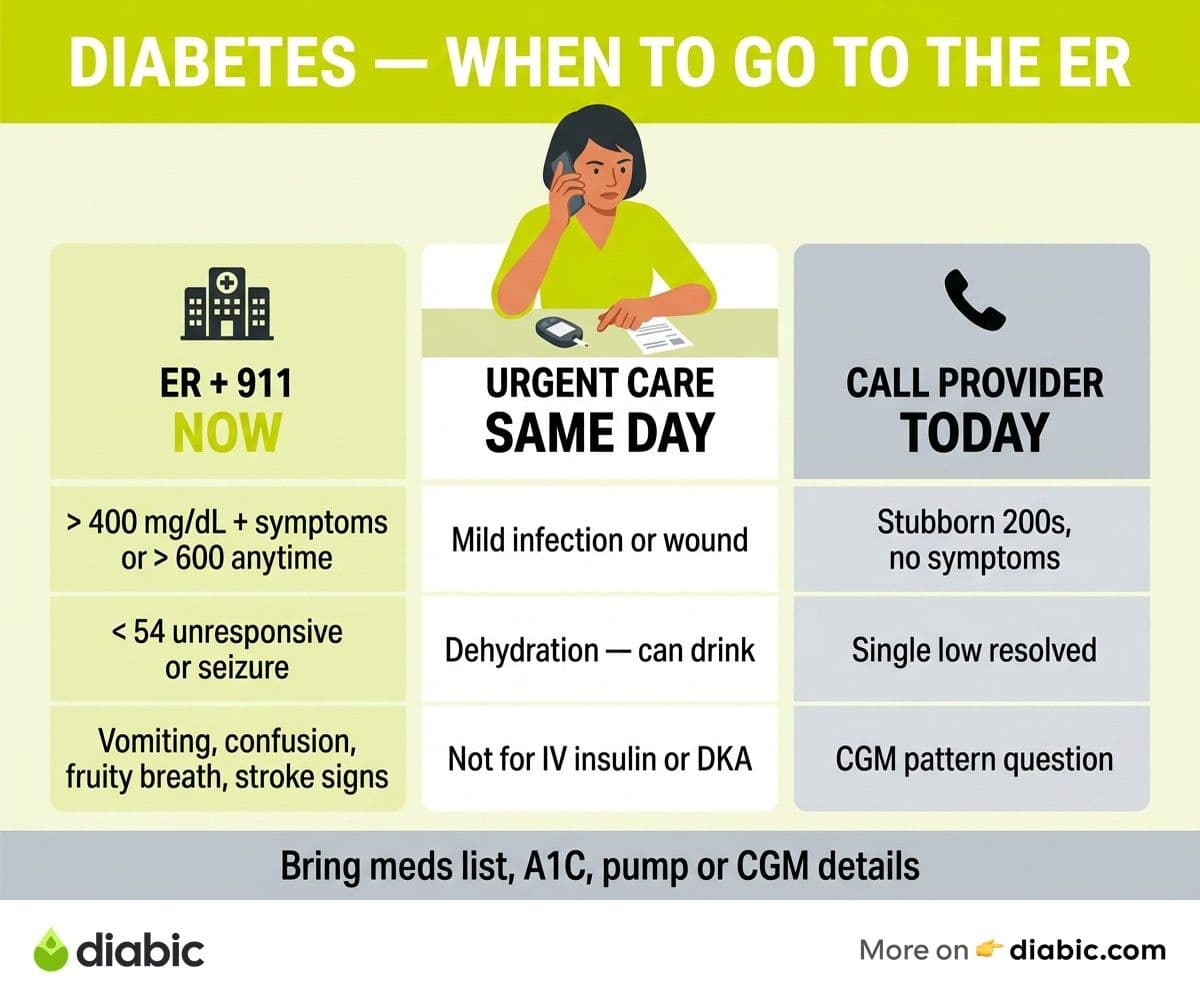
Numbers matter, but they never tell the whole story on their own. A reading above 300 mg/dL is a warning sign that needs same-day attention, and if it stays elevated for more than a few hours despite correction, or if it climbs alongside symptoms like nausea or rapid breathing, the situation has shifted from manageable to urgent. The American Diabetes Association treats persistent readings above 240 mg/dL paired with ketones as a reason to contact your provider immediately, and readings above 400 mg/dL with any worrying symptoms as a reason to head to the hospital.
Lows are equally dangerous and often more time-sensitive. A blood sugar below 70 mg/dL is hypoglycemia, but a reading below 54 mg/dL is considered clinically severe, and if it does not respond to fast-acting carbs after two attempts about 15 minutes apart, you need help that goes beyond juice and glucose tabs. When someone cannot swallow safely, has lost consciousness, or is having a seizure, that is a 911 call before anything else.
Context shapes how seriously to take any single number. A 320 mg/dL reading after a heavy meal in someone who feels fine is a different situation than 320 mg/dL with vomiting and confusion in someone who is acting unlike themselves. Trust symptoms at least as much as the meter, because the body often signals trouble before the numbers fully reflect it.
Signs of Diabetic Ketoacidosis That Need the ER
Diabetic ketoacidosis (DKA) is the emergency that pushes most people with type 1 diabetes into the hospital, and it can also affect people with type 2 in certain circumstances. The classic warning signs cluster together in a way that should never be ignored: high blood sugar (usually above 250 mg/dL), nausea and vomiting that prevents you from keeping fluids down, abdominal pain that feels deep and steady, and a level of fatigue that goes beyond a normal off day. If you are reading this with two or more of those happening right now, stop scrolling and check ketones or head to the ER.
Breathing changes are a particularly important red flag. Rapid, deep breaths that feel hard to slow down (sometimes called Kussmaul respirations) indicate the body is trying to blow off acid that has built up in the blood. A fruity or acetone-like smell on the breath is another classic sign that ketones have reached dangerous levels. We have a deeper walkthrough in our guide to what ketoacidosis feels like and how to treat it that covers home ketone testing and the early intervention steps that can sometimes prevent a hospital stay.
DKA can become critical within hours, not days. The Endocrine Society and ADA consensus on hyperglycemic crises emphasizes that delay in seeking care is one of the strongest predictors of worse outcomes, including ICU admission and longer hospitalization. If you suspect DKA, the ER is the right call. Urgent care clinics generally cannot manage IV insulin protocols and electrolyte corrections at the level this condition demands.
Recognizing Hyperglycemic Hyperosmolar Syndrome
Hyperglycemic hyperosmolar syndrome (HHS) is a slower-burning emergency that primarily affects older adults with type 2 diabetes, often during an illness that interferes with eating, drinking, or taking medication on schedule. Blood sugar in HHS commonly exceeds 600 mg/dL and can climb above 1,000, with profound dehydration, confusion, and sometimes one-sided weakness that mimics a stroke. Because HHS develops over days rather than hours, it is frequently caught late, and the mortality rate is higher than for DKA.
If you are caring for an older parent or relative with type 2 diabetes who has been sick recently, watch for signs that something is shifting beyond the original illness. Confusion that worsens, dry mouth and skin that does not bounce back when pinched, decreased urination after a stretch of frequent bathroom trips, and unusual drowsiness all warrant a blood sugar check and a serious conversation about going in. Our companion piece on hyperglycemic hyperosmolar syndrome warning signs goes deeper into what to watch for and how HHS is treated.
Severe Hypoglycemia: When Low Blood Sugar Becomes an Emergency
Severe hypoglycemia is the most acutely dangerous scenario in diabetes management because it can move from "uncomfortable" to "life-threatening" inside of 20 minutes. The threshold for emergency action is not a specific number but a level of impairment: if the person cannot safely swallow, has lost consciousness, is seizing, or is so confused they cannot follow basic instructions, that is a 911 situation. Diabetes symptoms at this level demand immediate help, not another round of juice.
Glucagon is the bridge between a severe low and the ambulance. Every household where someone uses insulin should have a current glucagon kit and at least one other person who knows how to use it. If glucagon has been given and the person is not waking up within 15 minutes, or if they wake up and quickly relapse into low blood sugar, do not wait for a third try. Call 911 and let paramedics take over. Our walkthrough on hypoglycemia emergency treatment and our step-by-step on how to use a glucagon emergency kit are worth bookmarking before you ever need them.
Repeated severe lows in a short window are also an ER-worthy pattern, even if each one resolved at home. Two episodes of unresponsiveness in a single day, or a low that bounces back and crashes again within hours, points to something the routine plan is no longer covering. Hospital evaluation can identify whether a medication adjustment, hidden infection, or kidney issue is driving the pattern.
Other Diabetes-Related Reasons to Visit the ER
Not every diabetes emergency is a glucose number. Foot or skin wounds that show spreading redness, warmth, streaking, drainage, or a fever above 101 degrees Fahrenheit need same-day evaluation, because diabetes-related infections can progress to sepsis faster than most people expect. The Mayo Clinic guidance on diabetic foot care is clear that delay in treating these wounds is a leading cause of preventable hospitalizations and amputations.
Cardiovascular and neurological symptoms also deserve a low threshold for ER care because diabetes increases the risk of heart attack and stroke, and the warning signs can be subtler than they are in people without diabetes. Chest pain or pressure, shortness of breath that is new, sudden weakness on one side of the body, slurred speech, or a sudden severe headache all warrant calling 911 rather than driving yourself in. Severe dehydration from vomiting or diarrhea during an illness is another reason to go, especially if you cannot keep insulin or oral diabetes medications down. Insulin pump or CGM failures during an active illness, in the middle of the night, or when you cannot reach backup supplies are also valid reasons to seek care.
When to Go to ER for Diabetes vs Urgent Care vs Your Doctor
A normal blood sugar levels chart for adults shows fasting values between roughly 80 and 130 mg/dL and post-meal values under 180 mg/dL, but the question of where to get help is rarely about a single reading. Some situations can wait for a same-day or next-day call to your endocrinologist: a stretch of stubborn highs in the 200s without symptoms, a single low you treated successfully, an unexplained pattern in your CGM data, or questions about a recent medication change. Your provider can adjust your plan over the phone or via patient portal in many of these cases.
Urgent care can handle a narrower slice of diabetes concerns. Mild to moderate infections, dehydration that can be addressed with oral fluids and a brief assessment, and minor wound care are usually appropriate. Urgent care is generally not equipped for IV insulin drips, ketoacidosis management, or treatment of severe altered mental status. If you are unsure whether a clinic can handle your situation, call ahead before you drive over.
The ER, and in some cases 911 for transport, is the right choice when you see DKA symptoms, suspected HHS, severe hypoglycemia that is not bouncing back, chest pain or stroke signs, infections with fever or spreading redness, or any altered mental status. When you head in, bring or have ready a list of your medications with doses, your most recent A1C if you know it, your insulin pump or CGM details, and an emergency contact. Our diabetes emergency plan checklist is designed to make that grab-and-go moment less chaotic.
What to Expect at the ER for a Diabetes Emergency
ER teams move quickly through a predictable sequence with diabetes emergencies. You can expect a fingerstick glucose check within minutes of arrival, followed by blood and urine tests that include a metabolic panel, ketones, and often a venous blood gas to assess acid levels. If you are presenting with DKA or HHS, IV access goes in early so fluids and insulin can begin without delay, and you will be placed on continuous monitoring while the team checks for triggers like infection, missed doses, or new illnesses.
Treatment depends on what they find, but the through-line is steady correction rather than dramatic swings. IV fluids restore hydration and dilute glucose, IV insulin gradually brings sugar down without crashing it, and electrolyte replacement (especially potassium) keeps the heart and muscles safe as fluids shift. Most DKA admissions stay one to three days; HHS often takes longer because correcting profound dehydration in older adults must be done carefully. Bring your insurance card, photo ID, and a phone charger, and let the team know early if you have an insulin pump or CGM in place so they can coordinate with their protocols.
Frequently Asked Questions
At what blood sugar level should you go to the ER?
There is no single magic number, but readings above 400 mg/dL with symptoms like vomiting, abdominal pain, rapid breathing, or confusion warrant the ER, as do readings above 600 mg/dL even without dramatic symptoms. On the low end, a blood sugar below 54 mg/dL that does not respond to two rounds of fast-acting carbs, or any low accompanied by loss of consciousness or seizure, is a 911 call. Knowing when to go to ER for diabetes is about combining the number with how you feel and how the situation is trending.
What diabetes symptoms are considered an emergency?
Emergency-level diabetes symptoms include persistent vomiting that prevents you from keeping fluids or medication down, deep or rapid breathing, fruity-smelling breath, severe abdominal pain with high blood sugar, confusion or altered mental status, loss of consciousness, seizures, signs of stroke or heart attack, and infections with fever or spreading redness. Any combination of these with elevated or very low blood sugar should trigger an ER visit.
Should I go to the ER for high blood sugar if I feel fine?
A high reading without symptoms is usually safe to address at home with hydration, a correction dose if your plan includes one, and a recheck in two to three hours, as long as you do not have ketones and the trend is moving down. If the number stays above 300 mg/dL after several hours of correction, climbs higher, or starts producing symptoms, that is the moment to escalate. When in doubt, call your provider's after-hours line before assuming you are fine.
The most useful frame for when to go to ER for diabetes is to trust the combination of numbers and symptoms, not either one in isolation. Save this guide somewhere your family can find it too, because the moments where these decisions matter most are also the moments you may not be the clearest thinker in the room.
Shahriar P. Shuvo is the founder of Diabic. He has lived with diabetes for over 14 years, and built Diabic to deliver the practical, evidence-based self-management tools he wished existed when he was first diagnosed. By trade, Shahriar is a senior design and frontend engineer with 6+ years shipping products at Agora, Timescale (now Tiger Data), and ShareTrip. He writes from the intersection of lived diabetes experience and product craft, focused on what works in daily management rather than what sounds good in a textbook.
Medically reviewed by
Dr. Shanto Arian is an internal medicine physician now specializing in clinical and aesthetic dermatology, with a parallel academic focus on epidemiology and public health. He holds an MBBS, MPH, MSc (UK), MRCP (UK), MRCPI (Ireland), Diploma in Dermatology (UK), and Diploma in Aesthetic Medicine (USA). Dr. Arian trained in internal medicine, including hospital work on hematology cases such as graft-versus-host disease, before moving toward dermatology. Skin is one of the earliest places diabetes shows itself, from acanthosis nigricans and diabetic dermopathy to slow foot wound healing, and that intersection is where his clinical and Diabic-review work meet. On Diabic, Dr. Arian medically reviews content on diabetes diagnosis, complications, dermatologic manifestations, and pharmacotherapy, ensuring every claim aligns with current ADA, NICE, and peer-reviewed literature.
More from Treatment & Medication
View all
Recognizing Diabetic Coma Warning Signs Early
Learn to spot diabetic coma warning signs early. We cover DKA, HHS, and severe hypoglycemia symptoms, plus when to call 911 for immediate help.

Switching to Injectable Diabetes Medication: What to Expect
Switching to injectable diabetes medication can feel daunting. Learn what to expect, how to manage side effects, and why this step is progression, not.

Hyperglycemic Hyperosmolar Syndrome: Warning Signs to Know
Hyperglycemic hyperosmolar syndrome is a serious type 2 diabetes emergency. Learn the warning signs, triggers, and when to call 911 for HHS care.
Clinician-reviewed habits, plain-language guides, and honest answers - the small shifts that make living with diabetes feel lighter, every day.