Type 2 Diabetes Treatment Options Explained Clearly
Type 2 diabetes treatment now spans lifestyle, oral pills, GLP-1s, and insulin. Here is how options compare and what to ask your care team.

In this article(19)
You sit in the exam room, and the doctor lists three medications you have never heard of, mentions an injectable, and asks what you think. Five years ago your neighbor with the same diagnosis was handed a single pill and a brochure. The choices are wider now, the science is moving fast, and most people leave that visit with more questions than answers.
That is not a bad thing. Type 2 diabetes treatment has become one of the most personalized areas of modern medicine, with options that protect the heart, the kidneys, and quality of life in ways that were not possible a decade ago. The flip side is that the menu is genuinely complex, and your care team needs your input to choose well.
In this article we will walk through how type 2 diabetes treatment works today, from lifestyle foundations through oral medications, injectable therapies, and insulin. We will explain what each class does, where it shines, and what tradeoffs to weigh. The goal is not to tell you what to take. It is to help you sit at the table as an informed partner.
How Type 2 Diabetes Treatment Has Evolved
For most of the twentieth century, medication for type 2 diabetes was simple and limited. You took a pill that pushed your pancreas to make more insulin, and if that stopped working, you started insulin injections. Blood sugar was the only target, and complications were treated as separate problems after they appeared.
That picture has changed dramatically. The ADA/EASD Consensus Report on management of hyperglycemia reframed type 2 care around the whole person, not just the glucose number. Today, treatment plans weigh blood sugar, body weight, heart disease risk, kidney health, and personal preferences in roughly equal measure. Newer medication classes, particularly SGLT2 inhibitors and GLP-1 receptor agonists, were originally developed for blood sugar but turned out to protect organs in ways no older drug could match.
This is also why guidelines update so often. Major trials are still reshaping how doctors sequence medications, and what was second-line three years ago may be first-line today depending on your profile. If your treatment plan is the same one you started with five years ago, it is reasonable to ask whether anything has changed that might benefit you.
Lifestyle Changes as the Foundation
Every credible treatment guideline, including those from the ADA and the NICE NG28 type 2 diabetes guidelines, starts with the same first step: nutrition, physical activity, weight management, and sleep. This is not because guidelines are old fashioned. It is because lifestyle changes do things medications cannot.
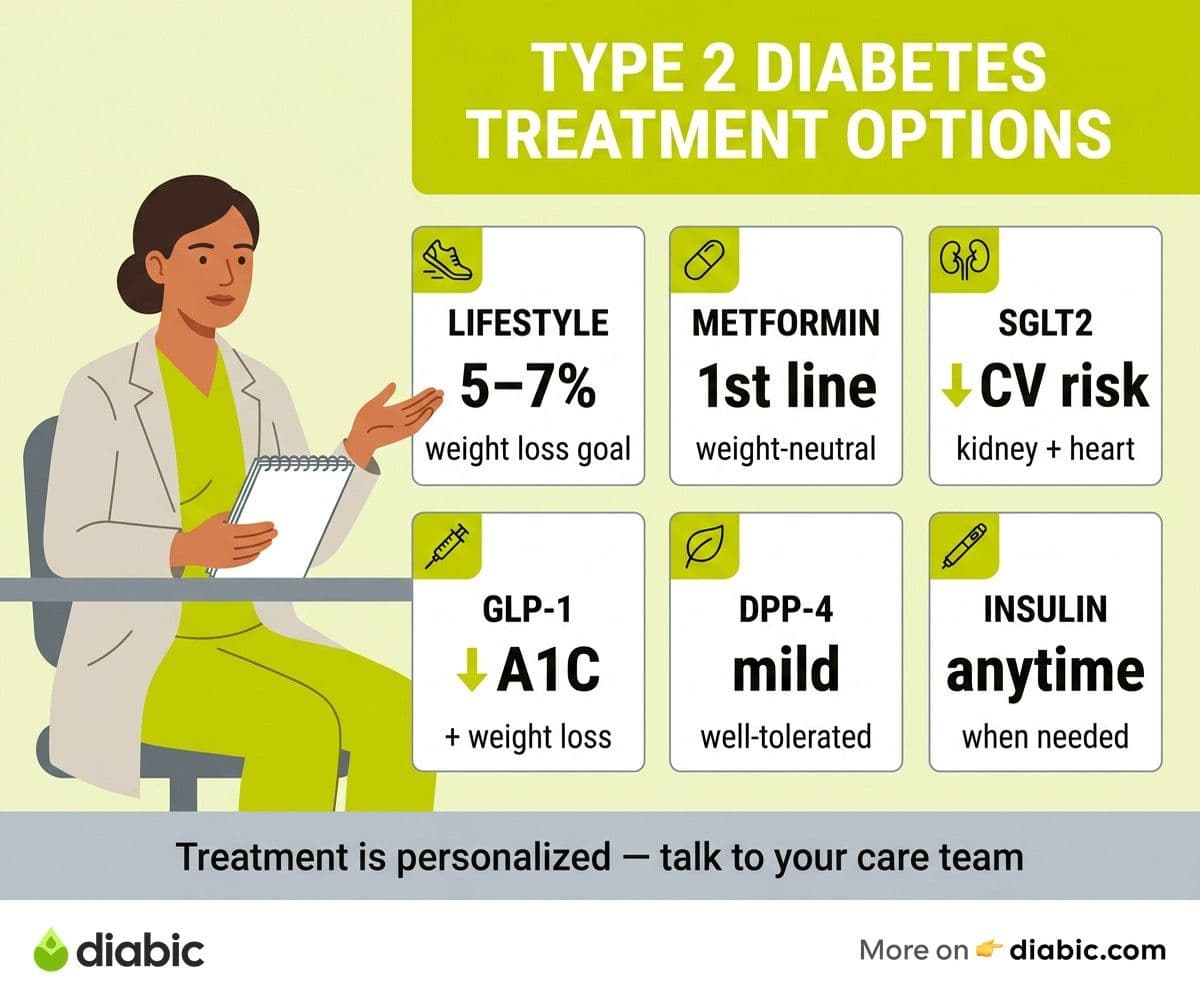
Modest weight loss, often as little as five to seven percent of body weight, can substantially lower A1C and sometimes put early type 2 diabetes into remission. The Diabetes Prevention Program, run through the CDC, showed how powerful structured lifestyle support can be for people at high risk, and the same principles apply after diagnosis. Strength training improves insulin sensitivity in ways that work alongside almost every diabetes medication on the market.
We get into more detail in our guide on managing type 2 without medication, including who is most likely to do well with that approach. For most people, lifestyle changes do not replace medication. They make every medication work better, and they often allow lower doses, fewer drugs, or both. Talk to your care team about a realistic plan rather than aiming for perfection.
Oral Medications for Type 2 Diabetes
Oral medication for type 2 diabetes has expanded into several distinct classes, each with its own strengths. Understanding the basic logic of each makes the menu less intimidating.
Metformin
Metformin remains the first-line medication for most newly diagnosed people, and for good reason. It works by reducing glucose production in the liver and improving how cells respond to insulin. It does not cause hypoglycemia on its own, it is generally weight-neutral, and it is one of the most affordable medications in modern medicine. We cover the trade-offs in our guide to metformin side effects. The most common issue is gastrointestinal upset in the first few weeks, which usually settles or improves with the extended-release version.
SGLT2 inhibitors
SGLT2 inhibitors, including empagliflozin and dapagliflozin, work by helping the kidneys excrete excess glucose in urine. The blood sugar effect is moderate, but the cardiovascular and kidney benefits shown in trials like EMPA-REG, published in The New England Journal of Medicine, have made them a core option for people with heart failure, established cardiovascular disease, or chronic kidney disease. They can cause genital yeast infections and modest dehydration, and they are not suitable for everyone, so the conversation is individualized.
GLP-1 receptor agonists in oral form
Most GLP-1 receptor agonists are injections, but oral semaglutide is now an option. It works on the same incretin pathway as the injectables, slowing stomach emptying and improving insulin response after meals. We unpack the class in detail in our overview of GLP-1 receptor agonists explained.
DPP-4 inhibitors
Sitagliptin and linagliptin are mild, well-tolerated medications that gently boost the body's own incretin response. They produce smaller A1C reductions than other classes but are weight-neutral and rarely cause hypoglycemia, which makes them a useful option for older adults or people who cannot tolerate stronger medications.
Sulfonylureas and thiazolidinediones
Sulfonylureas like glipizide push the pancreas to produce more insulin. They are inexpensive and effective at lowering blood sugar but can cause hypoglycemia and modest weight gain, so they are used more selectively now. Thiazolidinediones like pioglitazone improve insulin sensitivity and have a place in insulin resistance treatment, though they require monitoring for fluid retention and bone health.
Comparing the oral classes at a glance
Talk to your doctor about which combination fits your specific A1C, weight goals, organ health, and budget rather than assuming the most popular option is the right one for you.
Injectable Medications Beyond Insulin
The most important shift in type 2 diabetes medication over the last decade has been the rise of injectable medications that are not insulin. Many people associate injections with last-resort treatment, but these newer options are often started long before insulin is on the table.
GLP-1 receptor agonists, including semaglutide, dulaglutide, and liraglutide, mimic a gut hormone that signals fullness, slows stomach emptying, and improves insulin response. They typically produce significant A1C reductions and meaningful weight loss, and several have shown cardiovascular benefits in landmark trials like LEADER and SUSTAIN. Tirzepatide is a dual GIP/GLP-1 agonist that takes this approach a step further, with even larger A1C and weight effects in the SURPASS trials. Our injectable diabetes medication list breaks down how the major options compare.
These medications are not for everyone. Side effects are mostly gastrointestinal, especially during dose increases, and they require careful evaluation in people with certain pancreatic, thyroid, or gallbladder histories. Cost and insurance coverage are real factors. The FDA drug labels list the full safety profile for each, and your provider can help you weigh whether any of them fit your situation.
Insulin Therapy for Type 2 Diabetes
Many people feel a wave of dread when their doctor first mentions insulin. That reaction is understandable, but it is often based on outdated assumptions. Needing insulin is not a personal failure, a sign you did something wrong, or evidence that your other efforts did not matter.
Type 2 diabetes is, in many cases, progressive. Pancreatic beta cells gradually produce less insulin over time, regardless of how well you have managed your blood sugar. When your body needs more insulin than oral or non-insulin injectable options can provide, supplementing what you have makes biological sense.
Most people start with basal insulin, a long-acting form that provides a steady background level. This is often combined with a GLP-1 receptor agonist for additional blood sugar and weight benefits. Some people eventually add bolus or mealtime insulin if needed. Modern insulins, pens, and continuous glucose monitors have made the day-to-day reality far more manageable than it was even ten years ago.
Talk to your doctor about how insulin would fit into your life rather than whether you can avoid it. The right question is not "did I fail" but "what plan helps me live well from here."
Choosing the Right Treatment Plan
The ADA Standards of Care 2025 and matching international guidelines lay out a treatment algorithm, but they leave plenty of room for individual decisions. Your doctor will weigh several factors when shaping a plan.
Current A1C, kidney function, and cardiovascular history all narrow or expand the menu. Body weight goals matter, since some medications support weight loss and others promote weight gain. Cost is a real and legitimate factor, and asking about generic options or assistance programs is reasonable, not awkward. Pill burden, injection comfort, and how well a regimen fits your daily routine deserve weight too.
Shared decision making is the standard now. Your doctor brings the medical evidence, and you bring the context of your life, your priorities, and what you are willing and able to do. A treatment plan that looks perfect on paper but does not fit your reality will not work, and a slightly less optimal plan you can actually follow usually wins.
Monitoring Your Treatment Over Time
Type 2 diabetes treatment is rarely set-and-forget. Most people have an A1C check every three to six months, depending on how stable things are. Home blood sugar monitoring or a continuous glucose monitor fills in the picture between visits and helps you and your care team see patterns no single lab number can show.
Annual checks should also include kidney function, cholesterol, blood pressure, and eye and foot exams. These are not extras. They are how care teams catch and prevent the complications that used to define type 2 diabetes. Treatment adjustments are normal, expected, and not a sign that something has gone wrong.
If your numbers are stable for years and then drift, your body has likely changed, not failed. Talk to your doctor about adjusting medications proactively rather than waiting for things to slide further.
Frequently Asked Questions
What is the best treatment for type 2 diabetes?
There is no single best treatment that fits everyone. Most type 2 diabetes medication guidelines recommend starting with metformin and lifestyle changes, then layering in additional medications based on your A1C, weight goals, heart and kidney health, and cost. The right plan is the one that fits your medical picture and your daily life, and your care team can help you build it.
Can type 2 diabetes be treated without medication?
For some people, especially those caught early with mildly elevated blood sugar, structured changes to nutrition, physical activity, and weight can bring blood sugar into a healthy range. Many people eventually need medication because type 2 diabetes is often progressive. Lifestyle work matters at every stage, even when medications are part of the plan.
How often should I expect my treatment to change?
Most care teams reassess the plan every three to six months based on A1C and other labs. Adjustments are normal, and adding or switching medications is part of well-managed care, not a setback.
How do I bring up newer medications with my doctor?
Be specific. Mention the class you are curious about, why it interests you, and what concerns you have. A simple "I read about GLP-1 medications and wonder if one might help me, given my weight and heart history" gives your doctor a clear opening to talk through fit, cost, and tradeoffs.
A Practical Next Step
Before your next appointment, write down your current A1C if you know it, your top one or two goals, and any side effects or frustrations with your current plan. Bring that short list with you. Type 2 diabetes treatment works best when it is a conversation, and the more clearly you can describe what you want, the easier it is for your care team to match the right options to your life.
Shahriar P. Shuvo is the founder of Diabic. He has lived with diabetes for over 14 years, and built Diabic to deliver the practical, evidence-based self-management tools he wished existed when he was first diagnosed. By trade, Shahriar is a senior design and frontend engineer with 6+ years shipping products at Agora, Timescale (now Tiger Data), and ShareTrip. He writes from the intersection of lived diabetes experience and product craft, focused on what works in daily management rather than what sounds good in a textbook.
Medically reviewed by
Dr. Rezwana Parvin Rumpa is an obstetrics and gynaecology specialist with clinical focus on gestational diabetes, PCOS, and fertility. She holds the MRCOG (Final Part) from the Royal College of Obstetricians and Gynaecologists in London, the MRCPI (Final Part) from the Royal College of Physicians of Ireland, and an MBBS from Shaheed Monsur Ali Medical College under Dhaka University. Dr. Rumpa serves as a Senior Medical Officer in the Obs and Gynae department at BRB Hospitals Ltd, where she has spent three years managing prenatal care, emergency obstetric cases, and women's-health surgery. On Diabic, she medically reviews content for women living with diabetes, with particular attention to pregnancy, PCOS, and reproductive-health intersections.
More from Treatment & Medication
View all
Recognizing Diabetic Coma Warning Signs Early
Learn to spot diabetic coma warning signs early. We cover DKA, HHS, and severe hypoglycemia symptoms, plus when to call 911 for immediate help.

Switching to Injectable Diabetes Medication: What to Expect
Switching to injectable diabetes medication can feel daunting. Learn what to expect, how to manage side effects, and why this step is progression, not.

Hyperglycemic Hyperosmolar Syndrome: Warning Signs to Know
Hyperglycemic hyperosmolar syndrome is a serious type 2 diabetes emergency. Learn the warning signs, triggers, and when to call 911 for HHS care.
Clinician-reviewed habits, plain-language guides, and honest answers - the small shifts that make living with diabetes feel lighter, every day.