Exercise for Type 2 Diabetes: Where to Start
A beginner's guide to exercise for type 2 diabetes: how movement lowers blood sugar, the best activities to start with, and how to build a safe routine.

In this article(14)
Exercise for type 2 diabetes is one of the most effective tools for improving blood sugar, yet many people feel completely unsure about where to begin. Maybe you have not exercised regularly in years, maybe a previous attempt left you sore and discouraged, or maybe you are worried about your blood sugar dropping mid-workout. All of those concerns are reasonable, and none of them have to keep you from getting started.
This guide is for beginners, especially anyone newly diagnosed or returning to movement after a long break. We will cover what exercise actually does for type 2 diabetes, which activities work best when you are starting out, how to begin safely, and what to watch for along the way.
How Exercise Helps with Type 2 Diabetes
Movement helps with type 2 diabetes through a few overlapping mechanisms, and understanding them tends to make the routine feel more worthwhile when you are tired and tempted to skip it. The biggest effect is on insulin sensitivity. When you contract your muscles, they pull glucose out of your bloodstream without needing as much insulin to do it, which directly lowers blood sugar both during and after the activity.
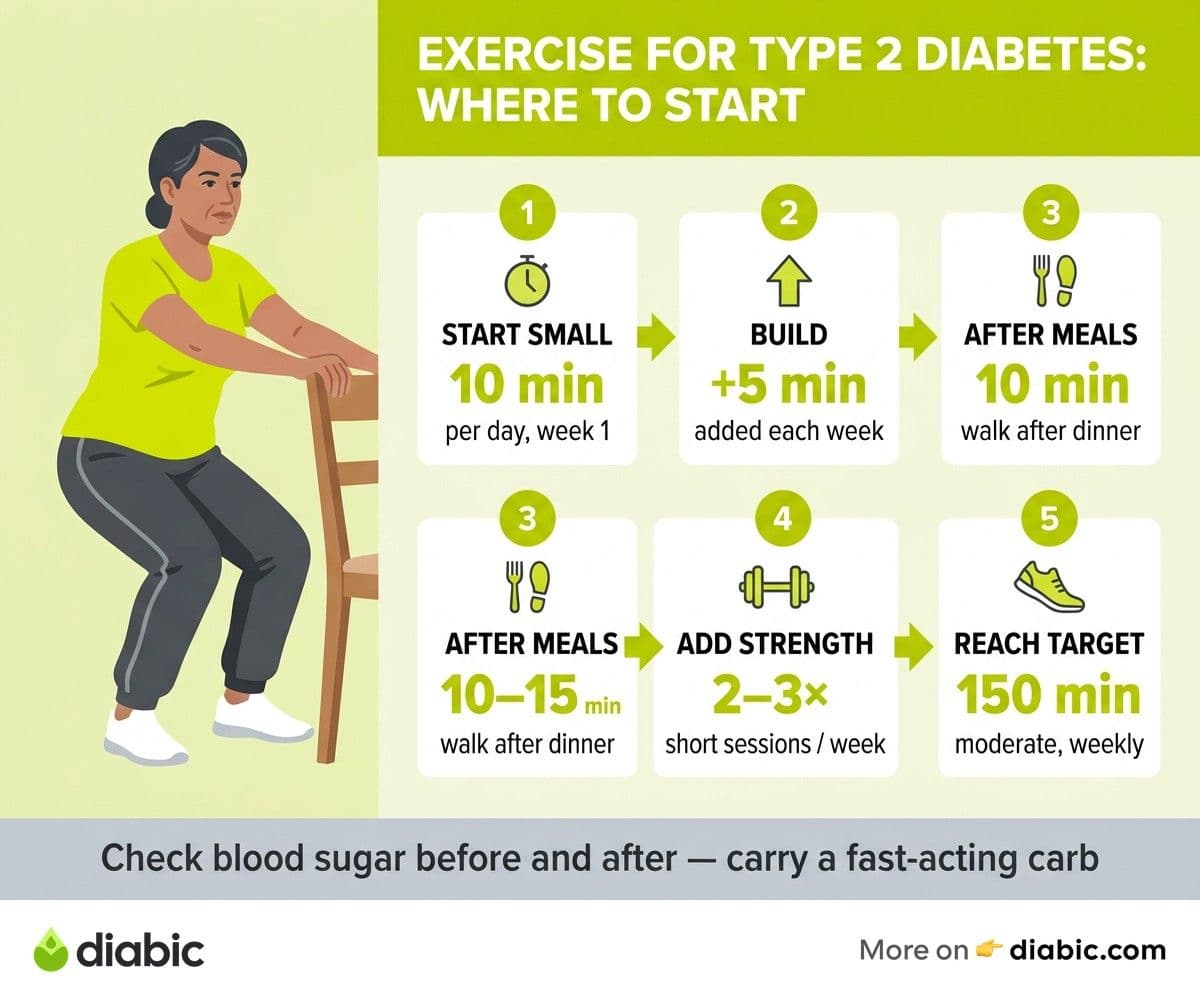
Studies in journals like Diabetes Care show that regular activity improves A1C, often by a meaningful margin over weeks to months. According to the American Diabetes Association, the recommendation for most adults with type 2 diabetes is at least 150 minutes a week of moderate-intensity aerobic activity, plus two or three sessions of resistance training. That is the long-term target, not the place beginners need to start.
The effects compound over time. Better insulin sensitivity makes blood sugar more stable. More stable blood sugar makes it easier to manage food and medication. Easier management reduces stress and improves sleep, which further supports blood sugar. Exercise also pays dividends for cardiovascular health, weight, mood, and energy, all of which interact with diabetes outcomes. Our piece on weight loss and type 2 diabetes covers how the activity-and-weight side of the equation actually works.
The first weeks of exercise with type 2 diabetes
Exercise with type 2 diabetes can produce noticeable changes early, even before you see scale or A1C movement. Many people see fasting blood sugar drop a bit within the first two to four weeks of consistent walking. Energy and sleep often improve in a similar window. These early signals help you stay consistent during the period before bigger biomarkers catch up.
If you are completely new to a routine, our guide to a diabetes exercise routine for beginners walks through a structured first month. The point is not to do everything at once. The point is to start, repeat, and let the effects build.
Best Types of Exercise for Type 2 Diabetes
The best exercise for type 2 diabetes is whichever one you will actually do consistently. That said, a few categories are particularly well-suited to beginners because they are accessible, low-impact, and well-studied for blood sugar effects.
Walking is the most accessible starting point. It requires no equipment, no membership, and almost no learning curve. A 10 to 15 minute walk after a meal can take a meaningful edge off post-meal blood sugar. Studies consistently show walking improves insulin sensitivity in people with type 2 diabetes, and it is the activity most healthcare providers will suggest first when someone asks where to begin.
Swimming and water aerobics are excellent for anyone with joint pain, neuropathy, or mobility limitations. Water provides resistance for strength gains while reducing impact, which makes it possible to exercise longer and more comfortably than land-based activity. Pools at community centers, YMCAs, and senior centers often have low-cost or free programs.
Cycling, indoors on a stationary bike or outdoors, is another low-impact option. Stationary bikes work well for beginners because you can read, listen to a podcast, or watch something while you ride, which makes 20 to 30 minutes feel less like a workout and more like a habit.
Strength training and flexibility
Strength training matters more than many beginners realize. Muscle is the main site where glucose gets stored and used, so building even a little muscle mass improves blood sugar management long-term. You do not need a gym. Resistance bands, light dumbbells, and bodyweight movements (chair squats, wall pushups, glute bridges) cover the basics. Two to three short sessions a week is enough to start. Our piece on aerobic exercise and diabetes explains why pairing aerobic work with strength training tends to outperform either one alone.
Yoga and stretching round out a routine. They support flexibility, balance, and stress reduction, all of which interact with blood sugar. Beginner-friendly classes (online or in person) make it easy to start without feeling self-conscious. Yoga is not a substitute for aerobic and resistance training when it comes to blood sugar, but it adds something useful and sustainable.
How to Start Safely
Type 2 diabetes and exercise can pair beautifully, but there are a handful of safety considerations worth handling up front, especially if you have been sedentary, have other health conditions, or take medications that can cause low blood sugar.
Talk to your doctor before starting a new routine. This is not a formality. Your provider can flag any cardiovascular, joint, foot, or eye considerations that should shape your starting point. If you take insulin or sulfonylureas (medications that can cause low blood sugar), your doctor may want to discuss timing, snacks, or dose adjustments around exercise.
Start small and build gradually. Ten to fifteen minutes a day for the first week is a reasonable starting point for most people. Add five minutes a session each week, or add a second session per day, until you reach your target. The reason this matters is that beginners who do too much in week one often quit by week three because they are sore, exhausted, or injured. Slow buildup beats fast burnout every time.
Monitor blood sugar before and after exercise, at least at first. Patterns will show up: certain activities or times of day may move your numbers more than others. Carry a fast-acting carb source (glucose tablets, juice, fruit snacks) in case of hypoglycemia, especially if you are on medication that can cause lows. Pairing this with a nutrient-dense eating pattern, like the one in our guide to a healthy diet for type 2 diabetes, gives your body the fuel it needs to handle the new demand.
The first session checklist
Wear good shoes. Hydrate before and during. Bring a phone in case you need help. Tell someone where you are going if you are heading out alone. None of these are alarming requirements; they are habits that make exercise feel safer and easier to repeat.
If you have not exercised in months or years, your first session might just be a five-minute walk to the end of the block and back. That counts. Show up tomorrow and do it again. Consistency over the first month is more important than intensity.
Building Exercise into Your Daily Routine
The biggest predictor of long-term success is whether the routine fits your life. Adding exercise on top of an already full schedule rarely lasts. Replacing or stacking activity with things you already do tends to last much longer.
After-meal walks are one of the simplest, most effective habits for type 2 diabetes. A 10 to 15 minute walk after dinner, or after the meal that tends to spike your blood sugar most, blunts post-meal glucose and adds movement without requiring a separate workout slot. Many people find this single change moves their numbers within weeks.
Active commuting and small habit shifts add up. Taking the stairs, parking farther away, walking to a colleague's desk instead of messaging, doing five minutes of stretching while the coffee brews. None of these replace structured exercise, but they raise your daily floor of movement, which the Centers for Disease Control and Prevention groups as part of meeting weekly activity goals.
Pick activities you actually enjoy or at least tolerate. If you hate running, do not run. If a 6 a.m. workout will never happen for you, schedule for evening. Consistency comes from honesty about what fits your life, not from forcing a routine you saw someone else do online.
Setting realistic weekly goals
A reasonable beginner goal is three to five sessions per week, 15 to 30 minutes each, with one or two short strength sessions added once aerobic activity feels routine. Build to the 150-minute weekly target over a few months rather than a few weeks. Many people find that tracking sessions on a calendar (a paper one or a phone app) is more motivating than tracking minutes or distance.
Celebrate the consistency itself. Four 15-minute walks in a week is a real win when the previous month had zero. Small wins compound; abandoned grand plans do not.
From my experience: When my A1C was at its worst, I tried to start with hour-long gym sessions five days a week. I lasted about ten days. The thing that finally worked was a daily 12-minute walk after dinner, every night, no exceptions. Within six weeks, my fasting numbers came down meaningfully. Within a few months, I added strength sessions, then longer walks, then a stationary bike. The whole routine grew out of one tiny non-negotiable habit, not a dramatic plan.
When to Be Cautious with Exercise
Most people with type 2 diabetes can exercise safely with sensible precautions, but a few situations call for extra attention or a check-in with your provider before starting.
Stop and rest if you experience chest pain, severe shortness of breath, dizziness, lightheadedness, blurred vision, or unusual extreme fatigue. These symptoms are not normal exertion and warrant a medical evaluation. The Mayo Clinic outlines specific safety considerations worth reading if you have any cardiovascular history alongside your diabetes.
Medications that can cause low blood sugar (insulin, sulfonylureas, some others) interact with exercise in ways that matter. Activity tends to lower blood sugar, sometimes for hours after the session ends. If you are on these medications, talk to your provider about whether to check before, during, and after exercise, and whether timing snacks around activity makes sense for you. Never adjust medication doses on your own.
Foot care matters more for people with neuropathy or circulation issues. Inspect your feet daily, wear well-fitted athletic shoes, and avoid walking barefoot. Small blisters or cuts can become serious problems if circulation is compromised, so prevention is the easier path. Swimming and cycling are good options if walking causes foot stress.
Eye, kidney, or cardiovascular complications may shape what kinds of exercise are safe. This is exactly the conversation your provider can help with, ideally before you start rather than after a problem shows up.
FAQ
What is the best exercise for type 2 diabetes?
Walking is the most accessible and well-studied option, and it is what most providers recommend first for beginners. Brisk walking for 30 minutes most days of the week can meaningfully improve blood sugar levels. Adding strength training two or three times a week amplifies the benefit because muscle tissue is where most glucose gets used. The best exercise for type 2 diabetes overall is a combination of aerobic activity and resistance training, but starting with just walking is completely fine.
How does exercise help with type 2 diabetes?
Exercise helps your muscles use glucose without needing as much insulin, which directly lowers blood sugar during and after the activity. Regular movement improves insulin sensitivity over time, which means your body manages blood sugar more efficiently around the clock. Exercise also supports weight management, cardiovascular health, sleep, and mood, all of which interact with diabetes outcomes. Most people see early benefits in fasting blood sugar within the first few weeks of consistent activity.
How much exercise should I do per week if I have type 2 diabetes?
The general recommendation is at least 150 minutes of moderate-intensity aerobic activity per week, plus two or three sessions of resistance training. For complete beginners, that target is something to build toward over months, not weeks. Starting at 10 to 15 minutes per day, three to five days a week, is reasonable and effective. Consistency matters more than hitting the full guideline immediately.
Should I check my blood sugar before exercising?
It is a good habit, especially in the first weeks of a new routine and especially if you are on medications that can cause low blood sugar. Checking before, sometimes during longer sessions, and after exercise helps you understand how different activities affect your numbers. Patterns appear quickly, and once you know your patterns you can fine-tune timing, food, and intensity. Talk to your doctor about what target ranges fit your situation.
The first step really is the hardest one. Once you have walked around the block twice this week, the question shifts from "where do I start" to "what do I add next," and that is a much easier question to answer. Treat exercise for type 2 diabetes as a slow, repeating habit rather than a project, and the numbers usually follow on their own timeline.
Shahriar P. Shuvo is the founder of Diabic. He has lived with diabetes for over 14 years, and built Diabic to deliver the practical, evidence-based self-management tools he wished existed when he was first diagnosed. By trade, Shahriar is a senior design and frontend engineer with 6+ years shipping products at Agora, Timescale (now Tiger Data), and ShareTrip. He writes from the intersection of lived diabetes experience and product craft, focused on what works in daily management rather than what sounds good in a textbook.
Medically reviewed by
Dr. Rezwana Parvin Rumpa is an obstetrics and gynaecology specialist with clinical focus on gestational diabetes, PCOS, and fertility. She holds the MRCOG (Final Part) from the Royal College of Obstetricians and Gynaecologists in London, the MRCPI (Final Part) from the Royal College of Physicians of Ireland, and an MBBS from Shaheed Monsur Ali Medical College under Dhaka University. Dr. Rumpa serves as a Senior Medical Officer in the Obs and Gynae department at BRB Hospitals Ltd, where she has spent three years managing prenatal care, emergency obstetric cases, and women's-health surgery. On Diabic, she medically reviews content for women living with diabetes, with particular attention to pregnancy, PCOS, and reproductive-health intersections.
More from Diet & Fitness
View all
Simple Diabetes Exercise Routine for Beginners
A simple diabetes exercise routine for beginners with a 7-day plan, strength basics, and safety tips to help you move more without feeling overwhelmed.

Diabetes Friendly Smoothie Recipes: 5 No-Spike Picks
Five diabetes friendly smoothie recipes that balance protein, fat, and fiber to keep blood sugar steady. Includes a simple framework for building your own.

Can Exercise Prevent Diabetes? Research Says Yes
Can exercise prevent diabetes? Landmark studies show a 58% lower risk with regular activity. Here's how much you need and which workouts help most.
Clinician-reviewed habits, plain-language guides, and honest answers - the small shifts that make living with diabetes feel lighter, every day.