How to Start Losing Weight with Insulin Resistance
A practical guide to losing weight with insulin resistance, covering why it is harder, what dietary and exercise strategies work, and how to set realistic.

In this article(25)
Losing weight with insulin resistance often feels like an uphill battle, because your body stores fat more easily and burns it more reluctantly than someone with normal insulin sensitivity. If you have been doing what generic weight-loss advice tells you to do and seeing very little for the effort, the problem is probably not your willpower. It is the metabolic context the advice ignores.
Understanding why weight loss is harder also reveals what actually works. This guide walks through the dietary, exercise, and lifestyle strategies that account for how insulin resistance affects your body, and how to start without burning out in week two.
Why Losing Weight With Insulin Resistance Feels Harder
Insulin is the hormone that ushers glucose out of your bloodstream and into your cells. When your cells stop responding to it efficiently, your pancreas pumps out more insulin to compensate. Higher circulating insulin is one of the strongest fat-storage signals your body has.
The connection between metabolic syndrome and weight loss runs straight through this hormone. According to the National Institute of Diabetes and Digestive and Kidney Diseases, insulin resistance is closely tied to abdominal weight gain, elevated triglycerides, and higher blood pressure, the same cluster that defines metabolic syndrome.
The frustrating part is that the relationship runs in both directions. Carrying excess weight, especially around the midsection, makes insulin resistance worse. Worsening insulin resistance then makes it harder to lose that weight. Standard "eat less, move more" advice is not wrong exactly, but it underestimates this loop.
The fat-storage cycle
When insulin is consistently elevated, your body prioritizes storing energy over burning it. Fat cells stay locked. Hunger and cravings tend to intensify, especially for refined carbs, because cells are not getting glucose efficiently even when blood sugar is high.
This is why many people with insulin resistance describe feeling hungry shortly after eating, tired in the afternoon, and unable to go more than a few hours without snacks. It is not a discipline problem. It is a signaling problem.
Why generic diets often fall short
Calorie-restriction-only diets that do not account for carb quality or meal composition can leave insulin levels high all day. You eat less, but the hormonal environment that drives storage barely changes.
The strategies that work for insulin resistance are the ones that lower insulin output, restore some sensitivity, and make adherence easier in the process. Food choice and movement do that better than calorie math alone.
Dietary Strategies That Work
Diet is the single biggest lever for diabetes and weight loss outcomes when insulin resistance is in the picture. Not because any one food is magic, but because the right pattern lowers insulin demand at every meal.
The American Diabetes Association and ongoing research published in Diabetes Care consistently point to a few principles that hold up across approaches like Mediterranean, lower-carb, and balanced whole-food eating. The labels matter less than the underlying levers.
Prioritize protein and healthy fats
Protein and fat barely affect insulin compared to refined carbs. Building meals around chicken, fish, eggs, tofu, beans, Greek yogurt, olive oil, avocado, and nuts gives your body fewer reasons to spike insulin.
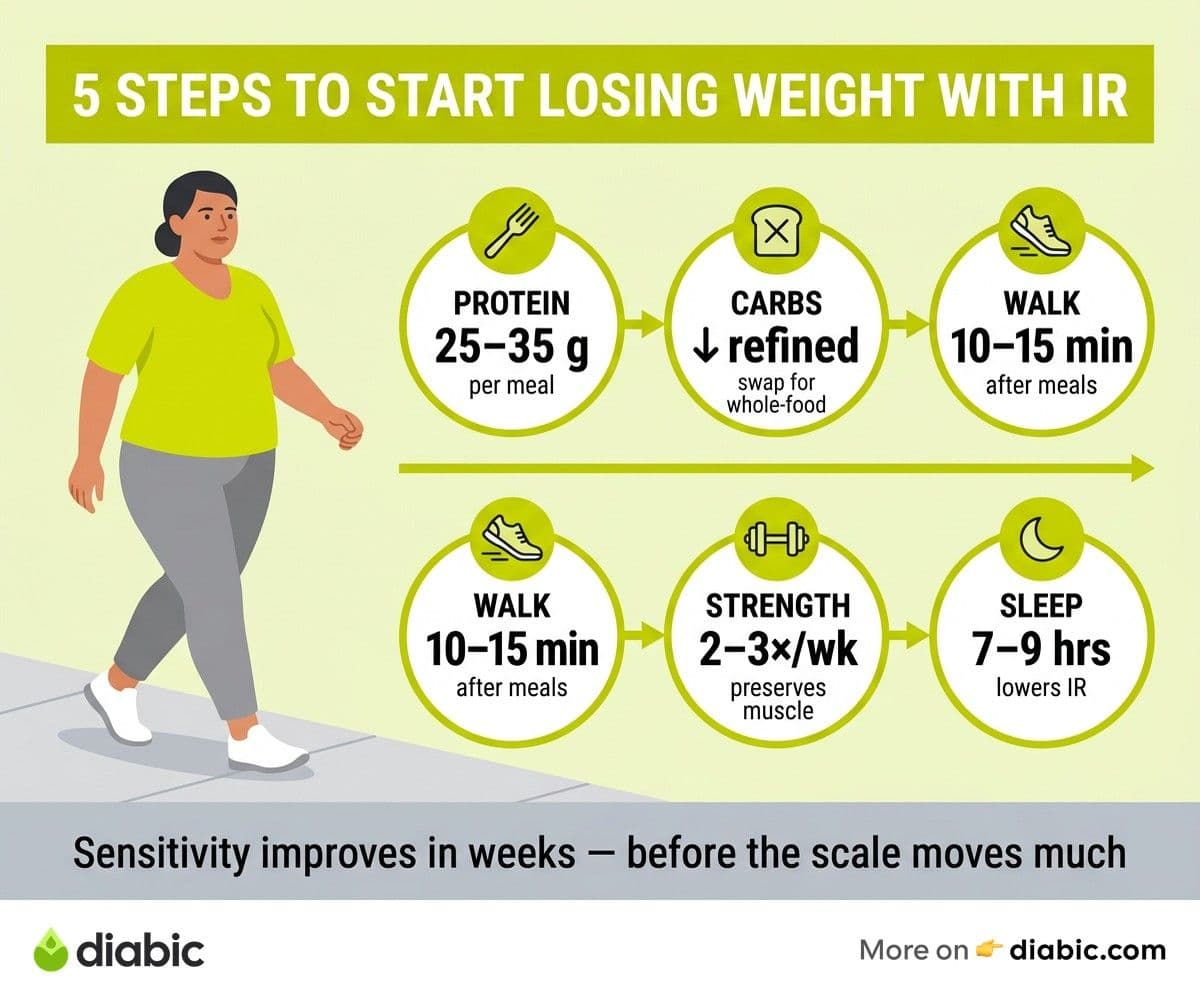
A useful target is roughly 25 to 35 grams of protein at each main meal. That amount tends to keep people full for hours, which removes a lot of the snacking pressure that drives weight gain.
Reduce refined carbs and added sugars
This does not mean zero carbs. It means swapping the highest-impact carbs for ones that come with fiber and a slower glucose release.
White bread, sweetened drinks, pastries, most boxed cereals, and dessert-style coffees are the usual suspects. Trading them for whole-grain options, fruit instead of juice, and water or unsweetened drinks is often enough to shift the insulin landscape noticeably within a few weeks.
Eat more fiber
Fiber slows glucose absorption, which means smaller insulin spikes after meals. It also feeds gut bacteria that play a role in insulin sensitivity.
Aim for fiber from beans, lentils, vegetables, berries, oats, chia seeds, and flax. Most adults eat about half the recommended amount, so this is one of the easiest places to upgrade. We dig deeper into this in our guide to weight loss and type 2 diabetes.
Why meal timing can matter
Constant snacking and late-night eating keep insulin elevated for more of the day. Many people with insulin resistance see clearer results from eating two to three structured meals with minimal grazing in between.
You do not need a strict fasting protocol. Simply leaving four to five hours between meals, and finishing dinner two to three hours before bed, gives insulin a chance to come down. If a structured fasting window appeals to you, talk to your doctor before starting one, especially if you take any blood sugar medication.
Exercise Approaches for Insulin Resistance
Exercise is the second major lever, and it works through a different mechanism than diet. Muscle contraction pulls glucose out of the bloodstream without needing insulin, which gives your pancreas a break and slowly rebuilds sensitivity.
The right kind of movement matters as much as the amount. An insulin resistance diet plus the wrong workout plan can still leave you stuck. Below are the approaches with the strongest evidence behind them.
Strength training builds muscle that absorbs glucose
Muscle is metabolically expensive tissue. The more of it you carry, the more glucose storage capacity you have, and the better your insulin sensitivity tends to be.
Two to three strength-training sessions a week, focused on big movements like squats, hinges, presses, and rows, is a strong starting point. You do not need a gym. Bodyweight progressions, resistance bands, or basic dumbbells at home work well, especially in the first six months.
Walking after meals
A 10 to 20 minute walk within an hour of finishing a meal can flatten the post-meal blood sugar spike noticeably. Research suggests even short walks at an easy pace help, which makes this one of the highest-return habits for the time investment.
Three short walks across the day often have a bigger metabolic impact than one longer walk in the evening. Build it into commutes, lunch breaks, or post-dinner family time.
Combining cardio and resistance
The best results come from combining both. Strength training builds the storage capacity, cardio improves how efficiently your body uses fuel, and walking handles the day-to-day glucose response.
A simple weekly template might look like two strength sessions, two to three brisk walks or bike rides, and a few short post-meal walks layered in. Our guide to exercise for type 2 diabetes lays out a starter plan if you want a more concrete structure to follow.
Lifestyle Factors That Support Weight Loss
Diet and exercise get most of the attention, but the lifestyle factors below quietly determine whether the rest of your efforts compound or stall. They are also the most underappreciated drivers of insulin resistance.
The Mayo Clinic and other major institutions consistently include sleep, stress, and hydration in their lifestyle guidance for insulin resistance, because the data behind each is strong.
Sleep quality
Even one week of poor sleep can measurably reduce insulin sensitivity in healthy adults. Chronic short sleep also raises ghrelin (the hunger hormone) and lowers leptin (the fullness hormone), which is a recipe for craving carbs you do not actually need.
Aim for seven to nine hours, with a consistent bedtime and wake time. Cool, dark, and screen-free for the last 30 minutes is the cheapest sleep upgrade most people can make.
Stress management
Cortisol, your main stress hormone, raises blood sugar and worsens insulin resistance over time. A high-stress life with otherwise good habits can keep you stuck.
You do not need to meditate for an hour a day. Five to ten minutes of slow breathing, a daily walk outdoors, time with people you like, and clear boundaries around work hours all qualify. The point is regular nervous-system downshifting, not a particular technique.
Hydration
Mild dehydration elevates cortisol slightly, can worsen insulin resistance, and is often mistaken for hunger. Drinking water consistently across the day is a small but real lever.
A simple target is to drink water with each meal and again between meals. If your urine is consistently pale yellow, you are probably in a good range.
Setting Realistic Goals
Goals that are too aggressive are the most common reason people quit before they see real results. With insulin resistance, slow and steady is not a consolation prize. It is the strategy with the best long-term outcomes.
From my experience: In 14 years of managing diabetes, the periods where I tried to lose 20 pounds in two months were almost always followed by gaining 25. The periods where I aimed for a pound every two weeks, kept walking after meals, and stopped weighing myself daily were the ones that actually changed how my body felt and how my labs looked. Boring works. Drama does not.
Why slow weight loss sticks
Aggressive calorie cuts trigger metabolic adaptations that work against you, including hunger that escalates over time, drops in non-exercise movement, and a temporary increase in cortisol. A loss of 0.5 to 1% of body weight per week tends to preserve muscle, keep adherence high, and avoid the rebound that ends most diets.
For someone starting at 200 pounds, that is roughly one to two pounds a week. A 5 to 7% total reduction (10 to 14 pounds) has been shown to meaningfully improve insulin sensitivity, blood pressure, and triglycerides.
Track non-scale victories
The scale is a noisy signal, especially in the first six to eight weeks. Body composition can improve before scale weight changes much.
Pay attention to how clothes fit, your waist measurement, your energy through the afternoon, the quality of your sleep, your post-meal blood sugar if you track it, and how often you crave sweets. These tend to shift earlier than the scale, and they are more meaningful indicators of underlying change.
When to talk to your doctor about medical support
If lifestyle changes alone are not producing results after three to six months of consistent effort, that is information, not failure. Some people benefit from medications that improve insulin sensitivity or appetite regulation, and the conversation about whether they are appropriate is a medical one.
A registered dietitian, a diabetes educator, or your primary care provider can also help troubleshoot specific obstacles. We have a deeper look at this question in our piece on diabetic and weight loss strategies.
FAQ
Why is it so hard to lose weight with insulin resistance?
Insulin resistance causes your body to produce more insulin than normal, and high insulin levels promote fat storage while making it harder to release stored fat. This creates a metabolic headwind that makes standard calorie restriction less effective on its own.
The strategies that work tend to lower insulin output across the day. That usually means more protein and fiber, fewer refined carbs and sugary drinks, regular movement (especially strength training and post-meal walks), and enough sleep to keep cortisol in check. The goal is not to fight your metabolism harder but to change the signals it is responding to.
What is the best diet for weight loss with insulin resistance?
Diets that reduce refined carbohydrates and emphasize protein, healthy fats, and fiber tend to work best. Mediterranean-style and lower-carb approaches both have strong supporting research, and the results are similar when adherence is similar.
The most important factor is sustainability. A pattern you can keep up with for years will outperform a stricter plan you abandon in two months. Pick the approach that fits your taste, schedule, and culture, and adjust from there.
How much weight do I need to lose to see improvements?
Research consistently shows that a 5 to 7% reduction in body weight produces meaningful improvements in insulin sensitivity, blood pressure, and lipid markers. For someone weighing 200 pounds, that is 10 to 14 pounds.
You do not need to reach an "ideal" weight to start seeing benefits. Most of the metabolic improvement happens in that first 5 to 7%, which is why so many programs use it as the initial target.
Should I try intermittent fasting for insulin resistance?
Some people with insulin resistance do well with a structured eating window, often around 10 to 12 hours of eating and 12 to 14 hours of overnight fasting. Longer fasts can help others, but the research is less consistent and the practical risks are higher if you take any glucose-lowering medication.
Talk to your doctor before starting any fasting protocol, especially if you are on medications. The basic version (finishing dinner earlier and skipping late-night snacking) is usually safe and a reasonable place to start.
Losing weight with insulin resistance is rarely a straight line, but the direction is clear. Small, layered shifts in how you eat, move, sleep, and manage stress add up over months in ways that no single dramatic change can match. The body that responded to short-term tricks is not the body you have, and the strategies above are built for the body you do.
Shahriar P. Shuvo is the founder of Diabic. He has lived with diabetes for over 14 years, and built Diabic to deliver the practical, evidence-based self-management tools he wished existed when he was first diagnosed. By trade, Shahriar is a senior design and frontend engineer with 6+ years shipping products at Agora, Timescale (now Tiger Data), and ShareTrip. He writes from the intersection of lived diabetes experience and product craft, focused on what works in daily management rather than what sounds good in a textbook.
Medically reviewed by
Dr. Rezwana Parvin Rumpa is an obstetrics and gynaecology specialist with clinical focus on gestational diabetes, PCOS, and fertility. She holds the MRCOG (Final Part) from the Royal College of Obstetricians and Gynaecologists in London, the MRCPI (Final Part) from the Royal College of Physicians of Ireland, and an MBBS from Shaheed Monsur Ali Medical College under Dhaka University. Dr. Rumpa serves as a Senior Medical Officer in the Obs and Gynae department at BRB Hospitals Ltd, where she has spent three years managing prenatal care, emergency obstetric cases, and women's-health surgery. On Diabic, she medically reviews content for women living with diabetes, with particular attention to pregnancy, PCOS, and reproductive-health intersections.
More from Diet & Fitness
View all
Simple Diabetes Exercise Routine for Beginners
A simple diabetes exercise routine for beginners with a 7-day plan, strength basics, and safety tips to help you move more without feeling overwhelmed.

Diabetes Friendly Smoothie Recipes: 5 No-Spike Picks
Five diabetes friendly smoothie recipes that balance protein, fat, and fiber to keep blood sugar steady. Includes a simple framework for building your own.

Can Exercise Prevent Diabetes? Research Says Yes
Can exercise prevent diabetes? Landmark studies show a 58% lower risk with regular activity. Here's how much you need and which workouts help most.
Clinician-reviewed habits, plain-language guides, and honest answers - the small shifts that make living with diabetes feel lighter, every day.