Can Prediabetes Be Reversed? Here's What Works
Can prediabetes be reversed? Yes, often. See the lifestyle changes that work, realistic timelines, and what research from the DPP trial shows.

In this article(12)
If a recent lab result told you that you have prediabetes, you are probably asking the same question almost everyone asks: can prediabetes be reversed? The encouraging answer is yes, often it can, and the research on what works is unusually clear. The harder part is knowing which changes matter most and how to keep them going past the first burst of motivation.
Prediabetes sits in a window where your blood sugar is higher than normal but not yet in the diabetes range. That window is also an opportunity, because the same biological changes that produced it can often be slowed or reversed with consistent lifestyle changes. We want to walk you through what the evidence actually shows, what reversal looks like in real life, and the steps research backs.
Can Prediabetes Be Reversed? What the Evidence Shows
The clearest evidence on whether prediabetes can be reversed comes from the Diabetes Prevention Program, a landmark trial run by the National Institute of Diabetes and Digestive and Kidney Diseases. The DPP followed thousands of adults with prediabetes and compared lifestyle change, the medication metformin, and a placebo group. The results reshaped how providers talk to patients.
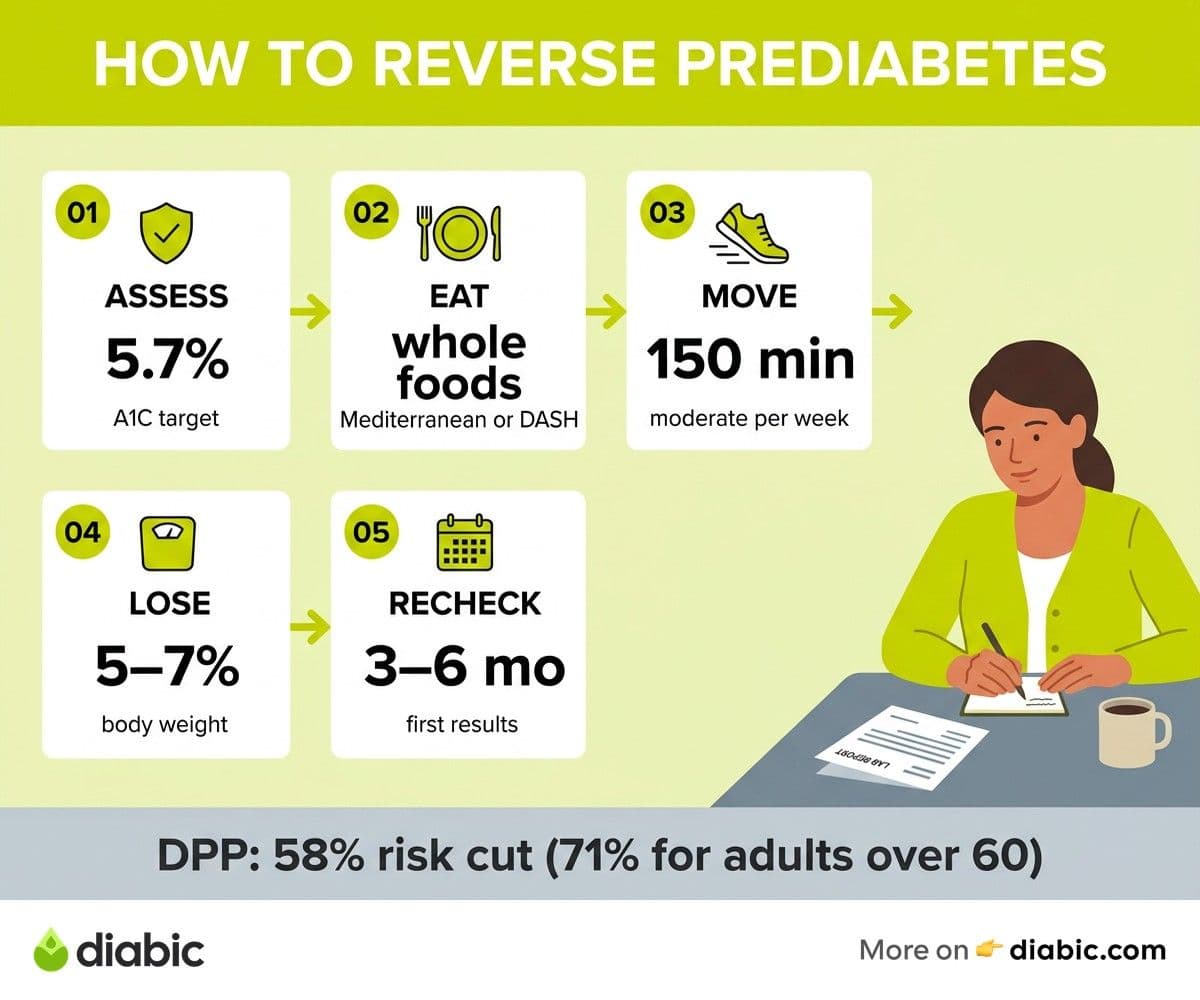
People in the lifestyle change group reduced their risk of progressing to type 2 diabetes by 58% over about three years. In adults over 60, that number rose to 71%. The lifestyle group lost a modest 5 to 7% of body weight, added 150 minutes of weekly activity, and adjusted their diets toward whole foods. Metformin alone reduced risk by 31%, which means lifestyle change outperformed the medication in this trial.
There is an important nuance worth understanding. "Reversal" and "prevention" are sometimes used interchangeably, but they describe slightly different outcomes. Reversal means your blood sugar markers return to the normal range. Prevention means you stop progression toward type 2 diabetes, even if your numbers do not move all the way back. Both outcomes are meaningful, and both are realistic targets.
This is also why early action helps. The longer your blood sugar sits in the prediabetic range, the more your beta cells, the cells that make insulin, may have had to work overtime. Catching it now gives those cells a better shot at recovery, which is one reason why catching prediabetes early matters keeps coming up in research.
Can You Reverse Prediabetes Completely
Whether you can reverse prediabetes completely depends on how we define complete. In medical terms, reversal usually means your A1C drops below 5.7% and your fasting glucose drops below 100 mg/dL. Hitting and holding those numbers is the working definition most providers use.
According to the American Diabetes Association, many people achieve normal blood sugar levels with sustained lifestyle changes, particularly when they catch prediabetes early. Sustained is the key word here. Numbers can drift back up if the habits that lowered them fade.
Several factors influence whether someone reverses prediabetes or progresses. Starting weight, family history, age, the duration of insulin resistance, and how consistently changes are kept all play a role. Two people with the same starting A1C can have different outcomes based on these factors, which is normal and not a personal failing.
It also helps to think of reversal as ongoing maintenance, not a finish line. Your body still has the underlying tendency toward insulin resistance, and the habits that brought your numbers down are usually the same ones that keep them there. The good news is that those habits feel less like effort over time, and many people report feeling better overall.
How Long Does It Take to Reverse Prediabetes
Most studies show meaningful improvement in blood sugar markers within three to six months of consistent lifestyle changes. Full reversal to normal A1C and fasting glucose can take anywhere from six months to three years, depending on starting point and how steadily the changes are kept.
The DPP saw most participants begin to see measurable improvement in fasting glucose within the first year. A1C, which reflects an average over about three months, lagged a bit behind because of how the test works. If you check your A1C only six weeks into a new plan, the number may not yet show what your meter is showing.
Individual results vary for predictable reasons. Someone with an A1C of 5.8 has less ground to cover than someone at 6.4. A person in their thirties typically responds faster than a person in their seventies. Stress, sleep, and any underlying conditions like PCOS or sleep apnea can also slow progress.
Setting realistic expectations protects motivation. If you are bracing for normal numbers in 30 days and they are not there, the temptation to give up is real. A more sustainable mindset is to look for trends month over month rather than week over week.
Can You Go from Prediabetes Back to Normal
Yes, you can go from prediabetes back to normal, and a meaningful portion of people do. Clinical trials including the DPP and the Finnish Diabetes Prevention Study have shown that sustained lifestyle changes can return many people to normal blood sugar ranges.
Normal in this context means an A1C below 5.7%, a fasting glucose below 100 mg/dL, and a two-hour glucose tolerance test below 140 mg/dL. Hitting any one of these alone is progress, and hitting all three is the conventional definition of reversal.
What does "back to normal" look like day to day? For most people, it looks less dramatic than they imagined. The diet changes that lowered their numbers become routine. Exercise becomes a habit they miss when they skip it. Energy levels often improve, and sleep often gets better.
It is also worth saying that returning to normal does not mean returning to your old habits. The underlying insulin resistance can come back if the lifestyle slips, which is why most providers recommend continued monitoring even after reversal. An annual A1C and fasting glucose check is a low-effort way to keep an eye on things.
The Prediabetes Diet That Supports Reversal
There is no single prediabetes diet that works for everyone. The eating patterns with the strongest research backing for reversing prediabetes share some common features, though, and you can borrow from any of them. Mediterranean, DASH, and lower-carb whole-food approaches all show benefit in different studies.
Common ground across the research includes plenty of non-starchy vegetables, beans and lentils, whole grains rather than refined ones, fish and lean proteins, nuts and seeds, and olive oil as a primary fat. Added sugars, sugary drinks, and ultra-processed foods come up consistently as patterns to limit. Dairy and fruit fit comfortably in most of these patterns when portions are reasonable.
Carb quality matters more than carb quantity for most people with prediabetes. A bowl of lentils and a bowl of white rice can have similar carb counts but very different blood sugar effects because of fiber and protein content. Building meals around protein and vegetables first, then adding a moderate portion of complex carbs, is a simple framework that works.
Pick the pattern that fits your life. The best diet for reversing prediabetes is one you will actually keep eating in six months. Cultural foods, family preferences, budget, and cooking skill all matter, and a plan that ignores them rarely lasts.
Weight Loss and Prediabetes Reversal
Modest weight loss has an outsized effect on blood sugar. The DPP target was 5 to 7% of body weight, which for someone weighing 200 pounds is just 10 to 14 pounds. That amount may sound small, but it improves insulin sensitivity in measurable ways and is the threshold where most metabolic benefits start to show.
Losing weight in the abdominal area specifically tends to help insulin sensitivity the most. This is not about appearance. Visceral fat, the fat around organs, is metabolically active and contributes to insulin resistance. Even a few inches off your waist can correspond to meaningful improvement in fasting glucose.
How you lose the weight matters too. Crash diets and very-low-calorie plans can produce fast weight loss but rarely produce sustainable change. The weight tends to come back, and with it the elevated blood sugar. A realistic approach to weight loss for prediabetes usually beats aggressive plans for the long haul.
From my experience: In fourteen years of living with diabetes, the patterns I have seen play out, both in my own life and in our community, are clear. The people who hold their improvements are not the ones who lost the most weight the fastest. They are the ones who built habits they did not hate. Slow weight loss with a sustainable plan, even just a pound or two a month, often outperforms a 30-day intensive plan that ends in burnout.
Movement and Physical Activity
Physical activity improves insulin sensitivity in ways that are partly independent of weight loss. Even without dropping a pound, regular movement helps your muscles take up glucose more efficiently, which lowers blood sugar both during and after exercise.
The DPP and the CDC's National Diabetes Prevention Program both target 150 minutes of moderate activity per week. That is 30 minutes, five days a week, or whatever combination fits your schedule. Brisk walking counts. Gardening counts. Cycling counts. The activity does not need to look athletic to do the work.
Strength training adds another layer of benefit because muscle tissue is more insulin-sensitive than fat tissue. Two short sessions per week of bodyweight exercises, resistance bands, or light weights can build the muscle that helps you handle carbs better. A combination of cardio and strength training shows the strongest effect in research.
Low-barrier ways to start moving often beat ambitious plans. A 10-minute walk after each meal can lower post-meal blood sugar noticeably. Parking farther from the door, taking the stairs, or pacing during phone calls all add up. Small lifestyle changes that make a big difference often turn out to be the most sustainable ones.
Frequently Asked Questions
How long does it take to reverse prediabetes?
Most people see meaningful improvement in their blood sugar markers within three to six months of consistent lifestyle changes. Full reversal to normal A1C and fasting glucose can take from six months to three years, depending on starting point, age, and how steadily the changes are maintained.
Can you go from prediabetes back to normal?
Yes. Clinical trials including the Diabetes Prevention Program show that many people with prediabetes can return to normal blood sugar levels through sustained lifestyle changes, particularly diet modification, regular physical activity, and modest weight loss. Continued monitoring helps keep numbers in the normal range over time.
Can prediabetes be reversed without medication?
For many people, yes. Lifestyle changes alone outperformed metformin in the DPP trial. Some people benefit from adding medication, especially if blood sugar is climbing or other risk factors are present. Talk to your doctor about whether medication makes sense in your situation.
Will prediabetes always lead to type 2 diabetes?
No. Without intervention, a meaningful percentage of people with prediabetes do progress to type 2 diabetes within a decade. With sustained lifestyle changes, that risk drops dramatically, and many people stay at or return to normal blood sugar for years.
A prediabetes diagnosis is one of the rare moments in health when a label is also an open door. The science says you can change the trajectory, and the daily steps that work are unglamorous and accessible. Pick one change you can keep this week, get steady on that, and add the next when it feels easy.
Shahriar P. Shuvo is the founder of Diabic. He has lived with diabetes for over 14 years, and built Diabic to deliver the practical, evidence-based self-management tools he wished existed when he was first diagnosed. By trade, Shahriar is a senior design and frontend engineer with 6+ years shipping products at Agora, Timescale (now Tiger Data), and ShareTrip. He writes from the intersection of lived diabetes experience and product craft, focused on what works in daily management rather than what sounds good in a textbook.
Medically reviewed by
Dr. Shanto Arian is an internal medicine physician now specializing in clinical and aesthetic dermatology, with a parallel academic focus on epidemiology and public health. He holds an MBBS, MPH, MSc (UK), MRCP (UK), MRCPI (Ireland), Diploma in Dermatology (UK), and Diploma in Aesthetic Medicine (USA). Dr. Arian trained in internal medicine, including hospital work on hematology cases such as graft-versus-host disease, before moving toward dermatology. Skin is one of the earliest places diabetes shows itself, from acanthosis nigricans and diabetic dermopathy to slow foot wound healing, and that intersection is where his clinical and Diabic-review work meet. On Diabic, Dr. Arian medically reviews content on diabetes diagnosis, complications, dermatologic manifestations, and pharmacotherapy, ensuring every claim aligns with current ADA, NICE, and peer-reviewed literature.
More from Diabetes Knowledge
View all
6 Safe Dessert for Gestational Diabetes Recipes You Can
Six dessert for gestational diabetes recipes that satisfy your sweet tooth without spiking blood sugar, with carb counts and pairing tips you can use.

8 High Fiber Foods That Help with Prediabetes
Add these 8 high fiber foods for prediabetes to slow glucose absorption, support steady blood sugar, and meet the daily fiber target most people miss.

Mediterranean Diet for Prediabetes: A Practical Guide
The mediterranean diet for prediabetes is one of the best-studied eating patterns for prevention. Here is what to eat, what to avoid, and how to start.
Clinician-reviewed habits, plain-language guides, and honest answers - the small shifts that make living with diabetes feel lighter, every day.