Insulin Resistance Diet: What to Eat and Avoid
An insulin resistance diet that fits real life. We cover foods that help, foods to limit, and meal patterns that improve insulin sensitivity.

In this article(10)
If you have been told you have insulin resistance, you have probably also been handed a long list of foods you are supposed to avoid forever. We get why that feels exhausting, and we have seen plenty of people quietly give up before they even start. The truth is that an insulin resistance diet is not about restriction or perfection, and the research backs that up.
What actually moves the needle is a pattern of eating that helps your cells respond to insulin more efficiently, keeps blood sugar swings smaller, and feels sustainable on a Tuesday night when you are tired. In the sections below, we walk through how food affects insulin signaling, which foods tend to help, which ones to lean on less often, and how to put it all together without turning every meal into a math problem. Think of this as a starting framework you can adapt with your healthcare team.
From my experience: I have type 1, so my insulin needs are obvious in a way that they are not for everyone reading this, but I noticed years ago that the same number of carbs hits my Dexcom curve very differently depending on what is on the rest of the plate. A bowl of plain white rice in 2020 used to give me a sharp spike to 220 mg/dL even with a careful pre-bolus, while the same rice with eggs, avocado, and a side of greens lands closer to a slow climb topping out under 160. The food pairings in this article are not theoretical to me; they are what I watch happen on the graph every day.
How Food Affects Insulin Resistance
Every time you eat, especially carbohydrates, your blood sugar rises and your pancreas releases insulin to help that glucose move into your cells for energy. When the cells stop responding well to that signal, the pancreas pumps out more insulin to compensate, and over time those high circulating insulin levels can make the resistance worse. This loop is at the heart of why food choices matter so much for people working on insulin resistance treatment options alongside lifestyle change.
The size and speed of those blood sugar spikes depend a lot on what is on your plate. Refined carbs without much fiber, protein, or fat tend to produce the steepest rises, which means a bigger insulin response and more strain on an already taxed system. Foods that are higher in fiber, paired with protein or healthy fat, lead to gentler curves and a more measured insulin release. Research published in Diabetes Care has consistently shown that overall dietary patterns predict insulin sensitivity better than any single ingredient does (diabetesjournals.org).
Glycemic index and glycemic load are useful concepts here, but they are tools, not rules. Glycemic index ranks how quickly a food raises blood sugar in isolation, while glycemic load accounts for typical portion size. Both can guide swaps, like choosing steel-cut oats over instant, yet neither captures the full picture once you start combining foods in real meals. The quality and combination of carbohydrates you eat across a day matters more than chasing a perfect number on any chart.
Foods to Include in an Insulin Resistance Diet
When we talk about insulin resistance treatment through food, the goal is to crowd in nutrient-dense options that support steadier blood sugar rather than memorize a forbidden list. The American Diabetes Association points to dietary patterns rich in vegetables, legumes, whole grains, lean proteins, and unsaturated fats as broadly supportive of better glycemic outcomes (diabetesjournals.org/care). What follows is the kind of pattern that fits within those guidelines without locking you into a single rigid menu.
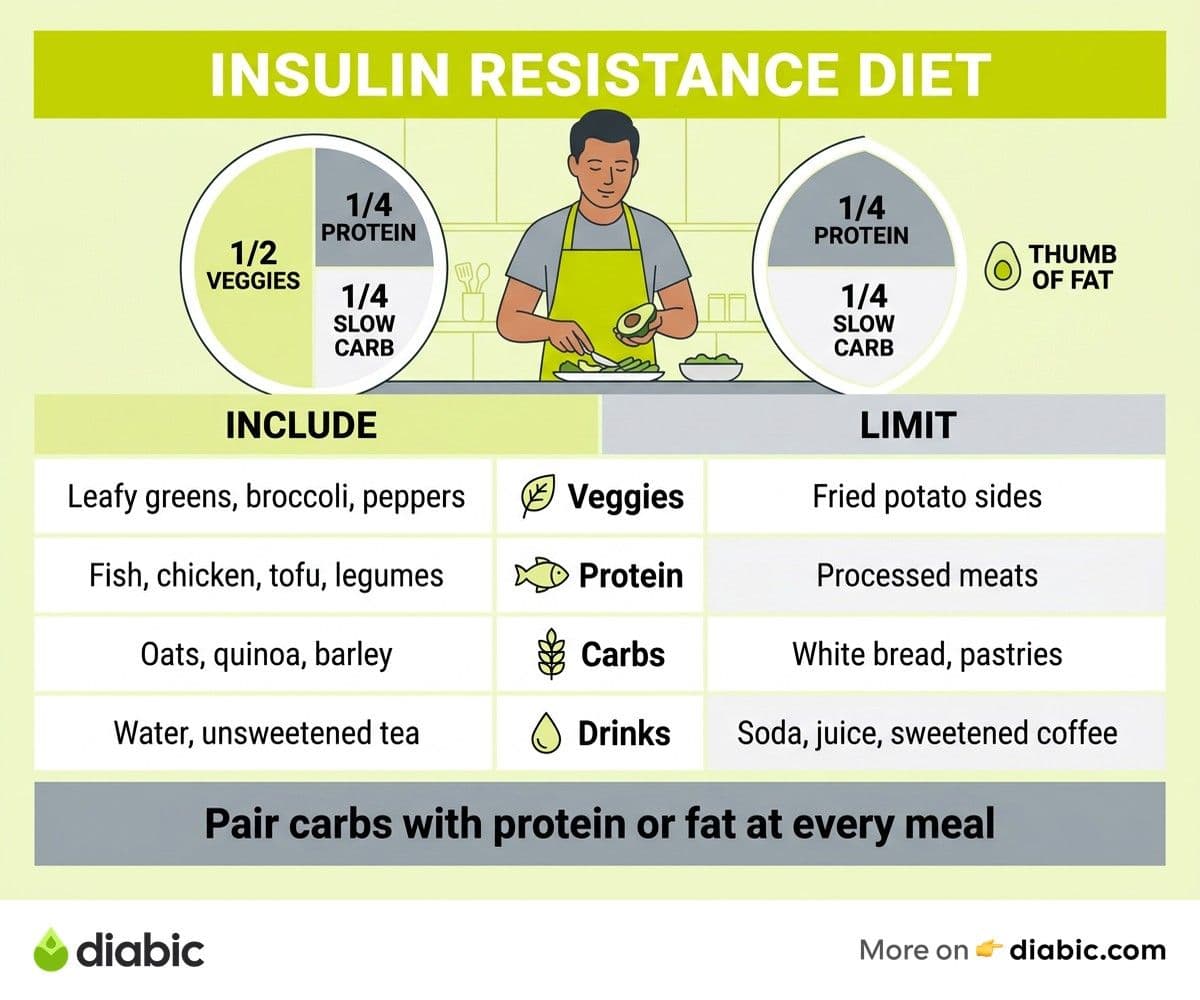
Non-starchy vegetables are the easiest place to start because they are high in fiber and low in carbohydrate impact. Leafy greens like spinach, kale, and arugula, plus broccoli, peppers, zucchini, cauliflower, and tomatoes, can fill half your plate at most meals. They add volume, micronutrients, and fiber without prompting a large insulin response, which is exactly what an insulin-resistant body benefits from.
Lean proteins help slow digestion, blunt blood sugar rises, and keep you satisfied between meals. Options like fish, chicken, turkey, eggs, tofu, tempeh, Greek yogurt, and legumes all work well. Beans and lentils deserve a special mention because they bring protein and soluble fiber together in one package, which is a useful combination when you are trying to improve insulin sensitivity. Healthy fats from avocado, olive oil, nuts, and seeds round out the picture by supporting fullness and slowing carbohydrate absorption.
Whole grains and high-fiber starches still belong on the plate for most people. Oats, quinoa, barley, brown rice, and starchy vegetables like sweet potatoes provide steady energy when eaten in reasonable portions and paired with protein or fat. Berries, apples, pears, and citrus fruits bring natural sweetness with fiber that softens their glycemic impact. The thread tying all of this together is variety, since different whole foods bring different nutrients and your body benefits from the mix.
Foods to Limit or Avoid
This is where shame tends to creep in, so we want to be clear about something first. Limiting certain foods is not the same as banning them, and a single meal does not undo your progress. The goal is to shift the everyday pattern, not to build a list of foods you feel guilty about.
Refined carbohydrates like white bread, pastries, sugary cereals, and many crackers digest quickly and tend to produce sharper blood sugar spikes. Sugary beverages are in their own category because liquid sugar hits the bloodstream fast and rarely fills you up the way solid food does. That includes regular soda, sweetened iced coffee drinks, sports drinks, and fruit juice, even the freshly squeezed kind. Replacing one sweetened drink a day with water, sparkling water, or unsweetened tea is one of the higher-uses changes we have seen people make.
Highly processed foods that combine refined carbs with added sugars and industrial fats often hit several of the patterns linked to worsening insulin resistance at once. Trans fats specifically have been associated with increased insulin resistance markers in studies tracked by the Harvard T.H. Chan School of Public Health (hsph.harvard.edu). Alcohol is worth thinking about too, since it can cause unpredictable blood sugar swings, interact with diabetes medications, and add empty calories that crowd out more nutrient-dense foods. Moderation matters more than abstinence for most adults, and your provider can help you figure out where your personal line should sit.
Meal Planning Tips for Insulin Resistance Diet Success
Knowing which foods help is one thing, but actually building meals on a busy week is another. The plate method is one of the simplest frameworks the CDC and ADA both point to, and it does not require any tracking app to use. Fill half your plate with non-starchy vegetables, a quarter with lean protein, and a quarter with a fiber-rich carbohydrate, then add a thumb-sized portion of healthy fat.
Pairing carbs with protein or fat at every meal is a small habit that pays off across the day. A piece of fruit with a handful of almonds will land differently than the fruit alone, and a slice of whole-grain toast with eggs and avocado behaves differently than toast with jam. This kind of pairing slows glucose absorption, lowers the insulin spike, and tends to keep hunger steadier between meals, which matters when you are also working on losing weight with insulin resistance.
Portion awareness is helpful, but it does not have to mean weighing every gram. Using your hand as a rough guide works for most meals, with a palm of protein, a fist of vegetables, a cupped handful of starch, and a thumb of fat. Meal prepping just one or two components on the weekend, like a batch of roasted vegetables or cooked grains, makes weekday assembly much faster. Harvard's Healthy Eating Plate is a good visual reference if you want a simple poster on the fridge (hsph.harvard.edu).
Should You Try Intermittent Fasting
Intermittent fasting has gotten a lot of attention as an insulin sensitivity tool, and the research is genuinely interesting if not yet conclusive. Several studies, including a review in the New England Journal of Medicine, suggest that time-restricted eating windows may improve markers of insulin sensitivity in some people (nejm.org). Other trials have found that the benefits largely come from the calorie reduction that often accompanies fasting rather than from the timing itself.
The honest answer is that intermittent fasting can be a useful tool for some people and a poor fit for others. Anyone taking insulin or sulfonylureas, anyone with a history of disordered eating, and people who are pregnant or trying to conceive should be especially careful. Skipping meals while on certain glucose-lowering medications can raise the risk of low blood sugar, which is not a tradeoff worth making without clinical oversight.
If you are curious, the safer path is to talk with your healthcare provider before changing your eating window. A 12-hour overnight fast, simply by not snacking after dinner, is a gentle starting point that most people can try without medication adjustments. Longer or stricter protocols deserve a conversation with someone who knows your full picture.
Building Sustainable Eating Habits
Extreme diets tend to backfire, especially for people with insulin resistance. Very restrictive plans can produce short-term blood sugar improvements, but the relapse rate is high and the rebound often leaves people feeling worse about themselves than when they started. We would rather see you make two changes you keep for a year than ten changes you abandon by February.
A more useful approach is to pick one or two shifts at a time and let them become automatic before adding more. That might mean swapping your usual breakfast for one with more protein and fiber, or building a vegetable into lunch every weekday. Tracking progress through fasting glucose, post-meal readings, and how you actually feel is more informative than the bathroom scale alone, especially in the first few months when body composition can shift before weight does. If you are working on reversing insulin resistance or addressing prediabetes and what it means for your long-term health, these habits stack up.
A registered dietitian who understands insulin resistance can be a worthwhile partner here. The CDC's National Diabetes Prevention Program found that structured lifestyle support, including dietary coaching, reduced progression to type 2 diabetes by 58 percent in adults with prediabetes (cdc.gov). You do not need to do this alone, and the best insulin resistance diet is the one you can stick with while still enjoying meals with the people you love.
Frequently Asked Questions
What foods should you avoid if you have insulin resistance?
Refined carbohydrates like white bread, pastries, and sugary cereals tend to spike blood sugar quickly, and sugary drinks deliver glucose without the fiber or protein that would slow absorption. Highly processed foods with added sugars and trans fats are also worth limiting, since they hit several patterns linked to worsening insulin resistance at once. The goal is to eat them less often rather than to cut them out entirely, and a registered dietitian can help you adjust the pattern to your real life.
Is intermittent fasting good for insulin resistance?
Some studies suggest intermittent fasting may improve insulin sensitivity, but the evidence is mixed and it is not appropriate for everyone. People taking insulin or certain glucose-lowering medications should be especially cautious, since fasting can raise the risk of low blood sugar. Talk to your healthcare provider before starting any fasting protocol so they can help you weigh the potential benefits against your specific risks.
How long does it take to see results from an insulin resistance diet?
Many people notice improvements in fasting blood sugar and energy within two to four weeks of consistent changes, while shifts in A1C usually take about three months. Tracking fasting glucose at home and checking in with your provider gives you a clearer picture than the scale alone.
Shahriar P. Shuvo is the founder of Diabic. He has lived with diabetes for over 14 years, and built Diabic to deliver the practical, evidence-based self-management tools he wished existed when he was first diagnosed. By trade, Shahriar is a senior design and frontend engineer with 6+ years shipping products at Agora, Timescale (now Tiger Data), and ShareTrip. He writes from the intersection of lived diabetes experience and product craft, focused on what works in daily management rather than what sounds good in a textbook.
Medically reviewed by
Dr. Shanto Arian is an internal medicine physician now specializing in clinical and aesthetic dermatology, with a parallel academic focus on epidemiology and public health. He holds an MBBS, MPH, MSc (UK), MRCP (UK), MRCPI (Ireland), Diploma in Dermatology (UK), and Diploma in Aesthetic Medicine (USA). Dr. Arian trained in internal medicine, including hospital work on hematology cases such as graft-versus-host disease, before moving toward dermatology. Skin is one of the earliest places diabetes shows itself, from acanthosis nigricans and diabetic dermopathy to slow foot wound healing, and that intersection is where his clinical and Diabic-review work meet. On Diabic, Dr. Arian medically reviews content on diabetes diagnosis, complications, dermatologic manifestations, and pharmacotherapy, ensuring every claim aligns with current ADA, NICE, and peer-reviewed literature.
More from Treatment & Medication
View all
Recognizing Diabetic Coma Warning Signs Early
Learn to spot diabetic coma warning signs early. We cover DKA, HHS, and severe hypoglycemia symptoms, plus when to call 911 for immediate help.

Switching to Injectable Diabetes Medication: What to Expect
Switching to injectable diabetes medication can feel daunting. Learn what to expect, how to manage side effects, and why this step is progression, not.

Hyperglycemic Hyperosmolar Syndrome: Warning Signs to Know
Hyperglycemic hyperosmolar syndrome is a serious type 2 diabetes emergency. Learn the warning signs, triggers, and when to call 911 for HHS care.
Clinician-reviewed habits, plain-language guides, and honest answers - the small shifts that make living with diabetes feel lighter, every day.