Insulin Resistance Treatment Options Explained
Insulin resistance treatment is more than one pill. Here is a clear look at lifestyle, medication, and supplement options that actually work.

In this article(9)
If you have just learned you have insulin resistance, the next question is usually a practical one: what do you actually do about it? The good news is that insulin resistance treatment is rarely a single intervention. It is a layered plan that combines lifestyle changes, sometimes medication, and consistent monitoring to help your body use insulin more effectively over time.
There is no single right answer for every person, which can feel overwhelming when you are trying to make sense of advice from different sources. We wrote this piece to give you a clear map of the real options, what the research says about each, and how they tend to fit together. Your provider will tailor the specifics to you, but knowing the landscape helps you walk into that conversation prepared.
What Is Insulin Resistance and Why Does It Need Treatment?
Insulin resistance develops when your cells stop responding efficiently to insulin's signal to absorb glucose from the blood. Your pancreas reacts by releasing more insulin to compensate, which keeps blood sugar in range for a while but creates its own cascade of problems. Higher circulating insulin promotes fat storage, particularly around the midsection, which in turn worsens cellular resistance further. It is a feedback loop that tends to tighten if nothing interrupts it.
Left alone, insulin resistance often progresses to prediabetes and then to type 2 diabetes over years. It also drives up cardiovascular risk, contributes to fatty liver, and shows up alongside conditions like PCOS and metabolic syndrome. Research summarized in the Journal of Clinical Investigation describes insulin resistance as a central node in metabolic disease, which is why treating it early changes the trajectory rather than just managing downstream symptoms.
The encouraging part is how responsive the underlying biology can be. Cells can become more sensitive again with the right inputs, and our piece on reversing insulin resistance walks through the evidence in depth. Treatment is less about chasing a single fix and more about steadily lowering insulin demand while improving how your body responds to what is there.
Lifestyle Changes as First-Line Insulin Resistance Treatment
For nearly everyone with insulin resistance, lifestyle change is the foundation, and the ADA Standards of Care make that explicit. The reason is simple: lifestyle factors are the most powerful insulin sensitizers we have, and they address the condition at its root rather than working around it. Even when medication is also part of the plan, the lifestyle piece does most of the long-term lifting.
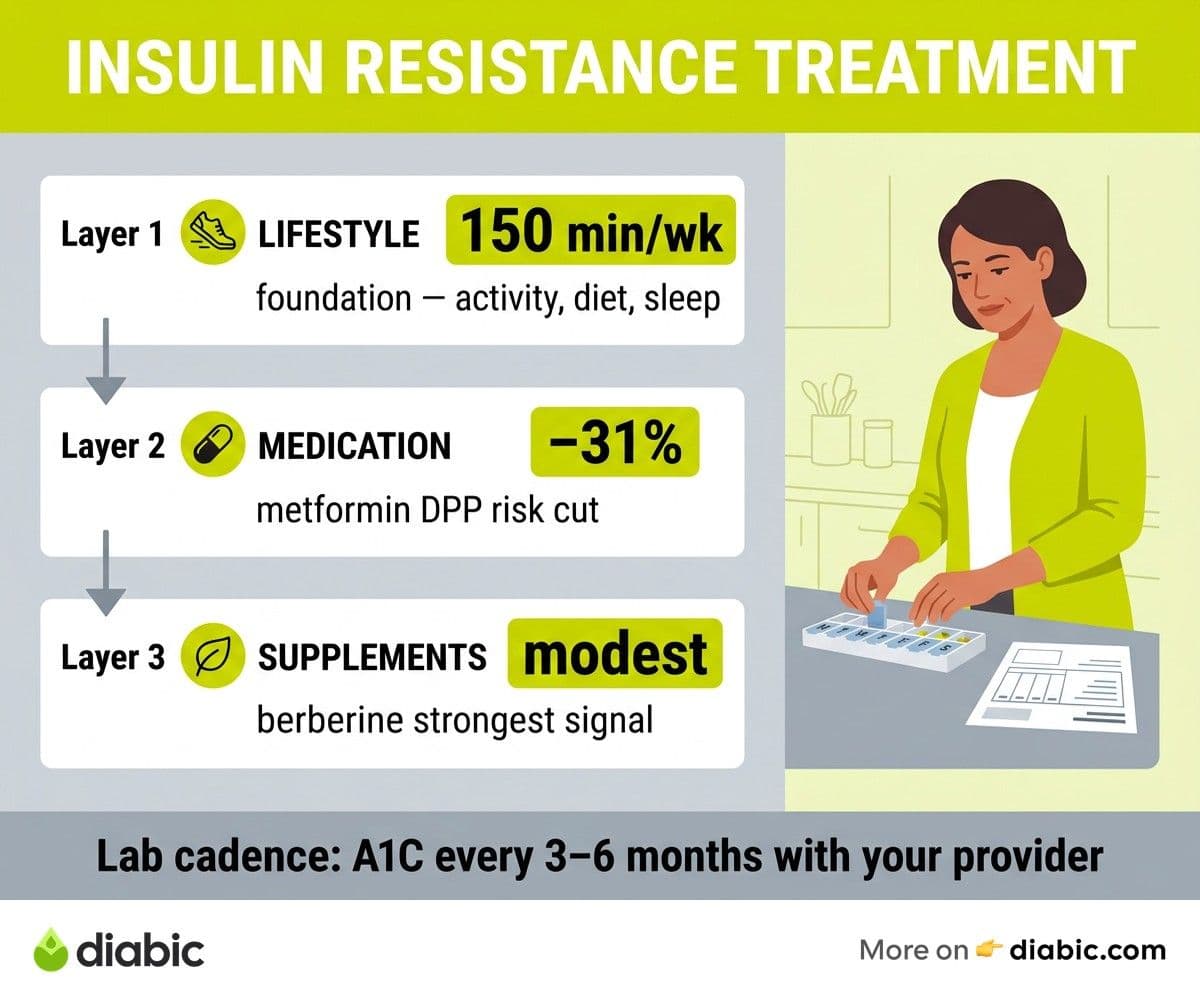
Physical activity is the single highest-yield habit. Studies in Diabetes Care consistently link 150 minutes per week of moderate exercise, plus two strength sessions, with meaningful improvements in insulin sensitivity. Aerobic work like brisk walking, cycling, or swimming improves how your cardiovascular system delivers fuel, while resistance training builds muscle tissue, which acts as a glucose reservoir after meals. A daily walk after dinner is one of the simplest interventions with one of the best returns.
Dietary changes matter just as much. Reducing refined carbohydrates and added sugars lowers the insulin demand on your pancreas. Adding fiber from vegetables, legumes, and intact whole grains slows glucose absorption. Mediterranean-style eating and lower-carbohydrate patterns both have strong evidence behind them, which is why our insulin resistance diet guide treats them as parallel paths rather than competitors.
Weight management is the third pillar. The Diabetes Prevention Program showed that a modest 5% to 7% reduction in body weight cut diabetes progression risk by 58% over three years, with most of the benefit coming from reduced visceral fat. Steady changes tend to outperform aggressive crash diets, which often trigger rebound weight gain that can leave insulin resistance worse than it started. For practical strategies that hold up long term, see our piece on losing weight with insulin resistance.
Sleep and stress round out the foundation, and they are the pieces most people skip. Sleeping fewer than six hours a night meaningfully reduces insulin sensitivity, sometimes within days. Chronic stress raises cortisol, which signals the liver to release more glucose and shifts food choices toward higher-carb comfort eating. Treating sleep as a metabolic intervention rather than a luxury often unlocks progress that diet and exercise alone cannot.
Medications for Insulin Resistance
When lifestyle alone is not enough, or when your provider thinks you would benefit from medication alongside lifestyle, several drug classes can help. The choice depends on your A1C, weight, kidney function, cardiovascular history, and personal preferences. Talk to your doctor about which fits your full health profile rather than trying to map a single best answer.
Metformin is the most studied and most widely used medication for insulin resistance and early type 2 diabetes. It works mainly by reducing glucose production in the liver and modestly improving insulin sensitivity in muscle and fat cells. The original DPP results published in The New England Journal of Medicine showed that metformin cut diabetes progression risk by 31% in adults with prediabetes. Side effects are usually limited to temporary gastrointestinal symptoms, and the drug has decades of safety data behind it. Our metformin for insulin resistance explainer covers what to expect.
Thiazolidinediones, including pioglitazone, act directly on insulin receptors and improve sensitivity in muscle, fat, and liver tissue. They can be useful for select patients, though side effects like fluid retention and weight gain mean they are used more selectively today than they were a decade ago. Your provider will weigh these tradeoffs against your specific situation.
GLP-1 receptor agonists are a newer and increasingly common option. Drugs in this class slow gastric emptying, blunt post-meal glucose spikes, and reduce appetite, which often leads to meaningful weight loss alongside the metabolic benefits. Large cardiovascular outcome trials have shown reductions in heart and kidney events in patients with type 2 diabetes, and the FDA prescribing information for these medications continues to expand as new indications are approved. They are typically given as a once-weekly injection, though oral options also exist now.
SGLT2 inhibitors take a different approach. They cause your kidneys to excrete excess glucose in the urine, which lowers blood sugar without raising insulin. Like GLP-1s, they have strong cardiovascular and kidney protection data, particularly for people with established heart failure or chronic kidney disease. They are not always first-line for insulin resistance specifically, but they are often considered when broader cardiometabolic risk is a factor.
Medication choices depend on your full health profile, not just blood sugar numbers. The NICE guidelines (NG28) on type 2 diabetes management offer one good algorithm, and the ADA publishes updated guidance each year. Your primary care provider or endocrinologist will combine those frameworks with your individual situation. For a related view focused on type 2 diabetes specifically, see our type 2 diabetes treatment overview.
Supplements and Natural Approaches
Supplement aisles are full of products marketed for blood sugar support, and the evidence behind them varies widely. We try to be honest here: most supplements have modest effects at best, and a few have meaningful interactions with medications you may already be taking. Always discuss anything you are considering with your healthcare provider before adding it to your routine.
Berberine has the strongest research base of the popular options. Several randomized trials have shown reductions in fasting glucose and A1C comparable to a low dose of metformin in some studies, though sample sizes are smaller and long-term safety data are thinner. Side effects are mostly gastrointestinal. It is not a replacement for proven treatments, but it is one of the few supplements with real signal in the data.
Chromium and magnesium have modest evidence for improving insulin sensitivity, particularly in people who are deficient. Magnesium deficiency is common in adults with insulin resistance, and correcting it can help with glucose handling, sleep, and muscle function. A simple food-first approach, leafy greens, nuts, seeds, and legumes, often does the job without supplementation.
Apple cider vinegar has been studied for its effect on post-meal glucose, with some small trials showing modest reductions. The effect is real but small, and it is not a substitute for the bigger levers above. The same applies to cinnamon, alpha-lipoic acid, and many other popular options. Use them as complements at best, not replacements.
Building a Long-Term Treatment Plan
Insulin resistance treatment is ongoing rather than one-time, and the most successful plans treat it that way. The habits that improve your insulin sensitivity now are the same habits that keep it improved a year from now. The plan you build with your provider should be one you can sustain in real life, not one that depends on perfect conditions.
Working closely with a primary care provider or endocrinologist gives you someone tracking the data with you. Most plans include regular A1C checks every three to six months, periodic fasting glucose and lipid panels, blood pressure monitoring, and sometimes a fasting insulin or HOMA-IR for a sharper picture of sensitivity. Goals should be measurable and personal: a target A1C, a waist circumference range, a step count, and improvements in energy and sleep that matter to you day to day.
Specialist referrals can add real value. A registered dietitian can translate general nutrition advice into meals that fit your schedule, budget, and preferences. A certified diabetes care and education specialist can help with self-monitoring, glucose pattern recognition, and behavior change. An exercise physiologist can design a program that respects any joint or cardiovascular limitations. None of these people replace your primary provider. They round out the team.
The biggest predictor of long-term success is consistency, not intensity. Pick a few habits you can keep, layer in medication if your doctor recommends it, track the data that matters, and revisit the plan with your provider every few months. Progress in insulin resistance rarely looks like a straight line, but it does add up.
FAQ
Can insulin resistance be treated without medication?
For many people, especially those caught early, lifestyle changes alone can significantly improve insulin resistance. Regular physical activity, dietary improvements, and even modest weight loss have strong evidence behind them and can produce measurable shifts in fasting glucose and A1C within months. Some people benefit from adding medication alongside lifestyle changes, particularly when A1C is already in the prediabetes range or higher. Your healthcare provider can help you decide which approach fits your situation.
What doctor treats insulin resistance?
Your primary care provider can diagnose and treat insulin resistance in most cases, especially when it is caught early. If your situation is more complex, or if initial treatment is not producing the response you hoped for, your provider may refer you to an endocrinologist, a specialist in hormone-related conditions including diabetes and insulin resistance. A registered dietitian or certified diabetes care and education specialist can also be valuable members of your team.
Where to Go From Here
The most useful thing you can do this week is have one focused conversation with your provider about your numbers and your starting point. Bring your most recent labs, ask about fasting insulin and HOMA-IR if they have not been ordered, and discuss whether lifestyle alone, lifestyle plus medication, or a different combination makes sense for you right now. Then pick one habit you can carry into next week, a daily walk, a swap of one sugary drink, an earlier bedtime, and let that be your first win.
Insulin resistance treatment is a plan you build, not a verdict you receive. The earlier you start, the more room you have to work with, and small consistent wins tend to outperform any single dramatic change. Layer the habits, lean on your care team, and let the data from the next few months show you which levers move your numbers most.
Shahriar P. Shuvo is the founder of Diabic. He has lived with diabetes for over 14 years, and built Diabic to deliver the practical, evidence-based self-management tools he wished existed when he was first diagnosed. By trade, Shahriar is a senior design and frontend engineer with 6+ years shipping products at Agora, Timescale (now Tiger Data), and ShareTrip. He writes from the intersection of lived diabetes experience and product craft, focused on what works in daily management rather than what sounds good in a textbook.
Medically reviewed by
Dr. Rezwana Parvin Rumpa is an obstetrics and gynaecology specialist with clinical focus on gestational diabetes, PCOS, and fertility. She holds the MRCOG (Final Part) from the Royal College of Obstetricians and Gynaecologists in London, the MRCPI (Final Part) from the Royal College of Physicians of Ireland, and an MBBS from Shaheed Monsur Ali Medical College under Dhaka University. Dr. Rumpa serves as a Senior Medical Officer in the Obs and Gynae department at BRB Hospitals Ltd, where she has spent three years managing prenatal care, emergency obstetric cases, and women's-health surgery. On Diabic, she medically reviews content for women living with diabetes, with particular attention to pregnancy, PCOS, and reproductive-health intersections.
More from Treatment & Medication
View all
Recognizing Diabetic Coma Warning Signs Early
Learn to spot diabetic coma warning signs early. We cover DKA, HHS, and severe hypoglycemia symptoms, plus when to call 911 for immediate help.

Switching to Injectable Diabetes Medication: What to Expect
Switching to injectable diabetes medication can feel daunting. Learn what to expect, how to manage side effects, and why this step is progression, not.

Hyperglycemic Hyperosmolar Syndrome: Warning Signs to Know
Hyperglycemic hyperosmolar syndrome is a serious type 2 diabetes emergency. Learn the warning signs, triggers, and when to call 911 for HHS care.
Clinician-reviewed habits, plain-language guides, and honest answers - the small shifts that make living with diabetes feel lighter, every day.