Hypoglycemia Risk in Older Adults With Diabetes
Hypoglycemia risk in older adults rises with age. Learn why low blood sugar gets more dangerous, which medications drive it, and how to prevent severe.

In this article(16)
Hypoglycemia risk in older adults with diabetes is one of the most underestimated dangers in senior care, and a single severe episode can lead to falls, fractures, hospitalization, or worse. Knowing why low blood sugar becomes more dangerous with age is the first step toward preventing it, and the prevention plan often looks different from what younger adults are taught.
For decades the standard message in diabetes care has been to keep blood sugar as low as safely possible. That message still holds for many people, but it shifts after roughly age 65. Aging changes how the body senses, signals, and responds to falling glucose, and several common diabetes medications behave differently in older bodies. Recognizing those shifts prevents a lot of avoidable trouble.
This guide covers why the risk rises with age, which medications carry the most weight, how to recognize and respond when a low happens, and how to build a plan with your healthcare team. The goal throughout is steady, safe blood sugar, not perfect numbers.
Why Hypoglycemia Risk in Older Adults Is Higher
Hypoglycemia is more common, more severe, and harder to detect in older adults. The reasons are partly biological and partly structural, and stacking them together explains why a regimen that worked fine at 55 sometimes becomes risky at 75.
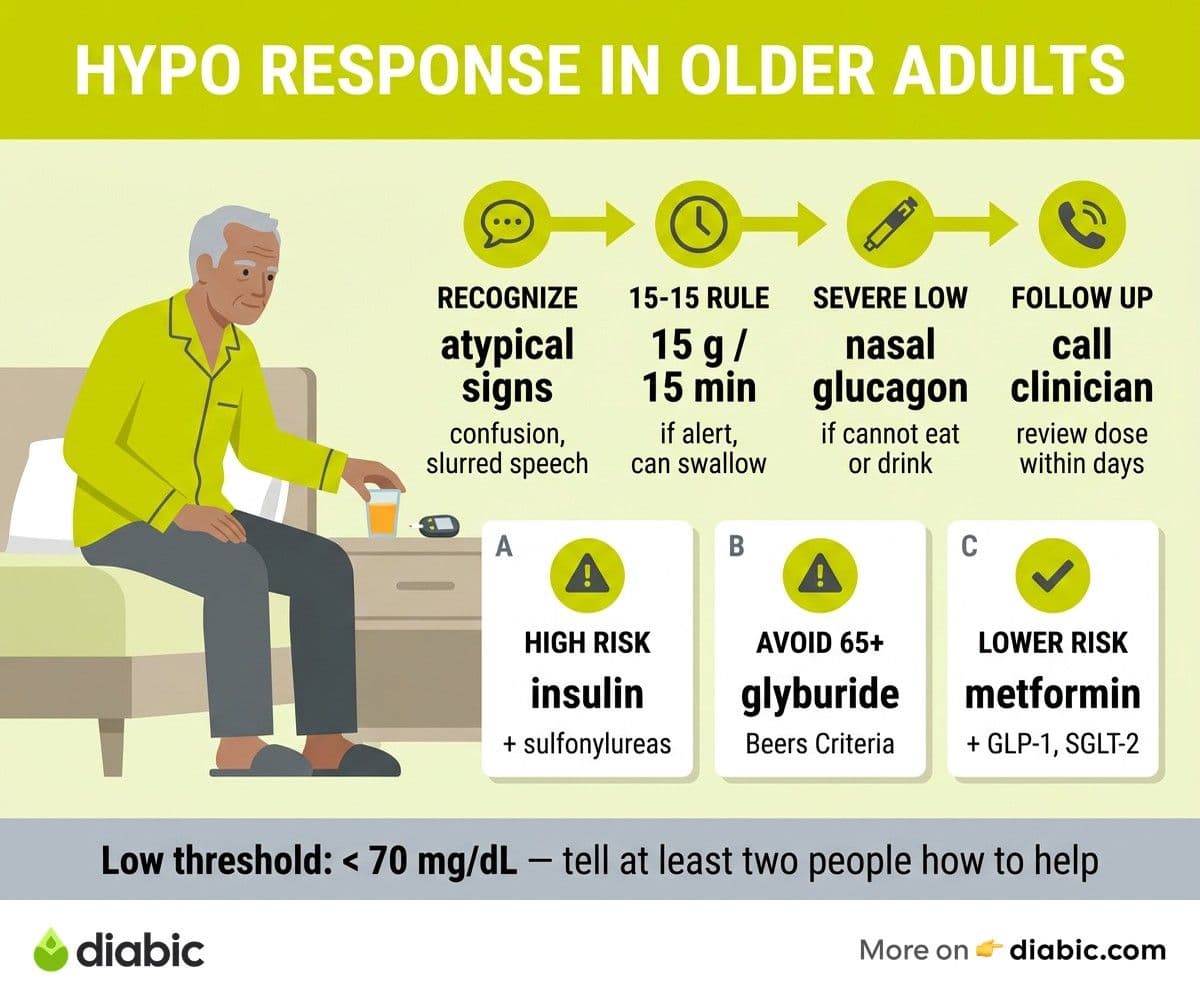
The first piece is hypoglycemia unawareness, the loss of early warning symptoms most people learn to recognize, like sweating, shakiness, and a racing heart. Long-duration diabetes blunts the counter-regulatory hormone response that produces those symptoms, and aging blunts it further. Research in the Journal of Diabetes and Its Complications and Diabetes Care describes how older adults often skip the adrenaline-driven warning phase and move directly into cognitive symptoms like confusion, drowsiness, or slurred speech. Those later symptoms are easy to mistake for fatigue, dehydration, or a medication side effect.
The second piece is the body's reduced ability to defend against falling glucose. Glucagon and epinephrine responses weaken with age and longer diabetes duration. Kidney and liver function also decline gradually, which slows how quickly insulin and certain oral medications clear. Together this means a low sugar can drop further and last longer in an older body than in a younger one taking the same dose.
Why Falls and Cognitive Outcomes Matter
The downstream consequences are what make hypoglycemia in older adults a different conversation than in younger adults. Falls during a low episode account for a meaningful share of fractures and emergency visits in seniors with diabetes, and the CDC's older adult fall prevention resources identify medication-related instability as one of the major modifiable risk factors. A hip fracture at 75 is rarely just a hip fracture, it often reshapes the next several months of someone's life.
Severe hypoglycemia has also been linked to higher cardiovascular event rates in older adults with type 2 diabetes, including in studies referenced by the Endocrine Society Clinical Practice Guidelines. Repeated lows also appear to interact with cognitive function in ways researchers are still mapping. None of this is meant to alarm, it is meant to explain why "fewer severe lows" is a goal worth taking seriously even when A1C looks fine. Our piece on the challenges of diabetes management after 65 puts these pieces in fuller context.
Diabetes in Seniors: Medications That Increase Risk
Not all diabetes medications carry the same hypoglycemia profile, and the difference matters more with age. Two classes drive most of the severe low blood sugar episodes in older adults, and recognizing them is the first step in any safety conversation.
Insulin is the most direct cause of hypoglycemia simply because it lowers glucose actively. Older adults using mealtime insulin face higher risk than those on basal-only regimens, especially when meal timing or appetite shifts. Sulfonylureas, particularly the longer-acting ones like glyburide, are the second major contributor. Glyburide in particular is flagged on the American Geriatrics Society Beers Criteria as potentially inappropriate for adults 65 and older because it produces more frequent and more severe hypoglycemia than alternatives in the same class.
Several other diabetes medications carry much lower hypoglycemia risk on their own, including metformin, DPP-4 inhibitors, GLP-1 receptor agonists, and SGLT-2 inhibitors. They can still contribute to low blood sugar when combined with insulin or sulfonylureas, but as standalone therapies their risk profile is favorable. This is part of why your doctor may suggest swapping medications rather than always adjusting doses.
Drug Interactions and Aging Physiology
Several non-diabetes medications can amplify hypoglycemia risk by changing how diabetes drugs are metabolized or by independently lowering glucose. Some antibiotics, certain heart medications, and a few drugs used for nerve pain fall into this group. Aging kidneys also clear medications more slowly, so a dose appropriate at 60 may be too strong at 78 even if nothing else has changed.
A regular medication review with your prescribing clinician or pharmacist is one of the most useful steps in older-adult diabetes care. Bringing a current list of every medication, including over-the-counter and supplement use, lets the review catch the interactions that matter. The ADA Standards of Care chapter on older adults explicitly recommends regular reassessment of regimens to reduce hypoglycemia risk as people age.
Medication Management to Prevent Low Blood Sugar
Medication management for elderly diabetes is less about willpower and more about structure. The right system reduces daily decisions that go wrong and makes the regimen safer almost passively.
Start with a structured medication review. Many pharmacies offer a medication therapy management service, often free for Medicare beneficiaries, where a pharmacist sits down with your full list and looks for interactions and high-risk combinations. Walking out with a clear list of "keep, change, ask the doctor about" is one of the best uses of an hour. Our piece on simplifying medications for older adults walks through the deeper version of that process.
Meal timing matters once sulfonylureas or insulin are in the mix. A medication that lowers glucose works best when food shows up on schedule, and a missed or delayed meal is one of the most common triggers for severe lows. Anchoring meals to consistent times, keeping easy backup foods on hand, and never skipping a meal when on a glucose-lowering medication are practical guardrails. If appetite is genuinely changing, that is a doctor conversation rather than a willpower problem, because the medication may need to come down.
Deprescribing and Pill Organizers
Deprescribing, the formal process of reducing or stopping medications that no longer add value, is increasingly part of mainstream geriatric care. If your A1C has been comfortably below your target for a long time, especially below 6.5%, talk to your doctor about whether a dose reduction or a medication swap could lower your hypoglycemia risk without giving up glucose control. Lower A1C in older adults is not always better, especially when reached through insulin or sulfonylureas.
Pill organizers and reminder systems prevent the everyday errors that cause many lows. A weekly pillbox laid out on Sunday eliminates the "did I already take that?" question. Smart pill caps and phone reminders work for some, while a paper checklist on the fridge works for others. The right system is the one you actually use.
Recognizing and Treating Hypoglycemia in Seniors
Symptoms of low blood sugar in older adults are often quieter than the textbook list. Where a younger adult might feel sudden sweating and a pounding heart, an older adult may instead feel suddenly tired, confused, dizzy, or unsteady. Mood changes, slurred speech, and difficulty finding words are also common. Caregivers and family often notice these changes before the person themselves does, which is one reason involving them in the safety plan matters.
The 15-15 rule remains the standard treatment when blood sugar is low and the person is alert enough to swallow safely. Take 15 grams of fast-acting carbohydrate, wait 15 minutes, recheck, and repeat if still low. Reliable options include 4 ounces of fruit juice, 4 glucose tablets, a tube of glucose gel, or a tablespoon of honey or sugar. Chocolate and peanut butter are not first-line because the fat slows carb absorption.
When to Skip the 15-15 Rule
The 15-15 rule does not apply to severe hypoglycemia, which is any episode where the person cannot safely eat or drink. In that situation, glucagon is the right tool. Modern nasal glucagon and prefilled glucagon pens have replaced older mix-it-yourself kits and are much easier for a family member to use under stress. Talk to your doctor about whether a glucagon prescription belongs in the home, and make sure at least one other person knows where it is and how to use it.
Call emergency services for any severe episode involving loss of consciousness, a seizure, or a low that does not respond to two rounds of fast-acting carbs. After any severe low, schedule a follow-up with the prescribing clinician within a few days to review what happened.
From my experience: I have lived with type 1 diabetes for 14 years, and the lows that taught me the most were the ones I almost did not catch. Even with full awareness, a delayed dinner or unplanned walk can change what a dose does. For older adults whose warning signals are quieter, building safety nets into the routine matters far more than relying on feeling the low coming.
Overnight Hypoglycemia: A Hidden Danger
Nighttime is when low blood sugar becomes hardest to detect and easiest to misinterpret. Sleep blunts whatever symptoms remain, and a low that would wake a 30-year-old can drift through the night unnoticed in a 75-year-old. Morning headaches, restless sleep, vivid dreams, and damp sheets are sometimes the only clues that blood sugar drops at night.
Several factors push overnight risk higher in older adults. Long-acting basal insulin or evening sulfonylurea doses can peak during sleep, especially if dinner was light. Alcohol, even one drink with dinner, can lower glucose hours later by reducing the liver's overnight glucose release. Daytime physical activity can extend insulin sensitivity into the night. Our piece on causes and prevention of nighttime blood sugar drops goes deeper here.
A modest, balanced bedtime snack can be protective when overnight lows are a recurring pattern, particularly for people on insulin. Something with protein and a small amount of slow carbohydrate, like cheese with a few crackers or yogurt with nuts, gives the body something to draw on during the long fasting window. The exact need varies, so this is a conversation to have with your doctor rather than a universal recommendation.
CGMs Change the Overnight Picture
Continuous glucose monitors have transformed nighttime safety for older adults at risk of lows. A CGM can alert you and a family member's phone before glucose drops below a threshold you set. The alerts wake people who would otherwise sleep through a low, and they create a record that helps clinicians adjust evening medication timing. Both Dexcom and Abbott FreeStyle Libre offer night-friendly alert profiles, and Medicare covers CGMs for many people with diabetes on insulin.
If a CGM is not the right fit, adjusting medication timing is the next step. Moving a long-acting insulin dose earlier, switching basal insulins, or replacing an evening sulfonylurea with a lower-risk alternative are conversations worth having with your prescribing clinician.
Building a Safety Plan With Your Healthcare Team
A safety plan turns scattered awareness into a structured response, which is what reduces the odds of a serious event. The plan does not need to be long, but it does need to be specific.
Start with individualized targets. The ADA's older-adult guidance recommends A1C targets in the range of 7.0% to 8.0% for many seniors, with looser targets for those with multiple conditions, cognitive changes, or shortened life expectancy. Tighter targets are appropriate for healthier older adults with longer expected lifespans, but the default for someone with hypoglycemia history should usually be looser. This is exactly the question to bring to your next appointment.
Build a written action plan together. It should cover what numbers count as low and severe for you, what foods you keep on hand, when to use glucagon, when to call 911, and who to notify after a moderate-to-severe episode. A printed copy on the fridge and a digital copy on your phone covers most situations.
Family, Caregivers, and Regular Reviews
Tell at least two people in your life how to recognize a low, where your fast-acting carbs and glucagon live, and how to use them. A neighbor, an adult child, a partner, or a regular caregiver are all reasonable candidates, and including more than one ensures coverage when someone is unavailable.
Schedule regular medication reviews, ideally every six to twelve months or after any significant change in health, weight, kidney function, or appetite. The right regimen at 70 is rarely the right regimen at 78, and small adjustments along the way prevent a sudden severe event later.
FAQ
Why is hypoglycemia more dangerous in older adults?
Older adults are more likely to experience hypoglycemia unawareness, which means the early warning symptoms like sweating and a racing heart fade or disappear. Aging also weakens the counter-regulatory hormones that defend against falling glucose, and slower kidney and liver function let medications linger longer in the body. The downstream risks include falls, fractures, head injuries, hospitalizations, and elevated cardiovascular and cognitive consequences over time.
How can you prevent low blood sugar in elderly people with diabetes?
Work with your healthcare provider to review every medication against the AGS Beers Criteria, especially insulin and sulfonylureas. Set individualized A1C targets that prioritize avoiding severe lows, anchor meals to consistent times, and never skip meals while on glucose-lowering medication. Talk to your doctor about whether a continuous glucose monitor would help, especially if overnight lows are a concern, and make sure at least two family members or caregivers know how to recognize and respond to a low.
What blood sugar level is considered dangerous in older adults?
The standard low threshold is below 70 mg/dL, with severe hypoglycemia defined as any episode requiring help from another person or producing loss of consciousness. For older adults, many clinicians treat readings in the low 70s as a signal to act, because the response to a low is slower with age. Talk to your doctor about what number should trigger the 15-15 rule for you.
Hypoglycemia risk in older adults is real, but highly modifiable once the regimen is built around it. A medication review, individualized targets, a written action plan, and a CGM where appropriate cover most of what matters. Pick the next conversation that fits your situation, whether a pharmacist visit, a CGM question, or a call with your prescribing clinician, and use it to take one concrete step toward fewer severe lows this year.
Shahriar P. Shuvo is the founder of Diabic. He has lived with diabetes for over 14 years, and built Diabic to deliver the practical, evidence-based self-management tools he wished existed when he was first diagnosed. By trade, Shahriar is a senior design and frontend engineer with 6+ years shipping products at Agora, Timescale (now Tiger Data), and ShareTrip. He writes from the intersection of lived diabetes experience and product craft, focused on what works in daily management rather than what sounds good in a textbook.
Medically reviewed by
Dr. Rezwana Parvin Rumpa is an obstetrics and gynaecology specialist with clinical focus on gestational diabetes, PCOS, and fertility. She holds the MRCOG (Final Part) from the Royal College of Obstetricians and Gynaecologists in London, the MRCPI (Final Part) from the Royal College of Physicians of Ireland, and an MBBS from Shaheed Monsur Ali Medical College under Dhaka University. Dr. Rumpa serves as a Senior Medical Officer in the Obs and Gynae department at BRB Hospitals Ltd, where she has spent three years managing prenatal care, emergency obstetric cases, and women's-health surgery. On Diabic, she medically reviews content for women living with diabetes, with particular attention to pregnancy, PCOS, and reproductive-health intersections.
More from Living with Diabetes
View all
A Gentle Chair Yoga Routine for people with diabetes
A gentle chair yoga for people with diabetes routine with safe poses, modifications for neuropathy, retinopathy, and joint pain, plus tips for older.

Shift Work and Diabetes: Managing Irregular Hours
Shift work and diabetes is a tough combination. Learn how to manage meals, sleep, medication, and blood sugar when your hours rotate or flip overnight.

Dating with Diabetes: When to Tell a New Partner
Dating with diabetes brings unique disclosure questions. Here is when to tell a new partner, what to say, and how to handle the conversation with.
Clinician-reviewed habits, plain-language guides, and honest answers - the small shifts that make living with diabetes feel lighter, every day.