Hyperglycemic Hyperosmolar Syndrome: Warning Signs to Know
Hyperglycemic hyperosmolar syndrome is a serious type 2 diabetes emergency. Learn the warning signs, triggers, and when to call 911 for HHS care.

In this article(9)
Hyperglycemic hyperosmolar syndrome is a diabetes emergency that does not get nearly enough attention, even though it carries a higher mortality rate than the better-known diabetic ketoacidosis. It is most common in older adults with type 2 diabetes, and it tends to develop over days rather than hours, which means there is usually a window where families and caregivers can recognize what is happening and act. The hard part is that the early signs look a lot like "just feeling under the weather," and by the time confusion or extreme dehydration sets in, the person is often too unwell to advocate for themselves. We wrote this guide to help you spot it early.
If you are reading this because someone in your life is showing signs that worry you right now, trust that instinct. Call 911 or head to the nearest emergency department if blood sugar is above 600 mg/dL, if there is confusion or unusual drowsiness, or if dehydration looks severe. The hospital is the only place equipped to manage this condition safely, and waiting it out is not a strategy that works with HHS.
What Is Hyperglycemic Hyperosmolar Syndrome
Hyperglycemic hyperosmolar syndrome (HHS) is a metabolic emergency defined by extreme hyperglycemia, profound dehydration, and elevated blood osmolarity, usually without the significant ketone production seen in DKA. Blood sugar in HHS commonly exceeds 600 mg/dL and can climb above 1,000 mg/dL, while the body tries to flush all that extra glucose through the kidneys. The result is massive fluid loss through urine, which the person cannot keep up with by drinking, especially if they are already ill, confused, or have limited access to water.
This condition is most common in type 2 diabetes, and risk climbs sharply with age. According to the Endocrine Society and ADA consensus on hyperglycemic crises in adults, HHS carries a mortality rate of roughly 10 to 20 percent, several times higher than DKA. That difference comes from a combination of factors: HHS develops slowly enough to be missed, it disproportionately affects older adults whose bodies tolerate dehydration poorly, and it is often layered on top of another illness like pneumonia or a urinary tract infection that is also taking a toll.
The reason HHS produces little ketone activity has to do with insulin levels. Most people who develop HHS still have enough insulin in their system to suppress fat breakdown, so they do not produce the acid-forming ketones that drive DKA. That spared them one problem and handed them another, because without the early alarm bells of nausea and rapid breathing, the condition can build for days while everyone assumes the underlying flu or infection is the main story.
Warning Signs of HHS to Watch For
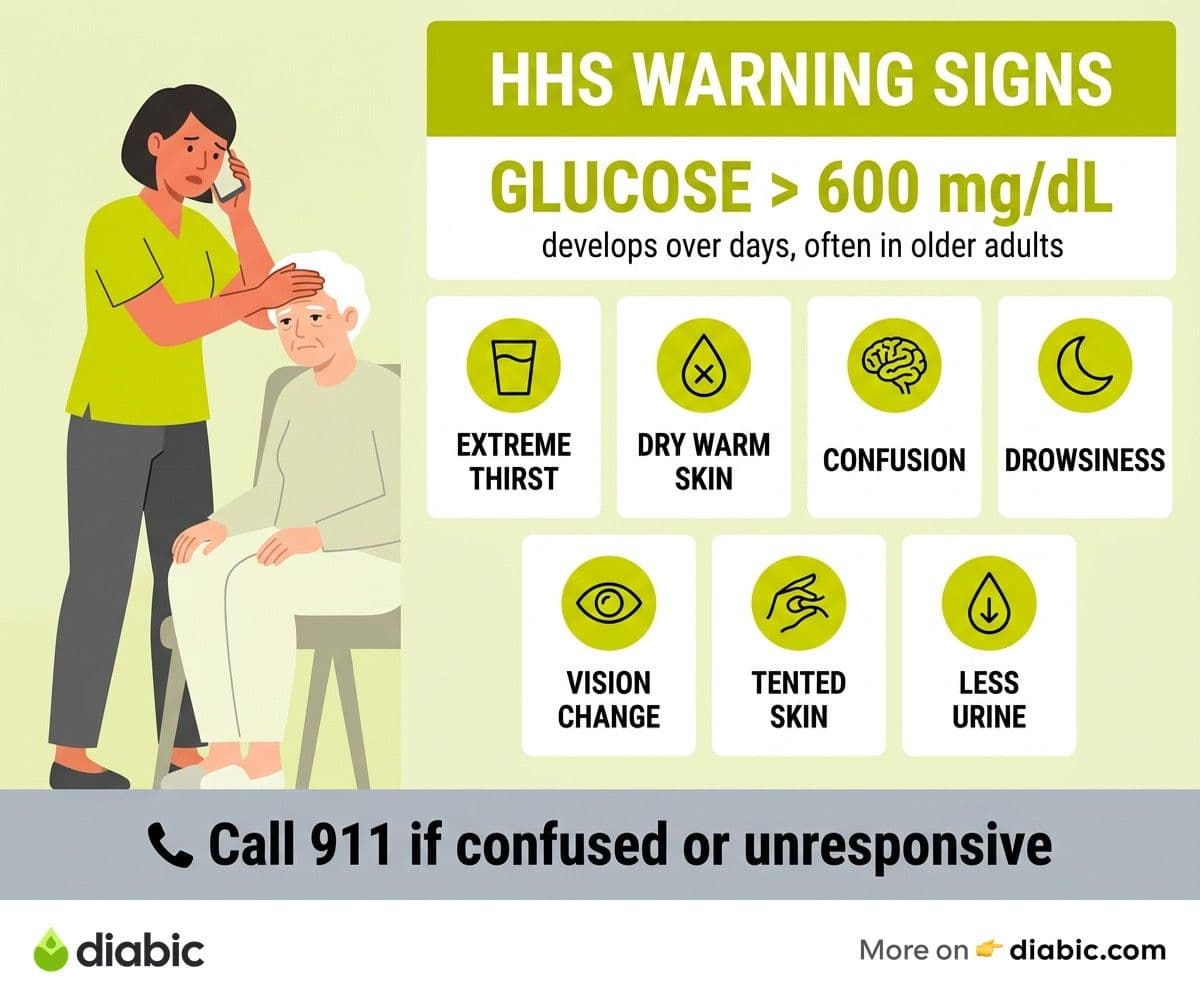
The early diabetes symptoms of HHS look ordinary at first. Extreme thirst and a dry mouth that seem to grow worse rather than better, frequent urination that gradually slows as dehydration deepens, warm and dry skin that does not sweat, and a subtle drift in alertness are the first wave. The person may sleep more than usual, lose interest in food, and feel weak in a way they brush off as part of being sick. Family members often notice these changes before the person with diabetes does, because the cognitive shift makes self-assessment harder.
As HHS progresses, the warning signs become harder to ignore and more dangerous. Watch for these red flags:
- Confusion, hallucinations, or speech that does not make sense
- Drowsiness that progresses toward unresponsiveness
- Vision disturbances or sudden vision loss
- Weakness on one side of the body that can mimic a stroke
- Fever, especially when combined with the symptoms above
- Skin that stays "tented" when pinched, indicating severe dehydration
- Decreased urination after a stretch of frequent bathroom trips
If you see any of these signs in someone with type 2 diabetes, especially an older adult who has been ill, do not wait to call your provider's office in the morning. This is a 911 situation, and we cover the broader triage logic in our guide on when to go to the ER for diabetes. The progression toward diabetic coma warning signs can happen quickly once altered mental status sets in, and recovery is faster and safer when treatment starts before that point.
The National Institute of Diabetes and Digestive and Kidney Diseases emphasizes that altered mental status in someone with diabetes should always trigger a blood sugar check and an emergency response if the reading is very high. Trust your gut here. Caregivers who say "something is just off" are usually right, and the cost of being wrong about an ER visit is far smaller than the cost of being wrong about waiting at home.
How HHS Differs From DKA
DKA and HHS share some signs of diabetes emergencies, but they behave differently and require slightly different treatment paths. Understanding the contrast helps you recognize which one you might be dealing with.
Both conditions are medical emergencies that require hospital treatment, and both can occasionally overlap in what clinicians call mixed presentations. Our deeper dive on what ketoacidosis feels like walks through the DKA picture in detail. The takeaway is not to memorize the chart but to recognize that very high blood sugar in someone who is also acting confused or severely dehydrated is an emergency regardless of which label fits best.
What Triggers HHS
HHS rarely appears out of nowhere. It almost always has a trigger, and recognizing those triggers helps you prevent the condition from developing in the first place. Infection is the most common precipitant, with pneumonia, urinary tract infections, sepsis, and influenza topping the list. The illness raises blood sugar, the person eats and drinks less, and the cycle accelerates from there.
Other common triggers include dehydration from any cause, especially in hot weather or after gastrointestinal illness, and missed or inadequate diabetes medication. Some medications also raise the risk: corticosteroids, thiazide diuretics, certain atypical antipsychotics, and some chemotherapy agents can push glucose levels high enough to spark HHS in someone whose diabetes has been previously well managed. Heart attack and stroke can also trigger HHS through the body's stress response, and undiagnosed diabetes is sometimes discovered only when HHS lands someone in the ER.
The vulnerability factor that connects most cases is reduced access to fluids. Older adults living alone, people with dementia, residents in long-term care facilities with thin staffing, and anyone who has lost the ability to recognize or respond to thirst are at higher risk. The American Geriatrics Society consistently flags hydration status as a critical, underchecked vital sign in older adults with diabetes, and it deserves more attention from families and care teams than it typically gets.
How HHS Is Treated in the Hospital
Hospital treatment for HHS focuses on three pillars: rehydration, gradual blood sugar correction, and treating the underlying trigger. The fluid replacement piece is the most important and the most carefully managed, because adults with HHS are often profoundly dehydrated, sometimes carrying a deficit of 8 to 12 liters or more. IV fluids go in as a steady, monitored infusion rather than a fast bolus, because correcting that volume too quickly can stress the heart and shift fluids into the brain in dangerous ways.
IV insulin starts at a low dose and runs continuously while the team tracks blood sugar and electrolytes hour by hour. The goal is to bring glucose down by no more than 50 to 75 mg/dL per hour, slow enough to avoid rapid osmotic shifts that can cause cerebral edema. Potassium replacement is almost always needed, because total body potassium drops sharply during HHS even when blood levels look normal at first, and this is a setup for dangerous heart rhythm changes. Most HHS patients are managed in an ICU or step-down unit for at least the first day or two, and the average length of stay tends to be longer than for DKA. Recovery from the underlying trigger, often an infection, frequently extends the hospitalization further.
Prevention Strategies
The good news is that HHS is largely preventable when families and people with diabetes know what to watch for. Consistent blood sugar monitoring matters most during illness, when readings can shift quickly and the usual routine is disrupted. A simple rule of thumb: if you are sick enough to skip a meal, you are sick enough to check your blood sugar more often than usual, ideally every two to four hours.
Hydration is the most underrated prevention tool we have. Keep water within reach during any illness, drink steadily even when you do not feel thirsty (especially in older adults, where thirst signals weaken), and pay attention to urine color as a rough hydration check. Building a sick-day plan with your healthcare team, ideally before you are actually sick, makes it easier to follow through when you are not feeling well. Our diabetes emergency plan checklist covers what that plan should include and how to share it with family or caregivers.
For caregivers and family members of older adults with type 2 diabetes, learning the early warning signs is one of the most protective things you can do. Schedule a quiet conversation with your loved one about what you should watch for, what they want you to do if you see those signs, and when they would want you to call 911 even if they protest. Those conversations are easier in calm moments than in the middle of a crisis.
Frequently Asked Questions
What is the difference between DKA and HHS?
DKA involves high blood sugar with significant ketone production and metabolic acidosis, typically developing within hours in people with type 1 diabetes. HHS involves extremely high blood sugar (often above 600 mg/dL) with severe dehydration but minimal ketones, developing over days to weeks, primarily in older adults with type 2 diabetes. Both are medical emergencies requiring immediate hospital treatment, but their symptom profiles, speed of onset, and treatment nuances differ enough that recognizing which is which helps you describe the situation accurately to emergency responders.
Who is most at risk for hyperglycemic hyperosmolar syndrome?
Older adults with type 2 diabetes are at the highest risk, especially those who are currently ill or dehydrated, have limited access to fluids, live alone, have reduced kidney function, or have cognitive impairment that interferes with self-care. People with undiagnosed diabetes and those taking medications such as steroids, thiazide diuretics, or certain antipsychotics also face increased risk. Caregivers and family members of higher-risk individuals should be familiar with the warning signs and know when to call 911.
Shahriar P. Shuvo is the founder of Diabic. He has lived with diabetes for over 14 years, and built Diabic to deliver the practical, evidence-based self-management tools he wished existed when he was first diagnosed. By trade, Shahriar is a senior design and frontend engineer with 6+ years shipping products at Agora, Timescale (now Tiger Data), and ShareTrip. He writes from the intersection of lived diabetes experience and product craft, focused on what works in daily management rather than what sounds good in a textbook.
Medically reviewed by
Dr. Shanto Arian is an internal medicine physician now specializing in clinical and aesthetic dermatology, with a parallel academic focus on epidemiology and public health. He holds an MBBS, MPH, MSc (UK), MRCP (UK), MRCPI (Ireland), Diploma in Dermatology (UK), and Diploma in Aesthetic Medicine (USA). Dr. Arian trained in internal medicine, including hospital work on hematology cases such as graft-versus-host disease, before moving toward dermatology. Skin is one of the earliest places diabetes shows itself, from acanthosis nigricans and diabetic dermopathy to slow foot wound healing, and that intersection is where his clinical and Diabic-review work meet. On Diabic, Dr. Arian medically reviews content on diabetes diagnosis, complications, dermatologic manifestations, and pharmacotherapy, ensuring every claim aligns with current ADA, NICE, and peer-reviewed literature.
More from Treatment & Medication
View all
Recognizing Diabetic Coma Warning Signs Early
Learn to spot diabetic coma warning signs early. We cover DKA, HHS, and severe hypoglycemia symptoms, plus when to call 911 for immediate help.

Switching to Injectable Diabetes Medication: What to Expect
Switching to injectable diabetes medication can feel daunting. Learn what to expect, how to manage side effects, and why this step is progression, not.

Semaglutide vs Tirzepatide: Key Differences You Should Know
Semaglutide vs tirzepatide explained: how they work, A1C and weight results, side effects, costs, and how to choose the right injectable with your doctor.
Clinician-reviewed habits, plain-language guides, and honest answers - the small shifts that make living with diabetes feel lighter, every day.