6 Tips for Improving Sleep Quality with Diabetes
Practical, evidence-based strategies for improving sleep quality with diabetes, from bedtime blood sugar checks to wind-down routines that actually work.

In this article(13)
You crawl into bed exhausted, then spend two hours watching the ceiling, getting up to pee, or jolting awake at 3 a.m. with your meter beeping. If that sounds familiar, you are not imagining the link. Improving sleep quality with diabetes often feels like a chicken-and-egg problem: poor sleep nudges blood sugar higher the next day, and uneven blood sugar disrupts the sleep that was supposed to fix it.
The cycle works in both directions, which means small, consistent changes compound quickly. We have pulled together six practical tips that target the specific friction points people with diabetes face at night. None of them require a sleep lab or a new gadget, just a week or two of honest effort to show up in your morning numbers.
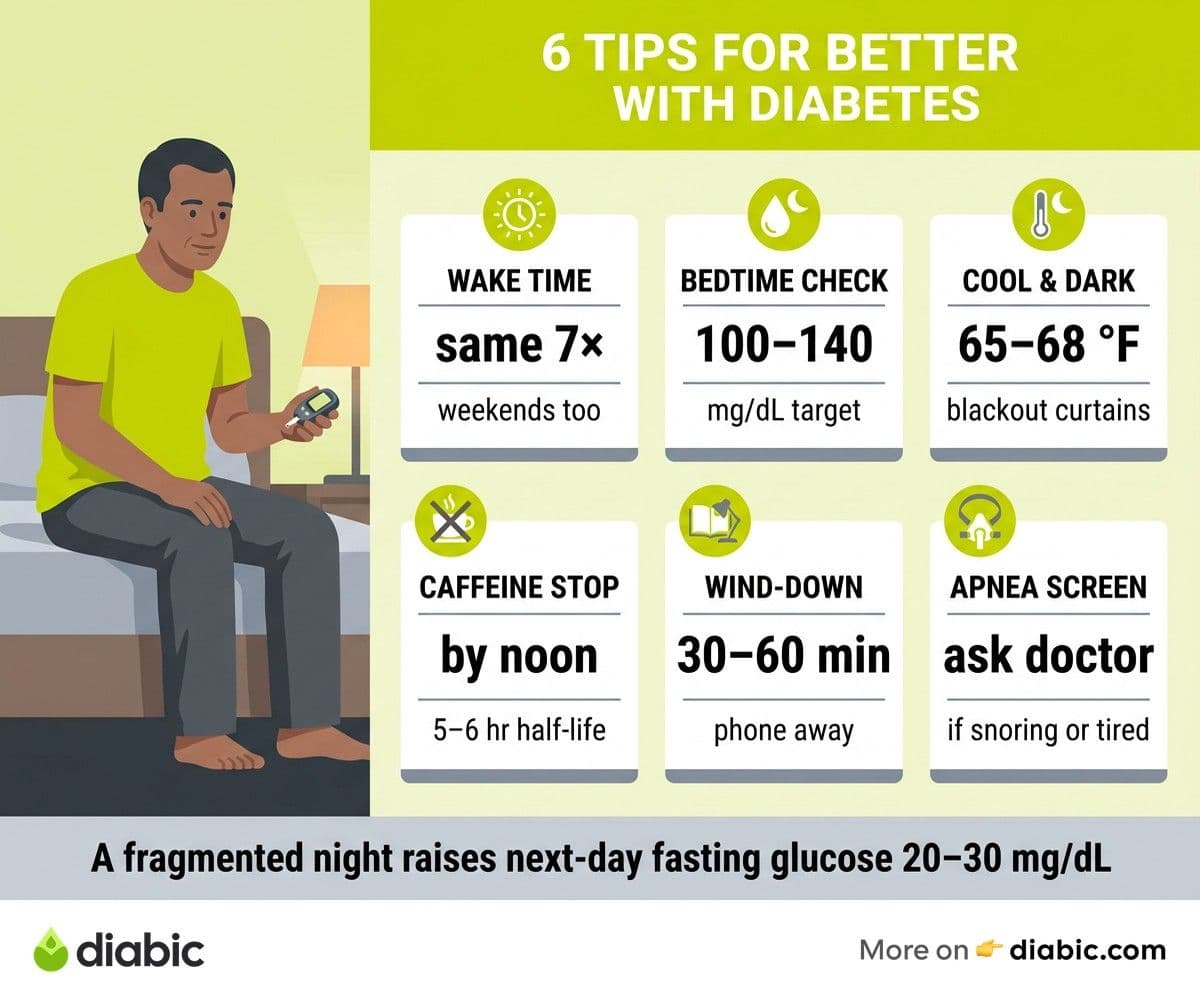
From my experience: The way a 3 a.m. low feels different from a 3 p.m. low is hard to describe until you have lived through it. I learned to set my Dexcom low alert at 80 instead of 70 overnight a few years back, because the extra ten points buys me time to grab juice without fully waking the rest of my brain. The morning after a fragmented night, my fasting number is almost always 20 to 30 points higher than it would be on a clean eight hours, and the pattern is consistent enough that I now treat sleep as part of my insulin plan.
Why Improving Sleep Quality with Diabetes Pays Off
Sleep does a lot of unglamorous maintenance work, including regulating the hormones that govern hunger, stress, and insulin sensitivity. When you sleep less than seven hours, cortisol stays elevated and your cells respond less efficiently to insulin, which the CDC notes can raise both fasting glucose and appetite the next day. Add a night of fragmented sleep on top, and you are essentially starting tomorrow with the deck stacked against you.
The reverse is also true. Glucose swings, especially overnight lows or stubborn highs, pull you out of the deeper sleep stages where the body does most of its repair work. We dig into the mechanics in our piece on the sleep and blood sugar connection, but the practical takeaway is simple. Treating sleep as part of your diabetes plan, not separate from it, tends to move the needle on both.
1. Keep a Consistent Sleep Schedule
The single most underrated habit for improving sleep quality with diabetes is going to bed and waking up at roughly the same time every day, weekends included. Your circadian rhythm runs on repetition, and it is the same internal clock that helps regulate insulin secretion and morning cortisol. When that clock gets jostled by a late Friday or a Sunday sleep-in, your Monday fasting glucose often pays the price.
Even a 30 to 60 minute shift in bedtime can change how your body handles breakfast the next morning. The American Diabetes Association lists sleep as a core lifestyle behavior alongside nutrition and movement, and consistent timing is the part most people skip. Pick a wake-up time you can hit seven days a week, then count backward seven to eight hours to find your bedtime.
If your current schedule is wildly off, do not try to swing it three hours overnight. Shift your bedtime by 15 minutes every two or three days until you land where you want to be. That gradual approach respects how your body actually adapts and avoids the Sunday-night insomnia that comes from forcing a big change.
2. Manage Blood Sugar Before Bed
A bedtime glucose check is one of the highest-uses habits we recommend, because the number you go to bed with often dictates how the next eight hours unfold. If you are running high, you are more likely to wake up to use the bathroom and feel parched. If you are trending low, you risk a nighttime drop that fragments sleep without fully waking you. We cover the warning signs in our guide to blood sugar drops at night.
A few practical guardrails help most people. Try to avoid heavy, high-carb snacks within two hours of bed, and lean on protein-fat combinations like Greek yogurt with nuts or a hard-boiled egg with a few berries when you do need something. These pairings blunt the glucose curve and reduce the odds of a rebound spike or post-snack crash. If you use a continuous glucose monitor, set conservative overnight alerts so you catch a developing low before it pulls you fully awake.
Talk to your doctor about how to handle a bedtime number that is consistently too high or too low. Patterns matter more than single readings, and a small adjustment to dinner timing, evening medication, or basal insulin can change everything. The goal is not a perfect bedtime number every night, only a workable one.
3. Create a Sleep-Friendly Bedroom
Your environment is doing more work than you think. The Sleep Foundation recommends a bedroom temperature around 65 to 68 degrees Fahrenheit, because a slightly cool room helps your core body temperature drop, which is the physiological signal that tells your brain to release melatonin. Add blackout curtains or a sleep mask to block streetlight and early sunrise, and you have removed two of the most common reasons people surface during light sleep stages.
Screens are the other usual suspect. The blue wavelengths from phones and tablets suppress melatonin and keep your brain in alert mode, so we suggest moving the charger out of arm's reach or switching on a warm-tone night filter at least an hour before bed. If a partner watches TV later than you do, an eye mask and soft earplugs solve most of the problem.
For anyone using a CPAP machine, a humidifier, or an insulin pump, set up your nightstand so everything you need is within reach without sitting up. A small lamp with a warm, dim bulb is far better than the overhead light if you have to check something at 2 a.m. The less you stimulate your brain during a midnight wake-up, the faster you fall back asleep.
4. Limit Caffeine and Alcohol After Noon
Caffeine has a half-life of about five to six hours, which means the latte you drink at 3 p.m. still has a meaningful dose circulating at 9 p.m. Even if you fall asleep on schedule, that lingering caffeine reduces the amount of slow-wave sleep your brain gets, leaving you groggy in the morning despite a full night in bed. We generally suggest cutting off caffeine by lunch, then switching to herbal tea, sparkling water, or just plain water for the afternoon.
Alcohol is trickier because it feels like a sleep aid in the first hour, then quietly sabotages the next six. As your body metabolizes it, sleep fragments, REM stages get suppressed, and for people on insulin or sulfonylureas, the risk of an overnight low rises significantly. The liver prioritizes processing alcohol over releasing stored glucose, so a couple of drinks with dinner can quietly set up a 3 a.m. dip.
You do not have to go fully dry to see a difference. Try moving any alcohol earlier in the evening, capping it at one drink, and pairing it with food that includes some protein and slow carbs. Then check your overnight numbers for a week and see what your own data tells you.
5. Build a Wind-Down Routine
Your nervous system needs a runway, not a cliff. A 30 to 60 minute wind-down ritual signals to your brain that the day is closing, and it does not have to be elaborate to work. Dim the lights, put the phone on the charger across the room, and choose two or three low-stimulation activities you actually enjoy, like reading a paperback, light stretching, or a warm shower.
Slow, intentional breathing is one of the most effective and least appreciated tools here. A simple 4-7-8 pattern, where you inhale for four counts, hold for seven, and exhale for eight, downshifts your heart rate and pulls you out of fight-or-flight mode within a few minutes. We share a few more in our post on breathing exercises that are easy to fold into bedtime.
One specific tip for people with diabetes: avoid late-night CGM deep-dives. Scrolling through the day's graph right before bed often spikes anxiety, especially if you see a pattern you did not love. The data will still be there in the morning, when you can review it with a clearer head and actually act on it. Set a soft cutoff time for diabetes data, the same way you would for work email.
6. Address Underlying Sleep Disorders
If you are doing the basics and still waking up exhausted, an undiagnosed sleep disorder may be the missing piece. Obstructive sleep apnea is dramatically more common in people with type 2 diabetes, and it pushes glucose higher through repeated oxygen drops and stress hormone surges overnight. The American Academy of Sleep Medicine recommends screening anyone with persistent daytime sleepiness, loud snoring, witnessed pauses in breathing, or a high BMI, and treatment is usually well tolerated once dialed in. Our deep dive on sleep apnea and diabetes walks through what to ask for.
Restless legs syndrome shows up more often in diabetes too, especially when neuropathy is in the picture. The hallmark is an uncomfortable urge to move your legs in the evening that eases with motion and worsens with rest. It is highly treatable once identified, but it is rarely picked up unless you bring it up directly. Frequent nighttime urination, called nocturia, is another flag. When it traces back to elevated overnight glucose pulling water into the urine, the fix lives in your daytime management plan rather than your bladder.
Bring sleep into your next appointment the same way you would bring a glucose log. A specific description like "I wake up three times a night and my partner says I snore" gives your provider something concrete to work with. Talk to your doctor about whether a sleep study or a referral makes sense for you.
Putting It All Together
You do not need to overhaul everything tonight. Pick the one tip that feels most doable, run it for a week, and watch your morning numbers and your energy. Most people find that consistency on bedtime alone moves the needle within ten days, and stacking a second habit on top compounds the gain. Improving sleep quality with diabetes is a slow build, not a switch you flip, so be patient with the data and willing to adjust when something is not working.
Frequently Asked Questions
How can I improve sleep when I have diabetes?
Start with a consistent bedtime and wake time, check your blood sugar before bed, and create a cool, dark, screen-free room. Add a 30 minute wind-down routine and cut caffeine after lunch. If you still wake unrested, talk to your doctor about screening for sleep apnea.
What sleep habits help with blood sugar management?
Steady sleep timing, seven to eight hours of sleep, and a stable bedtime glucose number are the habits with the clearest payoff. Avoid alcohol close to bed and skip late high-carb snacks that can spike or crash you while you sleep.
How many hours of sleep do people with diabetes need?
The CDC recommends seven or more hours per night for most adults. People with diabetes who consistently sleep less often see higher fasting glucose, more cravings, and reduced insulin sensitivity the following day.
Can poor sleep raise blood sugar even if I eat well?
Yes. A single short or fragmented night raises cortisol and reduces insulin sensitivity, so the same breakfast can produce a higher post-meal reading. This is why sleep belongs in your management plan alongside food and movement.
The honest summary is that improving sleep quality with diabetes is one of the highest-leverage habits you can build, and it rarely needs new gear or a sleep clinic to start. Pick one of the six tips above, hold it for a week, and let the data tell you whether to layer the next one. Bring your bedtime numbers and any snoring or nighttime symptoms to your provider so the medical pieces of the puzzle are not left to guesswork.
Shahriar P. Shuvo is the founder of Diabic. He has lived with diabetes for over 14 years, and built Diabic to deliver the practical, evidence-based self-management tools he wished existed when he was first diagnosed. By trade, Shahriar is a senior design and frontend engineer with 6+ years shipping products at Agora, Timescale (now Tiger Data), and ShareTrip. He writes from the intersection of lived diabetes experience and product craft, focused on what works in daily management rather than what sounds good in a textbook.
Medically reviewed by
Dr. Rezwana Parvin Rumpa is an obstetrics and gynaecology specialist with clinical focus on gestational diabetes, PCOS, and fertility. She holds the MRCOG (Final Part) from the Royal College of Obstetricians and Gynaecologists in London, the MRCPI (Final Part) from the Royal College of Physicians of Ireland, and an MBBS from Shaheed Monsur Ali Medical College under Dhaka University. Dr. Rumpa serves as a Senior Medical Officer in the Obs and Gynae department at BRB Hospitals Ltd, where she has spent three years managing prenatal care, emergency obstetric cases, and women's-health surgery. On Diabic, she medically reviews content for women living with diabetes, with particular attention to pregnancy, PCOS, and reproductive-health intersections.
More from Living with Diabetes
View all
A Gentle Chair Yoga Routine for people with diabetes
A gentle chair yoga for people with diabetes routine with safe poses, modifications for neuropathy, retinopathy, and joint pain, plus tips for older.

Shift Work and Diabetes: Managing Irregular Hours
Shift work and diabetes is a tough combination. Learn how to manage meals, sleep, medication, and blood sugar when your hours rotate or flip overnight.

Dating with Diabetes: When to Tell a New Partner
Dating with diabetes brings unique disclosure questions. Here is when to tell a new partner, what to say, and how to handle the conversation with.
Clinician-reviewed habits, plain-language guides, and honest answers - the small shifts that make living with diabetes feel lighter, every day.