Blood Sugar Drops at Night: Causes and Prevention
Why blood sugar drops at night, the warning signs to watch for, and practical steps to prevent nocturnal hypoglycemia and sleep more safely.

In this article(10)
Waking up drenched in sweat with your heart pounding at 3 AM is one of the most disorienting experiences in diabetes management, and it almost always points to the same culprit. When blood sugar drops at night, your body fires off a stress response that can rattle you awake, soak your sheets, and leave you anxious about closing your eyes again. For people living with insulin-dependent diabetes especially, nocturnal lows are not just unpleasant. They can be genuinely dangerous, and they happen more often than most of us realize.
The good news is that nighttime hypoglycemia is largely preventable once you understand what causes it and which patterns to look for. We want to walk you through the most common reasons your glucose tanks while you sleep, the symptoms that often go unnoticed, and the practical steps that can keep your overnight numbers steady. Whether you wear a pump, take long-acting insulin, or are simply curious why your mornings sometimes feel off, the strategies below come from medical guidance and real-world experience.
From my experience: After 14 years of living with type 1 diabetes, I can tell you that nocturnal lows used to be the thing that scared me most. The first time I slept through one and woke up at 42 mg/dL, shaking and confused, I rebuilt my entire bedtime routine from scratch. CGM alerts changed the game for me, but so did learning to read the small signals my body was sending in the hours before bed.
Why Blood Sugar Drops at Night
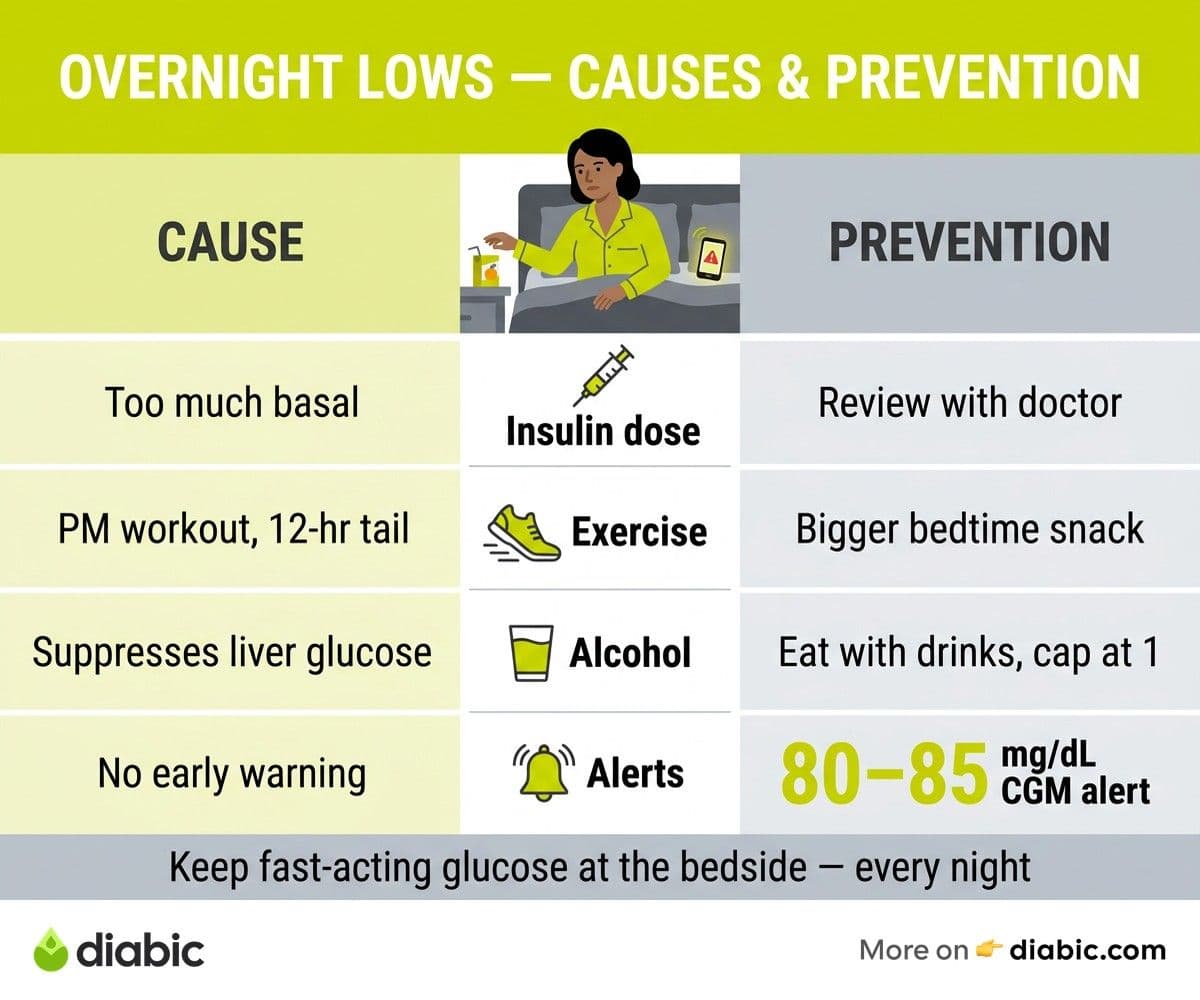
Most cases of nighttime hypoglycemia trace back to a mismatch between how much insulin is on board and how much glucose your liver is releasing while you sleep. Between roughly midnight and 4 AM, your body's insulin sensitivity tends to increase, and your glucose needs are at their lowest because you are not eating or moving. If your basal insulin dose was set during a period when you were more active, ate more carbs at dinner, or weighed slightly more, that same dose can now push you too low overnight. The Endocrine Society notes that overtreatment with insulin remains one of the leading drivers of severe hypoglycemia in adults with diabetes, and the overnight window is where it shows up most often.
Evening exercise is a sneaky contributor that catches many people off guard. When you work out hard in the late afternoon or evening, your muscles continue pulling glucose from your bloodstream to refill glycogen stores for hours afterward, sometimes well past midnight. According to a 2015 study published in Diabetes Care, the risk of overnight hypoglycemia after afternoon aerobic exercise can remain elevated for up to 12 hours. This is why athletes and active adults often need to plan ahead with reduced basal rates, smaller insulin doses at dinner, or a more substantial bedtime snack on workout days.
Alcohol is another major factor that deserves more attention than it usually gets. When you drink, your liver prioritizes metabolizing the alcohol over its usual job of releasing glucose into your bloodstream. That means even a couple of drinks with dinner can suppress your liver's overnight glucose production for six to eight hours, leaving you vulnerable to a slow drift downward while you sleep. Skipping or undereating at dinner amplifies the same problem, because there is less food in your system to buffer against your basal insulin's action. Knowing when blood sugar is dangerous and how alcohol shifts that risk is essential context for anyone who drinks socially.
There is also a counterintuitive twist worth understanding. Many people assume the dawn phenomenon, where hormones push glucose up in the early morning, protects them from overnight lows. In reality, your numbers can drop significantly in the middle of the night and then rebound by morning, masking the dip entirely. This pattern matters even more in hypoglycemia risk in older adults, where sleep architecture changes and longer insulin half-lives can worsen the picture.
Symptoms of Nighttime Low Blood Sugar
The tricky thing about nocturnal hypoglycemia is that you can sleep through most of it. Your body still mounts a defense, but the signals get muffled by sleep itself, which is why so many people only notice the aftermath rather than the event. Night sweats are one of the most common warning signs. If you regularly wake up with a damp pillow or soaked sheets and you have ruled out other causes, your overnight glucose pattern deserves a closer look. Vivid nightmares, restless tossing, and a racing heart upon waking are also frequent flags, all driven by the adrenaline your body releases to push glucose back up.
Morning symptoms tell a story too. Waking with a dull headache, brain fog, or a feeling that you slept poorly despite a full night in bed often points to a low you did not consciously register. Some people wake with elevated blood sugar and assume they need more insulin, when the actual cause is rebound hyperglycemia after an unnoticed dip. This pattern is sometimes called the Somogyi effect, and confusing it with the dawn phenomenon can lead to medication adjustments that make things worse rather than better. We dig into the differences in our breakdown of dawn phenomenon vs Somogyi, and understanding which one you are dealing with changes the treatment entirely.
The most concerning scenario is nocturnal hypoglycemia unawareness, where the body's normal warning signals fail to trigger or are too weak to wake you. Research published in the Journal of Clinical Endocrinology and Metabolism has shown that repeated lows blunt the body's counterregulatory hormone response over time, making future lows even harder to detect. If you have had multiple unexplained morning highs, partner reports of unusual sleep behavior, or any episode where you needed help recovering from a low, this is a conversation worth having with your provider promptly. The sleep and blood sugar connection runs in both directions, and unmanaged nocturnal lows can fragment your sleep architecture for days afterward.
How to Prevent Overnight Lows
Prevention starts with food, and specifically with what you eat in the last few hours before bed. A balanced bedtime snack that combines a slow-release carbohydrate with protein and a small amount of fat gives your body a steady glucose source through the early sleep hours. Think a slice of whole grain toast with peanut butter, plain Greek yogurt with berries and a few almonds, or a small bowl of cottage cheese with sliced apple. The American Diabetes Association recommends individualizing bedtime snack strategies based on your blood sugar trends, your insulin regimen, and how much you ate at dinner, rather than following a one-size-fits-all rule. You can read more about ADA guidance at diabetes.org.
Checking your blood sugar at bedtime is non-negotiable on any night when something is different from your norm. If you exercised in the evening, drank alcohol, ate less than usual, or took a correction dose within a few hours of bed, a quick fingerstick or CGM check before sleep is your safety net. Many providers recommend treating any bedtime reading below a personal threshold, often around 100 to 120 mg/dL, with a small snack to provide a buffer. The NIDDK's overview of low blood glucose management is a helpful starting point if you are building this habit from scratch.
If you experience overnight lows more than once a week, that is a pattern worth bringing to your care team. Talk to your doctor about whether your basal insulin dose, long-acting insulin timing, or evening rapid-acting doses need adjustment. Pump users may benefit from temporary basal rate reductions on heavy exercise days, while people on long-acting insulin might need to shift their injection time or split the dose. These are decisions to make with your provider, not on your own, because the right adjustment depends on the full picture of your glucose trends, lifestyle, and other medications.
A few practical habits also reduce your risk significantly:
- Keep fast-acting glucose, such as juice boxes or glucose tabs, on your bedside table within easy reach
- Avoid stacking correction doses within three to four hours of bedtime when possible
- Track your evening exercise, alcohol intake, and dinner timing alongside your overnight glucose data so patterns become visible
- Build in a routine bedtime CGM check, even on nights that feel uneventful
Using Technology to Stay Safe Overnight
Continuous glucose monitors have genuinely transformed overnight safety for many of us, and the alert features are where they earn their place at the bedside. Setting a low-glucose alarm somewhere between 75 and 85 mg/dL gives you a chance to treat a downward trend before it becomes a full hypoglycemic event. Predictive alerts, available on devices like the Dexcom G7 and the Freestyle Libre 3, can warn you up to 20 minutes before you actually drop below your threshold, giving you precious time to grab a snack without fully waking up. The Sleep Foundation has documented how chronic sleep disruption from nocturnal lows compounds other diabetes-related health risks, which makes investing in alert technology worthwhile.
Automated insulin delivery systems take this a step further by actively responding to your glucose trends in real time. Hybrid closed-loop systems such as the Medtronic 780G, the Tandem t:slim X2 with Control-IQ, and the Omnipod 5 can suspend or reduce basal insulin delivery when your sensor detects a downward trend overnight. A 2022 review in Diabetes Technology and Therapeutics found that these systems significantly reduce time spent in hypoglycemia overnight compared to standard pump therapy or multiple daily injections. They are not a magic fix, and they still require thoughtful settings and bedtime management, but the overnight protection is meaningful for people who qualify.
Sharing your CGM data with a partner, parent, or trusted family member adds another layer of safety, especially if you live alone or have a history of severe lows. Most CGM apps allow remote followers to receive low-glucose alerts on their own phones, so someone else can check on you if you are not responding. For families managing pediatric diabetes or for adults with hypoglycemia unawareness, this feature has been life-saving. The American Academy of Sleep Medicine resources at aasm.org also emphasize that protecting sleep continuity matters for overall metabolic health, which is one more reason to take overnight glucose stability seriously.
A few additional tools round out a solid overnight safety setup. Smart insulin pens, such as the InPen, log every dose and can help prevent accidental double-dosing, which is a surprisingly common cause of severe nocturnal lows. Keeping a backup glucose meter and lancing device on your nightstand means you do not have to stumble to the bathroom to confirm a reading. And if you have a glucagon emergency kit, particularly one of the newer ready-to-use options like Baqsimi or Gvoke, make sure your partner or housemate knows where it is and how to use it.
Your Overnight Action Plan
Putting all of this together, here is a practical sequence for any night when you want extra peace of mind. Check your blood sugar between 30 and 60 minutes before bed, regardless of how you feel, and treat anything below your personal safety threshold with a small balanced snack. Set your CGM low alert to a level that gives you reaction time, typically 80 to 85 mg/dL, and confirm your phone volume is loud enough to wake you. Place fast-acting carbs and your meter within arm's reach, ideally on the same side of the bed where you sleep.
If you exercised in the evening, drank alcohol, or skipped dinner, treat the night as higher risk. Consider a slightly larger bedtime snack, a temporary basal reduction if you use a pump, and an extra middle-of-the-night CGM check if you happen to wake up. Keep a simple log of the nights when lows happen, including what you ate, when you exercised, and any medication changes, because patterns often only become visible after two or three weeks of data. Bring that log to your next appointment so your provider can help you fine-tune your regimen with real evidence rather than guesswork.
Frequently Asked Questions
Why does blood sugar drop at night?
Blood sugar drops at night for several common reasons. The most frequent is too much basal or long-acting insulin relative to your overnight glucose needs, often because your body becomes more insulin-sensitive in the early morning hours. Other major contributors include evening exercise that depletes glycogen stores hours later, alcohol consumption that suppresses the liver's glucose production, and inadequate carbohydrate intake at dinner or bedtime. If overnight lows happen more than once a week, talk to your doctor about reviewing your insulin regimen.
How do I prevent nighttime low blood sugar?
You can prevent most nighttime low blood sugar episodes by combining a few habits. Eat a balanced bedtime snack with slow-release carbs, protein, and a little fat when your bedtime number is below your safety threshold. Set CGM low alerts to give you reaction time, share your data with a trusted person, and keep fast-acting glucose at your bedside. If you exercised, drank alcohol, or undereat at dinner, treat the night as higher risk and add an extra check before sleep. For recurring lows, your provider may need to adjust your insulin doses or timing.
What should my bedtime blood sugar be?
There is no single target that works for everyone, but many providers suggest aiming for a bedtime blood sugar between 100 and 140 mg/dL for adults on insulin therapy. Anything lower than your personal safety threshold usually warrants a small snack to prevent an overnight drop. Your individual target may be different based on your age, your insulin regimen, your hypoglycemia history, and your overall treatment goals, so this is a number to set with your care team.
Can a CGM alone prevent nocturnal hypoglycemia?
A CGM dramatically reduces your risk of severe nocturnal hypoglycemia, but it works best as part of a broader strategy. Alerts only help if you wake up to them, your phone is loud enough, and you treat the trend before it becomes severe. Pairing your CGM with thoughtful bedtime habits, periodic insulin dose reviews with your provider, and sharing data with a partner gives you the strongest overall protection.
The reason we keep coming back to bedtime habits is simple. When blood sugar drops at night, the consequences are felt the next day in fatigue, brain fog, and shakier numbers, and the loop quietly compounds if it goes unaddressed. Build the routine you would want a friend with diabetes to build, give the data a few weeks to show you patterns, and bring that information to your provider so the dose conversations are grounded in evidence rather than guesswork.
Shahriar P. Shuvo is the founder of Diabic. He has lived with diabetes for over 14 years, and built Diabic to deliver the practical, evidence-based self-management tools he wished existed when he was first diagnosed. By trade, Shahriar is a senior design and frontend engineer with 6+ years shipping products at Agora, Timescale (now Tiger Data), and ShareTrip. He writes from the intersection of lived diabetes experience and product craft, focused on what works in daily management rather than what sounds good in a textbook.
Medically reviewed by
Dr. Shanto Arian is an internal medicine physician now specializing in clinical and aesthetic dermatology, with a parallel academic focus on epidemiology and public health. He holds an MBBS, MPH, MSc (UK), MRCP (UK), MRCPI (Ireland), Diploma in Dermatology (UK), and Diploma in Aesthetic Medicine (USA). Dr. Arian trained in internal medicine, including hospital work on hematology cases such as graft-versus-host disease, before moving toward dermatology. Skin is one of the earliest places diabetes shows itself, from acanthosis nigricans and diabetic dermopathy to slow foot wound healing, and that intersection is where his clinical and Diabic-review work meet. On Diabic, Dr. Arian medically reviews content on diabetes diagnosis, complications, dermatologic manifestations, and pharmacotherapy, ensuring every claim aligns with current ADA, NICE, and peer-reviewed literature.
More from Living with Diabetes
View all
A Gentle Chair Yoga Routine for people with diabetes
A gentle chair yoga for people with diabetes routine with safe poses, modifications for neuropathy, retinopathy, and joint pain, plus tips for older.

Shift Work and Diabetes: Managing Irregular Hours
Shift work and diabetes is a tough combination. Learn how to manage meals, sleep, medication, and blood sugar when your hours rotate or flip overnight.

Dating with Diabetes: When to Tell a New Partner
Dating with diabetes brings unique disclosure questions. Here is when to tell a new partner, what to say, and how to handle the conversation with.
Clinician-reviewed habits, plain-language guides, and honest answers - the small shifts that make living with diabetes feel lighter, every day.