Diabetes and Dementia Connection: Reducing Your Risk
Explore the diabetes and dementia connection and learn evidence-based steps to protect brain health while managing blood sugar at any age.

In this article(13)
The diabetes and dementia connection is one that catches many people off guard, yet decades of research now show that adults with type 2 diabetes carry a meaningfully higher risk of cognitive decline than those without it. That sentence can feel heavy, so we want to balance it with the part that often gets lost. The same factors that raise the risk are largely the ones you and your care team already work on, which means brain protection and good diabetes care overlap more than they diverge.
This article walks through what researchers know about how diabetes affects the brain, why aging compounds those effects, and which daily choices show up most often in the prevention literature. We will keep the tone honest without leaning into fear, because shame and panic are not useful tools for changing behavior. If you are reading this for yourself, a parent, or a partner, the throughline is the same. Brain health is built across years, and small moves add up.
The Diabetes and Dementia Connection: What Research Tells Us
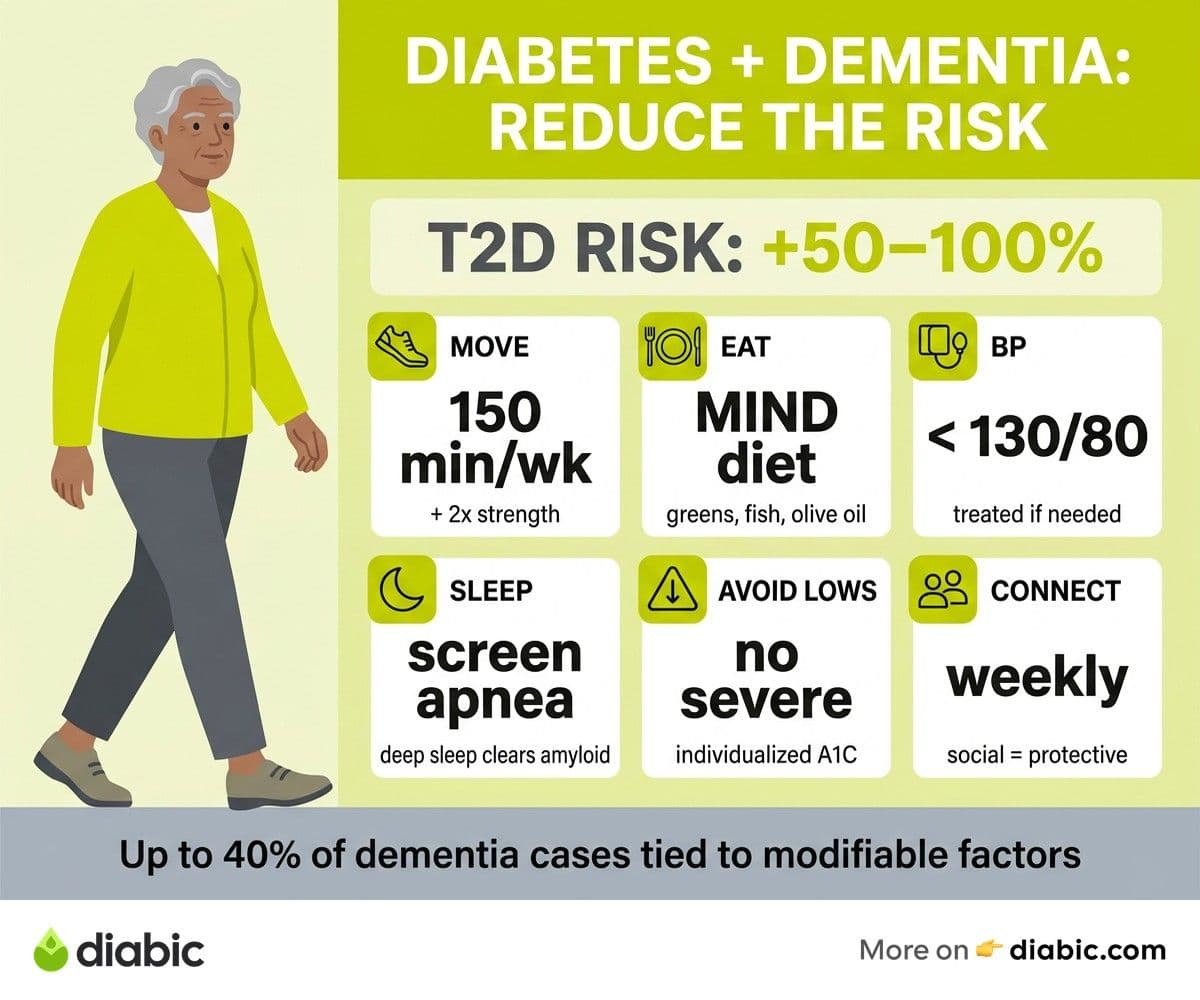
The diabetes and dementia connection has been studied extensively, and the pattern is consistent. People with type 2 diabetes face roughly a 50 to 100% greater risk of developing dementia compared to people without diabetes, according to data summarized by the Alzheimer's Association. The risk applies to both Alzheimer's disease and vascular dementia, through somewhat different mechanisms.
Chronic high blood sugar appears to damage the small blood vessels in the brain in much the same way it damages vessels in the eyes and kidneys. When tiny vessels stiffen or leak, brain regions get less oxygen and clear waste less efficiently. Over years, that creates a pattern called cerebral small vessel disease, one of the strongest predictors of vascular cognitive impairment. Brain MRIs of older adults with longstanding diabetes often show more white matter changes than age-matched peers without diabetes.
Insulin resistance plays a second, separate role. Brain cells use insulin signaling for memory, learning, and the clearance of beta-amyloid, the protein that accumulates in Alzheimer's disease. When the body becomes insulin resistant, the brain often does too, which is why some researchers refer to Alzheimer's as "type 3 diabetes" in the literature. The label is a hypothesis rather than a formal diagnosis, but it captures something real about how the two diseases share machinery.
Type 1 Versus Type 2 in the Research
Most of the strongest data on this link comes from type 2 diabetes, simply because there are far more people with type 2 to study. Type 1 diabetes appears to carry an elevated dementia risk as well, particularly when severe hypoglycemia and longstanding hyperglycemia have both been part of the picture. The mechanisms overlap with type 2, but the absolute risk numbers are less established.
Why Diabetes in Seniors Raises Cognitive Risk
Diabetes in seniors interacts with aging in ways that amplify each individual factor. The brain at 75 is more sensitive to oxygen disruptions, inflammation, and metabolic stress than the brain at 45, so the same blood sugar pattern can have different consequences at different ages.
Long-term glucose variability appears to matter as much as the average. Sharp swings between highs and lows, repeated over years, seem to drive vascular and inflammatory damage even when the A1C looks acceptable. The Lancet Commission on dementia prevention identifies diabetes as a modifiable risk factor for dementia, alongside hypertension, hearing loss, physical inactivity, smoking, and depression. Many of those factors travel together in older adults, which is part of why diabetes care focused only on blood sugar tends to underdeliver on brain protection.
Inflammation is the connective tissue between several of these mechanisms. Chronic low-grade inflammation, which is more common in type 2 diabetes, contributes to vascular damage, insulin resistance, and the buildup of brain proteins linked to cognitive decline. Lifestyle factors that lower inflammation, such as regular activity, sleep, and Mediterranean-style eating, tend to show benefits across all of these pathways at once.
Hypoglycemia adds its own risk in older adults. Repeated severe lows have been associated with higher dementia risk, possibly because the brain runs on glucose and tolerates shortages poorly. This is one reason the ADA now recommends gentler A1C targets for many older adults. If you are weighing the broader challenges of managing diabetes after 65, the cognitive piece deserves a seat at that table.
Aging with Diabetes: Challenges That Affect Brain Health
Aging with diabetes brings challenges that quietly chip away at brain health, separate from the disease itself. Naming them helps, because some are addressable in ways the underlying biology is not.
Medication side effects sometimes mimic cognitive decline so closely that they get mistaken for dementia. Certain sleep medications, anticholinergics, and some pain medications can cause memory issues, slowed thinking, and confusion in older adults. A medication review with a pharmacist or geriatrician can sort out what is the medication and what is something else, and that distinction changes the path forward.
Social isolation and depression are independent dementia risk factors that hit older adults with diabetes harder than average. The daily work of managing diabetes can pull people inward, especially after a partner dies or mobility shrinks. If sleep, appetite, energy, or mood have shifted in a sustained way, that conversation with your provider is worth having. Treating depression appears to improve diabetes self-care and cognitive function in parallel.
Reduced physical activity compounds the risk on multiple fronts. Movement supports glucose handling, vascular health, mood, sleep, and brain plasticity. Even modest activity, like walking after meals or seated strength work, shows benefits in older adults. Nutritional gaps matter too, since older adults are commonly low in vitamin B12, vitamin D, and protein. Metformin can lower B12 over time, so periodic checks are reasonable to discuss with your provider.
From my experience: I have lived with type 1 diabetes for 14 years, and the dementia research changed how I think about my own care. For years I treated tight glucose as the only goal that mattered. Reading the cognitive literature reframed the question. The aim is not the lowest possible A1C, it is the most stable glucose pattern over the longest possible time, with sleep, movement, and connection alongside it. That shift made my daily decisions less anxious and my numbers a little better.
Practical Steps to Lower Your Dementia Risk
The most encouraging part of the diabetes and dementia research is how much of it is modifiable. The Lancet Commission estimates that addressing modifiable risk factors could prevent or delay around 40% of dementia cases globally. The steps that protect brain health overlap heavily with the steps that protect heart and kidney health.
Blood sugar targets matter, but the right target depends on who you are. The ADA Standards of Care recommend individualized A1C targets for older adults that range from under 7.0% in healthy adults with long life expectancy to 8.0% or 8.5% in those with multiple comorbidities. Aiming for the gentlest target that still protects you from symptoms and complications generally serves the brain better than chasing the tightest number, particularly if hypoglycemia is part of the picture.
Exercise carries some of the strongest evidence in the dementia prevention literature. The combination most consistently linked to cognitive benefit is moderate aerobic activity, around 150 minutes a week, plus resistance training two days a week. That can look like brisk walking, swimming, cycling, or a community fitness class, paired with light strength work using bands or bodyweight. Starting small and building consistency beats starting big and stopping.
Eating for Brain Health
The Mediterranean and MIND diets have the most research behind them for cognitive protection. Both emphasize vegetables, fruit, whole grains, legumes, fish, olive oil, and nuts, while limiting red meat, processed foods, and added sugars. Adding leafy greens to one meal a day, swapping butter for olive oil, and eating fish twice a week is a reasonable starting place.
Sleep and Social Connection
Sleep quality has a quieter but real role in brain health. Deep sleep is when the brain clears metabolic waste, including beta-amyloid, and chronic poor sleep is associated with higher dementia risk. If you snore loudly, wake unrefreshed, or have been told you stop breathing in your sleep, ask your provider about a sleep apnea evaluation. Social connection is the prevention factor most often left out of clinical conversations, even though the data is strong. A caregiver's guide to diabetes care for aging parents can help families build that connection more intentionally.
Building a Simplified Diabetes Management Plan for Brain Health
A simpler diabetes routine is itself a form of cognitive protection. Complex regimens use real mental resources, and as those resources get more precious, simplification pays compounding returns.
Start by naming your highest-priority targets with your care team. For brain health, the short list usually includes a stable A1C in your individualized range, blood pressure under 130/80 in most cases, treated cholesterol if recommended, and as little hypoglycemia as possible. Anything that does not directly serve those targets is worth questioning, and our guide to simplified diabetes routines for seniors covers the practical setup.
Monitoring tools have become much friendlier for older adults. Continuous glucose monitors reduce the need for fingersticks and surface patterns earlier than spot checks ever could. Smartphone-paired blood pressure cuffs, medication reminder apps, and weekly pill organizers all reduce the moment-to-moment cognitive demand of self-care. The National Institute on Aging maintains a useful library of resources on cognitive health and diabetes.
When to Talk About Cognitive Concerns
If you or a family member have noticed changes in memory, problem-solving, or word-finding that go beyond the occasional missed name, raise it with your primary care provider. Earlier conversations open up earlier interventions, including medication reviews, hearing checks, depression screening, and cognitive assessments. Many things that look like dementia, including low B12, depression, sleep apnea, and medication side effects, are treatable, and the earlier you sort them, the better the trajectory for everyone.
Frequently Asked Questions
Does diabetes increase the risk of dementia?
Research consistently shows that adults with type 2 diabetes face about a 50 to 100% greater risk of developing dementia compared to adults without diabetes. The risk applies to both Alzheimer's disease and vascular dementia, with chronic high blood sugar, insulin resistance, vascular damage, and repeated severe hypoglycemia all contributing. Type 1 diabetes also appears to raise risk, particularly with longstanding glucose extremes.
How can you reduce dementia risk if you have diabetes?
Steady glucose management within your individualized range, regular physical activity that combines aerobic and strength work, a Mediterranean or MIND-style eating pattern, quality sleep, treated blood pressure and cholesterol, and active social connection all show research support. Avoiding repeated severe hypoglycemia matters specifically for older adults. Talk to your healthcare provider about setting personalized targets that prioritize stability and safety rather than the tightest possible numbers.
Can managing blood sugar prevent dementia?
Managing blood sugar well lowers risk but does not eliminate it, because dementia has multiple contributing factors that operate alongside diabetes. The most protective approach combines stable glucose, blood pressure control, physical activity, brain-healthy eating, sleep, and social engagement. Think of diabetes management as one essential layer of a larger brain-protection strategy rather than the whole answer.
The diabetes and dementia connection is real, and so is the protective power of the daily choices you already make around food, movement, sleep, and connection. Pick one area where you have room to grow this month, talk to your doctor about what stable glucose looks like for your situation, and consider bringing a family member into planning if that would help. Small consistent changes carry farther than dramatic short-term ones, and your future brain will feel the difference.
Shahriar P. Shuvo is the founder of Diabic. He has lived with diabetes for over 14 years, and built Diabic to deliver the practical, evidence-based self-management tools he wished existed when he was first diagnosed. By trade, Shahriar is a senior design and frontend engineer with 6+ years shipping products at Agora, Timescale (now Tiger Data), and ShareTrip. He writes from the intersection of lived diabetes experience and product craft, focused on what works in daily management rather than what sounds good in a textbook.
Medically reviewed by
Dr. Shanto Arian is an internal medicine physician now specializing in clinical and aesthetic dermatology, with a parallel academic focus on epidemiology and public health. He holds an MBBS, MPH, MSc (UK), MRCP (UK), MRCPI (Ireland), Diploma in Dermatology (UK), and Diploma in Aesthetic Medicine (USA). Dr. Arian trained in internal medicine, including hospital work on hematology cases such as graft-versus-host disease, before moving toward dermatology. Skin is one of the earliest places diabetes shows itself, from acanthosis nigricans and diabetic dermopathy to slow foot wound healing, and that intersection is where his clinical and Diabic-review work meet. On Diabic, Dr. Arian medically reviews content on diabetes diagnosis, complications, dermatologic manifestations, and pharmacotherapy, ensuring every claim aligns with current ADA, NICE, and peer-reviewed literature.
More from Living with Diabetes
View all
A Gentle Chair Yoga Routine for people with diabetes
A gentle chair yoga for people with diabetes routine with safe poses, modifications for neuropathy, retinopathy, and joint pain, plus tips for older.

Shift Work and Diabetes: Managing Irregular Hours
Shift work and diabetes is a tough combination. Learn how to manage meals, sleep, medication, and blood sugar when your hours rotate or flip overnight.

Dating with Diabetes: When to Tell a New Partner
Dating with diabetes brings unique disclosure questions. Here is when to tell a new partner, what to say, and how to handle the conversation with.
Clinician-reviewed habits, plain-language guides, and honest answers - the small shifts that make living with diabetes feel lighter, every day.