Diabetes Care for Aging Parents: A Caregiver's Guide
A practical guide to diabetes care for aging parents, covering medication management, daily routines, hypoglycemia signs, and caregiver burnout prevention.

In this article(14)
Providing diabetes care for aging parents brings a unique set of challenges that most caregivers never anticipated. Between medication schedules, meal planning, and doctor visits, the responsibility can feel heavy, especially when your parent's needs shift from one month to the next. You may also be balancing your own job, family, and health while trying to keep their numbers steady.
The good news is that thoughtful, simplified routines can make a real difference. Diabetes management for older adults is not about chasing perfect blood sugar values, it is about safety, dignity, and quality of life. Once you understand how their needs are different from a younger person's, the path forward becomes much clearer.
This guide walks through what changes with age, how to organize medications safely, how to build a daily rhythm that does not exhaust either of you, and how to protect your own wellbeing as a caregiver. We will keep things practical, because that is what tends to work in real homes with real schedules.
Understanding Diabetes Care for Aging Parents
Diabetes care for aging parents is different from managing diabetes in midlife, and pretending otherwise can lead to overtreatment, missed risks, or unnecessary stress. As people move into their seventies and eighties, kidneys process medications more slowly, appetites shrink, sleep patterns shift, and other conditions like arthritis or heart disease often share the stage. All of these factors influence how blood sugar behaves and how aggressively it should be managed.
Many caregivers start out trying to apply the same rules their parent followed at fifty. That can backfire. Tight glucose targets that made sense decades ago may now produce dangerous lows, and a complicated medication list that worked when memory was sharp may now cause confusion or missed doses. The National Institute on Aging notes that diabetes care plans should evolve as a person ages, with safety taking priority over strict numerical targets.
It also helps to recognize that your parent is still the lead character in their own care. The aim is to support, not to take over. Even small daily decisions, like choosing what to eat for breakfast or when to walk, can preserve a sense of independence that matters far more to long-term wellbeing than any single lab value.
When a Parent Needs More Help
Recognizing the moment your parent needs more hands-on diabetes support is rarely a single event. It usually shows up in patterns. You might notice expired insulin in the fridge, missed appointments piling up, glucose meter readings that no longer get logged, or new bruises that suggest unsteady balance during low blood sugar episodes.
Other signs include unexplained weight loss, new confusion after meals, frequent urinary tract infections, or wounds on the feet that take longer than expected to heal. Any of these is worth a phone call to their primary care provider. They are not failures, they are signals, and acting early on signals is one of the best things a caregiver can do.
Setting realistic expectations protects both of you. Your parent may not return to the version of themselves they were at sixty, and that is not the goal. The goal is steady days, fewer emergencies, and a routine that keeps them safe at home for as long as possible.
Managing Diabetes in Seniors: What Caregivers Need to Know
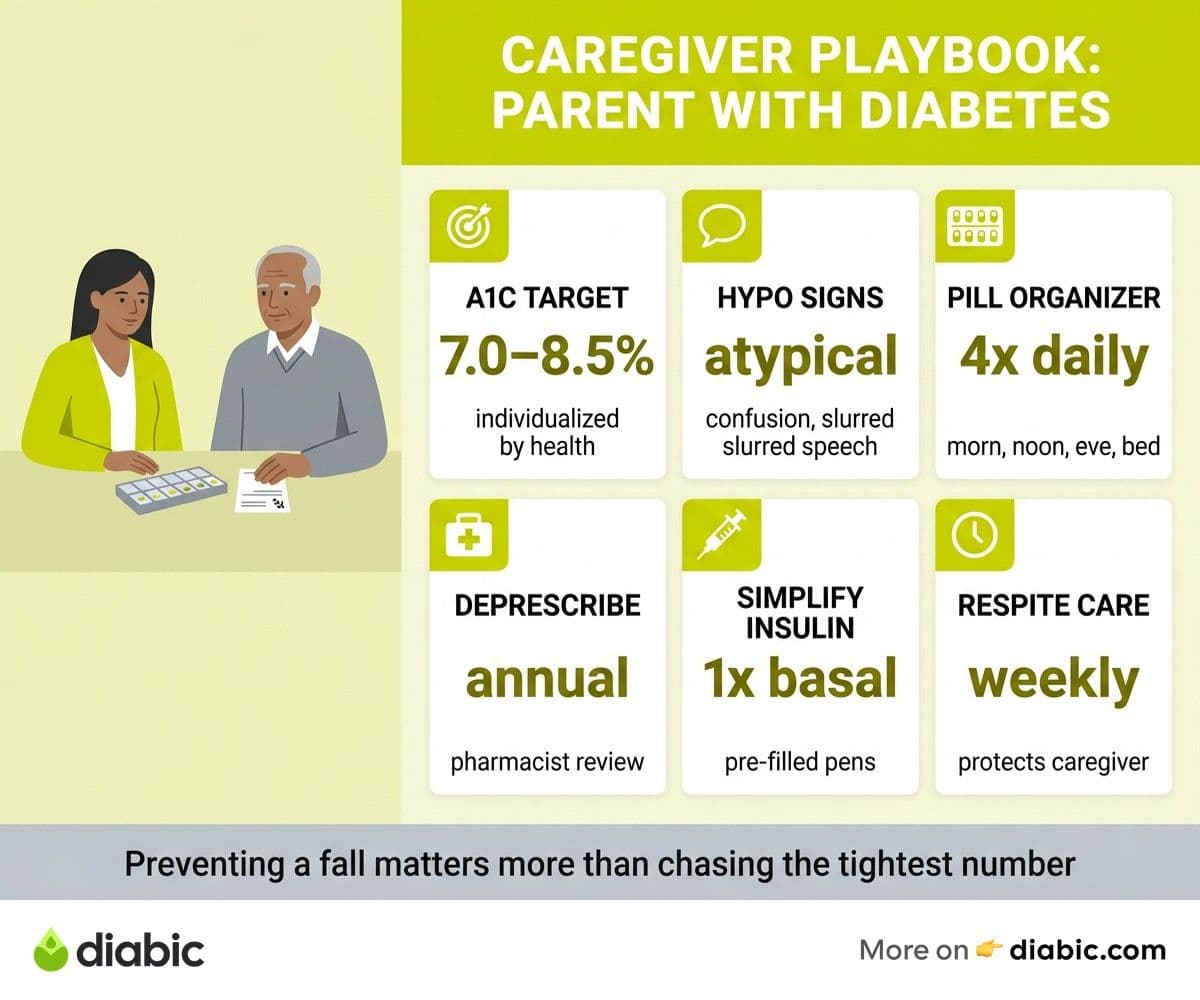
Managing diabetes in seniors involves a meaningful shift in targets and priorities. The American Diabetes Association Standards of Care recommends individualized glycemic goals based on overall health, rather than one universal A1C target for everyone. For a relatively healthy older adult, an A1C around 7.0 to 7.5% may be appropriate. For someone with multiple chronic conditions or frailty, an A1C closer to 8.0 to 8.5% is often safer because it reduces the risk of hypoglycemia.
These higher targets can feel counterintuitive at first. Caregivers sometimes worry that loosening the numbers means giving up. In older adults, the most immediate threat is usually not slightly elevated glucose, it is a serious low that causes a fall, a hospitalization, or a long recovery. The goal is the right target for this specific person, in this specific season of life.
Other health conditions also change the picture. Kidney function tends to decline with age, which affects how some diabetes medications clear the body. Heart disease, dementia, vision loss, and arthritis each add their own considerations, and discussing reducing dementia risk with diabetes with the care team can be especially valuable, because cognitive changes shape every other part of the management plan.
Recognizing Highs and Lows
Hypoglycemia in older adults often looks different than the textbook description. Instead of obvious shakiness or sweating, you may see confusion, slurred speech, sudden tiredness, irritability, or a vacant expression. Some seniors lose the early warning symptoms entirely, a condition called hypoglycemia unawareness, which makes caregiver observation even more important.
High blood sugar in seniors can also be subtle. Watch for increased thirst, frequent nighttime bathroom trips, unexplained fatigue, or a slow-healing scrape. Persistent highs can lead to dehydration, which in older adults can quickly turn into a medical emergency. Keeping a small notebook or simple app log of patterns helps you spot trouble before it becomes a crisis.
If your parent uses a continuous glucose monitor or a fingerstick meter, learn what their target range is and what numbers should trigger a call to the doctor. Many providers welcome a quick photo of the past 48 hours of readings, which can save an unnecessary office visit and speed up real solutions.
Medication Management for Elderly Parents with Diabetes
Medication management is where many caregivers feel the most pressure, and where small systems make the biggest difference. Older adults with diabetes often take multiple prescriptions for blood sugar, blood pressure, cholesterol, and other conditions, and the chance of mix-ups grows with every additional pill. The first step is a complete, current list of every medication, including over-the-counter products and supplements.
Bring this list to every appointment. Ask the prescribing doctor or a pharmacist to review it at least once a year and look for opportunities to reduce or simplify. This process, called deprescribing, is increasingly recognized as part of good geriatric care. The goal is not fewer medications for its own sake, it is the right medications at the right doses for who your parent is today, not who they were ten years ago. Our piece on simplifying medications for older adults goes deeper on the questions worth asking.
Tools that help include weekly pill organizers with morning, noon, evening, and bedtime compartments, automated dispensers that lock until the next dose is due, and smartphone reminders that ping at the same time every day. For parents with memory challenges, a locked dispenser can prevent accidental double doses, which are one of the most dangerous medication errors in seniors with diabetes.
Safer Insulin and Pharmacy Habits
If your parent uses insulin, talk with their endocrinologist about whether a simpler regimen is appropriate. A long-acting basal insulin once a day, with mealtime insulin only when truly needed, is often safer than a complex multi-injection schedule for someone who is forgetful or eats unpredictably. Pre-filled pens are usually easier to handle than vials and syringes, especially when arthritis is involved.
Build a relationship with one pharmacy and use it for every prescription. A pharmacist who sees the full picture can flag dangerous interactions, such as certain antibiotics that amplify hypoglycemia risk or new prescriptions that double up on the same active ingredient. Most chain pharmacies offer free medication therapy management consultations, and they are well worth scheduling once a year.
When a new medication is added, ask three questions before leaving the office. What is this for, what side effects should we watch for in the first two weeks, and is there a less complicated alternative. Writing the answers down is not overcautious, it is exactly what good caregiving looks like.
Simplified Daily Diabetes Routines for Seniors
A predictable daily rhythm is one of the most powerful tools you have. Older adults with diabetes do best when meals, medications, and activity happen at roughly the same times each day, because routine reduces both blood sugar swings and the cognitive load of remembering what comes next. The aim is a schedule simple enough that a tired caregiver, a visiting family member, or a home health aide can follow it without confusion.
Start by anchoring three meals at consistent times, even if portions are small. Skipping meals while taking certain diabetes medications, particularly insulin or sulfonylureas, is a common cause of dangerous lows in seniors. If appetite is limited, smaller, more frequent meals often work better than three large ones, and a registered dietitian familiar with older adults can help shape a plan that actually fits how your parent eats. We cover more simplified diabetes management approaches for seniors in a companion guide.
Meal prep can dramatically reduce daily stress. Batch-cooking soups, stews, and casseroles on the weekend, then portioning them into single-serving containers, takes the daily decision out of dinner. Keeping a few easy backup options on hand, such as Greek yogurt, hard-boiled eggs, cheese, whole-grain crackers, and frozen vegetables, means a missed meal does not have to be a crisis.
Movement and Monitoring at a Senior Pace
Physical activity does not have to mean exercise classes. For many older adults, gentle daily movement is more sustainable and just as helpful for blood sugar. A short walk after lunch, ten minutes of seated chair exercises, light gardening, or simply standing up during commercial breaks can all add up. The key is consistency, not intensity, and any movement that does not cause pain or breathlessness is a win.
Monitoring should match the person's reality. A parent who tests four times a day with shaky hands and growing frustration is not getting better care than one who tests once a day reliably. For some seniors, a continuous glucose monitor removes the burden of fingersticks and gives caregivers a clearer picture between visits. For others, a single morning fasting reading and an occasional after-dinner check is plenty.
Technology can support without taking over. Smart pill bottles, glucose meters that share readings with a family member's phone, and simple medical alert systems all reduce the mental load on you and the risk for your parent. Choose one or two tools, learn them well, and skip the rest.
From my experience: I have lived with type 1 diabetes for 14 years, and when my own grandmother was diagnosed with type 2 in her late seventies, I assumed I would slot into the caregiver role naturally. What surprised me was how different her care needed to be from mine. Her endocrinologist actually raised her A1C target, simplified her medication list, and told us flat out that preventing a fall mattered more than chasing tight numbers. That conversation reframed everything for our family.
Caregiver Self-Care: Avoiding Burnout
Caring for an aging parent with diabetes is meaningful work, and it is also one of the most demanding roles you may ever take on. The Family Caregiver Alliance reports that family caregivers face higher rates of depression, anxiety, sleep problems, and chronic illness than peers who are not caregiving. Recognizing the signs of burnout in yourself is not selfish, it is essential to sustaining the care your parent depends on.
Common warning signs include persistent exhaustion that sleep does not fix, irritability with loved ones, neglecting your own appointments and meals, feelings of resentment or hopelessness, and using food, alcohol, or screen time to cope. If three or more of these sound familiar, it is a signal to slow down and rebuild some support, not to push harder. You are not the only resource your parent has, even if it sometimes feels that way.
Building a support network early matters more than building one after a crisis. That can include siblings, adult children, neighbors, faith communities, and professional services like home health aides, adult day programs, and visiting nurse associations. Many communities also have caregiver support groups, both in person and online, where the simple experience of being understood eases a real share of the load.
Practical Steps to Protect Your Wellbeing
Respite care is a lifeline that too few caregivers use. Even a few hours of relief each week, where someone else handles meals, medications, or simple companionship, can prevent the kind of slow erosion that leads to crisis. The AARP Caregiving Resource Center maintains state-by-state guides to respite options, including Medicare and Medicaid programs that may cover part of the cost.
Keep your own medical care current. Schedule your physicals, dental visits, and any screenings you have been postponing, and be honest with your own doctor about your role at home. Ask your employer about caregiver leave policies if you work, because many workplaces now offer protections under the Family and Medical Leave Act that caregivers do not realize they qualify for.
Finally, give yourself permission to feel everything. Grief, frustration, love, exhaustion, tenderness, and impatience can all show up in the same hour. None of those feelings make you a bad caregiver. They make you human, and acknowledging them, ideally with a therapist, support group, or trusted friend, helps far more than pretending they are not there.
Frequently Asked Questions
How can you help an aging parent manage diabetes?
Start by attending medical appointments together so you understand the current plan, then organize medications using a weekly pill organizer or automated dispenser. Establish consistent meal and bedtime routines, and learn the early signs of high and low blood sugar in older adults. Work with their healthcare team to simplify the management plan where appropriate, and protect the tasks your parent can still do independently, because preserving autonomy supports both their dignity and their long-term function.
What caregiver tips work for elderly parents with diabetes?
Focus on simplifying wherever possible. That means fewer medications when a doctor agrees they can be deprescribed, easy-to-prepare meals on a predictable schedule, and automated reminders for both you and your parent. Build a support team early so the responsibility does not rest on one person, and use respite care to protect your own health. Talk to your doctor about whether their A1C target is appropriate for their stage of life, because a slightly higher target is often safer for seniors than aggressive tight control.
When should an aging parent stop self-managing diabetes?
There is rarely a single cutoff. Watch for repeated medication errors, missed appointments, unexplained low or high readings, falls, or new confusion. Any of these patterns is worth a conversation with their primary care provider and ideally a geriatric assessment. The aim is gradual support rather than sudden takeover, with your parent staying involved in decisions for as long as they can.
The most useful thing a caregiver can do today is pick one small change. That might be scheduling a medication review with the pharmacy, ordering a weekly pill organizer, or putting one respite afternoon on the calendar. Talk to your doctor about what an appropriate A1C target looks like for your parent right now, and let everything else build from there. Diabetes care for aging parents works best as a series of steady, sustainable choices, not heroic effort, and the small choices are what keep both of you going.
Shahriar P. Shuvo is the founder of Diabic. He has lived with diabetes for over 14 years, and built Diabic to deliver the practical, evidence-based self-management tools he wished existed when he was first diagnosed. By trade, Shahriar is a senior design and frontend engineer with 6+ years shipping products at Agora, Timescale (now Tiger Data), and ShareTrip. He writes from the intersection of lived diabetes experience and product craft, focused on what works in daily management rather than what sounds good in a textbook.
Medically reviewed by
Dr. Shanto Arian is an internal medicine physician now specializing in clinical and aesthetic dermatology, with a parallel academic focus on epidemiology and public health. He holds an MBBS, MPH, MSc (UK), MRCP (UK), MRCPI (Ireland), Diploma in Dermatology (UK), and Diploma in Aesthetic Medicine (USA). Dr. Arian trained in internal medicine, including hospital work on hematology cases such as graft-versus-host disease, before moving toward dermatology. Skin is one of the earliest places diabetes shows itself, from acanthosis nigricans and diabetic dermopathy to slow foot wound healing, and that intersection is where his clinical and Diabic-review work meet. On Diabic, Dr. Arian medically reviews content on diabetes diagnosis, complications, dermatologic manifestations, and pharmacotherapy, ensuring every claim aligns with current ADA, NICE, and peer-reviewed literature.
More from Living with Diabetes
View all
A Gentle Chair Yoga Routine for people with diabetes
A gentle chair yoga for people with diabetes routine with safe poses, modifications for neuropathy, retinopathy, and joint pain, plus tips for older.

Shift Work and Diabetes: Managing Irregular Hours
Shift work and diabetes is a tough combination. Learn how to manage meals, sleep, medication, and blood sugar when your hours rotate or flip overnight.

Dating with Diabetes: When to Tell a New Partner
Dating with diabetes brings unique disclosure questions. Here is when to tell a new partner, what to say, and how to handle the conversation with.
Clinician-reviewed habits, plain-language guides, and honest answers - the small shifts that make living with diabetes feel lighter, every day.