Diabetes in Seniors: Challenges After Age 65
Diabetes in seniors brings new challenges after 65, from hypoglycemia risk to medication shifts. Here is what changes and how to adapt with confidence.

In this article(8)
Turning 65 with diabetes can feel like the rules quietly changed without anyone telling you. Maybe the same insulin dose that worked for years now sends you low at lunch, or a new prescription for blood pressure suddenly clashes with your metformin. Diabetes in seniors carries a different weight than it does at 40 or 50, and the shifts can catch even seasoned patients off guard.
We see this with members of our community all the time. The plan that served them well for two decades needs a quiet recalibration, not a complete overhaul. In this guide, we walk through what changes after 65, why those changes happen, and how you can adapt your routine without feeling like you are starting over.
How Diabetes in Seniors Differs from Younger Adults
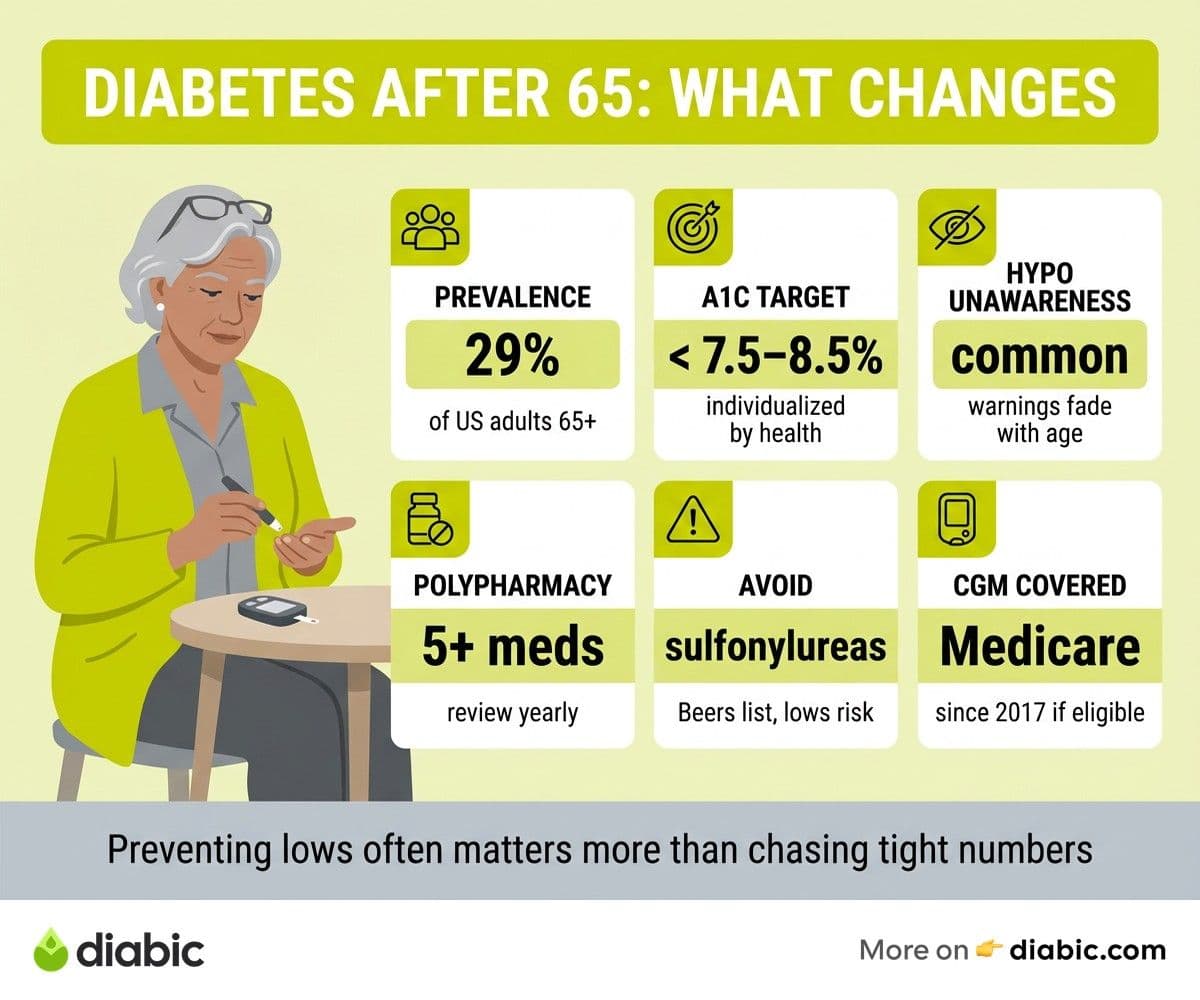
The biology of blood sugar shifts with age in ways that surprise most people. Insulin sensitivity tends to decrease, but so does the body's ability to recover from a low. Muscle mass declines, which changes how glucose is stored and used. According to CDC data on diabetes and aging, nearly 29 percent of Americans aged 65 and older live with diagnosed or undiagnosed diabetes, making this the most affected age group in the country.
Kidney function is another piece that changes the picture. The kidneys naturally lose some filtering capacity over time, and many medications used for type 2 diabetes are processed or cleared by them. Drugs that were perfectly safe at 55 may need a dose reduction or a switch at 70. The American Diabetes Association Standards of Care for Older Adults outlines how providers should adjust therapy based on kidney function and overall health status.
Hypoglycemia unawareness is perhaps the most underdiscussed change. Many people who once felt the classic shaky, sweaty warning signs of a low at age 50 stop sensing them in their late 60s and 70s. This happens because the counter-regulatory hormone response weakens with age and with longer diabetes duration. The result is that lows can drop further and faster before you notice anything is wrong.
Multiple chronic conditions also reshape the management landscape. Heart disease, arthritis, thyroid issues, and high blood pressure often show up alongside diabetes after 65. Each condition brings its own medications, its own dietary considerations, and sometimes its own conflicts. Coordinating care across specialists becomes part of the work, and it is okay to ask your primary care provider to help quarterback the team.
Aging with Diabetes: The Biggest Challenges
Falls become a serious concern when blood sugar runs low, and the consequences are more lasting than they used to be. A hip fracture at 70 carries far more risk than a similar fall at 50, both in recovery time and in long-term independence. When hypoglycemia hits, dizziness and weakness compound any existing balance issues, which is why preventing lows takes on new urgency in this stage of life.
Vision and dexterity changes can quietly complicate the daily basics. Cataracts, macular degeneration, or diabetic retinopathy may make glucose meter screens harder to read. Arthritis in the hands can turn what was once a quick finger stick into a frustrating ordeal. We hear from many readers who switched to talking meters, larger pen needles, or continuous glucose monitor systems precisely because the old tools no longer matched their changing bodies.
Social isolation affects diabetes management more than most people realize. Losing a spouse, retiring from a job, or having friends move away can disrupt the meal patterns, activity levels, and emotional support that kept routines steady. When motivation dips, it is easy for a missed walk to turn into a missed week, and skipped meals can lead to erratic glucose patterns. Staying connected with family, community groups, or peer networks is part of self-care, not separate from it.
Cognitive changes add another layer that deserves honest acknowledgment. Mild forgetfulness, slower processing, or early dementia can make complex insulin schedules and carb counting harder to follow. Talk to your doctor about diabetes and dementia risk reduction if memory feels less reliable than it used to. Catching changes early opens the door to simpler regimens and the right kind of support before small mistakes become dangerous ones.
Medication Management for Elderly Patients with Diabetes
Polypharmacy is the term clinicians use when someone takes five or more medications, and it becomes the norm rather than the exception after 65. Each prescription was added for a good reason, but the cumulative effect can include drug interactions, increased side effect risk, and sheer cognitive load just to remember what to take when. Research published in the Journal of the American Geriatrics Society shows that thoughtful deprescribing, which means stopping or reducing medications that no longer offer net benefit, can improve quality of life without worsening outcomes.
Certain diabetes medications carry higher hypoglycemia risk in older adults and deserve a closer look. Sulfonylureas like glyburide are flagged on the AGS Beers Criteria as potentially inappropriate for adults 65 and older because of their long action and pronounced low blood sugar risk. Long-acting insulins, while often necessary, also need careful dose titration as kidney function and appetite shift. Newer classes such as GLP-1 receptor agonists and SGLT2 inhibitors come with their own considerations around hydration, urinary infections, and cost.
Working with your provider to deprescribe when appropriate is a conversation worth scheduling. You might ask whether your A1C target is still right for your age and overall health, whether any medication can be reduced or removed, and whether a simpler regimen would serve you better. Many older adults find that moving from three injections a day to one, or from a sulfonylurea to a gentler agent, reduces both anxiety and hypoglycemia episodes. This is not about doing less for the sake of less. It is about matching the plan to the person you are now.
Timing and dosing adjustments often make a meaningful difference. The same dose taken at the same time may produce different results when appetite, sleep, and activity patterns change. Some seniors find that splitting a dose, taking it with food instead of before, or shifting the timing of long-acting insulin smooths out their glucose curves. These adjustments belong in conversation with your provider, not in solo experimentation.
Reducing Hypoglycemia Risk as You Age
Low blood sugar carries higher stakes for older adults than for younger people, and the reasons go beyond just feeling shaky. Severe hypoglycemia in seniors is linked to falls, cardiovascular events, cognitive decline, and emergency hospitalizations. The National Institute on Aging emphasizes that preventing lows is often a higher clinical priority in this age group than chasing tight glucose numbers, especially when life expectancy and functional status are factored in.
The ADA now recommends relaxed A1C targets for many older adults with diabetes, and this represents a meaningful shift in thinking. For healthy seniors with few complications, an A1C goal under 7.5 percent may still be appropriate. For those with multiple chronic conditions, an A1C of 8.0 percent can be reasonable. For frail adults or those with limited life expectancy, targets up to 8.5 percent may be safer than aggressive control. These are guideposts, not verdicts, and your individual goal should be set with your healthcare team based on your full picture. Building understanding hypoglycemia risk in older adults into your care conversations helps make sure your plan reflects current evidence.
Food and meal timing strategies can quietly do a lot of the heavy lifting. Eating consistent amounts of carbohydrate at regular times helps prevent both spikes and crashes. Pairing carbs with protein and fiber slows the rise and fall of glucose, which is especially helpful at breakfast when many seniors run high. Keeping fast-acting glucose tablets in obvious places at home, in the car, and in your pocket means treatment is never out of reach when symptoms appear.
CGM technology has changed the picture for many older adults, and since around 2017 it has been increasingly covered by Medicare for those who qualify. A continuous glucose monitor like the Dexcom G7 or FreeStyle Libre can detect drops before you feel them, alarm during the night when you are sleeping, and share data with a caregiver or family member if you choose. The peace of mind alone is worth a conversation with your provider about whether a CGM fits your situation. For some seniors, the alarms are the difference between catching a low at 70 mg/dL and discovering it at 40 mg/dL.
Adapting Your Daily Routine After 65
Simplifying testing and medication schedules often matters more than perfecting them. If you find yourself missing doses, skipping fingersticks, or feeling overwhelmed by your routine, that is information worth bringing to your next appointment. Many people benefit from once-daily insulin instead of multiple injections, weekly GLP-1 medications instead of daily ones, or pill organizers that take the guesswork out of mornings. Exploring simplified management approaches for seniors with your care team can reveal options you did not know existed.
Adjusting your diet for changing nutritional needs is part of aging well with diabetes. Protein needs actually increase after 65 to help preserve muscle mass, while calorie needs may decrease as activity levels shift. Hydration becomes trickier because thirst signals weaken with age, and dehydration can mimic or worsen high blood sugar. Working with a registered dietitian who specializes in geriatric nutrition can help you build a plan that supports both glucose goals and overall vitality, rather than treating diabetes in isolation.
Safe exercise options exist for almost every level of mobility, and movement remains one of the most powerful tools for blood sugar management at any age. Walking, water aerobics, chair yoga, resistance bands, and tai chi all offer benefits without high impact on joints. The National Institute on Aging recommends a mix of aerobic, strength, balance, and flexibility work for older adults. Start where you are, build slowly, and check in with your provider before adding anything new, especially if you have heart issues or neuropathy.
Asking for help is a strength, not a concession. Whether that means having a family member sit in on medical appointments, using a pharmacy that delivers, joining a peer support community, or hiring help for grocery shopping, the support you accept now protects your independence later. Managing diabetes in seniors is a team effort, and after 65 the team often grows to include caregivers, pharmacists, and specialists who each see a different piece of the picture. We encourage you to build yours intentionally rather than waiting for a crisis to assemble it. The goal is steady, sustainable care that lets you keep doing the things that matter to you, with diabetes in seniors treated as one part of a fuller life rather than the headline of every day.
Frequently Asked Questions
What changes about diabetes management after 65?
Blood sugar targets often become less aggressive, medication regimens may need simplification, and preventing hypoglycemia takes priority over tight glucose numbers. Your healthcare team should reassess your plan regularly, ideally at every annual visit, to make sure it still matches your kidney function, cognitive status, and overall health goals. Many seniors find that fewer medications and slightly higher A1C targets actually feel better and produce better outcomes than the regimen they had at 50.
What are the biggest challenges of diabetes in elderly patients?
Hypoglycemia unawareness, polypharmacy, reduced mobility, cognitive decline, and managing multiple chronic conditions simultaneously are the most common challenges reported by older adults and their caregivers. Vision and dexterity changes can also make daily self-care tasks harder, while social isolation can disrupt the routines that previously kept management steady. Each of these challenges is workable, but they often need new tools, simplified plans, and a wider support network than what worked in earlier decades.
Shahriar P. Shuvo is the founder of Diabic. He has lived with diabetes for over 14 years, and built Diabic to deliver the practical, evidence-based self-management tools he wished existed when he was first diagnosed. By trade, Shahriar is a senior design and frontend engineer with 6+ years shipping products at Agora, Timescale (now Tiger Data), and ShareTrip. He writes from the intersection of lived diabetes experience and product craft, focused on what works in daily management rather than what sounds good in a textbook.
Medically reviewed by
Dr. Shanto Arian is an internal medicine physician now specializing in clinical and aesthetic dermatology, with a parallel academic focus on epidemiology and public health. He holds an MBBS, MPH, MSc (UK), MRCP (UK), MRCPI (Ireland), Diploma in Dermatology (UK), and Diploma in Aesthetic Medicine (USA). Dr. Arian trained in internal medicine, including hospital work on hematology cases such as graft-versus-host disease, before moving toward dermatology. Skin is one of the earliest places diabetes shows itself, from acanthosis nigricans and diabetic dermopathy to slow foot wound healing, and that intersection is where his clinical and Diabic-review work meet. On Diabic, Dr. Arian medically reviews content on diabetes diagnosis, complications, dermatologic manifestations, and pharmacotherapy, ensuring every claim aligns with current ADA, NICE, and peer-reviewed literature.
More from Living with Diabetes
View all
A Gentle Chair Yoga Routine for people with diabetes
A gentle chair yoga for people with diabetes routine with safe poses, modifications for neuropathy, retinopathy, and joint pain, plus tips for older.

Shift Work and Diabetes: Managing Irregular Hours
Shift work and diabetes is a tough combination. Learn how to manage meals, sleep, medication, and blood sugar when your hours rotate or flip overnight.

Dating with Diabetes: When to Tell a New Partner
Dating with diabetes brings unique disclosure questions. Here is when to tell a new partner, what to say, and how to handle the conversation with.
Clinician-reviewed habits, plain-language guides, and honest answers - the small shifts that make living with diabetes feel lighter, every day.