Gestational Diabetes Meal Plan: What to Eat and When
A practical gestational diabetes meal plan with carb targets, sample meals, and timing tips to keep blood sugar steady through pregnancy.

In this article(11)
Building a gestational diabetes meal plan that works for you and your baby does not require a nutrition degree. It comes down to choosing the right foods, balancing your plate, and timing your meals so blood sugar stays in a steadier range. The good news is that small, repeatable habits often make a bigger difference than any single "perfect" meal.
If you have just been diagnosed, the food rules can feel overwhelming on top of everything else pregnancy brings. We want to walk you through what works, what to skip, and how to think about meals throughout the day. Pregnancy is short, and steady eating habits during these months can support both your numbers and your baby's growth.
What Should You Eat with Gestational Diabetes
The foundation of eating well during pregnancy with gestational diabetes is balance, not restriction. Your body still needs carbohydrates, protein, and fat to grow a healthy baby, and skipping food groups usually backfires. The goal is choosing foods that release energy slowly and pair carbs with protein or fat to soften blood sugar rises.
Lean proteins are your steady backbone at every meal. Think chicken, turkey, fish, eggs, Greek yogurt, cottage cheese, tofu, and beans. Protein helps you feel full, supports your baby's tissue growth, and slows the absorption of carbs you eat alongside it.
Non-starchy vegetables can fill half your plate without affecting blood sugar much. Leafy greens, broccoli, peppers, zucchini, cauliflower, green beans, and cucumbers all bring fiber, vitamins, and volume. They are one of the few food groups you rarely need to measure or limit.
Healthy fats round out meals and help your body absorb fat-soluble vitamins. Avocado, olive oil, nuts, seeds, and nut butters work well in pregnancy. Fats also help slow digestion, which keeps post-meal glucose curves gentler.
Complex carbohydrates still belong on your plate, just in measured portions. Oats, quinoa, brown rice, sweet potato, beans, lentils, and whole grain bread digest more slowly than refined options. For more on building a balanced base, our guide to what to eat and limit with prediabetes covers many of the same principles that apply during pregnancy.
Restrictive diets that cut entire food groups are rarely the answer. Your body and your baby need consistent fuel, and severely low-carb plans during pregnancy can lead to ketosis, which providers generally want to avoid. A balanced plate is more sustainable and supports better outcomes.
How Many Carbs Per Meal for Gestational Diabetes
Carb counting matters more than total calories when you have gestational diabetes. Carbohydrates have the largest and fastest impact on blood sugar, so knowing how much you are eating at each meal is what gives you control over your numbers.
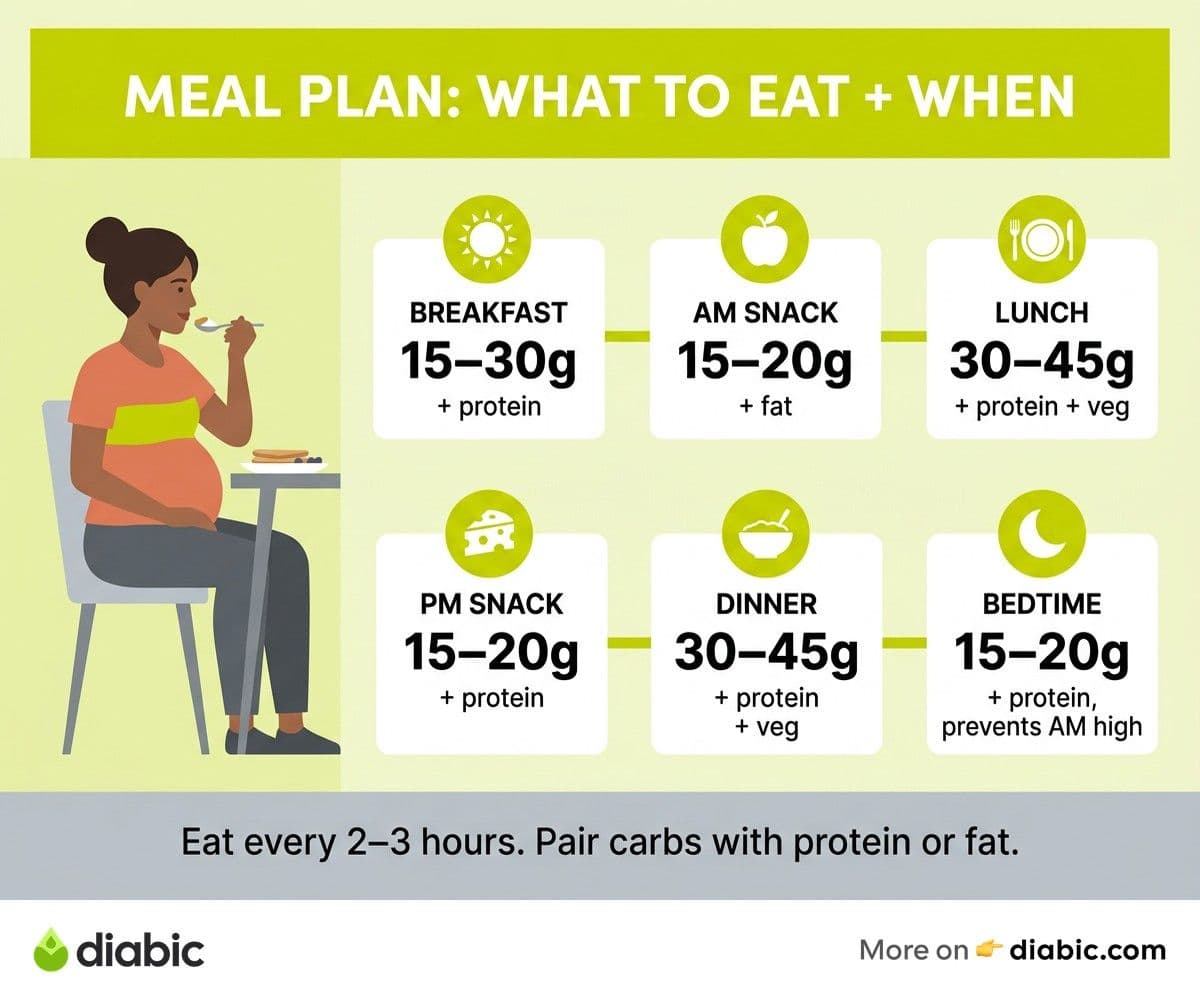
Most providers and dietitians recommend a starting framework of 30 to 45 grams of carbs per meal and 15 to 20 grams per snack. Breakfast often needs to be lower, around 15 to 30 grams, because pregnancy hormones make morning blood sugar more reactive. Your dietitian or diabetes care team can adjust these numbers based on what your meter shows.
Reading nutrition labels becomes a useful skill quickly. Look at the "Total Carbohydrate" line and the serving size, since one package often contains multiple servings. Sugar alcohols and fiber can be subtracted in some carb-counting methods, but for simplicity, many people start by using the total carb number.
For foods without labels like fruit, bread slices, or rice, a quick reference list helps. One small apple is roughly 15 grams of carbs. A half cup of cooked rice or pasta is about 22 grams. A slice of whole grain bread is around 15 to 20 grams. Keeping a small reference list on your phone makes meal planning faster.
The point of carb counting is not perfection. It is awareness. When you can estimate carbs reasonably well, you can troubleshoot a high reading by looking back at what you ate and how much.
Building Your Gestational Diabetes Meal Plan
A workable gestational diabetes meal plan usually means three meals and two to three snacks spread throughout the day. Smaller, more frequent eating helps prevent both spikes and the dips that can leave you shaky or nauseous. According to the American Diabetes Association, spreading carbs across the day is one of the most effective strategies for steady glucose during pregnancy.
The plate method works well during pregnancy with a few tweaks. Fill half your plate with non-starchy vegetables, a quarter with lean protein, and a quarter with a complex carb. Add a small portion of healthy fat like olive oil, avocado, or nuts. This visual approach takes the math out of most meals.
For a sample day, breakfast might be two scrambled eggs with spinach, half a slice of whole grain toast with avocado, and a handful of berries. Mid-morning snack could be Greek yogurt with a few walnuts. Lunch might look like a grilled chicken salad with mixed greens, chickpeas, olive oil dressing, and a small whole grain roll.
Afternoon snack ideas include apple slices with peanut butter, cottage cheese with cucumber, or a hard-boiled egg with a few crackers. Dinner could be baked salmon, roasted broccoli and cauliflower, and half a cup of quinoa. An evening snack of cheese with whole grain crackers or a small bowl of plain yogurt with cinnamon helps carry you through the night.
Pregnancy cravings are real, and so is the exhaustion that makes cooking feel impossible. Keeping easy proteins like rotisserie chicken, hard-boiled eggs, or canned tuna on hand makes pulling a meal together less daunting on hard days. For broader context on managing the diagnosis, our calm guide to gestational diabetes walks through what to expect overall.
Meal Timing for Steady Blood Sugar
When you eat matters almost as much as what you eat. Eating every two to three hours during the day helps prevent the big swings that come from going too long without food and then over-eating. Steady fuel makes for steadier numbers.
Breakfast is the meal most people are tempted to skip, especially with morning nausea. Skipping it usually backfires by mid-morning, when low blood sugar can drive cravings for refined carbs. Even something small like a hard-boiled egg and a few crackers gets your day started in a better place.
Mid-morning and afternoon snacks are not optional during pregnancy with gestational diabetes. They bridge the gap between meals and prevent the rebound highs that can happen when you let yourself get too hungry. Pair a carb with a protein or fat at every snack to keep the response gentle.
Evening snacks deserve special attention. A bedtime snack with protein, a small carb, and some fat can help prevent the overnight drop and morning rebound that produces a higher fasting number. Cottage cheese with a few berries, a small handful of nuts with a piece of cheese, or whole grain toast with peanut butter all work well.
From my experience: After fourteen years with diabetes, I learned that what time I ate often mattered as much as what I ate. With gestational diabetes specifically, my partner found that her bedtime snack made or broke her morning fasting number. A small bowl of plain Greek yogurt with a few walnuts at 10 p.m. brought her morning readings into range almost immediately. It was such a small change for such a meaningful result.
Gestational Diabetes Treatment Through Diet
For most people, dietary management is the first line of gestational diabetes treatment. Many people manage their numbers with food, movement, and timing alone for the rest of pregnancy. This is encouraging, because it means your daily choices have real power here.
Tracking blood sugar is what tells you whether your meal plan is working. Most providers ask for a fasting reading and a one or two hour post-meal reading after each main meal. The pattern matters more than any single number, and your care team uses those patterns to fine-tune your plan.
Sometimes diet alone is not enough, even when you are doing everything right. Pregnancy hormones from the placenta increase insulin resistance, particularly in the third trimester, and some people need insulin or other medication to stay in target ranges, as detailed in NIDDK's gestational diabetes overview. This is not a failure on your part. It simply means your body needs extra support to keep your baby in a safe range, and your provider can walk you through gestational diabetes treatment during pregnancy options that may help.
Keep a simple food and number log for at least the first few weeks. Note what you ate, when you ate it, and your reading two hours after the first bite. Patterns will emerge quickly, and you and your care team can adjust meals or portions where needed.
Foods to Limit or Avoid
A few categories of food tend to spike blood sugar quickly and offer little nutritional support for pregnancy. Knowing what to limit gives you more freedom with the foods you do choose. The goal is "less often and smaller portions" rather than total avoidance, which usually backfires.
Sugary beverages are the single biggest blood sugar disruptor. Regular soda, fruit juice, sweetened iced tea, sports drinks, and sweetened coffee drinks all flood your bloodstream with sugar quickly. Even 100% fruit juice without added sugar can spike numbers because it lacks the fiber of whole fruit. Water, sparkling water, and unsweetened tea or coffee are gentler choices.
Refined carbohydrates digest fast and offer little fiber to slow the rise. White bread, white rice, pastries, and most breakfast cereals fall into this group. Swapping to whole grain versions of the same foods often makes a noticeable difference in post-meal numbers.
High-sugar snacks and desserts deserve mindful planning rather than blanket bans. According to ACOG nutrition guidance, the occasional small treat eaten with a meal that includes protein and fat usually has less impact than the same treat eaten alone. If a slice of birthday cake is on the calendar, eat it after a balanced dinner rather than as a snack on an empty stomach.
Replacing "never" with "less often" helps most people stick with their plan for the duration of pregnancy. Restriction often leads to all-or-nothing thinking, while flexibility plus awareness leads to steadier numbers and a healthier relationship with food.
Frequently Asked Questions
What should you eat with gestational diabetes?
Focus on balanced meals with lean protein, non-starchy vegetables, healthy fats, and controlled portions of complex carbohydrates. Consistent meal timing across the day also helps maintain stable blood sugar. Pair every snack with some protein or fat to soften the rise.
How many carbs per meal for gestational diabetes?
Most guidelines suggest 30 to 45 grams of carbohydrates per meal and 15 to 20 grams per snack. Breakfast is often kept lower, around 15 to 30 grams, because hormones make morning glucose more reactive. Your provider may adjust these targets based on your blood sugar responses.
Are gestational diabetes symptoms always obvious?
Not at all. Many people have no noticeable gestational diabetes symptoms, which is why screening between 24 and 28 weeks is standard. Some women report increased thirst, more frequent urination, or fatigue, but these overlap with normal pregnancy and are easy to dismiss.
Can I still eat fruit with a gestational diabetes meal plan?
Yes, with attention to portion and pairing. One small fruit or about three quarters of a cup of berries usually fits well, especially when eaten with a protein or fat like cheese, nuts, or yogurt.
Pregnancy with gestational diabetes asks a lot from you, but the everyday choices that move the needle are more straightforward than they sound at first. Steady meals, balanced plates, and a bit of carb awareness are the bones of any good plan. Talk to your doctor or dietitian about what targets fit your situation, and trust that small consistent habits add up.
Dr. Rezwana Parvin Rumpa is an obstetrics and gynaecology specialist with clinical focus on gestational diabetes, PCOS, and fertility. She holds the MRCOG (Final Part) from the Royal College of Obstetricians and Gynaecologists in London, the MRCPI (Final Part) from the Royal College of Physicians of Ireland, and an MBBS from Shaheed Monsur Ali Medical College under Dhaka University. Dr. Rumpa serves as a Senior Medical Officer in the Obs and Gynae department at BRB Hospitals Ltd, where she has spent three years managing prenatal care, emergency obstetric cases, and women's-health surgery. On Diabic, she medically reviews content for women living with diabetes, with particular attention to pregnancy, PCOS, and reproductive-health intersections.
Medically reviewed by
Dr. Shanto Arian is an internal medicine physician now specializing in clinical and aesthetic dermatology, with a parallel academic focus on epidemiology and public health. He holds an MBBS, MPH, MSc (UK), MRCP (UK), MRCPI (Ireland), Diploma in Dermatology (UK), and Diploma in Aesthetic Medicine (USA). Dr. Arian trained in internal medicine, including hospital work on hematology cases such as graft-versus-host disease, before moving toward dermatology. Skin is one of the earliest places diabetes shows itself, from acanthosis nigricans and diabetic dermopathy to slow foot wound healing, and that intersection is where his clinical and Diabic-review work meet. On Diabic, Dr. Arian medically reviews content on diabetes diagnosis, complications, dermatologic manifestations, and pharmacotherapy, ensuring every claim aligns with current ADA, NICE, and peer-reviewed literature.
More from Diabetes Knowledge
View all
6 Safe Dessert for Gestational Diabetes Recipes You Can
Six dessert for gestational diabetes recipes that satisfy your sweet tooth without spiking blood sugar, with carb counts and pairing tips you can use.

8 High Fiber Foods That Help with Prediabetes
Add these 8 high fiber foods for prediabetes to slow glucose absorption, support steady blood sugar, and meet the daily fiber target most people miss.

Mediterranean Diet for Prediabetes: A Practical Guide
The mediterranean diet for prediabetes is one of the best-studied eating patterns for prevention. Here is what to eat, what to avoid, and how to start.
Clinician-reviewed habits, plain-language guides, and honest answers - the small shifts that make living with diabetes feel lighter, every day.