Going Low-Carb for Prediabetes: A Starter Guide
A practical starter guide to going low-carb for prediabetes, covering carb ranges, food swaps, and gentle ways to begin without feeling deprived.

In this article(9)
If your last lab report flagged a higher-than-normal A1C, you have probably already heard the suggestion to "cut carbs," and going low-carb for prediabetes is one of the most common starting points clinicians recommend. The research does back it up. The tricky part is that "low-carb" can mean almost anything depending on who you ask, so the same advice can land you anywhere from a gentle reset to a strict ketogenic plan.
Going low-carb for prediabetes is not about white-knuckling your way through a strict diet for six weeks and then giving up. It is about understanding which carbs hit your blood sugar hardest and choosing fewer of those, more often. This starter guide walks through what the science actually says, how to begin without feeling deprived, and how to find a carb level that fits your life.
We will keep things grounded in real food and real schedules. No extreme rules, no guilt about birthday cake, and no pretending this is easy.
How Low-Carb for Prediabetes Affects Blood Sugar
Of the three macronutrients (carbs, protein, and fat), carbohydrates have the biggest direct effect on blood sugar. When you eat them, your body breaks them down into glucose, which then enters your bloodstream. Protein and fat also affect blood sugar, but the rise is smaller and slower.
That is why reducing carbs, even moderately, can shrink the post-meal glucose spikes that drive prediabetes higher. According to the NIDDK guidance on diet and physical activity, the type and amount of carbohydrate you eat both shape your blood sugar response. Eating fewer refined carbs gives your pancreas less work to do.
Over time, lower glucose spikes give your insulin a chance to "catch up." Several studies summarized on PubMed have found that carbohydrate restriction can improve fasting glucose, A1C, and insulin sensitivity in people with prediabetes and type 2 diabetes. The effect tends to be strongest when the cut comes from refined starches and added sugars rather than from vegetables and fruit.
Reducing carbs is different from eliminating them. Your brain runs on glucose, and many fiber-rich foods (beans, berries, oats) contain carbs that come bundled with nutrients you want. The goal is to choose better carbs and eat fewer of the ones that spike you the hardest.
What "Low-Carb" Looks Like in Practice
There is no single definition of low-carb. Most clinical research uses three rough tiers, and any of them can be a reasonable starting point depending on your blood sugar response and how much change feels sustainable.
A general low-carb plan sits around 100 to 130 grams of carbs per day. This usually means cutting back on bread, pasta, rice, and sweets while keeping fruit, legumes, and starchy vegetables in the mix. For many people with prediabetes, this is the easiest place to start.
A moderate low-carb plan lands at 50 to 100 grams per day. At this level, grains and starchy vegetables become smaller side portions rather than meal centerpieces. Most carbs come from non-starchy vegetables, nuts, seeds, and small servings of fruit or legumes.
A very low-carb or ketogenic plan stays under 50 grams per day. This level can produce fast blood sugar improvements, but it is harder to maintain long term and is best done with a clinician's input. The Mayo Clinic's overview of low-carb eating is a useful primer if you are weighing whether to go this strict.
You do not need to go extreme to see results. A 30 to 50 gram daily reduction from your current intake is often enough to nudge fasting glucose and A1C in the right direction. If you want a less restrictive but still effective alternative, our mediterranean diet for prediabetes starter guide is worth a look. And if you want to understand how low-carb fits into the broader picture of prediabetes treatment, we cover that too.
Find Your Baseline First
Before you cut anything, spend a few days eating the way you normally would and writing it down. Most people are surprised by how much hidden carbohydrate slips into their day through drinks, sauces, and snacks. Your baseline is what you compare future changes against.
From my experience: I have lived with type 1 diabetes for 14 years, which means I count carbs at every meal. The single biggest insight I have picked up is that the gap between what people think they eat and what they actually eat is huge, and you cannot fix what you have not measured. Three honest days of tracking will teach you more than any meal plan.
Foods to Eat and Foods to Reduce
The good news is that low-carb eating is mostly additive once you get the hang of it. You add more of the foods that fill you up without spiking your blood sugar, and the high-carb foods quietly take a smaller place on the plate.
Foods to lean into include non-starchy vegetables (leafy greens, peppers, broccoli, zucchini), lean proteins (chicken, fish, eggs, tofu), healthy fats (olive oil, avocado), and nuts and seeds. The American Diabetes Association's nutrition guidance leans on this same pattern as the foundation of a blood-sugar-friendly plate. For deeper food specifics, see our companion piece on the prediabetes diet: what to eat and what to limit.
Foods to reduce, not necessarily eliminate, include:
- White bread, white rice, regular pasta, and pastries
- Sugary drinks (soda, sweetened coffees, juice)
- Sweetened cereals and granolas
- Crackers, chips, and most packaged snacks
- Candy, desserts, and sauces with added sugar
Smart swaps make the change feel less like a loss. Cauliflower rice in place of white rice. Lettuce wraps or low-carb tortillas in place of sandwich bread. Greek yogurt with berries in place of flavored yogurt. Sparkling water with lime in place of soda. None of these are magic, but stacked together over a week, they can drop your daily carbs by 50 to 100 grams.
Reading nutrition labels matters more than most people expect. The "Total Carbohydrate" line is what counts for blood sugar, not just "Sugars." Subtract fiber if you want a closer estimate of what will actually impact your glucose. Watch for serving sizes that look small enough to be misleading.
Getting Started Without Overwhelm
You do not need to overhaul everything at once. People who try to change every meal on day one usually quit by week two. People who change one meal at a time usually keep going.
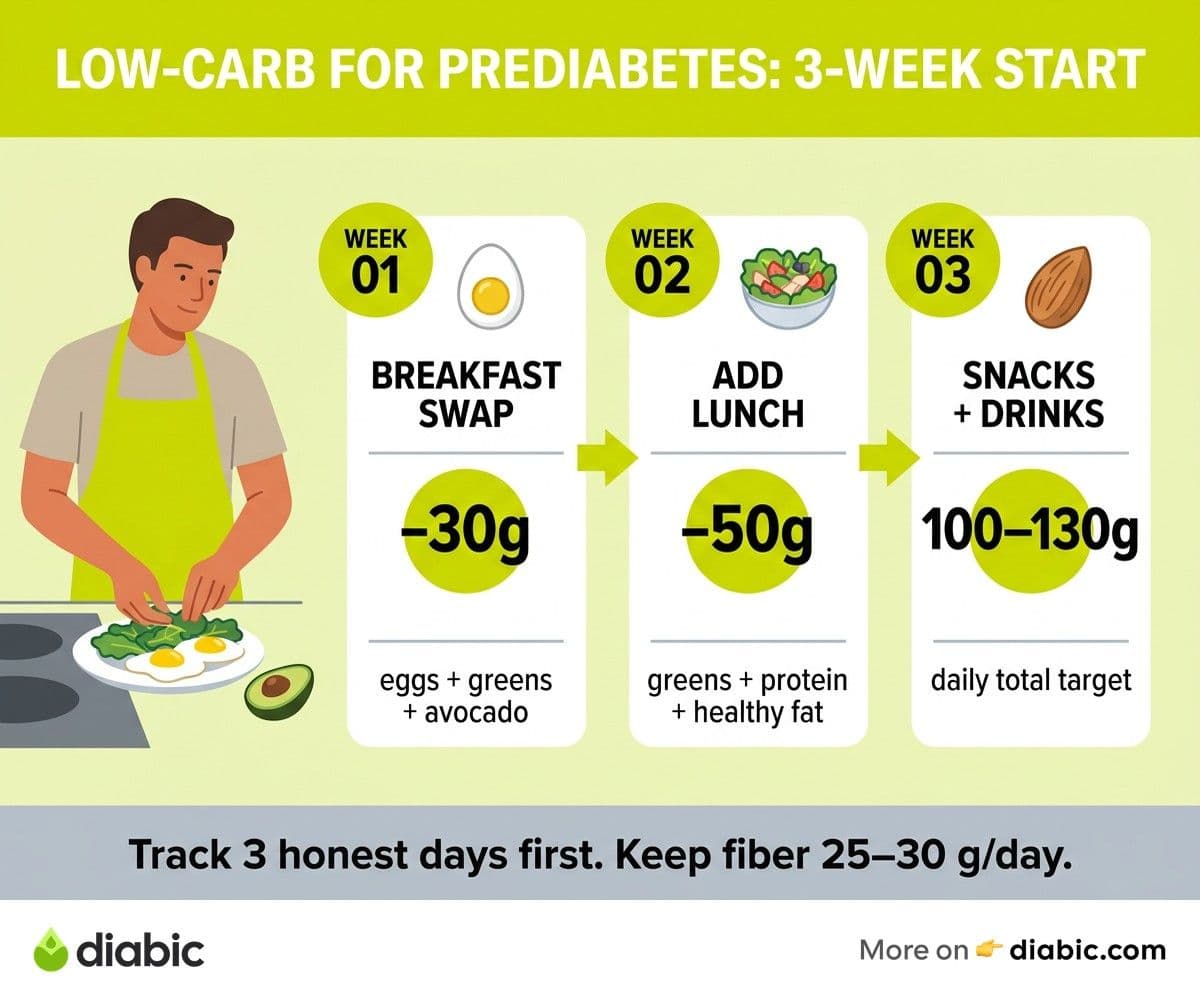
Week one, focus on breakfast only. If your usual breakfast is cereal or a bagel, swap in eggs with vegetables, Greek yogurt with chia and berries, or a protein-and-veggie scramble. Leave lunch and dinner alone for now. The point is to prove to yourself that one meal can change without the world ending.
Week two, add lunch. Build a base of leafy greens or non-starchy vegetables, add a palm-sized portion of protein, drizzle in a healthy fat, and keep grains small or skip them. Lunch is often the easiest meal to make portable and predictable.
Week three, look at snacks and drinks. Snacks are where a surprising number of carbs sneak in. Nuts, cheese, hard-boiled eggs, vegetables with hummus, and a piece of fruit with nut butter all carry well and keep blood sugar steady.
Use a simple food tracking app for the first two or three weeks to learn your baseline carb intake and which foods carry more carbs than you assumed. You can stop tracking once the patterns feel familiar. The reason early detection matters here is that the prediabetes window is the easiest time to change the trajectory, which is exactly the point we make in our piece on prediabetes: why catching it now gives you the most uses.
Potential Challenges and How to Handle Them
The first two weeks are often the hardest. Cravings for bread, pasta, or sweets can feel intense, especially in the afternoon. This usually has more to do with habit than hunger, and most people find the cravings fade noticeably by week three.
Eating out can feel awkward at first. A few small habits help: ask for vegetables instead of fries, request sauces and dressings on the side, and order the protein-and-vegetable version of whatever sounds good. Most restaurants will swap a side without making a fuss.
Fiber needs a little planning on a low-carb plan. If you cut grains and fruit too aggressively, fiber can drop and digestion can slow. Lean on non-starchy vegetables, chia and flax seeds, nuts, berries, and small servings of legumes. Aim for at least 25 to 30 grams of fiber daily.
If you have kidney issues, are pregnant, take blood-pressure or diabetes medication, or have a history of disordered eating, talk to your doctor or a registered dietitian before making big dietary shifts. A clinician can personalize the approach so it works with your whole health picture, not against it. We dig deeper into the science in our overview of low carb diet and prediabetes: does it help, if you want a closer look at the evidence.
FAQ
Does low carb help with prediabetes?
Yes. Research suggests that reducing carbohydrate intake can improve blood sugar control, reduce insulin resistance, and support gradual weight loss, all of which help with prediabetes. You do not need to go extremely low; even cutting to around 100 to 130 grams of carbs per day, mostly by reducing refined starches and added sugars, can produce meaningful changes in fasting glucose and A1C.
How many carbs per day for prediabetes?
There is no single right number. Many clinicians suggest starting around 100 to 130 grams of carbs per day and adjusting based on your blood sugar response, energy levels, and how sustainable the plan feels. Some people benefit from going lower, while others do well with a moderate carb intake paired with more fiber and exercise. The best target is one your healthcare provider helps you set and that you can hold onto for the long run.
Going low-carb for prediabetes is less about a strict diet and more about building a daily way of eating you can actually live with. Start with one meal, learn what works, and let the wins compound. The goal is not perfect carbs; it is steadier blood sugar over time. Loop in your doctor or a registered dietitian if you take medication or have other conditions so the plan fits your whole health picture rather than working against it.
Shahriar P. Shuvo is the founder of Diabic. He has lived with diabetes for over 14 years, and built Diabic to deliver the practical, evidence-based self-management tools he wished existed when he was first diagnosed. By trade, Shahriar is a senior design and frontend engineer with 6+ years shipping products at Agora, Timescale (now Tiger Data), and ShareTrip. He writes from the intersection of lived diabetes experience and product craft, focused on what works in daily management rather than what sounds good in a textbook.
Medically reviewed by
Dr. Rezwana Parvin Rumpa is an obstetrics and gynaecology specialist with clinical focus on gestational diabetes, PCOS, and fertility. She holds the MRCOG (Final Part) from the Royal College of Obstetricians and Gynaecologists in London, the MRCPI (Final Part) from the Royal College of Physicians of Ireland, and an MBBS from Shaheed Monsur Ali Medical College under Dhaka University. Dr. Rumpa serves as a Senior Medical Officer in the Obs and Gynae department at BRB Hospitals Ltd, where she has spent three years managing prenatal care, emergency obstetric cases, and women's-health surgery. On Diabic, she medically reviews content for women living with diabetes, with particular attention to pregnancy, PCOS, and reproductive-health intersections.
More from Diabetes Knowledge
View all
6 Safe Dessert for Gestational Diabetes Recipes You Can
Six dessert for gestational diabetes recipes that satisfy your sweet tooth without spiking blood sugar, with carb counts and pairing tips you can use.

8 High Fiber Foods That Help with Prediabetes
Add these 8 high fiber foods for prediabetes to slow glucose absorption, support steady blood sugar, and meet the daily fiber target most people miss.

Mediterranean Diet for Prediabetes: A Practical Guide
The mediterranean diet for prediabetes is one of the best-studied eating patterns for prevention. Here is what to eat, what to avoid, and how to start.
Clinician-reviewed habits, plain-language guides, and honest answers - the small shifts that make living with diabetes feel lighter, every day.