10 High Fiber Foods for Prediabetes Worth Adding
Ten high fiber foods for prediabetes that slow glucose spikes, improve insulin sensitivity, and are easy to add to your weekly meals.

In this article(18)
If you have ever finished a meal and watched your blood sugar climb higher than you expected, fiber is one of the simplest tools you have to soften that curve. Adding more high fiber foods for prediabetes is the kind of change that does not require a strict diet, a new app, or a complete kitchen overhaul. It just requires putting a few specific foods on your plate more often.
Fiber slows the rate at which glucose enters your bloodstream, supports a healthier gut, and helps you feel full on fewer calories. Most adults in the United States only get about half the fiber they need, and people with prediabetes have an even bigger reason to close that gap. The ten foods below are easy to find, easy to use, and well-supported by research.
We will cover what each food brings to your plate, a realistic serving size, and a simple way to add it this week.
From my experience: Living with type 1 for 14 years has made me a fan of CGM tracing as a real-time fiber lesson. The first time I ate plain white-rice sushi, my Dexcom traced a steep climb that hit a peak around 220. The next week, the same sushi with a side of edamame and a small avocado salad first traced a much gentler curve, peaking closer to 160. Adding fiber and fat in front of the carbs did not change the carb count, but it changed the shape of the line in a way I could feel in my afternoon energy.
Why Fiber Matters for Prediabetes
There are two kinds of dietary fiber, and both matter. Soluble fiber dissolves in water and forms a gel that slows the absorption of glucose and cholesterol. Insoluble fiber adds bulk, supports digestion, and helps with satiety. Most plant foods contain a mix of the two.
For prediabetes, soluble fiber tends to get the most attention because of its effect on blood sugar. According to the American Diabetes Association's nutrition guidance, high-fiber eating patterns are linked to better glucose control and a lower risk of progressing from prediabetes to type 2 diabetes. Fiber-rich foods also tend to be nutrient-dense in ways that go beyond blood sugar.
Lifestyle changes including modest weight loss and a healthier eating pattern can delay or prevent type 2 diabetes, according to NIDDK's guidance on preventing type 2 diabetes. Insulin sensitivity also improves with consistent fiber intake, partly through the gut microbiome. Bacteria in your colon ferment certain fibers into short-chain fatty acids, which research suggests may improve how your cells respond to insulin. The earlier you start building this in, the more uses you have, which is exactly the case we make for why catching prediabetes early matters.
The takeaway is simple: fiber is one of the few dietary levers that helps blood sugar, weight, gut health, and cardiovascular markers all at once.
Does Fiber Help Lower Blood Sugar in Prediabetes?
The short answer is yes, and the long answer is "yes, with some nuance." A large Lancet meta-analysis on dietary fiber and chronic disease found that people who ate the most fiber had significantly lower rates of type 2 diabetes, heart disease, and all-cause mortality compared to those who ate the least.
The mechanism is straightforward. When carbs come bundled with fiber, your body breaks them down more slowly. Glucose enters your bloodstream in a gentle slope rather than a sharp peak. Smaller spikes mean less work for your pancreas and steadier energy after meals.
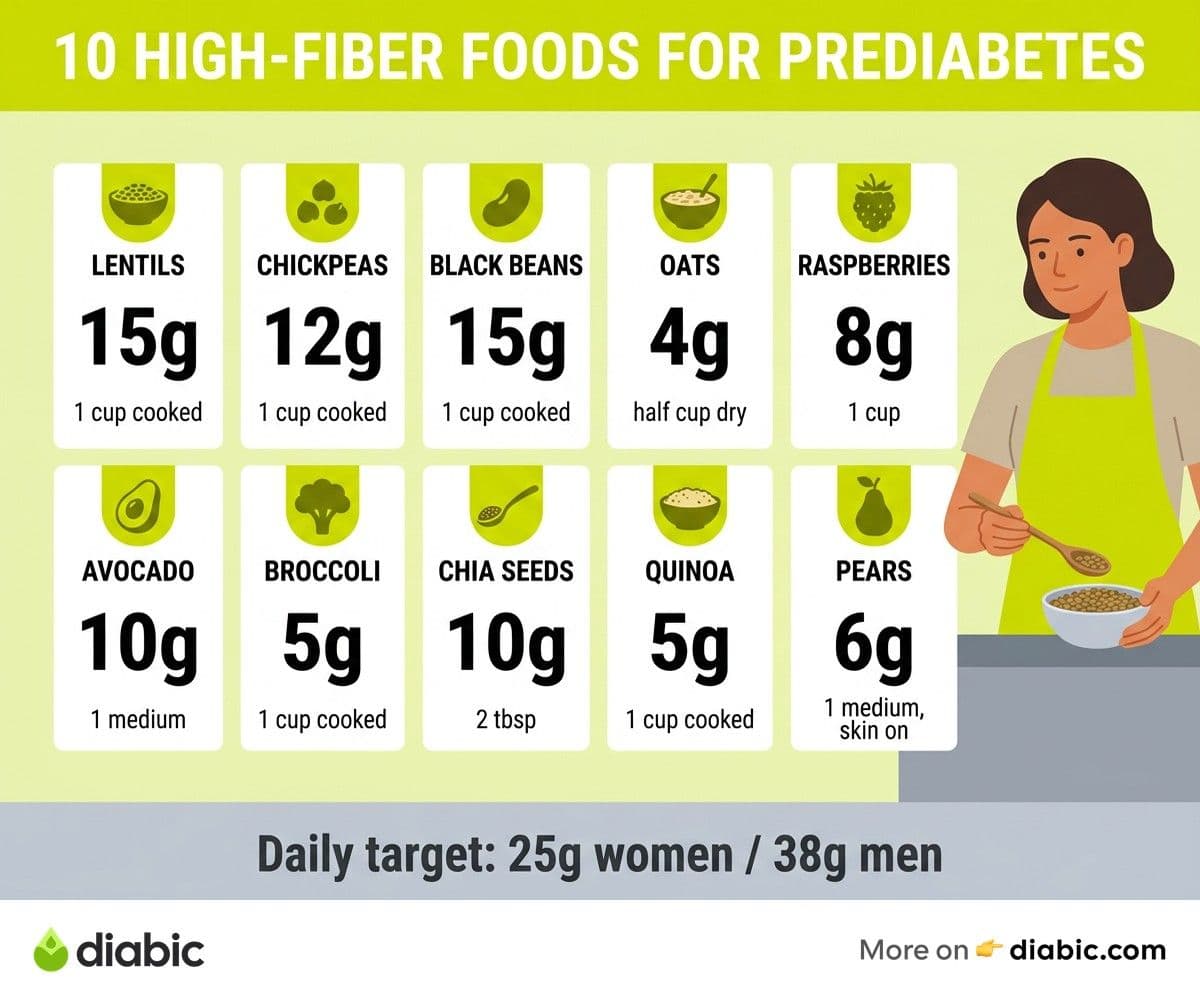
The Dietary Guidelines for Americans suggest 25 grams of fiber per day for adult women and 38 grams for adult men. Most adults eat closer to 15 grams. For prediabetes, hitting (or exceeding) the recommended target is a useful goal to work toward, ideally from food rather than from supplements alone.
Pair fiber with protein and healthy fat, and the blood sugar effect is even better. A bowl of oatmeal alone will spike less than a bowl of sugary cereal, but oatmeal with chia seeds, walnuts, and Greek yogurt will spike less still.
10 High Fiber Foods for Prediabetes Worth Adding
Here are ten foods worth a regular spot on your plate. Fiber values come from the USDA FoodData Central database, and serving sizes are realistic everyday portions.
1. Lentils
A cooked cup of lentils delivers about 15 grams of fiber along with 18 grams of plant protein. They cook in 20 to 25 minutes with no soaking required. Use them in soups, mix them into ground meat to stretch a meal, or spoon them over greens with a lemon-tahini dressing.
2. Chickpeas
A cooked cup of chickpeas brings around 12 grams of fiber. They are flexible: roast them for a crunchy snack, blend them into hummus, or add them to grain bowls and salads. Canned, drained, and rinsed is fine for weeknight cooking.
3. Black Beans
A cooked cup of black beans contains roughly 15 grams of fiber and a solid hit of protein. They pair well with eggs at breakfast, tucked into a tortilla at lunch, or spooned over a baked sweet potato at dinner. Beans are one of the highest-impact foods you can add for fiber.
4. Oats
A half-cup of dry rolled or steel-cut oats provides about 4 grams of fiber, much of it the soluble beta-glucan kind that has been studied for its effect on cholesterol and blood sugar. Top with berries, nuts, and a scoop of Greek yogurt for a balanced breakfast.
5. Raspberries and Blackberries
A cup of raspberries packs about 8 grams of fiber, and blackberries match them nearly gram for gram. They are some of the lowest-sugar fruits available and easy to add to yogurt, oatmeal, or simply eat by the handful. Frozen works just as well as fresh and tends to be cheaper year-round.
6. Avocado
A whole medium avocado offers around 10 grams of fiber along with monounsaturated fat. Half an avocado on whole-grain toast, sliced over a salad, or mashed into a dressing all count. Pairing avocado with a fiber-rich meal helps soften blood sugar spikes even more.
7. Broccoli and Brussels Sprouts
A cup of cooked broccoli has about 5 grams of fiber, and Brussels sprouts come in close behind. Both are members of the cruciferous family, which is associated with broader cardiometabolic benefits. Roast them at high heat with olive oil for a side that earns its place on the plate.
8. Chia Seeds and Flaxseeds
Two tablespoons of chia seeds carry roughly 10 grams of fiber, mostly soluble. Ground flaxseeds bring about 4 grams in two tablespoons. Stir either into yogurt, oatmeal, or smoothies. Chia pudding made with milk and a splash of vanilla is one of the easiest high-fiber snacks to keep in the fridge.
9. Quinoa
A cooked cup of quinoa offers around 5 grams of fiber along with all nine essential amino acids. It works as a base for grain bowls, a side for roasted vegetables, or a swap for white rice. Cook a big batch on Sunday and use it throughout the week.
10. Pears and Apples (with the Skin On)
A medium pear gives you about 6 grams of fiber, and a medium apple about 4. Most of that fiber sits in the skin, so leave it on. Slice with a tablespoon of nut butter for a snack that holds blood sugar steady through an afternoon slump.
A note on whole-food sources: ten grams of fiber from lentils does more for your metabolism than ten grams from a fortified bar. Whole foods bring the rest of the package (protein, micronutrients, water) along for the ride.
How to Build a Healthy Diet for Prediabetes Around Fiber
Knowing the foods is the easy part. The harder part is weaving them into meals that you would actually eat on a Tuesday night. The simplest framework is to ask three questions for each meal: where is my fiber, where is my protein, and where is my healthy fat?
A balanced fiber-forward plate might look like grilled salmon, roasted Brussels sprouts, and a half-cup of quinoa. Or scrambled eggs with sautéed spinach, half an avocado, and a slice of whole-grain toast. Or a lentil soup with a side salad and a handful of nuts. None of these are restrictive; they are just structured around fiber.
A few meal templates to keep in your back pocket:
- Breakfast: Greek yogurt + chia seeds + berries + walnuts
- Lunch: Mixed greens + chickpeas + roasted vegetables + olive oil dressing
- Dinner: Lean protein + non-starchy vegetable + a small grain like quinoa or wild rice
- Snack: Apple slices with nut butter, or hummus with raw vegetables
Increase fiber gradually. If you currently eat 12 grams a day and jump to 35, your gut will protest with bloating and gas. Add about 5 grams every few days and drink more water as you go. Your microbiome adjusts within a couple of weeks. For a deeper food-by-food breakdown, see our companion guide on what to eat and limit with prediabetes.
Whole Grains as a Fiber Source
Whole grains are different from refined grains because they keep all three parts of the kernel intact: the bran, the germ, and the endosperm. The bran is where most of the fiber lives. When grain is refined, the bran is stripped, taking the fiber and many micronutrients with it.
For prediabetes, the highest-fiber whole grains include barley, oats, bulgur, farro, quinoa (technically a seed but used as a grain), and whole-grain rye. A half-cup of cooked barley brings about 3 grams of fiber. Bulgur is similar and cooks in under 15 minutes.
Swapping refined grains for whole grain alternatives is one of the easiest fiber upgrades. Try whole-grain bread instead of white, brown rice or quinoa instead of white rice, whole-wheat pasta instead of regular, and steel-cut or rolled oats instead of instant. The carb count is similar, but the blood sugar response is gentler. We dive deeper into picking the right ones in our whole grains for prediabetes guide.
Pairing whole grains with the other foods on this list multiplies the benefit. A bowl of barley with lentils and roasted vegetables is a fiber powerhouse that costs under three dollars per serving and reheats well.
FAQ
What high fiber foods are best for prediabetes?
Legumes (lentils, chickpeas, black beans), berries, oats, chia seeds, avocado, and cruciferous vegetables like broccoli and Brussels sprouts are some of the best high-fiber choices for prediabetes. They combine high fiber content with protein, healthy fats, or antioxidants that support blood sugar management. Building meals around two or three of these foods at a time is more practical than trying to eat all of them every day.
Does fiber help lower blood sugar in prediabetes?
Yes. Research suggests that higher fiber intake is associated with smaller post-meal blood sugar spikes, improved insulin sensitivity, and a lower risk of progressing from prediabetes to type 2 diabetes. Soluble fiber, found in oats, beans, chia, and many fruits, has the strongest direct effect on blood glucose. Pairing fiber with protein and healthy fat at each meal makes the effect even more noticeable.
Adding fiber is one of the rare changes where the effort is small and the payoff is broad. Pick two high fiber foods for prediabetes from this list this week, work them into meals you already make, and let the rest follow. The body of evidence keeps pointing in the same direction: a steady habit of fiber-forward plates does more for your blood sugar over a year than any short-term diet, and the foods on this list are the ones that earn their place in real kitchens.
Shahriar P. Shuvo is the founder of Diabic. He has lived with diabetes for over 14 years, and built Diabic to deliver the practical, evidence-based self-management tools he wished existed when he was first diagnosed. By trade, Shahriar is a senior design and frontend engineer with 6+ years shipping products at Agora, Timescale (now Tiger Data), and ShareTrip. He writes from the intersection of lived diabetes experience and product craft, focused on what works in daily management rather than what sounds good in a textbook.
Medically reviewed by
Dr. Rezwana Parvin Rumpa is an obstetrics and gynaecology specialist with clinical focus on gestational diabetes, PCOS, and fertility. She holds the MRCOG (Final Part) from the Royal College of Obstetricians and Gynaecologists in London, the MRCPI (Final Part) from the Royal College of Physicians of Ireland, and an MBBS from Shaheed Monsur Ali Medical College under Dhaka University. Dr. Rumpa serves as a Senior Medical Officer in the Obs and Gynae department at BRB Hospitals Ltd, where she has spent three years managing prenatal care, emergency obstetric cases, and women's-health surgery. On Diabic, she medically reviews content for women living with diabetes, with particular attention to pregnancy, PCOS, and reproductive-health intersections.
More from Diabetes Knowledge
View all
6 Safe Dessert for Gestational Diabetes Recipes You Can
Six dessert for gestational diabetes recipes that satisfy your sweet tooth without spiking blood sugar, with carb counts and pairing tips you can use.

8 High Fiber Foods That Help with Prediabetes
Add these 8 high fiber foods for prediabetes to slow glucose absorption, support steady blood sugar, and meet the daily fiber target most people miss.

Mediterranean Diet for Prediabetes: A Practical Guide
The mediterranean diet for prediabetes is one of the best-studied eating patterns for prevention. Here is what to eat, what to avoid, and how to start.
Clinician-reviewed habits, plain-language guides, and honest answers - the small shifts that make living with diabetes feel lighter, every day.