Gestational Diabetes Treatment for a Healthy Pregnancy
A clear look at gestational diabetes treatment, from meal plans and monitoring to insulin and delivery, so you can feel prepared at every step.

In this article(31)
Gestational diabetes treatment is built around one simple goal: keeping your blood sugar in a safe range so you and your baby stay healthy through pregnancy and delivery. The reassuring news is that most pregnancies affected by gestational diabetes end with healthy babies and parents who feel proud of how they handled it. Treatment is rarely about a single dramatic change. It is about small, steady habits stacked on top of each other, supported by a care team that helps you adjust as pregnancy progresses.
If you were diagnosed recently, the path forward can look like a lot at once. We wrote this guide to walk you through what treatment actually involves, from your first dietitian visit through delivery day. You will leave with a realistic picture of the work, and a sense of what to expect at each stage.
How Is Gestational Diabetes Treated During Pregnancy
Care usually begins the same week you are diagnosed. Your provider will refer you to a diabetes educator or dietitian, give you a glucose meter, and explain target blood sugar ranges. The American Diabetes Association lays out the standard approach in its Standards of Care for diabetes in pregnancy, which most clinics in the United States follow.
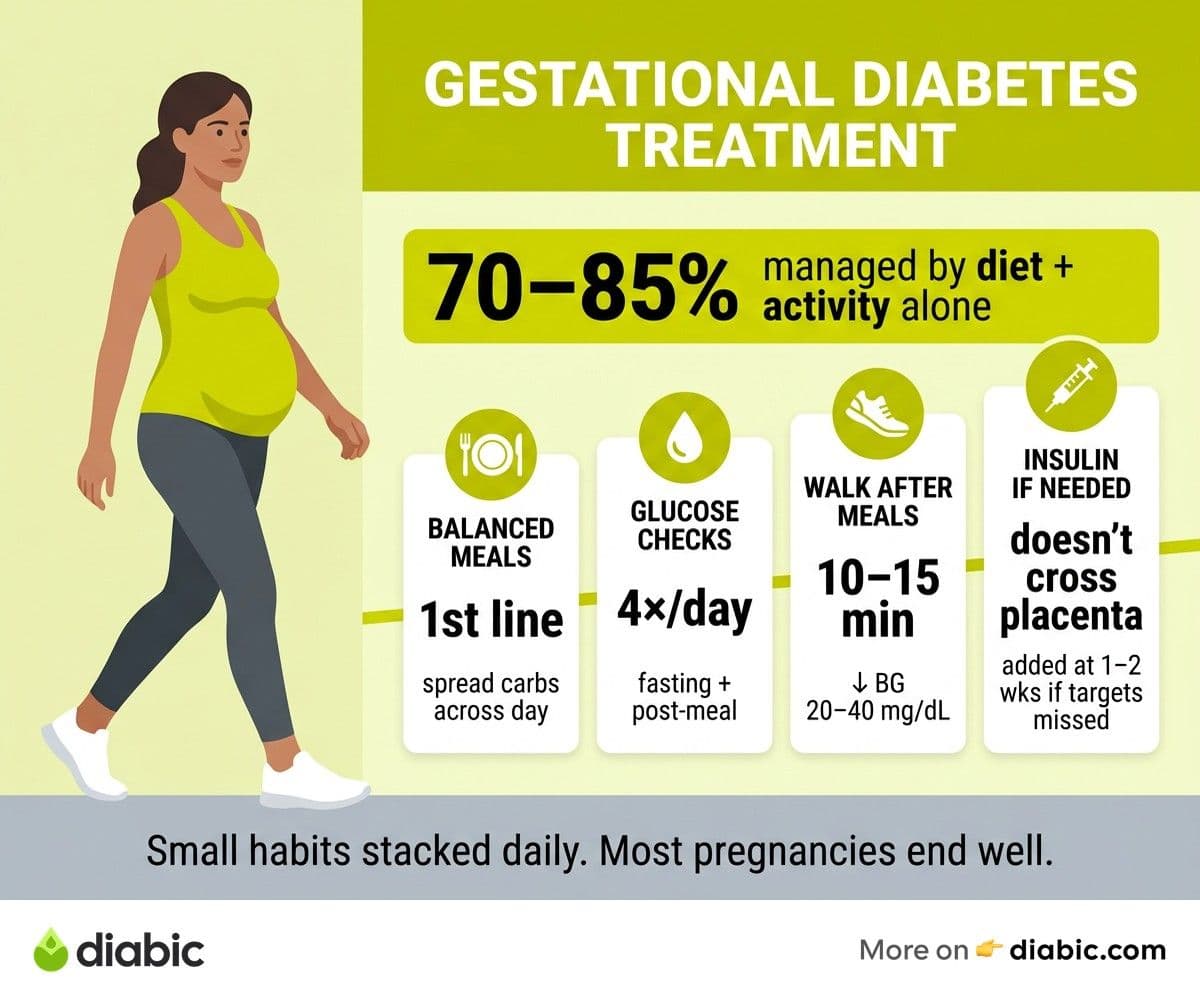
The first line of treatment is almost always nutrition and movement. About 70 to 85 percent of people with gestational diabetes can keep their numbers in range with food changes and light activity alone, according to ACOG, and the NIDDK's overview of gestational diabetes describes the same step-up approach when targets are not met. The remaining group benefits from adding medication, which we will cover further down. None of this is a moral test. It is biology responding to pregnancy hormones, and treatment is simply giving your body the support it needs.
Within the first week or two, you will likely meet with a dietitian, learn how to use a glucose meter, and start logging your numbers. If you want a fuller orientation to the condition itself before reading on, our calm guide to gestational diabetes lays out the basics in plain language. For people who are comparing approaches across the broader diabetes spectrum, prediabetes treatment approaches share many of the same lifestyle pillars.
First line: dietary changes and meal planning
Food is where this plan lives day to day. The goal is not to cut carbs entirely. Your baby needs carbohydrates for healthy growth, and so do you. The goal is to spread carbs evenly through the day and pair them with protein, fat, and fiber so blood sugar rises gently rather than spiking.
Most plans build around three smaller meals and two or three snacks. Breakfast is often the trickiest meal because morning hormones make blood sugar more reactive, so many people end up eating fewer carbs there than they would at lunch or dinner. Your dietitian will help you find the rhythm that works for your body.
Blood sugar monitoring (when and how to check)
Self monitoring is the second pillar of treatment. Most providers ask you to check your fasting blood sugar first thing in the morning, then again either one or two hours after the start of each main meal. That usually adds up to four checks a day. The numbers tell you and your team how your meals and activity are landing, and they guide any treatment adjustments.
Logging matters as much as testing. A simple notebook or app entry that captures the time, the number, and what you ate gives your provider the pattern they need to make good calls. Patterns matter more than any single number.
Physical activity guidelines during pregnancy
Movement is a quiet powerhouse in this plan. A 10 to 15 minute walk after meals can lower a post meal blood sugar reading meaningfully, often by 20 to 40 mg/dL. The point is not to train hard. It is to help your muscles pull glucose out of the bloodstream while it is rising.
Walking, prenatal yoga, swimming, and stationary cycling are typical green lights, assuming your obstetrician has cleared you for general activity. If anything causes pain, dizziness, or contractions, stop and check in with your provider.
When medication or insulin is added
If lifestyle changes do not bring your numbers into range after a week or two of consistent effort, your provider may add medication. This is common, expected, and not a sign that anything went wrong. Pregnancy hormones can simply outpace what nutrition alone can do, especially as you move into the third trimester.
Do You Need Insulin for Gestational Diabetes
Many people newly diagnosed are quietly worried about one question: do you need insulin for gestational diabetes? For some, yes. For others, no. The honest answer depends on your numbers, your stage of pregnancy, and how your body is responding to food and movement.
Insulin remains the gold standard medication for gestational diabetes when something more than lifestyle is needed. The reason is simple. Insulin does not cross the placenta in meaningful amounts, so it works on you while leaving the baby unaffected. The NICE guidelines on gestational diabetes outline a similar treatment pathway used across the UK, with insulin recommended when blood sugar targets are not met within one to two weeks of dietary changes.
When diet and lifestyle alone are not enough
Providers typically add medication when fasting blood sugar runs above target on multiple days, or when post meal numbers stay elevated despite a thoughtful meal plan. Hormones surge in the third trimester, and many people who managed beautifully at 28 weeks need a small evening insulin dose by 34 weeks. Needing more support later in pregnancy is one of the most common patterns in gestational diabetes, and it does not undo any of the work you did earlier.
How insulin works during pregnancy
Insulin is given as an injection, usually with a small pen device that most people find easier than expected. Doses are tiny compared to type 1 diabetes regimens, and they are adjusted often based on your logs. The most common scenario is a single bedtime dose of long acting insulin to bring fasting numbers down. Some people add a fast acting dose before meals if post meal numbers are also high.
Your care team will walk you through the technique in person. The needles are short and thin, and the injection sites are typically the abdomen or thigh.
Oral medications as an alternative in some cases
Metformin and glyburide are sometimes used in gestational diabetes when insulin is not a workable option. Both cross the placenta to some degree, which is why most major guidelines still consider insulin the first line medication. There are situations where oral medication makes sense, and your provider can talk you through the trade offs.
Why needing insulin is not a failure
If you take nothing else away from this section, take this: needing insulin during pregnancy is not a failure of effort, willpower, or self care. It is a reflection of how aggressively pregnancy hormones can push back against insulin. We have heard from many parents who blamed themselves for needing medication after weeks of strict eating. The medication is a tool, the same way prenatal vitamins are a tool. The point is a healthy baby and a healthy you.
From my experience: After 14 years of living with diabetes, I have learned that medication is never a moral category. The body asks for what it needs, and giving it the support it asks for is not a defeat. It is good parenting, applied early.
The Meal Plan at the Heart of Gestational Diabetes Treatment
A gestational diabetes meal plan is the foundation of treatment, and most people are surprised by how flexible it can be. There is no single approved diet for gestational diabetes. There is a set of principles that you and your dietitian shape into something that fits your culture, schedule, and food preferences.
The core principles are consistent carb portions at each meal, a balance of protein and fat alongside those carbs, and steady fiber throughout the day. Most plans land around 175 to 200 grams of total carbohydrates per day, distributed across meals and snacks. Your specific number may differ.
If you want a deeper look at this piece of treatment, our gestational diabetes meal planning guide walks through plate building, sample days, and snack ideas in detail. Reading both alongside each other gives a fuller picture.
Carb counting and balanced meal principles
Carb counting in pregnancy does not need to be precise to the gram. Most dietitians teach a simpler version using carb portions, where one portion equals roughly 15 grams. Breakfast might be one or two portions, lunch and dinner two to three each, and snacks one each. Your post meal blood sugar numbers tell you whether the targets are working.
The plate model is another helpful framework. Half non starchy vegetables, a quarter lean protein, a quarter starchy or grain food, plus a small fat source. It is intuitive enough to use at restaurants and family dinners without measuring anything.
Working with a dietitian for a personalized plan
A dietitian visit is one of the most valuable parts of this plan. They translate the principles into your real life: the foods you actually like, the schedule you actually keep, the cultural foods that matter to you. If your insurance covers Medical Nutrition Therapy for gestational diabetes (most do, in the US), use that benefit fully. Two or three sessions across the pregnancy often makes the difference between feeling controlled by the diet and feeling at home in it.
Blood Sugar Monitoring and Targets
Numbers can feel intimidating in the first week, then quickly become routine. Most people develop a feel for which foods send them up and which keep them steady within a few weeks of monitoring. Targets in pregnancy are tighter than in non pregnancy diabetes because blood sugar in the parent influences glucose levels in the baby.
The American College of Obstetricians and Gynecologists publishes target ranges in its practice bulletin on gestational diabetes management. These targets are widely used, and your provider may use slightly different cutoffs based on your situation.
Target blood sugar numbers during pregnancy
Most providers in the US use these general targets:
- Fasting: below 95 mg/dL
- One hour after the start of a meal: below 140 mg/dL
- Two hours after the start of a meal: below 120 mg/dL
Numbers above these once or twice are not a problem. Patterns of repeated highs are what your provider watches for, because patterns are what trigger treatment changes.
How often to test (fasting, before/after meals)
Four checks a day is the most common rhythm: fasting, plus one or two hours after each main meal. Some providers add a pre meal check if dosing is involved. Once your numbers stabilize and your provider has a clear pattern, testing may scale back. Always confirm your specific schedule with your team rather than going by what a friend or relative did.
Using a log to track patterns and adjust
A log of blood sugar plus a quick note about what you ate is gold for your care team. It turns four scattered numbers into a story your provider can interpret. A few common patterns: high fasting numbers point to bedtime or overnight changes (often where insulin is added first). High one hour numbers usually point to the meal itself. High two hour numbers often mean a meal lacked protein or fiber.
Gestational Diabetes Symptoms During Treatment
People often ask what gestational diabetes symptoms look like once treatment is underway. The honest answer is that most people did not have obvious symptoms before treatment either, which is why universal glucose screening exists in pregnancy. The shift you may notice with treatment is more about energy and steadiness than dramatic changes.
What improving symptoms look like
Once meal patterns are working, many people notice fewer afternoon energy crashes. Hunger between meals tends to feel less urgent because blood sugar swings are smaller. Sleep can improve as overnight glucose stabilizes. None of these are universal, but they are common and reassuring when they show up.
When to call your provider
Call your provider if you see fasting numbers consistently above target for several days, post meal numbers repeatedly above range despite consistent eating, ketones in your urine when you check (some providers ask for this), reduced fetal movement, severe headaches, or sudden swelling. None of these means something has gone wrong. Each one is information your team needs to make a good call about your treatment.
How to distinguish treatment side effects from pregnancy changes
Pregnancy itself causes thirst, frequent urination, and fatigue. So can elevated blood sugar. Insulin can sometimes cause low blood sugar, which feels different: shakiness, sweating, sudden hunger, or lightheadedness. If you are taking insulin, your team will teach you how to treat a low and when to call.
What to Expect During Delivery
Care continues right through delivery, and the day looks more normal than many parents expect. Most people with well managed gestational diabetes deliver vaginally at full term. Some are induced earlier based on baby size, blood sugar control, or other obstetric factors. Your care team will discuss any planning specific to you in the third trimester.
How gestational diabetes affects delivery planning
If your blood sugar has been well controlled and the baby is growing normally, your delivery plan often looks like any other pregnancy. If the baby is measuring large or your numbers have been hard to steady, your provider may recommend induction around 39 to 40 weeks rather than waiting longer. Cesarean delivery is more common with very large babies, but it is not automatic.
Monitoring during labor
During labor, your blood sugar will be checked frequently, often every one to two hours. The goal is to keep numbers in a tight range so the baby is not flooded with glucose right before delivery. If you are on insulin, your team may use IV insulin during labor, which is straightforward and easily adjusted.
Immediate postpartum blood sugar considerations
After delivery, blood sugar usually drops sharply because the placenta is gone and so are the hormones that drove the gestational diabetes. Most parents stop checking blood sugar within a day or two. The baby will have their blood sugar checked a few times in the first 24 hours to make sure they are adjusting well. Postpartum testing for you typically happens 6 to 12 weeks later, to confirm your blood sugar has returned to normal.
FAQ
How is gestational diabetes treated during pregnancy?
Gestational diabetes treatment starts with a personalized meal plan, regular blood sugar monitoring, and physical activity. If those measures do not keep blood sugar in target range, providers add insulin or, in some cases, an oral medication. Care continues through delivery and includes a postpartum glucose check 6 to 12 weeks after birth.
Do you need insulin for gestational diabetes?
Not always. Most people manage gestational diabetes with food and movement alone. When fasting or post meal numbers stay above target despite consistent effort, insulin is added because it is safe in pregnancy and does not cross the placenta. Needing insulin is a common outcome, especially in the third trimester, and is not a failure of effort.
What is a normal blood sugar range for gestational diabetes?
Common targets are below 95 mg/dL fasting, below 140 mg/dL one hour after meals, and below 120 mg/dL two hours after meals. Your provider may set slightly different goals based on your history. Patterns matter more than any single reading.
Can I have a vaginal delivery with gestational diabetes?
Yes. Most people with well managed gestational diabetes deliver vaginally at term. Cesarean delivery becomes more likely if the baby is measuring very large or if labor is not progressing safely. Your obstetrician will share specifics as you move into the final weeks of pregnancy.
What happens to gestational diabetes after birth?
Gestational diabetes resolves for most people within days to weeks of delivery as pregnancy hormones drop. A glucose test 6 to 12 weeks postpartum confirms your blood sugar has returned to normal. Because gestational diabetes raises lifetime risk of type 2 diabetes, ongoing screening every 1 to 3 years is recommended.
A few weeks into gestational diabetes treatment, the four daily checks and balanced plate start to feel like background noise rather than a project. Lean on your dietitian, your obstetrician, and any partner or family member who can share the load, and remember that needing more support later in pregnancy is a common, expected part of the path. Healthy babies and proud parents are the most common outcome, and a steady, supported plan is what gets you there.
Dr. Rezwana Parvin Rumpa is an obstetrics and gynaecology specialist with clinical focus on gestational diabetes, PCOS, and fertility. She holds the MRCOG (Final Part) from the Royal College of Obstetricians and Gynaecologists in London, the MRCPI (Final Part) from the Royal College of Physicians of Ireland, and an MBBS from Shaheed Monsur Ali Medical College under Dhaka University. Dr. Rumpa serves as a Senior Medical Officer in the Obs and Gynae department at BRB Hospitals Ltd, where she has spent three years managing prenatal care, emergency obstetric cases, and women's-health surgery. On Diabic, she medically reviews content for women living with diabetes, with particular attention to pregnancy, PCOS, and reproductive-health intersections.
Medically reviewed by
Dr. Shanto Arian is an internal medicine physician now specializing in clinical and aesthetic dermatology, with a parallel academic focus on epidemiology and public health. He holds an MBBS, MPH, MSc (UK), MRCP (UK), MRCPI (Ireland), Diploma in Dermatology (UK), and Diploma in Aesthetic Medicine (USA). Dr. Arian trained in internal medicine, including hospital work on hematology cases such as graft-versus-host disease, before moving toward dermatology. Skin is one of the earliest places diabetes shows itself, from acanthosis nigricans and diabetic dermopathy to slow foot wound healing, and that intersection is where his clinical and Diabic-review work meet. On Diabic, Dr. Arian medically reviews content on diabetes diagnosis, complications, dermatologic manifestations, and pharmacotherapy, ensuring every claim aligns with current ADA, NICE, and peer-reviewed literature.
More from Diabetes Knowledge
View all
6 Safe Dessert for Gestational Diabetes Recipes You Can
Six dessert for gestational diabetes recipes that satisfy your sweet tooth without spiking blood sugar, with carb counts and pairing tips you can use.

8 High Fiber Foods That Help with Prediabetes
Add these 8 high fiber foods for prediabetes to slow glucose absorption, support steady blood sugar, and meet the daily fiber target most people miss.

Mediterranean Diet for Prediabetes: A Practical Guide
The mediterranean diet for prediabetes is one of the best-studied eating patterns for prevention. Here is what to eat, what to avoid, and how to start.
Clinician-reviewed habits, plain-language guides, and honest answers - the small shifts that make living with diabetes feel lighter, every day.