Prediabetes Diet: What to Eat and What to Limit
A practical prediabetes diet guide covering what to eat, what to limit, and how to build balanced meals that support stable blood sugar without.

In this article(11)
Figuring out a prediabetes diet does not have to feel overwhelming or restrictive. The goal is not perfection but building eating habits that help your blood sugar stay stable while still enjoying your food. Most people are surprised to learn how much room there is to eat well, eat normally, and still move blood sugar in the right direction.
A prediabetes diagnosis can feel like a turning point, and that is exactly the moment when small dietary shifts pay off the most. Research shows that lifestyle changes can reverse prediabetes for many people, and food is the lever with the biggest daily impact.
If you are still wrapping your head around the diagnosis itself, our piece on why catching prediabetes early matters explains the window of opportunity. This guide focuses on what to put on your plate.
What Is the Best Diet for Prediabetes
The honest answer is that there is no single best diet for prediabetes. There are, however, clear principles that work across many eating patterns: emphasize whole foods, prioritize fiber and protein, choose healthy fats, and reduce refined carbohydrates and added sugars. The specific cuisine or framework you build around those principles matters less than your ability to stick with it.
Several dietary patterns have strong research support for blood sugar management. The Mediterranean diet emphasizes vegetables, legumes, whole grains, fish, olive oil, nuts, and moderate dairy. The DASH diet, originally designed for blood pressure, also performs well for blood sugar because it shares many of the same principles. Balanced low-carb approaches help some people, especially when carbs come from whole, minimally processed sources.
The American Diabetes Association's nutrition consensus report makes this point clearly: dietary quality and overall pattern matter more than rigid rules. If you want a deeper look at one of the most studied options, our guide to the Mediterranean approach for prediabetes walks through how to start.
What does not work well is any approach that feels like punishment. Restrictive diets that label foods as forbidden tend to backfire, leading to cycles of strict adherence and rebound eating that ultimately harm blood sugar more than a balanced approach would.
Foods to Eat More Of with a Prediabetes Diet
Building a diet for prediabetes starts with adding, not subtracting. When the foundation of your meals is rich in fiber, protein, and healthy fats, the rest tends to fall into place naturally. Here are the categories worth leaning into.
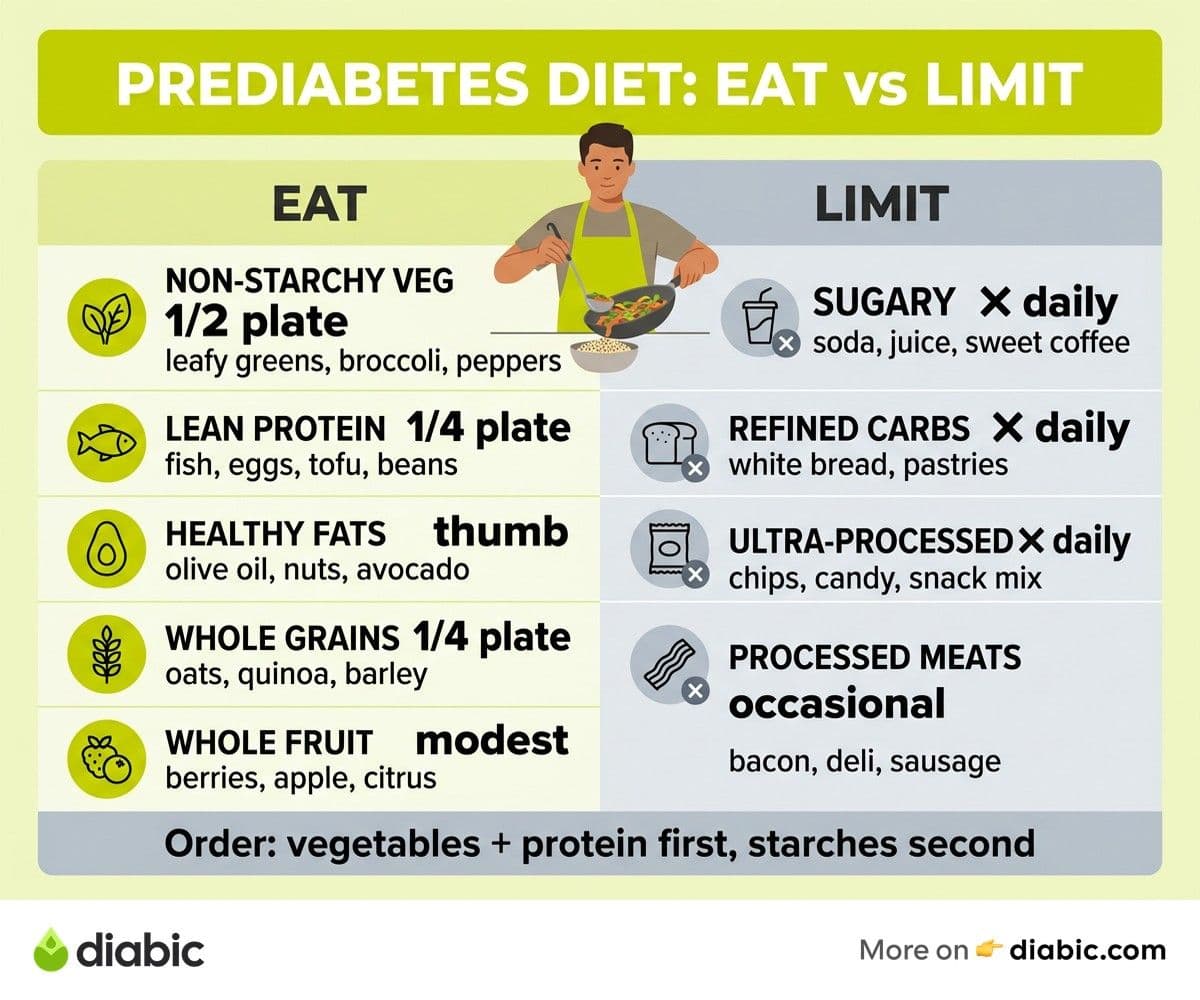
Non-starchy vegetables are the single most underused food group for blood sugar. Leafy greens, broccoli, cauliflower, peppers, zucchini, mushrooms, asparagus, green beans, tomatoes, and cabbage have minimal effect on blood sugar and provide fiber, vitamins, and minerals. Aim to fill half your plate with them at most meals.
Lean proteins slow digestion and help blood sugar stay steady. Good options include fish (especially fatty fish like salmon and sardines), poultry, eggs, tofu, tempeh, beans, and lentils. Legumes are particularly helpful because they combine protein with fiber and complex carbs.
Healthy fats support satiety and blood sugar stability. Olive oil, avocado, nuts, seeds, and fatty fish provide the kind of fats associated with better metabolic health in long-term studies.
Whole grains like oats, quinoa, brown rice, barley, and 100 percent whole-wheat bread digest more slowly than refined grains, which means a gentler rise in blood sugar. Portion still matters, but the type of grain matters too. Our guide to whole grains to choose for prediabetes breaks down which options work best.
Fruits in moderate portions are absolutely fine. Berries, apples, pears, citrus, and stone fruits offer fiber, antioxidants, and natural sweetness without the spike of fruit juice. Pairing fruit with a source of protein or fat (like an apple with almond butter) further softens the blood sugar response.
What Foods Should You Avoid with Prediabetes
The word "avoid" is doing a lot of work here, and it is worth softening. With prediabetes, the more useful framing is "limit" rather than "never eat again." Forbidding foods entirely tends to backfire and rarely matches how real people actually live and eat. That said, a few categories are worth seriously cutting back on.
Sugar-sweetened beverages are the biggest culprit for many people. Soda, sweetened iced tea, energy drinks, sweetened coffee drinks, and even fruit juice deliver a fast, large dose of sugar without any fiber to slow it down. Swapping these for water, sparkling water, unsweetened tea, or coffee with minimal added sugar is one of the highest-impact changes you can make.
Refined carbohydrates like white bread, white rice, instant oatmeal, sugary breakfast cereals, pastries, and crackers digest quickly and spike blood sugar. They also tend to leave you hungry sooner than whole-grain alternatives, which can drive overeating later in the day.
Highly processed snack foods and fast food combine refined carbs, added sugar, low-quality fats, and excessive sodium in ways that are hard on blood sugar and overall health. The convenience is real, and so is the cost over time.
Processed meats like bacon, sausage, and deli meats have been linked to higher type 2 diabetes risk in long-term studies. Enjoying them occasionally is fine; building daily meals around them is worth rethinking.
The CDC's National Diabetes Prevention Program emphasizes that progress, not perfection, drives long-term blood sugar improvement. Talk to your doctor or a registered dietitian about how to make changes that fit your life rather than fighting it.
Building a Balanced Diet for Prediabetes
Knowing which foods to choose is one thing. Putting them together into actual meals is where most people get stuck. A simple framework helps a balanced diet for prediabetes feel doable instead of mathematical.
The plate method is one of the easiest ways to structure meals without counting anything:
- Half your plate: non-starchy vegetables (salad, roasted vegetables, stir-fry vegetables)
- One quarter: lean protein (chicken, fish, tofu, eggs, beans)
- One quarter: whole grains or starchy vegetables (quinoa, brown rice, sweet potato, whole-wheat pasta)
- Add: a small portion of healthy fat (olive oil dressing, avocado, nuts) and water or unsweetened beverage
The Harvard Healthy Eating Plate offers a visual version of this framework that pairs well with prediabetes goals.
Meal timing also affects blood sugar stability. Eating at roughly consistent times each day helps your body anticipate and respond to food. Going long stretches without eating, then having a large meal, tends to produce bigger blood sugar swings than evenly spaced meals.
Snacks can support stable blood sugar when chosen well. Pairing a carb with a protein or fat (apple with cheese, hummus with vegetables, Greek yogurt with berries, a handful of nuts) tends to keep blood sugar steadier than a snack of carbs alone.
A Healthy Diet for Prediabetes in Practice
What does a healthy diet for prediabetes actually look like across a normal day? Here are some practical examples to make the framework concrete.
Breakfast ideas: steel-cut oats topped with berries and walnuts, vegetable omelet with whole-grain toast and avocado, Greek yogurt with chia seeds and a small handful of berries, or savory breakfast bowls with eggs, sauteed greens, and quinoa.
Lunch ideas: large salad with grilled chicken or chickpeas, olive oil dressing, and a piece of fruit; lentil soup with a side salad; whole-grain wrap with turkey, hummus, and lots of vegetables; or grain bowls built on quinoa or farro with roasted vegetables and a protein.
Dinner ideas: baked salmon with roasted Brussels sprouts and a small portion of brown rice; stir-fry with tofu or shrimp, plenty of vegetables, and quinoa; turkey chili with beans, peppers, and a small whole-grain roll; or sheet-pan chicken with vegetables and roasted sweet potato.
Snack ideas: apple with peanut butter, hummus with carrot sticks, a small handful of almonds, hard-boiled eggs, plain Greek yogurt with cinnamon, or whole-grain crackers with cheese.
Eating out does not have to derail your plan. Look for grilled rather than fried proteins, ask for extra vegetables, request dressings and sauces on the side, swap fries for salad or steamed vegetables, and skip the bread basket if you tend to over-snack on it. You do not need to be the picky one at the table; small swaps add up.
Grocery shopping is easier when you stick to the perimeter of the store, where most whole foods live. A simple list might include: leafy greens, two or three other non-starchy vegetables, one or two lean proteins, beans or lentils, whole grains, healthy fats (olive oil, nuts, avocado), and fresh fruit. Build your week around what is in the cart, not around recipes that require a special trip.
From my experience: I have lived with type 1 diabetes for fourteen years, which gives me a different relationship with food than someone with prediabetes, but the daily mechanics overlap a lot. The single change that made the biggest difference for my blood sugar stability was not cutting carbs; it was front-loading every meal with vegetables and protein, and eating starches second. Same food, different order, dramatically different glucose curve. It is the kind of small shift that costs nothing and pays off every single meal.
Making Dietary Changes That Last
The hardest part of a prediabetes diet is not figuring out what to eat. It is sticking with it past the first burst of motivation. Sustainable change tends to look different from what people expect.
Start with one meal at a time. Trying to overhaul breakfast, lunch, dinner, and snacks all in one week is a recipe for burnout. Pick the meal where change feels easiest (often breakfast) and build from there. Once it feels automatic, move to the next meal.
Track progress in ways that do not feel obsessive. A weekly check-in with how you are feeling, your energy levels, and any patterns you notice often tells you more than daily food logging. If your doctor is monitoring A1C every three to six months, that gives you a real signal of whether your changes are moving the needle.
Consider working with a registered dietitian, especially one with diabetes experience. Insurance often covers nutrition counseling for prediabetes through the Medical Nutrition Therapy benefit. Personalized guidance is far more useful than generic advice from the internet, including this article.
FAQ
What is the best diet for prediabetes?
No single diet is best for everyone. Research supports the Mediterranean diet, the DASH diet, and balanced moderate low-carb approaches as effective options for blood sugar management. The best diet is one that helps stabilize your blood sugar, supports your overall health, and fits your lifestyle well enough that you can sustain it long-term.
What foods should you avoid with prediabetes?
Limit sugar-sweetened beverages, refined carbohydrates like white bread and pastries, heavily processed snack foods, and processed meats. These can cause rapid blood sugar spikes and have been linked to higher type 2 diabetes risk over time. "Limit" is the key word; occasional enjoyment is different from daily reliance.
Can you reverse prediabetes with diet alone?
Diet plays a major role, and research suggests that combined with regular physical activity and modest weight loss when appropriate, dietary changes may help return blood sugar to the normal range for many people. The CDC's National Diabetes Prevention Program is built on this evidence. Talk to your doctor about a plan that fits your specific situation.
Are fruits okay on a prediabetes diet?
Yes, whole fruits are generally fine in moderate portions. Berries, apples, pears, citrus, and stone fruits provide fiber and nutrients without the rapid blood sugar response of fruit juice. Pairing fruit with a protein or fat helps stabilize the response further.
A prediabetes diet is less about restriction and more about reorientation. The same kitchen, the same favorite foods, often the same recipes can become a foundation for stable blood sugar with small consistent shifts. The window for reversal is real, and the food on your plate tomorrow is one of the most powerful tools you have.
Shahriar P. Shuvo is the founder of Diabic. He has lived with diabetes for over 14 years, and built Diabic to deliver the practical, evidence-based self-management tools he wished existed when he was first diagnosed. By trade, Shahriar is a senior design and frontend engineer with 6+ years shipping products at Agora, Timescale (now Tiger Data), and ShareTrip. He writes from the intersection of lived diabetes experience and product craft, focused on what works in daily management rather than what sounds good in a textbook.
Medically reviewed by
Dr. Shanto Arian is an internal medicine physician now specializing in clinical and aesthetic dermatology, with a parallel academic focus on epidemiology and public health. He holds an MBBS, MPH, MSc (UK), MRCP (UK), MRCPI (Ireland), Diploma in Dermatology (UK), and Diploma in Aesthetic Medicine (USA). Dr. Arian trained in internal medicine, including hospital work on hematology cases such as graft-versus-host disease, before moving toward dermatology. Skin is one of the earliest places diabetes shows itself, from acanthosis nigricans and diabetic dermopathy to slow foot wound healing, and that intersection is where his clinical and Diabic-review work meet. On Diabic, Dr. Arian medically reviews content on diabetes diagnosis, complications, dermatologic manifestations, and pharmacotherapy, ensuring every claim aligns with current ADA, NICE, and peer-reviewed literature.
More from Diabetes Knowledge
View all
6 Safe Dessert for Gestational Diabetes Recipes You Can
Six dessert for gestational diabetes recipes that satisfy your sweet tooth without spiking blood sugar, with carb counts and pairing tips you can use.

8 High Fiber Foods That Help with Prediabetes
Add these 8 high fiber foods for prediabetes to slow glucose absorption, support steady blood sugar, and meet the daily fiber target most people miss.

Mediterranean Diet for Prediabetes: A Practical Guide
The mediterranean diet for prediabetes is one of the best-studied eating patterns for prevention. Here is what to eat, what to avoid, and how to start.
Clinician-reviewed habits, plain-language guides, and honest answers - the small shifts that make living with diabetes feel lighter, every day.