Semaglutide vs Tirzepatide: Key Differences You Should Know
Semaglutide vs tirzepatide explained: how they work, A1C and weight results, side effects, costs, and how to choose the right injectable with your doctor.

In this article(12)
If you have type 2 diabetes or are exploring weight management options, the semaglutide vs tirzepatide question has probably come up in your provider's office or a late-night search session. Both medications have reshaped what is possible for managing blood sugar and body weight, yet they are not interchangeable. They work through different biological pathways, deliver different average results in clinical trials, and carry their own pros and cons around cost, side effects, and long-term evidence.
We get why this comparison feels confusing. Marketing names blur together, social media oversimplifies the science, and friends who started either medication often have wildly different experiences. Our goal here is to walk you through what the research actually shows and what questions to bring to your next appointment.
How Semaglutide and Tirzepatide Work
Semaglutide is a GLP-1 receptor agonist, which means it mimics a single gut hormone called glucagon-like peptide-1. You may know it by its brand names: Ozempic and Rybelsus are approved for type 2 diabetes, while Wegovy is approved for chronic weight management. When semaglutide binds to GLP-1 receptors, it helps your pancreas release insulin in response to meals, slows how quickly your stomach empties, and signals to your brain that you feel full sooner.
Tirzepatide takes a different approach. It is a dual agonist that activates both the GLP-1 receptor and the GIP (glucose-dependent insulinotropic polypeptide) receptor. Mounjaro is the brand name approved for type 2 diabetes, while Zepbound is approved for weight management. By engaging two incretin pathways instead of one, tirzepatide may amplify the effects on insulin secretion, appetite, and metabolic efficiency. You can read more in our overview of GLP-1 receptor agonists and why they changed diabetes care.
Both share core mechanisms that explain their overlapping effects. They slow gastric emptying so meals release glucose more gradually, boost insulin secretion only when blood sugar is elevated, and suppress glucagon so your liver releases less stored sugar. The added GIP activity in tirzepatide is the main biological reason researchers see somewhat larger effects on weight and A1C in head-to-head comparisons. According to the FDA prescribing information for Mounjaro, this dual mechanism is unique among currently approved injectables.
Blood Sugar Reduction in Type 2 Diabetes Trials
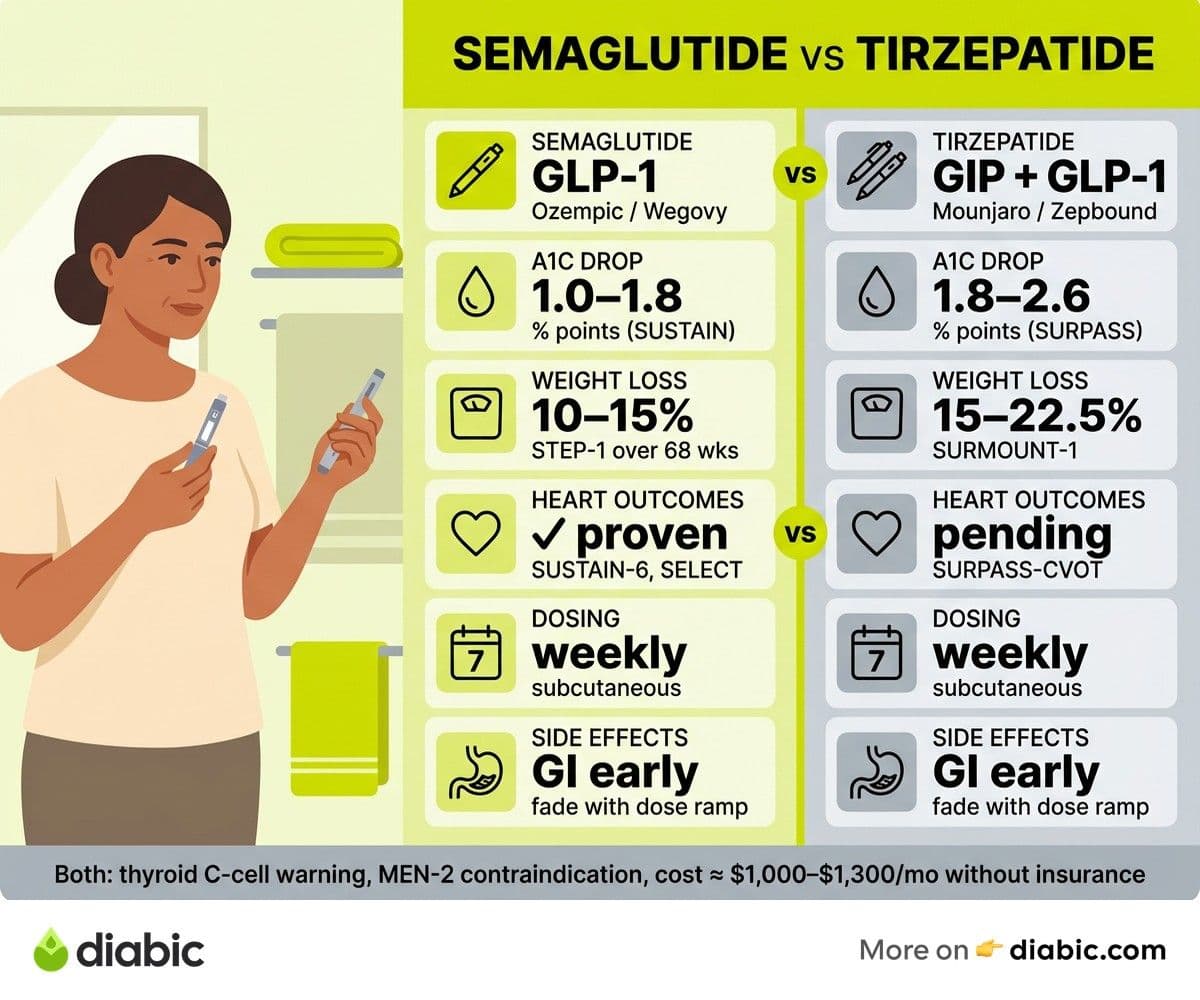
When it comes to lowering A1C, both medications perform impressively compared with older type 2 diabetes injection medication options. The SUSTAIN trial program for semaglutide reported average A1C reductions of roughly 1.0% to 1.8% across different doses and patient populations. Many participants reached the often-cited target of below 7.0%, and a meaningful portion did so without hypoglycemia or weight gain, which had long been weak spots of older therapies. You can review the SUSTAIN-6 cardiovascular outcomes trial in NEJM for the foundational efficacy and safety data.
The SURPASS trial program for tirzepatide reported average A1C reductions in the range of 1.8% to 2.6%, depending on dose and study. The numbers caught attention because they exceeded what most existing therapies could deliver, and because a sizable share of participants reached A1C levels below 5.7%, the threshold for normal glucose tolerance. The SURPASS-2 head-to-head trial published in NEJM directly compared tirzepatide with semaglutide in adults with type 2 diabetes and found greater A1C reductions across all three tirzepatide doses tested.
Trial comparisons are useful but never perfect. SURPASS and SUSTAIN enrolled different populations, used different background therapies, and measured outcomes at different time points. Real-world results depend heavily on how consistently you take the medication, what you eat, and how your body responds. Our guide to Ozempic for type 2 diabetes and the hype versus reality digs into the nuance further.
Weight Loss Comparison
Weight reduction is where these medications have generated the loudest public conversation, and the data behind the headlines is genuinely strong. In the STEP clinical program for semaglutide for weight loss, adults without diabetes lost an average of about 10% to 15% of starting body weight at the highest approved dose over 68 weeks. The STEP-1 trial in NEJM is the most cited reference and a good starting point if you want to look at the methodology.
Tirzepatide has produced larger average weight loss in its trial program. The SURMOUNT trials reported average weight reductions of approximately 15% to 22.5% of starting body weight at the highest doses, with the SURMOUNT-1 trial in NEJM being the headline study. A subset of participants lost 25% or more of their starting weight, which historically had only been achievable through bariatric surgery. For people considering tirzepatide for weight management, our explainer on whether Zepbound is a diabetes medication clarifies how the same molecule is approved under two brand names for two different uses.
Averages can hide an important truth: individual results vary widely. Genetics, baseline metabolism, sleep, stress, eating patterns, muscle mass, and side effect tolerance all shape the outcome. Both medications work best when paired with steady nutrition habits and regular movement, not as a substitute for them.
Cardiovascular and Kidney Benefits
Cardiovascular outcomes are one of the strongest differentiators in the semaglutide vs tirzepatide conversation right now. Semaglutide has dedicated outcomes trials, including SUSTAIN-6 in people with type 2 diabetes and the SELECT trial in NEJM in adults with overweight or obesity and existing cardiovascular disease. SELECT showed a roughly 20% reduction in major adverse cardiovascular events such as heart attack, stroke, and cardiovascular death, which is a meaningful finding for people who carry that risk profile.
Tirzepatide does not yet have completed cardiovascular outcomes data of the same scale. The SURPASS-CVOT trial is ongoing and expected to report in the coming years, and early signals from existing SURPASS data have been reassuring rather than conclusive. Until SURPASS-CVOT reports, providers often lean toward semaglutide when established cardiovascular disease is present and the protective evidence matters for the treatment decision.
Kidney protection is another area of active research. Semaglutide showed benefits in the FLOW trial, which tested it in adults with type 2 diabetes and chronic kidney disease. Tirzepatide has shown promising kidney signals in SURPASS analyses, though dedicated outcomes data is still maturing. The ADA Standards of Care 2025 reflects this evidence gap by giving semaglutide a slightly stronger recommendation when cardiovascular or kidney protection is a primary treatment goal.
Side Effects and Tolerability
Both medications share a broadly similar side effect profile because they act on the same gut hormone system. Nausea, vomiting, diarrhea, constipation, and reduced appetite are the most common complaints, and they tend to be worst during dose escalation. For most people these effects ease within weeks as the body adjusts, though a smaller group finds them persistent enough to stop the medication. Eating smaller, lower-fat meals and staying hydrated often helps you ride out the adjustment period.
Both carry a boxed warning about thyroid C-cell tumors, based on rodent studies, and are not recommended for people with a personal or family history of medullary thyroid cancer or multiple endocrine neoplasia syndrome type 2. Pancreatitis has been reported with both drugs, though the absolute risk is low. Gallbladder problems and acute kidney injury (often related to dehydration from severe nausea) are rarer concerns. The NIDDK overview of diabetes medicines is a balanced patient-friendly resource for reviewing risks.
Both medications are administered as a once-weekly subcutaneous injection, which most people find easier than daily regimens. Real-world data suggests small differences in tolerability between the two, but the pattern is not consistent enough to declare a clear winner. If you have struggled with one, switching under your provider's guidance is sometimes worth trying.
Cost, Insurance, and Availability
Cost is often the deciding factor whether the clinical data prefers it or not. List prices for both medications run roughly $1,000 to $1,300 per month in the United States without insurance, though actual out-of-pocket costs vary widely based on your plan, your indication, and any manufacturer assistance you qualify for. Insurance coverage tends to be more straightforward when the prescription is written for type 2 diabetes than for weight management, where prior authorizations, exclusions, and step therapy requirements are common.
Manufacturer copay savings cards can lower monthly costs significantly for people with commercial insurance, and patient assistance programs exist for those who qualify based on income. Pharmacy availability has been a moving target since 2022, with periodic shortages and a growing market of compounded versions of varying legitimacy. The FDA has issued warnings about compounded semaglutide and tirzepatide that are worth reading before considering non-brand alternatives. Talk to your doctor about which option your insurance is likely to approve and whether copay or assistance programs apply to your situation.
Quick Comparison at a Glance
The following table summarizes the major differences between the two medications. Use it as a conversation starter, not a substitute for a full medical evaluation with your provider.
Choosing Between Semaglutide vs Tirzepatide with Your Doctor
The right choice depends on what matters most to you and what your medical history looks like. If reducing cardiovascular risk is the priority, especially if you already have heart disease, semaglutide currently has the stronger evidence base. If your main goals are the largest possible reduction in A1C or body weight and you do not need cardiovascular protection above what general blood sugar improvement provides, tirzepatide may give you more on those endpoints. Our injectable diabetes medication list and comparison can help you see how both fit alongside other options.
Insurance and access realities will shape your decision whether you want them to or not. We have spoken with many readers who started on whichever medication their plan covered and got excellent results, even when it was not the one they originally asked about. Both are genuinely strong options, and switching between them later is possible if the first choice is not working for you.
The most important step is an honest conversation with your provider that covers your full medical history, including thyroid history, pancreatitis risk, kidney function, and what you have already tried. Bring your questions written down, ask about expected side effects, and discuss what success would look like at three, six, and twelve months. Talk to your doctor about whether starting low and titrating slowly might improve your tolerability, and revisit the plan together rather than abandoning it silently if the first weeks are difficult.
If you are weighing semaglutide vs tirzepatide right now, write down your top three priorities (A1C reduction, weight loss, cardiovascular protection, cost, side effect tolerance) and rank them. Bring that ranking to your next appointment along with a copy of your insurance formulary if you can access it. That short prep often produces a clearer decision than another month of internet research.
Frequently Asked Questions
Is tirzepatide better than semaglutide for diabetes?
In the SURPASS-2 head-to-head clinical trial, tirzepatide produced greater A1C reductions and greater weight loss than semaglutide at the doses tested. However, semaglutide has more extensive long-term safety data and proven cardiovascular benefits from completed outcomes trials such as SUSTAIN-6 and SELECT. Whether one is better for you depends on your individual health goals, your cardiovascular risk profile, your insurance coverage, and how your body responds. Your healthcare provider can help weigh these factors together with your full medical history.
Semaglutide vs tirzepatide for weight loss: which is better?
Clinical trials suggest tirzepatide produces greater average weight loss than semaglutide, with SURMOUNT-1 reporting average reductions of about 15% to 22.5% of starting body weight at the highest dose, compared with about 10% to 15% for semaglutide in STEP-1. That said, individual results vary widely from the trial averages, and factors like cost, availability, side effect tolerance, and your overall health profile all influence which medication is the better fit. Discuss both options with your provider and revisit the plan after a few months to assess how it is working for you.
Are semaglutide and tirzepatide safe for long-term use?
Both medications are intended for long-term use in the populations they are approved for, and clinical trials have followed participants for two years or longer. Semaglutide has more years of post-market safety data given its earlier approval. Stopping either medication often leads to weight regain and worsening blood sugar over time, which is why providers typically frame these as ongoing therapies. Talk to your doctor about a sustainable long-term plan if you start either medication.
Dr. Shanto Arian is an internal medicine physician now specializing in clinical and aesthetic dermatology, with a parallel academic focus on epidemiology and public health. He holds an MBBS, MPH, MSc (UK), MRCP (UK), MRCPI (Ireland), Diploma in Dermatology (UK), and Diploma in Aesthetic Medicine (USA). Dr. Arian trained in internal medicine, including hospital work on hematology cases such as graft-versus-host disease, before moving toward dermatology. Skin is one of the earliest places diabetes shows itself, from acanthosis nigricans and diabetic dermopathy to slow foot wound healing, and that intersection is where his clinical and Diabic-review work meet. On Diabic, Dr. Arian medically reviews content on diabetes diagnosis, complications, dermatologic manifestations, and pharmacotherapy, ensuring every claim aligns with current ADA, NICE, and peer-reviewed literature.
Medically reviewed by
Dr. Rezwana Parvin Rumpa is an obstetrics and gynaecology specialist with clinical focus on gestational diabetes, PCOS, and fertility. She holds the MRCOG (Final Part) from the Royal College of Obstetricians and Gynaecologists in London, the MRCPI (Final Part) from the Royal College of Physicians of Ireland, and an MBBS from Shaheed Monsur Ali Medical College under Dhaka University. Dr. Rumpa serves as a Senior Medical Officer in the Obs and Gynae department at BRB Hospitals Ltd, where she has spent three years managing prenatal care, emergency obstetric cases, and women's-health surgery. On Diabic, she medically reviews content for women living with diabetes, with particular attention to pregnancy, PCOS, and reproductive-health intersections.
More from Treatment & Medication
View all
Recognizing Diabetic Coma Warning Signs Early
Learn to spot diabetic coma warning signs early. We cover DKA, HHS, and severe hypoglycemia symptoms, plus when to call 911 for immediate help.

Switching to Injectable Diabetes Medication: What to Expect
Switching to injectable diabetes medication can feel daunting. Learn what to expect, how to manage side effects, and why this step is progression, not.

Hyperglycemic Hyperosmolar Syndrome: Warning Signs to Know
Hyperglycemic hyperosmolar syndrome is a serious type 2 diabetes emergency. Learn the warning signs, triggers, and when to call 911 for HHS care.
Clinician-reviewed habits, plain-language guides, and honest answers - the small shifts that make living with diabetes feel lighter, every day.