GLP-1 Receptor Agonists: Why They Changed Diabetes Care
GLP-1 receptor agonists diabetes treatment has shifted paradigms with weight loss, heart, and kidney benefits. Here is how this medication class works.

In this article(10)
GLP-1 receptor agonists diabetes care looked very different a decade ago. Treating type 2 diabetes mostly meant lowering blood sugar and hoping the rest of your health would follow. Today, the picture has shifted, and a single class of medications sits near the center of that change. GLP-1 receptor agonists diabetes therapy has moved from a niche injection used after other drugs failed to a treatment that doctors now consider early in the conversation, often alongside metformin.
We have watched this shift happen in real time, and the reason is simple. These medications do more than nudge a number on your glucose meter. They influence appetite, body weight, heart health, and kidney function in ways that surprised researchers when the first long-term trials reported their results. If you live with type 2 diabetes, or you care for someone who does, understanding what this class of medication actually does (and what it does not do) can help you have a more useful conversation with your healthcare team.
From my experience: I live with type 1, so GLP-1 medications are not part of my daily routine, but I have watched two close family members with type 2 start Ozempic in the past few years and the shift in their daily lives has been notable. One described the slower-emptying stomach as the first time in years he felt full from a normal-sized lunch, around three weeks in. Sitting with him while he learned to use the pen reminded me how different the type 2 treatment landscape looks now compared to when I was first reading endocrinology pamphlets in my early twenties.
What Are GLP-1 Receptor Agonists Diabetes Treatments?
GLP-1 stands for glucagon-like peptide-1, a hormone your gut releases naturally after you eat. It tells your pancreas to release insulin, signals your liver to slow glucose production, and sends a quiet message to your brain that you are full. The catch is that this natural hormone breaks down within minutes, so its effects are short-lived. GLP-1 receptor agonists are lab-designed molecules that act like this hormone but stick around in your body for hours or days, depending on the formulation.
This is the foundation of why doctors call them a type 2 diabetes injection medication that works differently from older drugs. Sulfonylureas push the pancreas to release insulin all the time, which can cause low blood sugar. Insulin itself replaces what the body lacks but does nothing for appetite or weight. GLP-1 medications work with the body's own systems, amplifying signals that already exist rather than overriding them. The American Diabetes Association Standards of Care now positions this class prominently in treatment algorithms for adults with type 2 diabetes, particularly when cardiovascular or kidney disease is also a concern.
If you are weighing different treatment paths, our guide on how injectable diabetes medications compare to insulin walks through the practical differences in side effects, dosing, and goals. The two classes are not interchangeable, and many people end up using both at different points in their care.
How GLP-1 Receptor Agonists Work
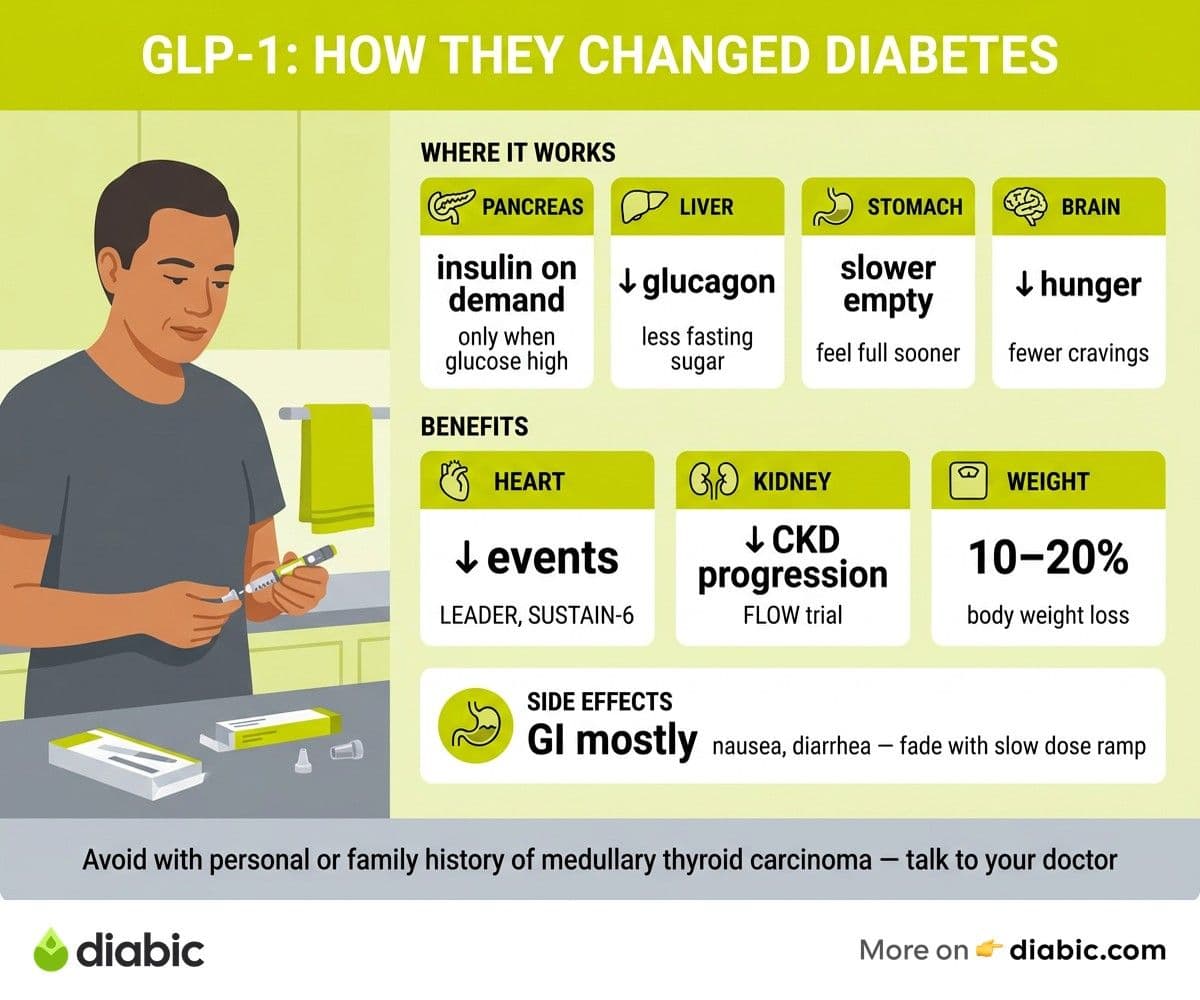
The mechanism behind these drugs is multi-layered, which is part of why they have such a broad effect on the body. They stimulate insulin release only when blood sugar is elevated, which means they are far less likely to cause hypoglycemia compared to sulfonylureas or insulin on their own. They also suppress glucagon, the hormone that tells your liver to dump stored sugar into your bloodstream, which is a major contributor to high fasting glucose readings.
Beyond the pancreas and liver, these medications slow gastric emptying. Food sits in your stomach a little longer, which flattens the post-meal blood sugar curve and helps you feel full faster. This same effect is why some people experience nausea when they first start treatment, and why dose increases are typically gradual. The brain piece is just as important, because GLP-1 receptors in your hypothalamus respond by reducing hunger signals and food cravings.
Put together, this multi-pronged action explains why no other diabetes drug class produces such consistent weight loss alongside blood sugar improvements. For anyone curious about how this category fits into the broader injectable diabetes medication list, the comparison helps clarify why a single weekly shot can do work that previously required several different pills.
Beyond Blood Sugar: The Unexpected Benefits
When the first GLP-1 medications were approved, their main selling point was glucose lowering with less hypoglycemia risk. Then the cardiovascular outcome trials began reporting results, and the conversation shifted. The LEADER trial, published in the New England Journal of Medicine, showed that liraglutide reduced the risk of major cardiovascular events, including death from cardiovascular causes, in adults with type 2 diabetes at high cardiovascular risk. The SUSTAIN-6 trial found similar benefits for semaglutide, including reduced rates of nonfatal stroke.
Kidney protection has emerged as another meaningful benefit. The FLOW trial showed that semaglutide slowed the progression of chronic kidney disease in people with type 2 diabetes, an effect that goes beyond what blood sugar lowering alone would predict. For a condition like diabetic kidney disease, which has historically had limited treatment options, these results matter for long-term outcomes.
Then there is weight loss. In clinical trials, people taking the higher doses approved for obesity have seen body weight reductions of 10 to 20 percent, depending on the medication and the duration of treatment. Weight loss of this magnitude can lower blood pressure, improve cholesterol, and reduce sleep apnea, all of which compound the cardiovascular benefits. This combination of effects is why the conversation about type 2 diabetes treatment options has moved beyond glucose targets alone to a more holistic view of metabolic and cardiovascular risk reduction.
Current GLP-1 Medications on the Market
Several GLP-1 medications are currently available in the United States, each with its own dosing schedule and clinical track record. Semaglutide, sold as Ozempic for type 2 diabetes and Wegovy for obesity, is a once-weekly injection that has the most robust outcome data of the newer agents. The popularity of semaglutide for weight loss has driven supply shortages and a wave of compounded versions, which the FDA has cautioned against because they may not contain the same active ingredient.
Dulaglutide, sold as Trulicity, is also a once-weekly injection and is widely used because of its simple, prefilled pen design. Liraglutide, sold as Victoza for diabetes and Saxenda for obesity, requires daily injection but has the longest safety record in this class. Exenatide was the original GLP-1 medication, available in twice-daily and weekly formulations under the names Byetta and Bydureon. Oral semaglutide, sold as Rybelsus, is currently the only pill version of a GLP-1 receptor agonist, taken daily on an empty stomach.
If you are considering any of these options, our deeper look at Ozempic for type 2 diabetes separates what the trials actually show from the social media headlines. Cost, insurance coverage, and supply availability vary widely, so what your neighbor uses may not be what your insurance plan covers. Talk to your doctor about which option fits your medical history, lifestyle, and budget.
Common Side Effects and Who Should Be Cautious
The most common side effects of GLP-1 receptor agonists are gastrointestinal. Nausea, vomiting, diarrhea, and constipation can show up in the first few weeks, especially when starting treatment or moving to a higher dose. Most people find these symptoms ease as their body adjusts, and slow dose escalation is the standard approach precisely because it gives your gut time to adapt. Eating smaller meals, avoiding very fatty foods, and staying hydrated often help during the adjustment period.
More serious risks are rare but worth knowing about. Pancreatitis has been reported with this class, and you should contact your healthcare provider promptly if you develop severe abdominal pain that radiates to your back, especially if it comes with nausea or vomiting. Gallbladder problems, including gallstones, have also been associated with rapid weight loss on these medications. Some people experience injection site reactions such as redness, itching, or small lumps, which are usually mild and resolve on their own.
The thyroid warning on GLP-1 product labels comes from animal studies in which rats developed medullary thyroid carcinoma at high doses. Whether this risk applies to humans is unclear, but the FDA labeling recommends against use in people with a personal or family history of medullary thyroid carcinoma or multiple endocrine neoplasia type 2. People with a history of severe gastroparesis, diabetic retinopathy that is not stable, or active pancreatitis should also discuss whether this class is appropriate for them. The National Institute of Diabetes and Digestive and Kidney Diseases provides accessible summaries of these considerations for patients and caregivers.
The Future of GLP-1 Therapy
The story of this drug class is still being written. Tirzepatide, sold as Mounjaro for diabetes and Zepbound for obesity, is technically a dual agonist that activates both GLP-1 and GIP receptors, producing even larger reductions in blood sugar and body weight in head-to-head comparisons. Retatrutide, an experimental triple agonist that targets GLP-1, GIP, and glucagon receptors, is showing promising early results in trials and may push weight loss outcomes further still.
Researchers are also studying whether GLP-1 medications may help in conditions beyond type 2 diabetes and obesity. Trials are looking at their role in nonalcoholic steatohepatitis, cardiovascular disease in people without diabetes, Alzheimer's disease, and even alcohol use disorder. Early-stage research is exploring careful, low-dose use of GLP-1 medications in select people with type 1 diabetes, although this is not currently an approved indication and carries different risks. Peer-reviewed coverage of these developments is regularly updated in journals like Diabetes Care.
Oral formulations are likely to expand, which would lower one of the biggest barriers to starting therapy for people who are uncomfortable with injections. Pricing and access remain genuine challenges, particularly outside of insurance coverage for diabetes specifically. The medications themselves are not a substitute for nutrition, movement, sleep, and stress management, which still form the foundation of how you live with diabetes day to day. What this class has done is open new options for people whose previous treatments were not enough, and that shift is what makes GLP-1 receptor agonists diabetes care look so different from a decade ago.
Frequently Asked Questions
How do GLP-1 receptor agonists work for diabetes?
GLP-1 receptor agonists mimic a natural gut hormone that helps regulate blood sugar after meals. They stimulate insulin release when glucose is elevated, suppress glucagon (a hormone that raises blood sugar), slow how quickly food leaves your stomach, and reduce appetite by acting on brain centers that control hunger. This combination of actions improves blood sugar levels, supports weight loss, and has been shown in major trials to reduce cardiovascular and kidney complications in adults with type 2 diabetes.
What are the side effects of GLP-1 agonists?
The most common side effects are gastrointestinal, including nausea, vomiting, diarrhea, and constipation. These symptoms are usually most noticeable when starting the medication or after a dose increase, and they often improve as your body adjusts over a few weeks. Rare but more serious risks include pancreatitis, gallbladder problems, and a thyroid warning based on animal studies. People with a personal or family history of medullary thyroid cancer or multiple endocrine neoplasia type 2 should not use these medications. Talk to your doctor about your full medical history before starting any new diabetes treatment.
Are GLP-1 receptor agonists safe for long-term use?
Long-term safety data on GLP-1 receptor agonists diabetes patients use is most complete for liraglutide and semaglutide, both of which have been studied in cardiovascular outcome trials lasting several years. So far, the long-term picture is reassuring for most people, with the main considerations being gastrointestinal tolerability and the rare risks already discussed. Because this class is still relatively new compared to insulin or metformin, ongoing research continues to track long-term outcomes for GLP-1 receptor agonists diabetes treatment, and your healthcare provider can help you weigh current evidence against your personal risk profile.
Dr. Shanto Arian is an internal medicine physician now specializing in clinical and aesthetic dermatology, with a parallel academic focus on epidemiology and public health. He holds an MBBS, MPH, MSc (UK), MRCP (UK), MRCPI (Ireland), Diploma in Dermatology (UK), and Diploma in Aesthetic Medicine (USA). Dr. Arian trained in internal medicine, including hospital work on hematology cases such as graft-versus-host disease, before moving toward dermatology. Skin is one of the earliest places diabetes shows itself, from acanthosis nigricans and diabetic dermopathy to slow foot wound healing, and that intersection is where his clinical and Diabic-review work meet. On Diabic, Dr. Arian medically reviews content on diabetes diagnosis, complications, dermatologic manifestations, and pharmacotherapy, ensuring every claim aligns with current ADA, NICE, and peer-reviewed literature.
Medically reviewed by
Dr. Rezwana Parvin Rumpa is an obstetrics and gynaecology specialist with clinical focus on gestational diabetes, PCOS, and fertility. She holds the MRCOG (Final Part) from the Royal College of Obstetricians and Gynaecologists in London, the MRCPI (Final Part) from the Royal College of Physicians of Ireland, and an MBBS from Shaheed Monsur Ali Medical College under Dhaka University. Dr. Rumpa serves as a Senior Medical Officer in the Obs and Gynae department at BRB Hospitals Ltd, where she has spent three years managing prenatal care, emergency obstetric cases, and women's-health surgery. On Diabic, she medically reviews content for women living with diabetes, with particular attention to pregnancy, PCOS, and reproductive-health intersections.
More from Treatment & Medication
View all
Recognizing Diabetic Coma Warning Signs Early
Learn to spot diabetic coma warning signs early. We cover DKA, HHS, and severe hypoglycemia symptoms, plus when to call 911 for immediate help.

Switching to Injectable Diabetes Medication: What to Expect
Switching to injectable diabetes medication can feel daunting. Learn what to expect, how to manage side effects, and why this step is progression, not.

Hyperglycemic Hyperosmolar Syndrome: Warning Signs to Know
Hyperglycemic hyperosmolar syndrome is a serious type 2 diabetes emergency. Learn the warning signs, triggers, and when to call 911 for HHS care.
Clinician-reviewed habits, plain-language guides, and honest answers - the small shifts that make living with diabetes feel lighter, every day.