Is Zepbound a Diabetes Medication? What You Need to Know
Is Zepbound a diabetes medication? We break down the FDA approval, the Mounjaro connection, and what tirzepatide means for blood sugar.

In this article(9)
If you have looked into newer injectable treatments for blood sugar or weight, you have probably seen the name Zepbound pop up beside Ozempic, Mounjaro, and Wegovy. The naming is genuinely confusing, and pharmacists, clinicians, and insurance reps often field the same question every week. So is Zepbound a diabetes medication, or is it something else entirely? The short answer might surprise you, because the active ingredient in Zepbound is the very same molecule prescribed under a different brand name to treat type 2 diabetes.
We wrote this piece to help you understand exactly where Zepbound sits in the broader landscape of injectable therapies. You will see how the FDA approval works, why the same drug carries two brand names, and what that means if you live with diabetes and are curious about tirzepatide. We will also walk through how Zepbound compares to other injectable options and what side effects to keep an eye on. By the end, you should feel confident asking your healthcare provider the right questions.
Is Zepbound a Diabetes Medication or a Weight Loss Drug?
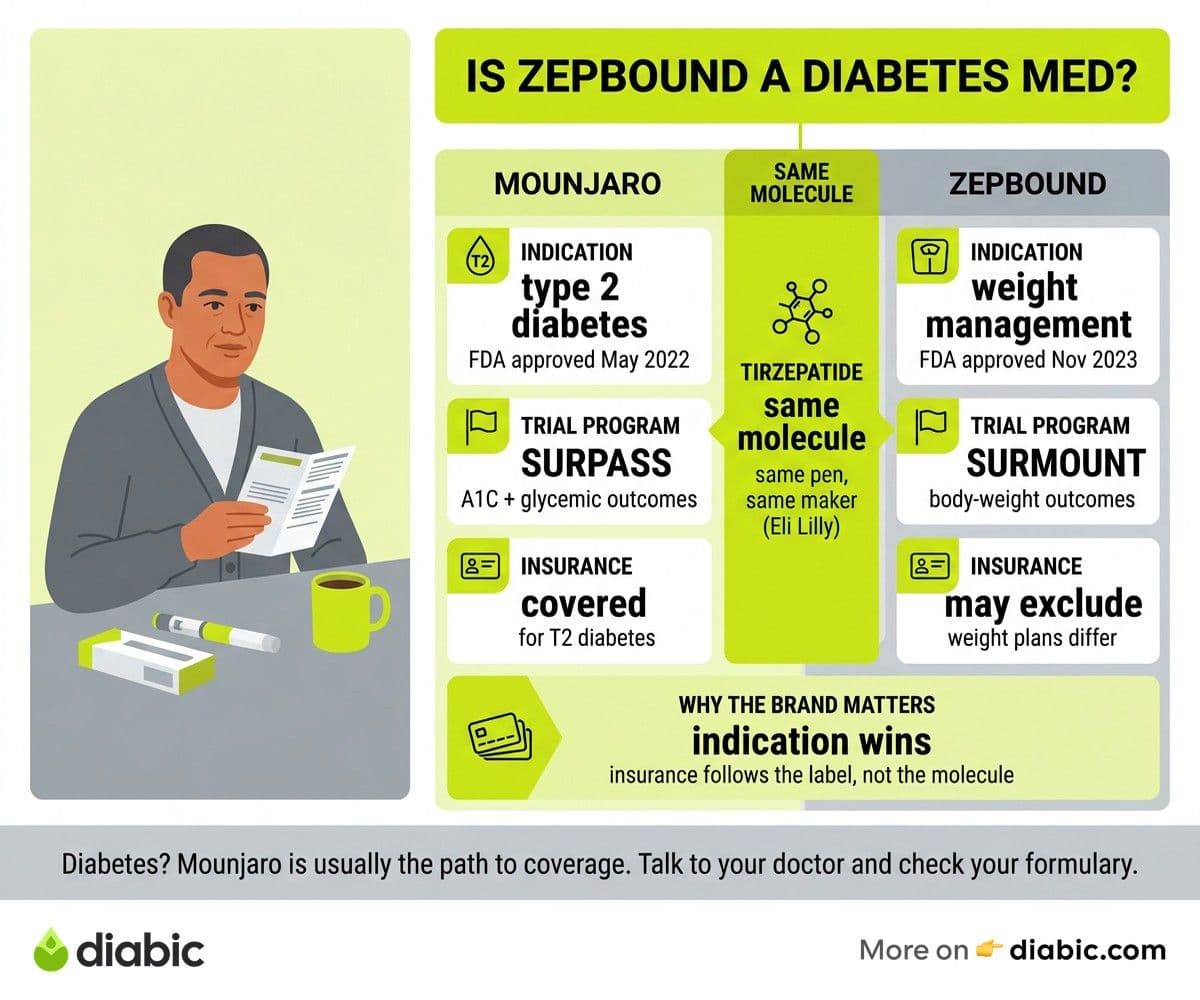
Zepbound is a once-weekly injectable manufactured by Eli Lilly, and its active ingredient is tirzepatide. According to the official FDA prescribing information for Zepbound, the medication is approved for chronic weight management in adults with obesity, or in adults with overweight who also have at least one weight-related condition such as high blood pressure, type 2 diabetes, or high cholesterol. The FDA announced the approval in November 2023, making Zepbound the first dual GIP/GLP-1 receptor agonist cleared specifically for weight loss in the United States.
The key word in that approval is "weight management." Zepbound is not a diabetes medication in the regulatory sense, even though the underlying drug acts powerfully on blood sugar pathways. This distinction shapes how doctors prescribe it, how pharmacies dispense it, and how insurance companies decide what to cover. If you have type 2 diabetes and your provider wants you on tirzepatide for blood sugar, they will typically write a prescription for Mounjaro instead, since that is the brand approved for diabetes.
The mechanism itself is fascinating. Tirzepatide is the first medication in its class to mimic two gut hormones at once: glucose-dependent insulinotropic polypeptide (GIP) and glucagon-like peptide-1 (GLP-1). For a deeper background on how this hormone class works, our piece on GLP-1 receptor agonists explained covers the science in friendly terms. The dual action helps slow stomach emptying, reduce appetite, and improve how the body releases insulin in response to meals.
Why does the brand distinction matter so much? Because insurance plans look at the FDA-approved indication when they decide what to cover. A plan that excludes weight-loss drugs may still pay for Mounjaro to treat type 2 diabetes, while denying Zepbound for the same person. Understanding this nuance can save you a frustrating phone call or a surprise bill at the pharmacy counter.
The Mounjaro Connection
Here is where things get interesting. Mounjaro and Zepbound are the same molecule, manufactured by the same company, in the same delivery pen. The FDA prescribing information for Mounjaro confirms the active ingredient as tirzepatide, identical to what is inside a Zepbound pen. The Mounjaro approval came in May 2022, about 18 months before Zepbound entered the market. So why two names for one drug?
The answer is partly regulatory and partly commercial. Each FDA-approved indication requires its own brand label, set of clinical trials, and prescribing information. Eli Lilly ran two separate trial programs to support each approval: the SURPASS program for type 2 diabetes and the SURMOUNT program for weight management. Splitting the brand also lets insurance, pharmacy benefit managers, and prescribers cleanly separate the two use cases without confusion at the point of care.
For someone living with type 2 diabetes, this overlap creates real-world complications, which is why the question "is Zepbound a diabetes medication" comes up at almost every appointment that touches tirzepatide. We have seen people with diabetes who started on Mounjaro for blood sugar, lost meaningful weight as a side benefit, and then wondered whether they should switch to Zepbound for the weight indication. The answer is almost always no, because Mounjaro is doing both jobs already, and switching brands could disrupt insurance coverage. If you want a fuller view of how tirzepatide fits into the broader category, our injectable diabetes medication list lays out the major players side by side.
The naming also affects pricing and patient assistance programs. Eli Lilly runs separate savings cards for each brand, and eligibility rules differ. People without diabetes generally cannot qualify for the Mounjaro savings card, even if their provider has prescribed it off-label. Likewise, the Zepbound savings program is designed for those who meet the weight management criteria, not for those using it primarily for glycemic effects.
Talk to your doctor about which brand fits your diagnosis, your insurance, and your treatment goals. The pen looks the same and the molecule is the same, but the path to getting it covered can look very different depending on which label is on the box.
Can Zepbound Help People with Diabetes
The clinical data on tirzepatide for type 2 diabetes is genuinely strong. The SURPASS trials, published across multiple papers in the New England Journal of Medicine, showed that tirzepatide produced significant reductions in A1C and body weight compared to placebo, semaglutide, and basal insulin. Many trial participants achieved A1C levels below the diabetes diagnostic threshold, which is a meaningful outcome for blood sugar management. Additional analyses in Diabetes Care have continued to explore the metabolic benefits of the drug across diverse populations.
So if the molecule works so well for type 2 diabetes, why would someone with diabetes ever be prescribed Zepbound instead of Mounjaro? Usually the answer comes down to insurance and supply. During periods of Mounjaro shortage, some providers have written for Zepbound off-label to keep their patients on the same molecule. In other cases, a person with diabetes also has obesity that meets the Zepbound criteria, and the weight-management indication may be easier to get covered under their specific plan.
Off-label prescribing is legal and common across medicine, but it has tradeoffs. Insurance is less likely to cover off-label use, which can mean higher out-of-pocket costs. Manufacturer savings cards usually exclude off-label prescriptions as well. Your endocrinologist or primary care provider can walk you through the realistic options based on your diagnosis and coverage. If you want to compare tirzepatide directly against the other major GLP-1 drug, our semaglutide vs tirzepatide comparison digs into the head-to-head data.
The bottom line is that tirzepatide, regardless of the brand on the box, has been shown to lower blood sugar effectively in adults with type 2 diabetes. The question is not really whether the drug works for diabetes. The question is which brand your provider should prescribe so the medication is accessible, affordable, and appropriate for your specific clinical picture.
Zepbound vs Other Weight Loss and Diabetes Medications
Zepbound and Mounjaro are not alone in the injectable category. Wegovy and Ozempic, both made by Novo Nordisk, contain semaglutide and follow the same dual-brand structure. Wegovy is approved for chronic weight management, while Ozempic is approved for type 2 diabetes. Our deeper look at Ozempic for type 2 diabetes breaks down how that semaglutide brand fits into a real treatment plan.
Head-to-head clinical data favors tirzepatide over semaglutide for both A1C reduction and weight loss. The SURPASS-2 trial published in NEJM directly compared the two drugs in adults with type 2 diabetes and found that tirzepatide produced larger reductions in A1C and body weight at every dose tested. That said, "better on average" does not mean "better for everyone." Side effect profiles, prior medication history, kidney function, and personal preferences all play into the right choice.
Cost and availability also matter. Both tirzepatide and semaglutide have faced supply constraints since their approvals, and both come with steep list prices that make insurance coverage essential for most people. The Eli Lilly newsroom periodically updates its supply outlook for tirzepatide, and Novo Nordisk does the same for semaglutide. Asking your pharmacist about real-time stock and your insurance about formulary tier can save you weeks of frustration.
The "which is better" question is the wrong frame. The better question is which medication, at which brand, fits your diagnosis, your insurance, your tolerance for side effects, and your goals. A drug you cannot afford or cannot tolerate is not the right drug, no matter how well it performed in a trial. Your provider can help you weigh these tradeoffs honestly.
Side Effects and Safety Considerations
The most common side effects of tirzepatide are gastrointestinal: nausea, vomiting, diarrhea, constipation, and reduced appetite. Most people who experience these symptoms find that they improve significantly after the first few weeks as the body adjusts, especially if dose increases happen gradually. Eating smaller meals, avoiding very fatty foods, and staying hydrated tend to help during the adjustment period. Talk to your doctor about strategies that fit your routine if symptoms feel hard to manage.
The FDA labeling for both Zepbound and Mounjaro includes a boxed warning about thyroid C-cell tumors, based on findings in rodent studies. Tirzepatide is contraindicated in people with a personal or family history of medullary thyroid carcinoma or Multiple Endocrine Neoplasia syndrome type 2. Pancreatitis is another known risk, and any persistent severe abdominal pain should prompt an immediate call to your healthcare provider. Gallbladder issues, kidney problems related to dehydration, and changes in vision in people with diabetic retinopathy have also been reported.
For people with diabetes who take other glucose-lowering medications, particularly insulin or sulfonylureas, the addition of tirzepatide can increase the risk of low blood sugar. Your provider may adjust other medications when starting tirzepatide to reduce this risk. Wearing a continuous glucose monitor or checking fingersticks more frequently in the first several weeks is a reasonable precaution, since the metabolic effects can show up quickly.
Pregnancy is another important consideration. Tirzepatide is not recommended during pregnancy, and it may reduce the effectiveness of oral contraceptives. People who could become pregnant should talk to their provider about reliable backup contraception during the titration period.
Frequently Asked Questions
Is Zepbound approved for type 2 diabetes?
No. Zepbound (tirzepatide) is FDA-approved specifically for chronic weight management, not for type 2 diabetes. The same active ingredient, tirzepatide, is marketed as Mounjaro for type 2 diabetes. If you have type 2 diabetes and are interested in tirzepatide, talk to your healthcare provider about which brand and indication is appropriate for you.
What is the difference between Zepbound and Mounjaro?
Zepbound and Mounjaro contain the same active ingredient (tirzepatide) but have different FDA approvals. Mounjaro is approved to treat type 2 diabetes, while Zepbound is approved for chronic weight management. The difference affects how they are prescribed, what insurance covers, and how providers approach them at different doses. Your healthcare provider can explain which option fits your health needs and coverage situation.
A Final Note on Asking the Right Questions
So is Zepbound a diabetes medication? Technically no, but the molecule inside it absolutely treats type 2 diabetes when prescribed under its other name. The brand distinction is a regulatory and commercial choice, not a chemical one, and understanding that nuance can help you have a more productive conversation with your care team. If you live with diabetes and are curious about tirzepatide, ask your provider whether Mounjaro fits your treatment plan, and bring up Zepbound only if weight management is a separate clinical focus.
The right medication is the one that fits your body, your budget, and your goals, prescribed by someone who knows your full history. Keep asking questions and lean on resources that respect your time as you sort through your options.
Shahriar P. Shuvo is the founder of Diabic. He has lived with diabetes for over 14 years, and built Diabic to deliver the practical, evidence-based self-management tools he wished existed when he was first diagnosed. By trade, Shahriar is a senior design and frontend engineer with 6+ years shipping products at Agora, Timescale (now Tiger Data), and ShareTrip. He writes from the intersection of lived diabetes experience and product craft, focused on what works in daily management rather than what sounds good in a textbook.
Medically reviewed by
Dr. Rezwana Parvin Rumpa is an obstetrics and gynaecology specialist with clinical focus on gestational diabetes, PCOS, and fertility. She holds the MRCOG (Final Part) from the Royal College of Obstetricians and Gynaecologists in London, the MRCPI (Final Part) from the Royal College of Physicians of Ireland, and an MBBS from Shaheed Monsur Ali Medical College under Dhaka University. Dr. Rumpa serves as a Senior Medical Officer in the Obs and Gynae department at BRB Hospitals Ltd, where she has spent three years managing prenatal care, emergency obstetric cases, and women's-health surgery. On Diabic, she medically reviews content for women living with diabetes, with particular attention to pregnancy, PCOS, and reproductive-health intersections.
More from Treatment & Medication
View all
Recognizing Diabetic Coma Warning Signs Early
Learn to spot diabetic coma warning signs early. We cover DKA, HHS, and severe hypoglycemia symptoms, plus when to call 911 for immediate help.

Switching to Injectable Diabetes Medication: What to Expect
Switching to injectable diabetes medication can feel daunting. Learn what to expect, how to manage side effects, and why this step is progression, not.

Hyperglycemic Hyperosmolar Syndrome: Warning Signs to Know
Hyperglycemic hyperosmolar syndrome is a serious type 2 diabetes emergency. Learn the warning signs, triggers, and when to call 911 for HHS care.
Clinician-reviewed habits, plain-language guides, and honest answers - the small shifts that make living with diabetes feel lighter, every day.