Type 1 vs Type 2 Diabetes: Key Differences Explained
Type 1 vs type 2 diabetes share a name but differ in cause, symptoms, and treatment. Here is a clear, friendly breakdown to help you understand both.

In this article(12)
Understanding the differences between type 1 vs type 2 diabetes is one of the most important first steps after a diagnosis, whether it is yours or someone you care about. These two conditions share a name, but they differ in causes, symptoms, treatment, and daily management.
The confusion is understandable. Both involve high blood sugar, both can be serious if ignored, and both get lumped together in casual conversation. Yet the path to managing each one looks very different from day one.
Here is a clear breakdown of what sets them apart, written for real people trying to make sense of a diagnosis or support someone they love.
What Is the Difference Between Type 1 and Type 2 Diabetes
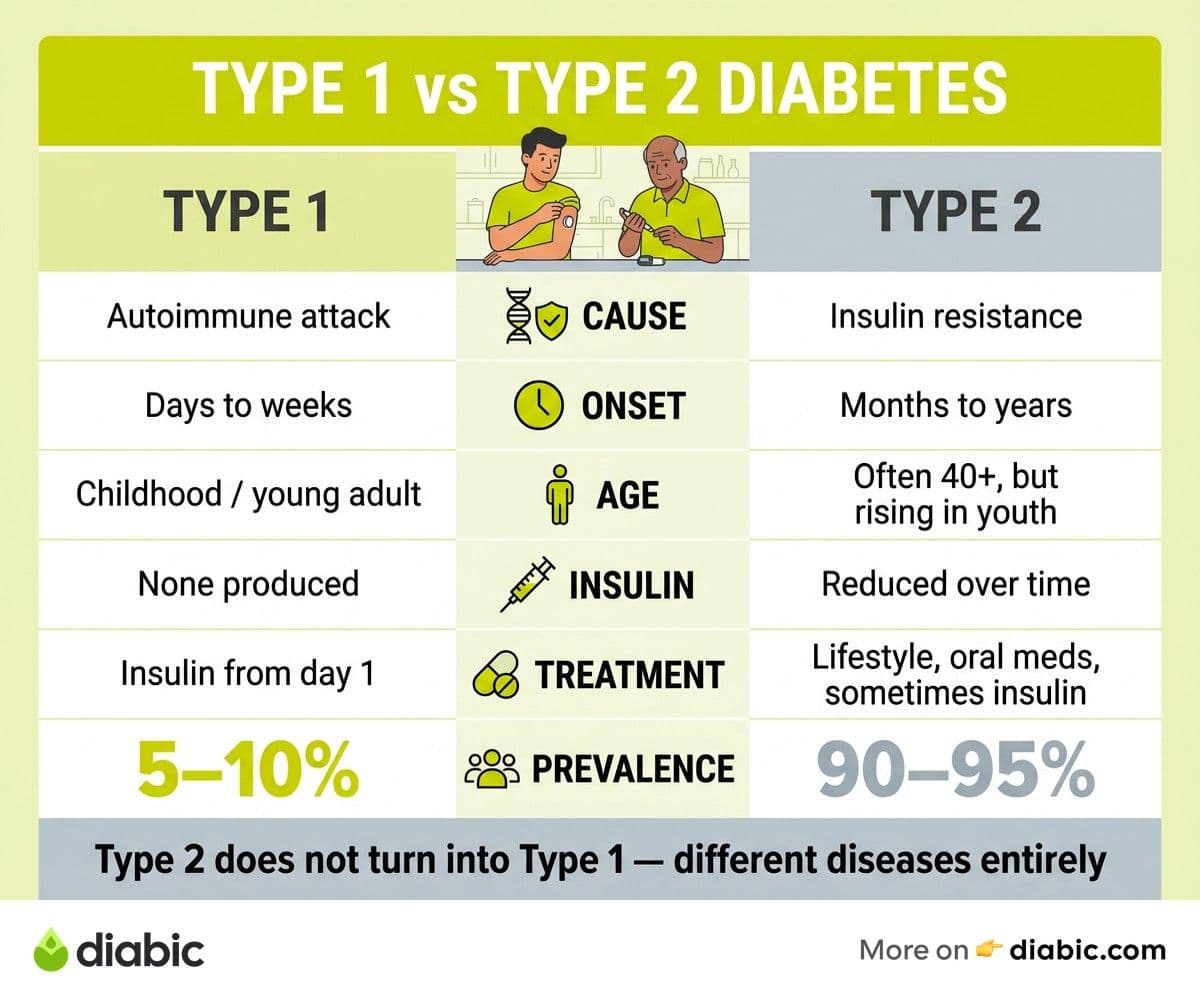
The simplest way to describe the difference comes down to what the body is doing wrong. In type 1 diabetes, the immune system mistakenly destroys the insulin-producing beta cells in the pancreas. The body can no longer make insulin, so daily insulin therapy becomes essential for life.
In type 2 diabetes, the body usually still makes insulin, at least at first. The problem is that cells become resistant to insulin's signal, and over time the pancreas struggles to keep up. This is why type 2 often progresses gradually and can sometimes be managed without insulin for years.
According to the National Institute of Diabetes and Digestive and Kidney Diseases, type 2 accounts for roughly 90 to 95 percent of all diabetes cases, while type 1 makes up about 5 to 10 percent. Genetics, environment, and immune triggers all play different roles in each condition.
Here is a side-by-side look at the key differences:
This table covers the broad strokes, but the lived experience of each condition is shaped by far more than a chart can capture. The next sections look at how symptoms, treatment, and daily life differ.
Type 1 Diabetes Symptoms to Recognize
Type 1 diabetes symptoms tend to come on quickly, sometimes over just a few weeks. Because the pancreas stops producing insulin, blood sugar rises rapidly and the body starts showing distress signs that are hard to ignore.
The classic warning signs include extreme thirst, frequent urination, unexplained weight loss, and constant hunger even while eating normally. Many people also notice deep fatigue, blurred vision, and fruity-smelling breath as the condition progresses. These symptoms reflect the body's frantic attempt to flush out excess glucose and burn fat for fuel.
If symptoms are missed, type 1 can lead to a dangerous condition called diabetic ketoacidosis (DKA), which often becomes the trigger for diagnosis. The American Diabetes Association notes that DKA is a medical emergency requiring immediate care. If you want a deeper look at the condition itself, our guide to what type 1 diabetes really is walks through the autoimmune process in more detail.
From my experience: when I was diagnosed with type 1 at age twelve, I had lost nearly fifteen pounds in six weeks without trying. I was drinking water constantly and falling asleep in class. My family thought I was just going through a growth spurt. The signs were all there, but type 1 was so far off our radar that no one connected the dots until I ended up in the emergency room. Fourteen years later, I still tell anyone who will listen: rapid weight loss plus constant thirst is not normal, and it is worth a same-day doctor visit.
Type 2 Diabetes Symptoms to Watch For
Type 2 diabetes symptoms move at a very different pace. Because insulin resistance builds slowly and the pancreas keeps producing some insulin, blood sugar tends to climb in small increments rather than spiking dramatically. This is why type 2 is often called a silent condition in its early stages.
The signs are real, but easy to miss or attribute to something else. Common symptoms include increased thirst and urination, slow-healing cuts, frequent infections, blurred vision, tingling or numbness in the hands and feet, and dark velvety patches of skin around the neck or armpits (a sign called acanthosis nigricans). Fatigue is another big one, but who is not tired these days?
The American Diabetes Association reports that millions of adults in the United States are living with undiagnosed type 2 diabetes. Many people only learn they have the condition after a routine blood test or when complications like nerve pain or vision changes prompt a deeper look. This slow buildup is why screening matters, especially for adults over 35 or anyone with a family history.
What Is Diabetes at Its Core
To understand both conditions, it helps to step back and look at what is diabetes in the simplest possible terms. Diabetes is a condition where the body cannot keep blood glucose (sugar) in a healthy range. Insulin, a hormone made by the pancreas, normally acts like a key that unlocks cells so glucose can move from the bloodstream into the cells for energy.
In type 1, the key is missing entirely because the immune system destroyed the cells that make it. In type 2, the keys exist but the locks have rusted; the body needs more and more insulin to do the same job, and eventually production cannot keep up. The end result in both cases is glucose stuck in the bloodstream, where it slowly damages blood vessels, nerves, and organs.
This is also a good place to address one of the biggest misconceptions out there. People often ask whether sugar causes diabetes, and the honest answer is that sugar alone does not cause either type. Type 1 is autoimmune. Type 2 develops from a mix of genetics, weight, activity level, age, and yes, long-term dietary patterns. Blaming sugar misses the bigger picture.
Type 1 vs Type 2 Diabetes Treatment Differences
Treatment is where the two conditions diverge most clearly. People with type 1 need insulin from the day of diagnosis, every day, for life. There is no oral medication that replaces insulin, no diet that brings beta cells back, and no current cure (though research is ongoing). Insulin can be delivered through injections, insulin pens, or an insulin pump, often paired with a continuous glucose monitor (CGM) for real-time blood sugar tracking.
Type 2 treatment usually starts with lifestyle changes: nutrition, physical activity, weight management, and sleep. Many people add oral medications like metformin, and newer drug classes such as GLP-1 receptor agonists and SGLT2 inhibitors have transformed type 2 care over the last decade. Some people with type 2 eventually need insulin too, especially if the pancreas loses more function over time.
Technology like CGMs and insulin pumps has historically been more common in type 1 care, but both are now used in type 2 management as well. The right combination depends on the individual, their care team, and what fits into daily life. There is no single right answer.
Can Type 2 Diabetes Turn Into Type 1
This is one of the most common questions we get, and the short answer is no. Type 2 diabetes does not turn into type 1, because the two conditions have completely different underlying causes. Insulin resistance does not become an autoimmune disease.
That said, there is a real source of confusion here. Some adults are diagnosed with type 2 but actually have a slow-onset form of type 1 called latent autoimmune diabetes in adults, or LADA. LADA looks like type 2 at first because it progresses slowly and people may respond to oral medications for a while. Over time, however, insulin becomes necessary because the autoimmune process eventually destroys the beta cells.
Needing insulin does not mean someone with type 2 has crossed over into type 1. Many people with long-standing type 2 eventually need insulin simply because the pancreas can no longer produce enough on its own. The condition itself has not changed; the treatment has just adapted to where the body is.
Living Well with Either Type
Both type 1 and type 2 are manageable conditions, and both come with the same basic invitation: build a care plan that fits your life, not someone else's idea of perfection. The tools differ, but the mindset of consistency, self-compassion, and informed choices applies to both.
Care plans should be individualized. What works for a teenager with type 1 who plays competitive soccer is not what works for a 60-year-old with type 2 managing arthritis. A good endocrinologist, certified diabetes care and education specialist (CDCES), and registered dietitian can help build something tailored to you. Talk to your doctor about what makes sense for your situation.
Community matters too. Living with diabetes can feel isolating, especially right after a diagnosis, when the learning curve feels endless. Connecting with others who get it, whether through online groups, in-person meetups, or apps designed for peer support, can change how the day-to-day feels. If you are wondering whether diabetes can be cured, our explainer on cure versus management offers an honest look at where research stands today.
FAQ
What is the difference between type 1 and type 2 diabetes?
Type 1 is an autoimmune condition where the body attacks its own insulin-producing cells, making daily insulin therapy necessary for life. Type 2 involves insulin resistance and a gradual decline in insulin production, often managed with lifestyle changes and medication first. They differ in cause, typical onset age, and treatment approach.
Can type 2 diabetes turn into type 1?
No. They are distinct conditions with different underlying causes. If someone with type 2 diabetes eventually needs insulin, it does not mean their condition has changed to type 1. Some adults are misdiagnosed with type 2 when they actually have LADA, a slow-progressing form of type 1.
Which type of diabetes is more common?
Type 2 is far more common, accounting for roughly 90 to 95 percent of all diabetes cases worldwide. Type 1 makes up about 5 to 10 percent. Both numbers come from the NIDDK and ADA.
Can type 1 diabetes be prevented?
Currently, there is no proven way to prevent type 1 diabetes, because the autoimmune trigger is not fully understood. Researchers are studying early intervention drugs that may delay onset in people at high genetic risk. Type 2 diabetes, on the other hand, can often be prevented or delayed through lifestyle changes.
A diagnosis of either type is not the end of a normal life. It is the start of a different relationship with your body, one that asks for attention but also rewards small, steady choices. The more you understand the type 1 vs type 2 diabetes distinction, the more confident you become in advocating for the care that fits you, and the easier it gets to filter out the noise online.
Shahriar P. Shuvo is the founder of Diabic. He has lived with diabetes for over 14 years, and built Diabic to deliver the practical, evidence-based self-management tools he wished existed when he was first diagnosed. By trade, Shahriar is a senior design and frontend engineer with 6+ years shipping products at Agora, Timescale (now Tiger Data), and ShareTrip. He writes from the intersection of lived diabetes experience and product craft, focused on what works in daily management rather than what sounds good in a textbook.
Medically reviewed by
Dr. Shanto Arian is an internal medicine physician now specializing in clinical and aesthetic dermatology, with a parallel academic focus on epidemiology and public health. He holds an MBBS, MPH, MSc (UK), MRCP (UK), MRCPI (Ireland), Diploma in Dermatology (UK), and Diploma in Aesthetic Medicine (USA). Dr. Arian trained in internal medicine, including hospital work on hematology cases such as graft-versus-host disease, before moving toward dermatology. Skin is one of the earliest places diabetes shows itself, from acanthosis nigricans and diabetic dermopathy to slow foot wound healing, and that intersection is where his clinical and Diabic-review work meet. On Diabic, Dr. Arian medically reviews content on diabetes diagnosis, complications, dermatologic manifestations, and pharmacotherapy, ensuring every claim aligns with current ADA, NICE, and peer-reviewed literature.
More from Diabetes Knowledge
View all
6 Safe Dessert for Gestational Diabetes Recipes You Can
Six dessert for gestational diabetes recipes that satisfy your sweet tooth without spiking blood sugar, with carb counts and pairing tips you can use.

8 High Fiber Foods That Help with Prediabetes
Add these 8 high fiber foods for prediabetes to slow glucose absorption, support steady blood sugar, and meet the daily fiber target most people miss.

Mediterranean Diet for Prediabetes: A Practical Guide
The mediterranean diet for prediabetes is one of the best-studied eating patterns for prevention. Here is what to eat, what to avoid, and how to start.
Clinician-reviewed habits, plain-language guides, and honest answers - the small shifts that make living with diabetes feel lighter, every day.